
Not today
I am tired of people telling me to “slow down”. The pace at which I work serves me well and results in optimum outcomes. I feel that many are confronted by my “pace” and “productivity”. Their solution is to say “slow down”. But who am I supposed to be slowing down for? Them or me? Working in film photography and the darkroom is grounding and slows me down more than adequately. In fact, film photography, the darkroom and printmaking are the only spaces I have ever felt secure enough to “breathe” freely.
Non-toxic copper plate hard ground
Part 1
https://www.youtube.com/watch?v=lkfuuitUuWk
Part 2
https://www.youtube.com/watch?v=a366CHs0B2E
Vent
[Start vent]
If I read another paper that quotes Barthes as the theoretical saviour of photography, I will fair dinkum spew. Why? At the end of the day, when considering the work of photographers from Frank Hurley, who made composites with glass negatives in the late 1800s (etc), to modernists such as Moholy-Nagy and Man Ray with their countless and mindblowing experimentations that blew apart the notion of photography being no more than a mechanised reproduction / truthful depiction of the world, through to the conceptual genius of artists such as Doug and Mike Starn, Mariah Robertson and Marco Breuer, Barthes views are limited in scope and quite frankly, wrong.
In my opinion, if views such as those of Barthes were applied to painting, we would never have seen the art form evolve beyond the Renaissance.
[End vent]
There are some outstanding art critics and theorists whose life work is in the domain of alchemical photography, although they are few and far between.
I don't have a problem with art critics or theorists not having a creative practice themselves. However, it is a concern when broad sweeping statements such as those of Barthes dumb down the brilliance and majestic beauty of highly complex and diverse creative fields (painting, sculpture, photography, whatever). In my opinion, critiques such as these do little more than highlight the lack of knowledge and understanding people have within their field of expertise, which can further be perceived as hanging on to convention in fear of the unknown. I'm a fan of living life myself.
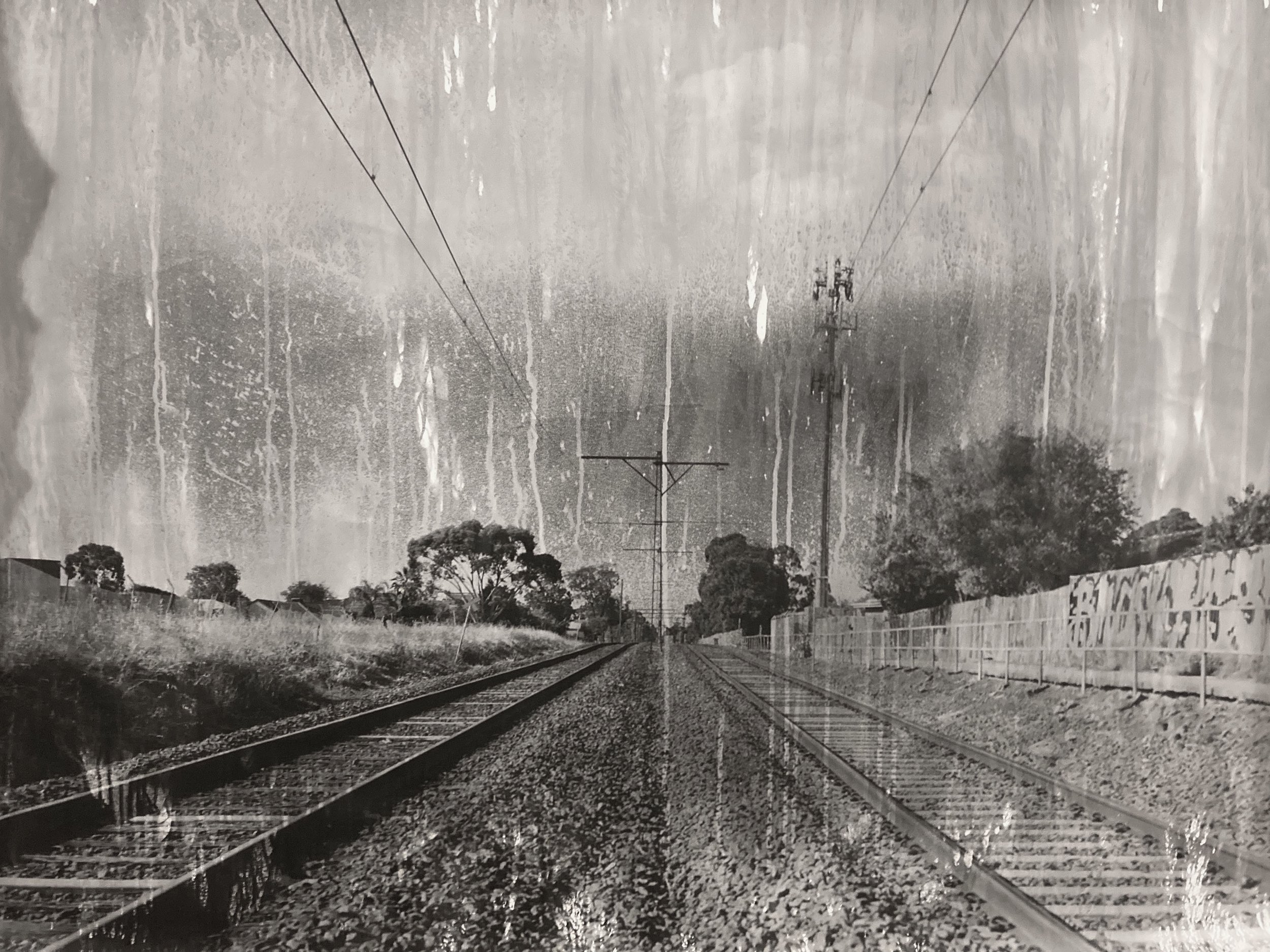
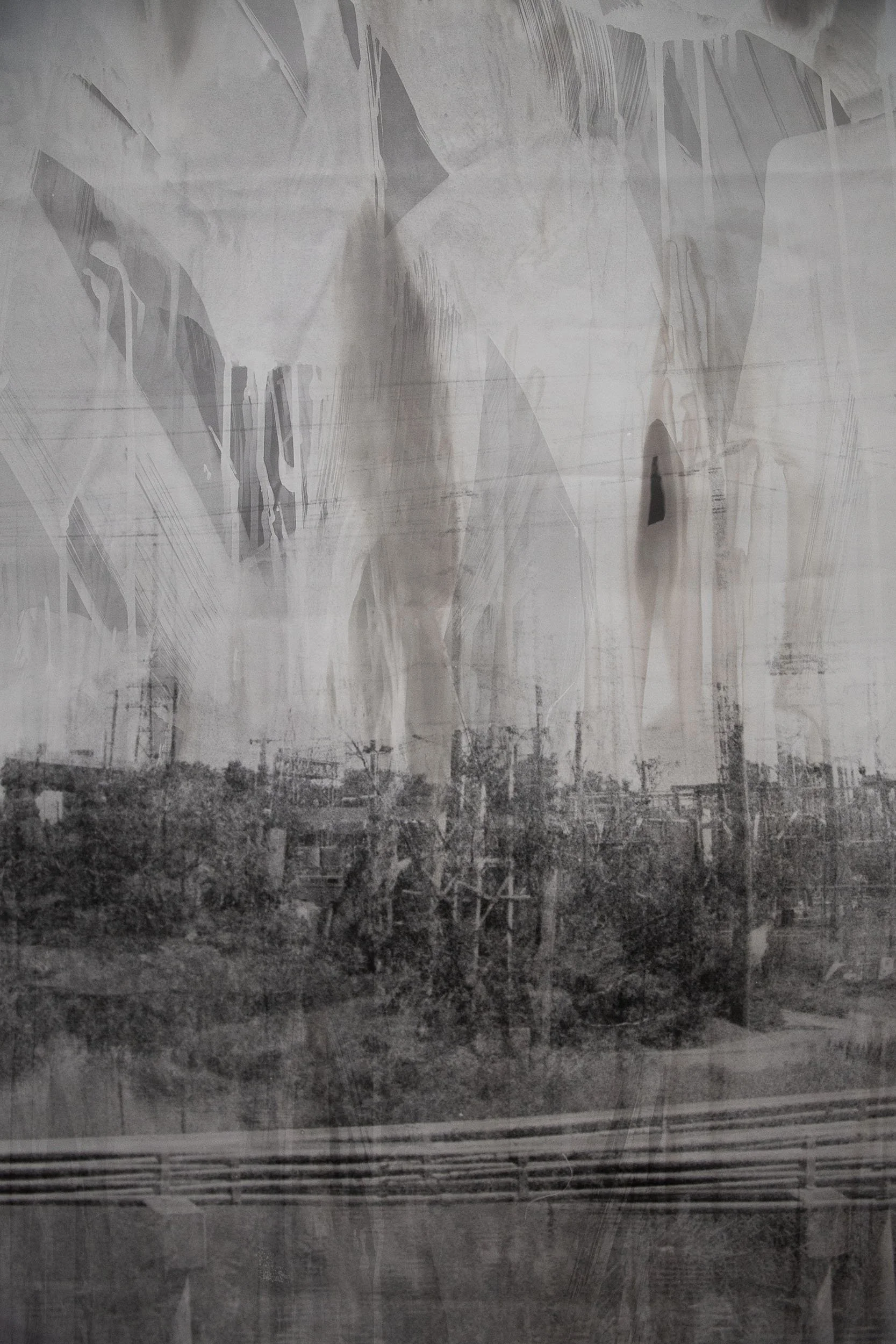
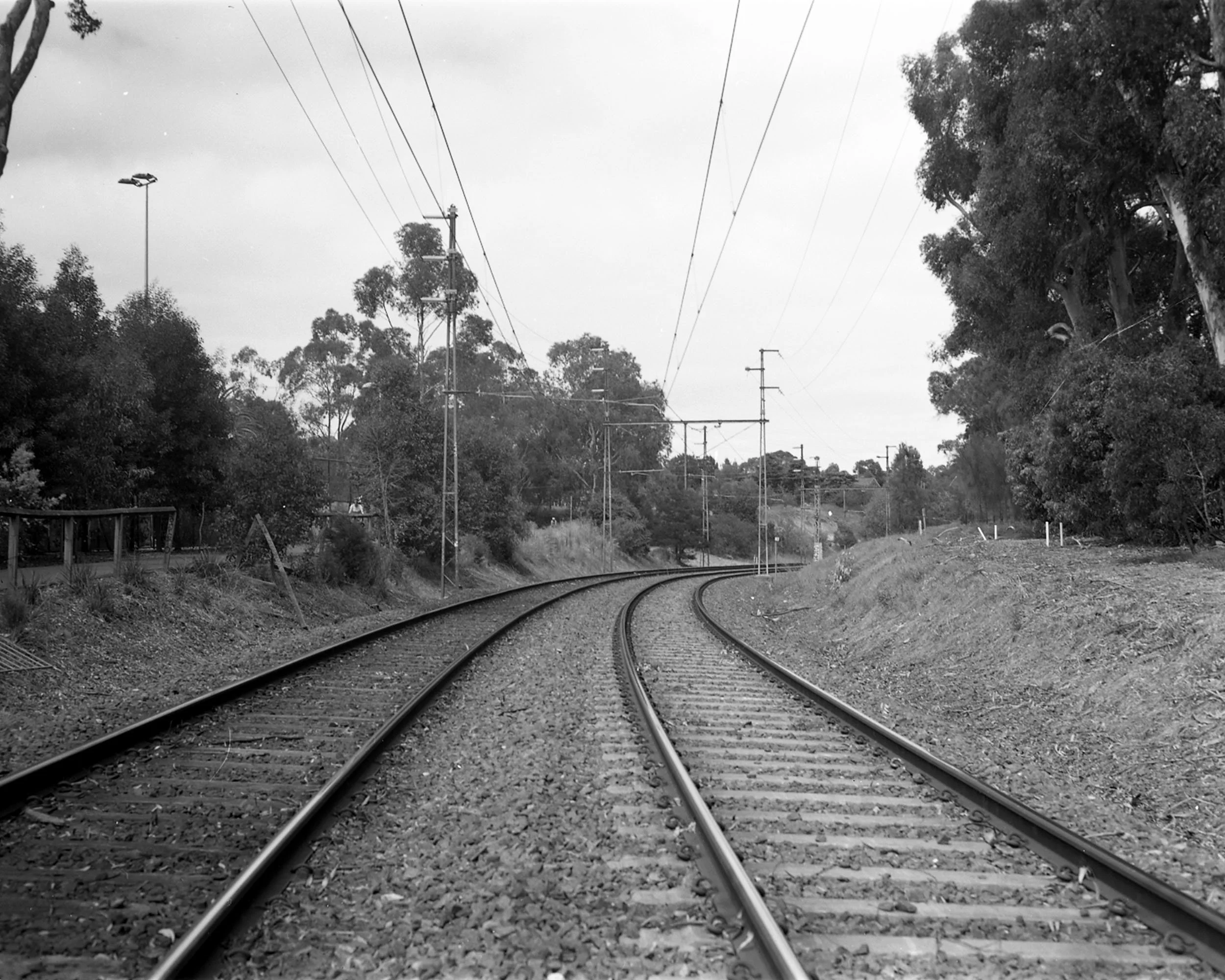
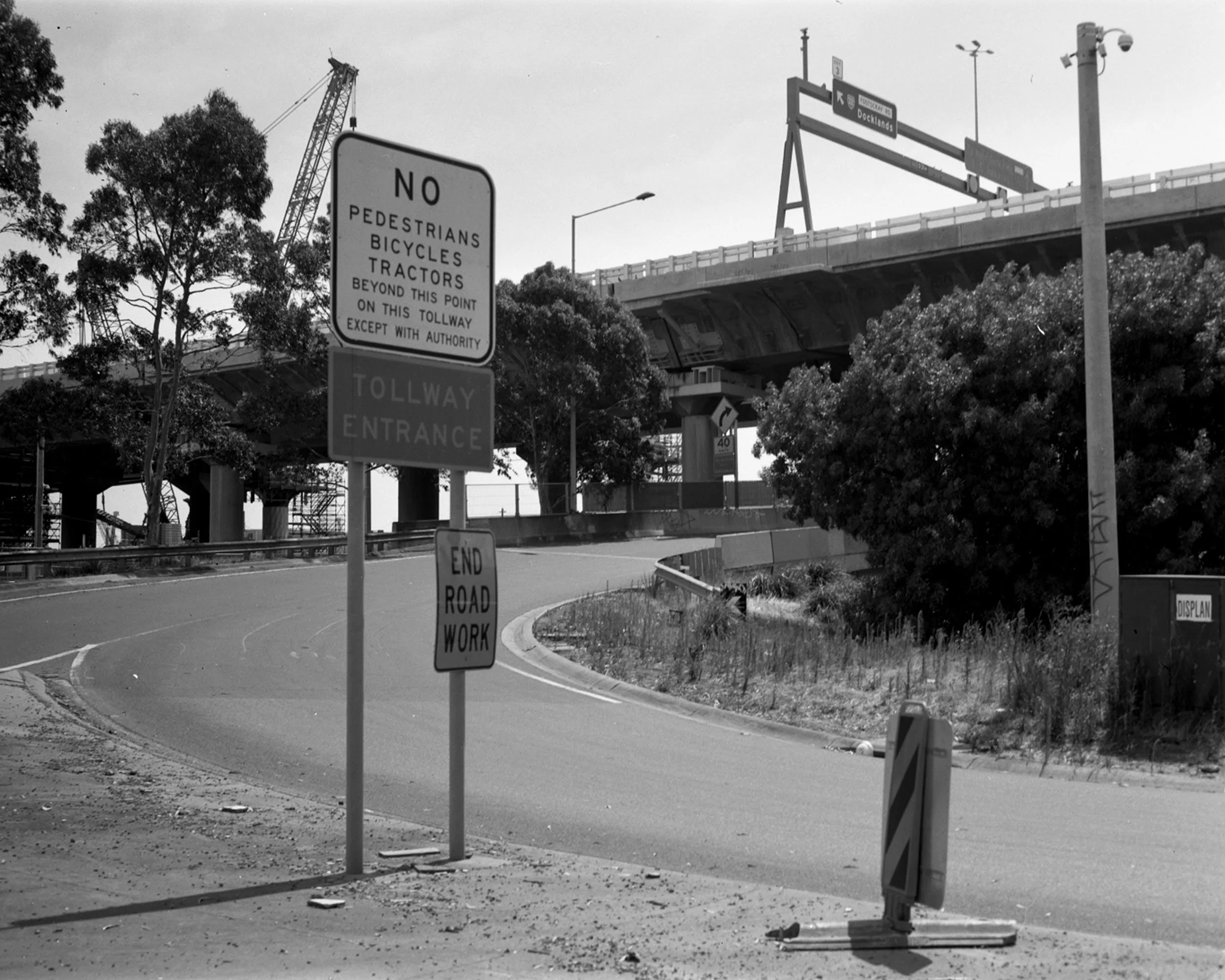
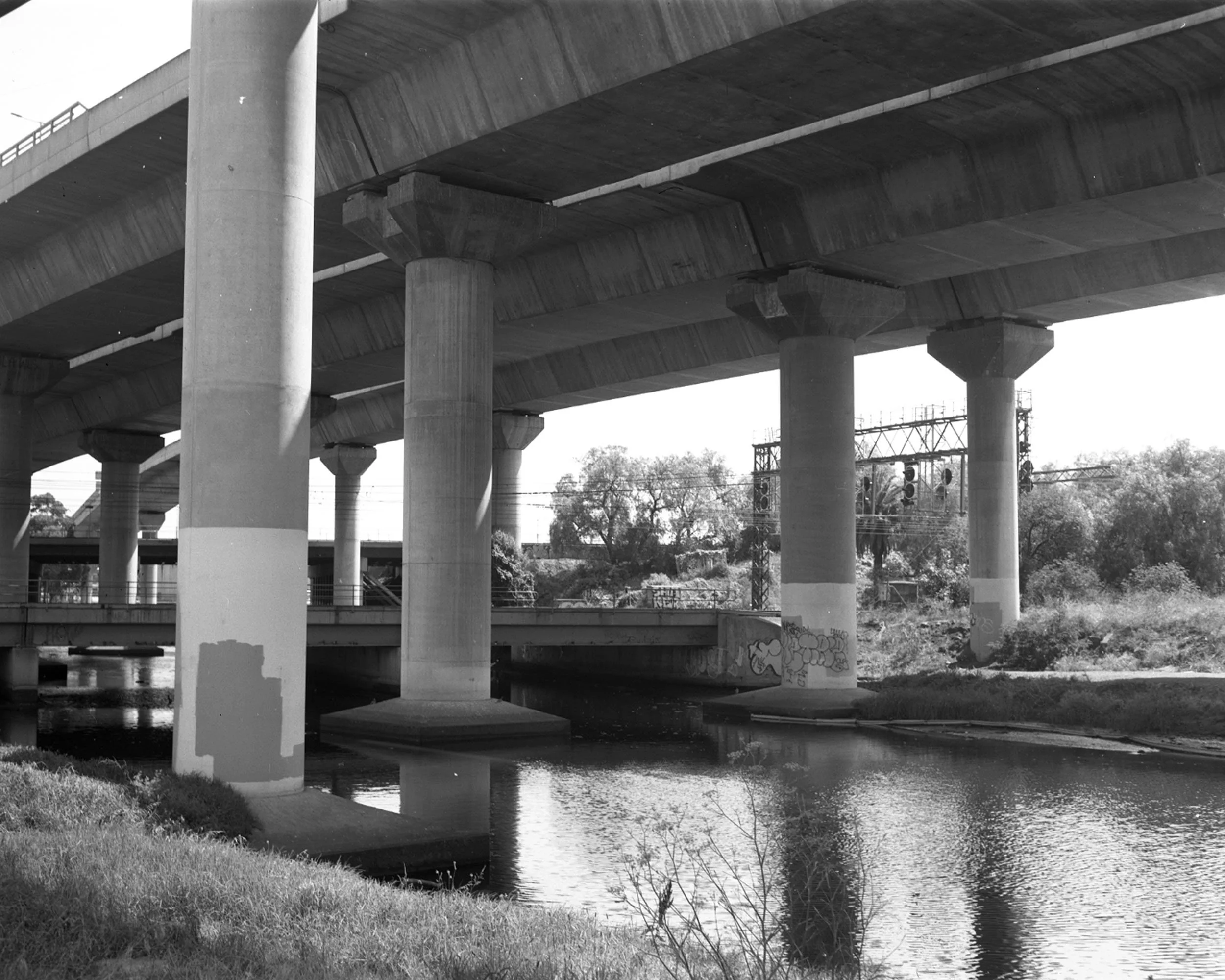
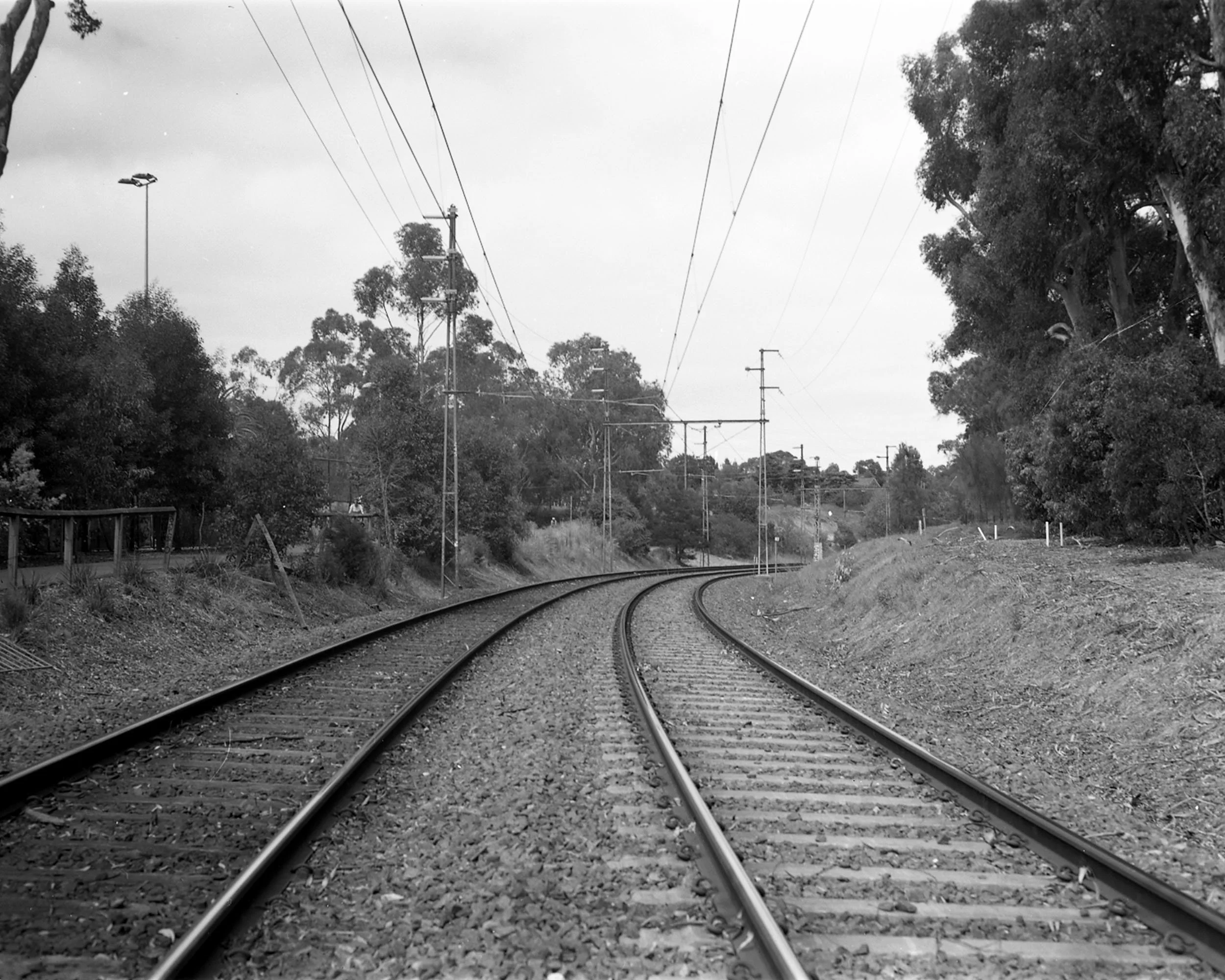
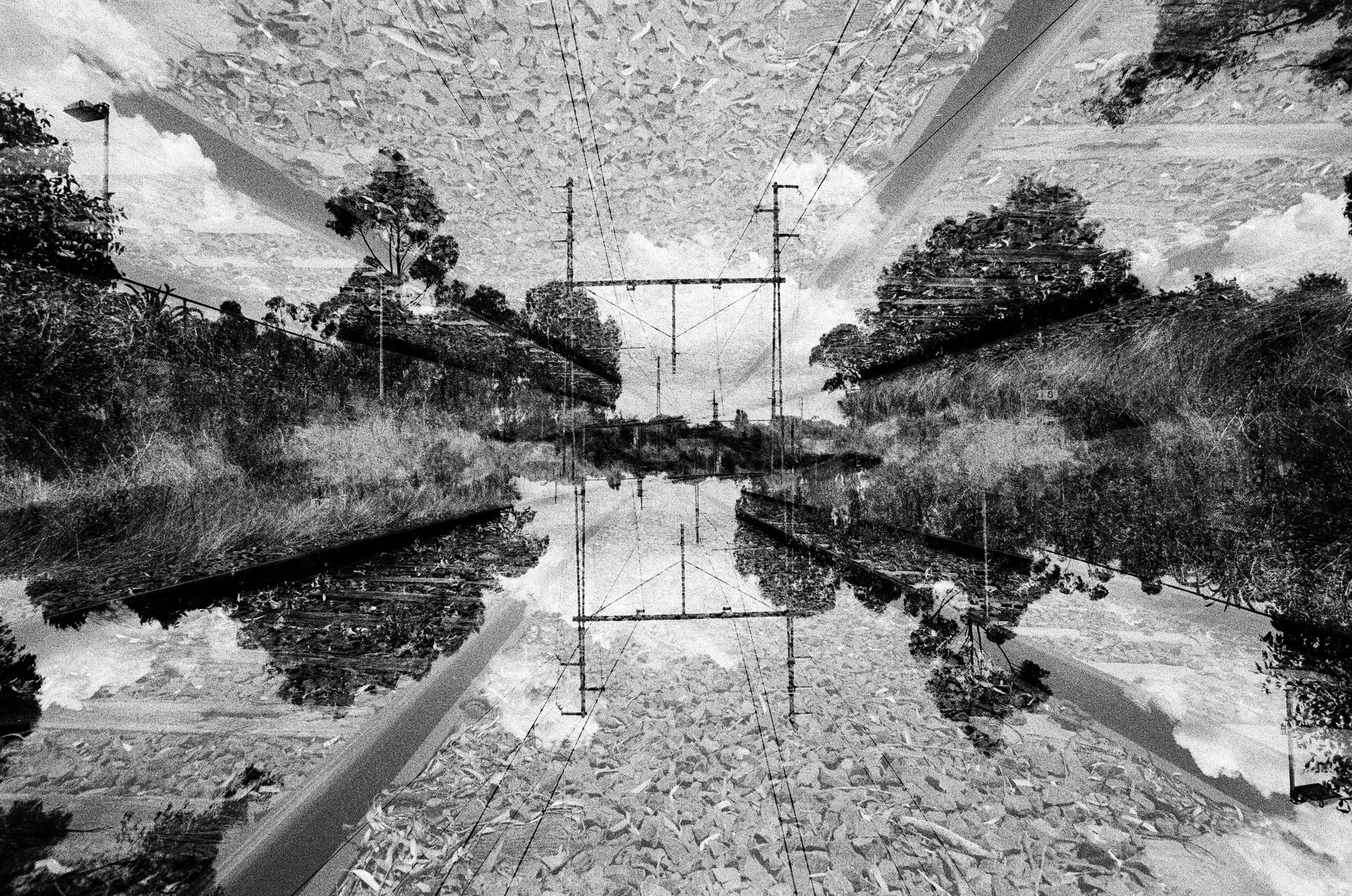
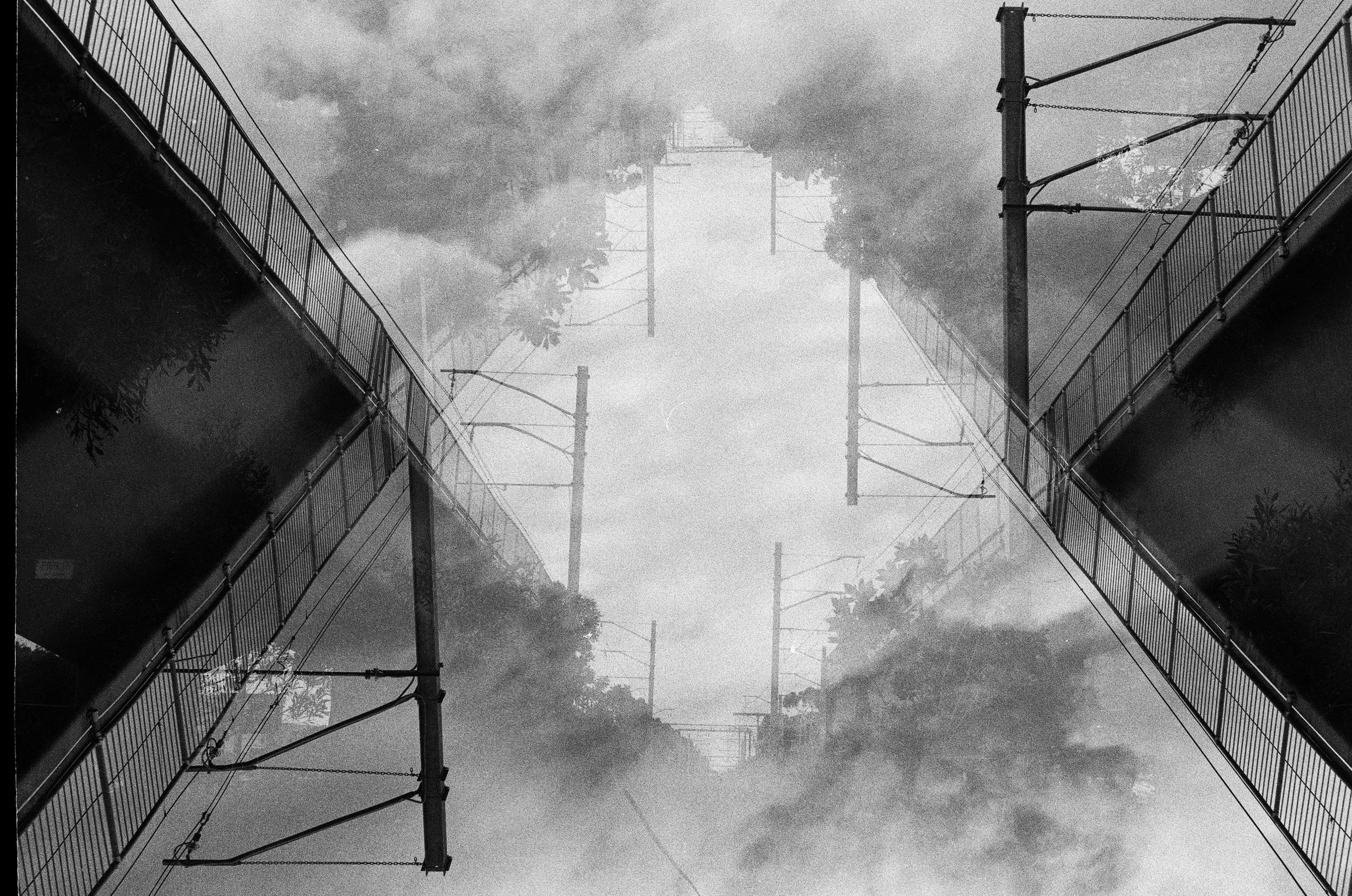
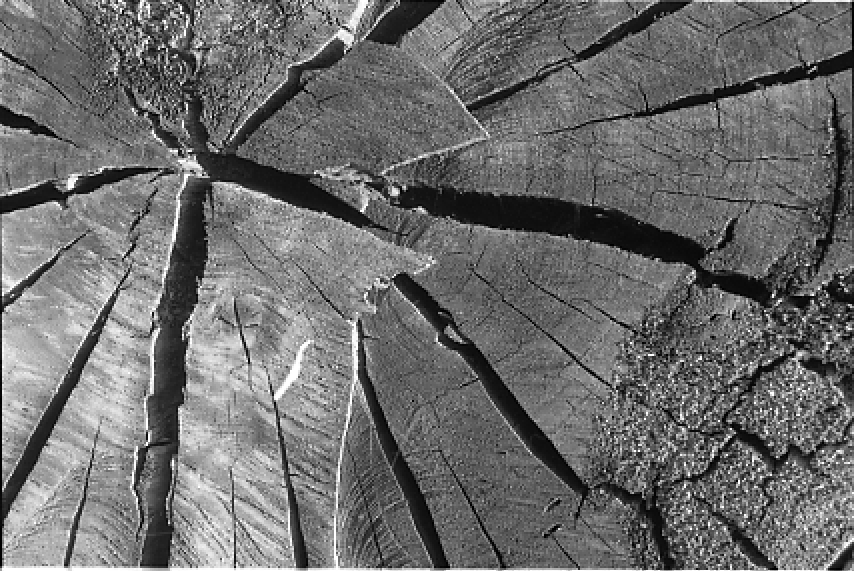
Gelatin silver image transfer
Removing Gelatin Layer From Silver Gelatin Paper?
https://www.photrio.com/forum/threads/removing-gelatin-layer-from-silver-gelatin-paper.129115/
Stripping can be done by laying the RC paper in a glass dish, then pouring near boiling water on it and soaking for several minutes. You may need to dump the water and redo every couple of minutes until it peels apart. You will have some paper residue on the back, but with careful rubbing it will come off. I have done this many times with paper negatives, then mounted the emulsion on to a piece of glass.
When I worked for Kodak on color paper, I remember visiting a large commercial photo lab (about 1975) that peeled the emulsion (containing a color image) from the RC base so that the image could be put on a canvas support. They started at a corner, using a razor blade to separate the emulsion from the base, and then further separated the emulsion from the base by rolling the emulsion up on a wooden dowel. They made it look easy; I was never able to achieve the same result. Your milage may vary.
It's actually possible to physically strip the polyethylene layer from RC. If you just want to remove the gelatin emulsion, a soak in diluted household bleach will suffice.
Respite
RESPITE
Cognitive neuroscientist Dr Antonio Damasio (2019, 3) states that "Feelings have not been given the credit they deserve as motives, monitors, and negotiators of human cultural endeavours". Damasio underscores that "what the body feels" and what the "mind thinks" are not only equally significant but they are also inseparably "intertwined" (Banville 2018).
The views of Damasio provide a methodological departure point for my Studio 2 project, Respite (Figure XX), to cultivate the "direct, unmediated, sensory experience of creation … as a valuable and meaningful part of the art making process" (Persinger 2014, 13) made manifest in the materiality of the darkroom.
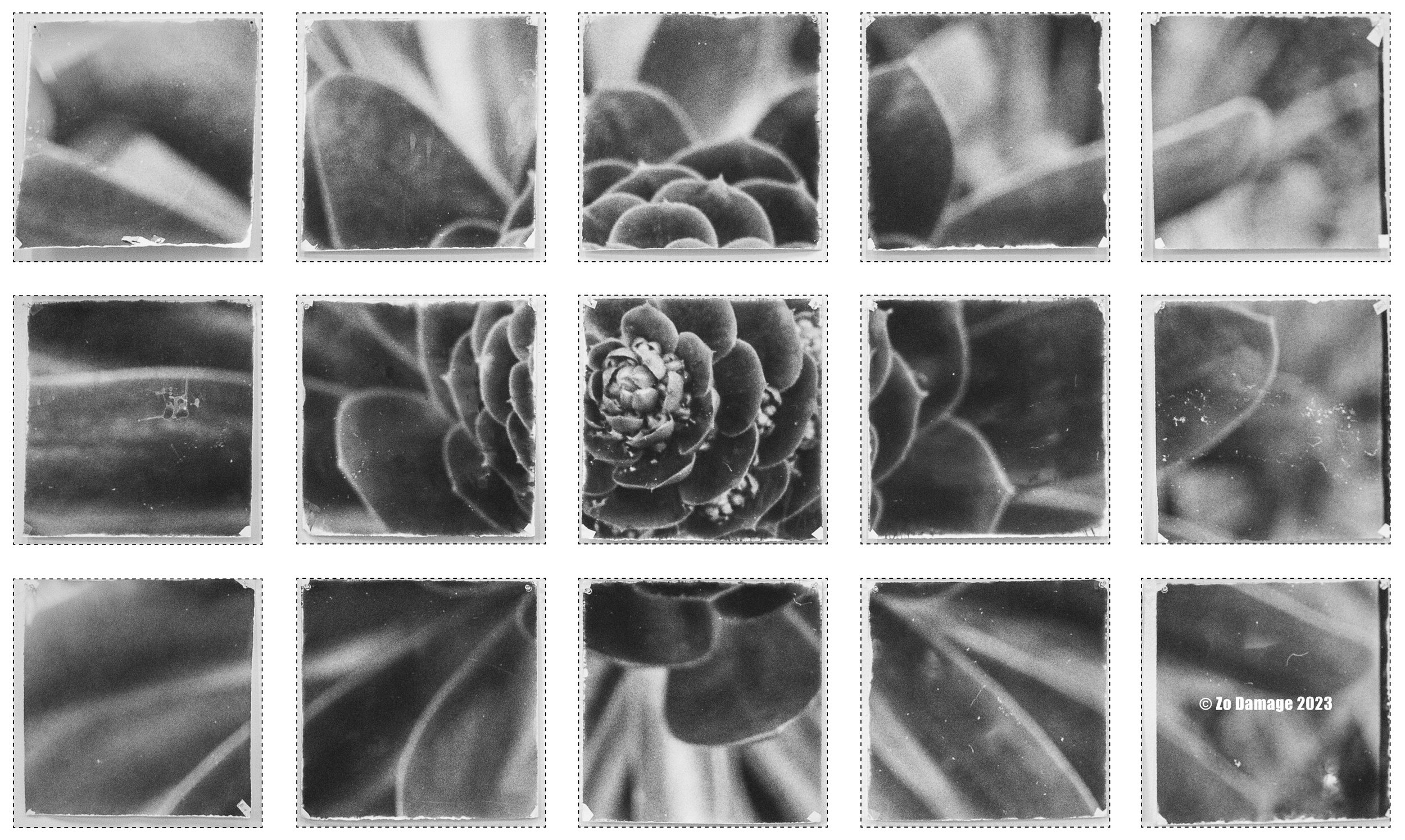
Informed Doug Starn and Mike Starn's artwork Attracted to Light 1 (2000-2003),[1] Respite is a multi-panel unique gelatin wall installation depicting a single exposure of a succulent across the expanse of a mosaic-type grid measuring 120 x 190cm comprising fifteen hand-torn tiles of gelatin silver paper arranged evenly and spaced slightly apart from the other – five across and three down – form a rectangle. Small nails and push pins secure the top left and right corners of each sheet to the wall, allowing them to curl and curve naturally at the bottom corners.
To make the work, I hand-tore the fifteen tiles from a 127cm x 30 metre roll of gelatin silver paper. The individual pieces were then arranged in a grid on the darkroom wall (Figure XX). A conventional film-based capture of a succulent was then exposed across the expanse of mosaic-like arrangement of the light-sensitive paper.
My lack of experience applying radical darkroom processes and working with large sheets of hand-torn paper presented several problems. For instance, I realised that my ad hoc home darkroom was too small to develop the prints. Recalling the radical darkroom practices of Sigmar Polke, I found a packet of craft sponges in the vanity cupboard and set up my enlarger table as a workbench. I then hand-brushed the individual sheets using craft sponges and kitchen cloths to develop the prints. The deckle-edge hand-torn paper, painterly gestures and my embracing of the dust and scratches in the negative further instilled a sense of humanity in the artwork (Figure XX).
The genesis of negative (Figure XX) – from being picked apart in the darkroom and reimagined in a grid – epitomises the Zen aesthetic principle of honouring the broken with beauty transformed. Each tile is an abstract image within the image that forms the greater whole as a reflection of myself. The in-between spaces of the mosaic-type installation suggest that "emptiness can … create something [and] give space to new thoughts, new creations" (Verhetsel et al. 2013, 31).
The titling of the work speaks to the sense of calm I experience when I am in the darkroom, a place where everyday stresses melt away, where I can lean into my hopes, fears and vulnerabilities to freely express myself.
The making of Respite marked a significant turning point in the development of my practice. Through accident, trial and error, I realised that deconstructing and reconstructing the material print broke through the boundaries of my work from having been confined within a two-dimensional plane.
This was achieved by experimenting with my methods of production through the materiality of the darkroom, which, without the use of digital processing, resulted in the creation of a hand-made work of art that comes closer to the visual aesthetics and scale I envisaged.
In contrast to my work in Studio 1, I was able to break down boundaries held within the two-dimensional plain to challenge notions of what defines the photographic image. I achieved my goal of creating hand-made works of art without the use of any digital processing. This in turn, marked the trajectory for my future work aims to "[demonstrate] the central role of the lived body in shaping experience" (Embree 1997, 104).
What is perfection?
I do not believe in perfection. To declare something is perfect is to imply there is no room for growth, change or deviation.
I also do not believe in imperfection. To claim something imperfect is to imply there is no room for growth, change or deviation. It may be that imperfection also suggests a level of wrongness, implying that something deemed as such is unworthy of whatever conventions perfection conforms to. It may be the implication that the word imperfection - in and of itself - conjures notions of abandonment and things that should be discarded or destroyed.
In terms of my creative practice, it is interesting to consider the negatives where dust and scratches are embraced. Introducing materiality into the work. Are they imperfections? No. I like to describe it as nuanced.
If there is no such thing as right, there is equally no such thing as wrong.
I wonder what Kant would say.
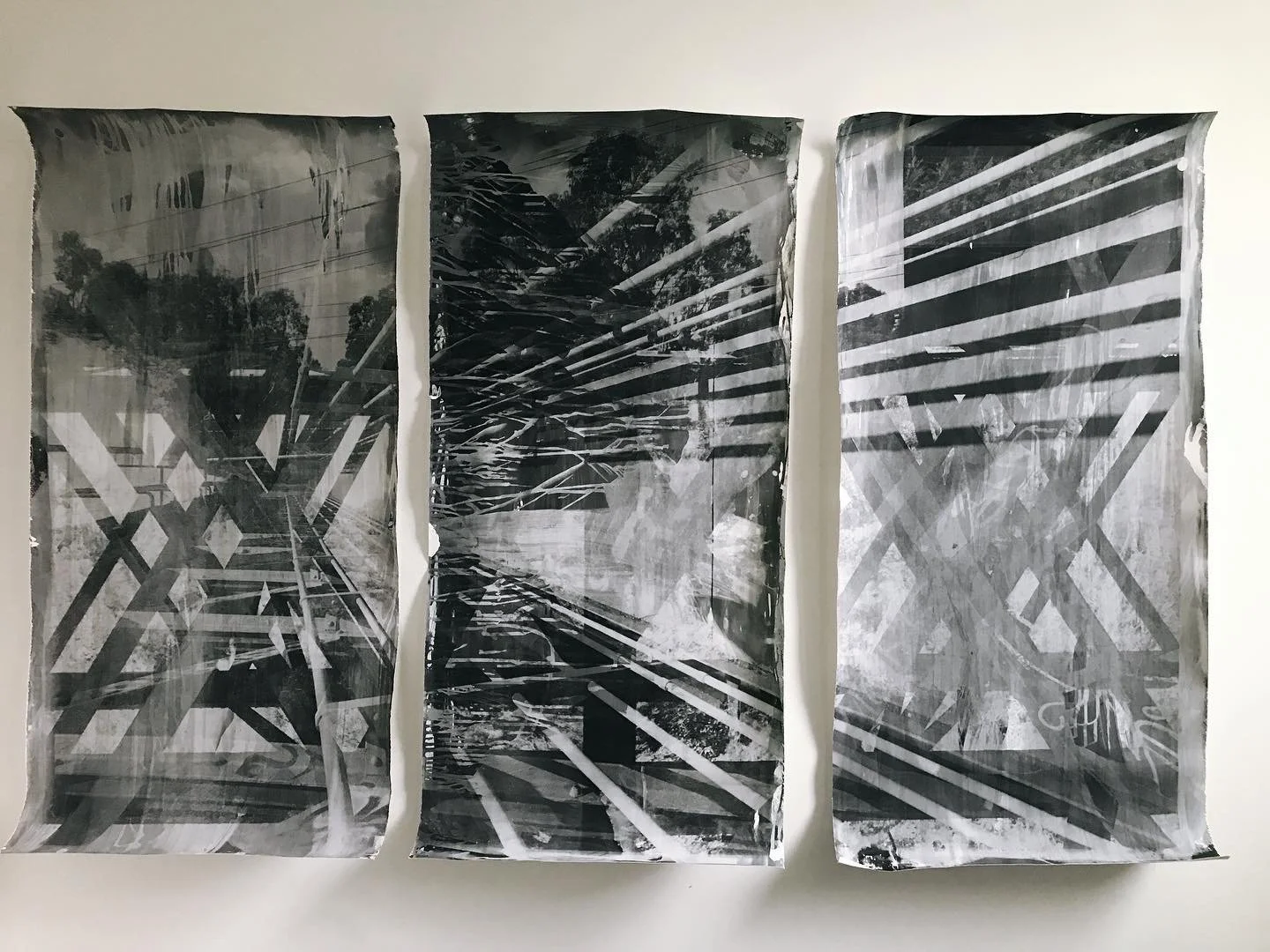
Courage (triptych), 2023, unique gelatin silver print
Truth
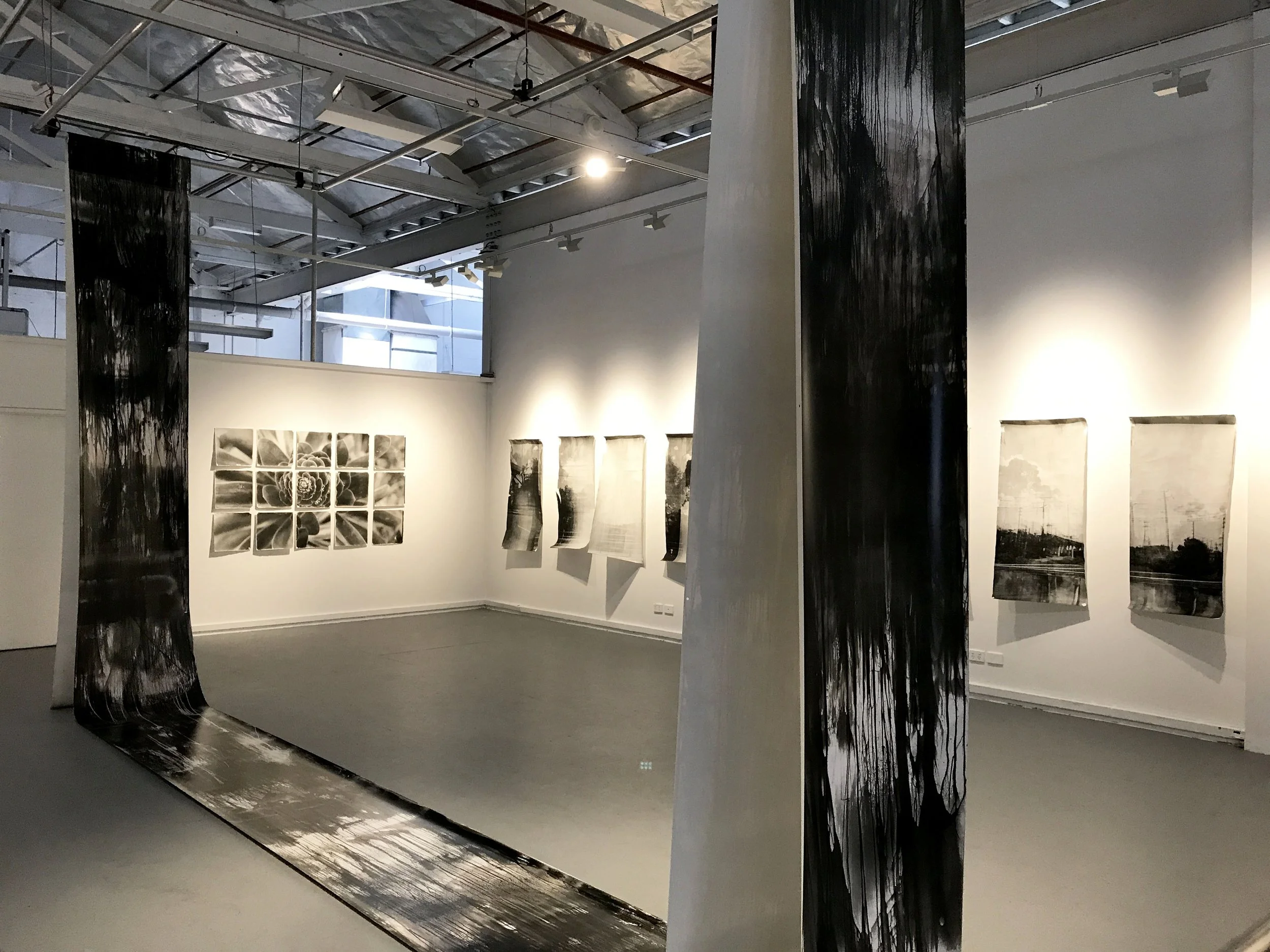
Figure 1. Truth, 2023, unique gelatin silver print on panchromatic paper, continuous roll/hand-brushed to develop, 70cm x 16M. Installation view, RMIT University, Melbourne, 2023
Truth is a new work created to include in my final folio presentation in place of Trust, which, at the time, was on display as a Bowness Prize finalist at the Museum of Australian Photography group exhibition 2023.
To make the work, I exposed a single negative in repeated intervals across a continuous roll of panchromatic paper black and white gelatin silver paper.[1] As the paper is sensitive to the full spectrum of visible light, the red safe light in the darkroom and the ambient light spilling onto the balcony during development obliterated the underlying image. Abstraction enters the work by applying the developing chemicals by hand, where I have permitted them to drip and run at will.
Truth challenges the illusion of representational truth in photography. What emerges from beneath the emulsion is not a conventional image, as the exposure would suggest, but rather the embodiment of my skewed vision of the world.
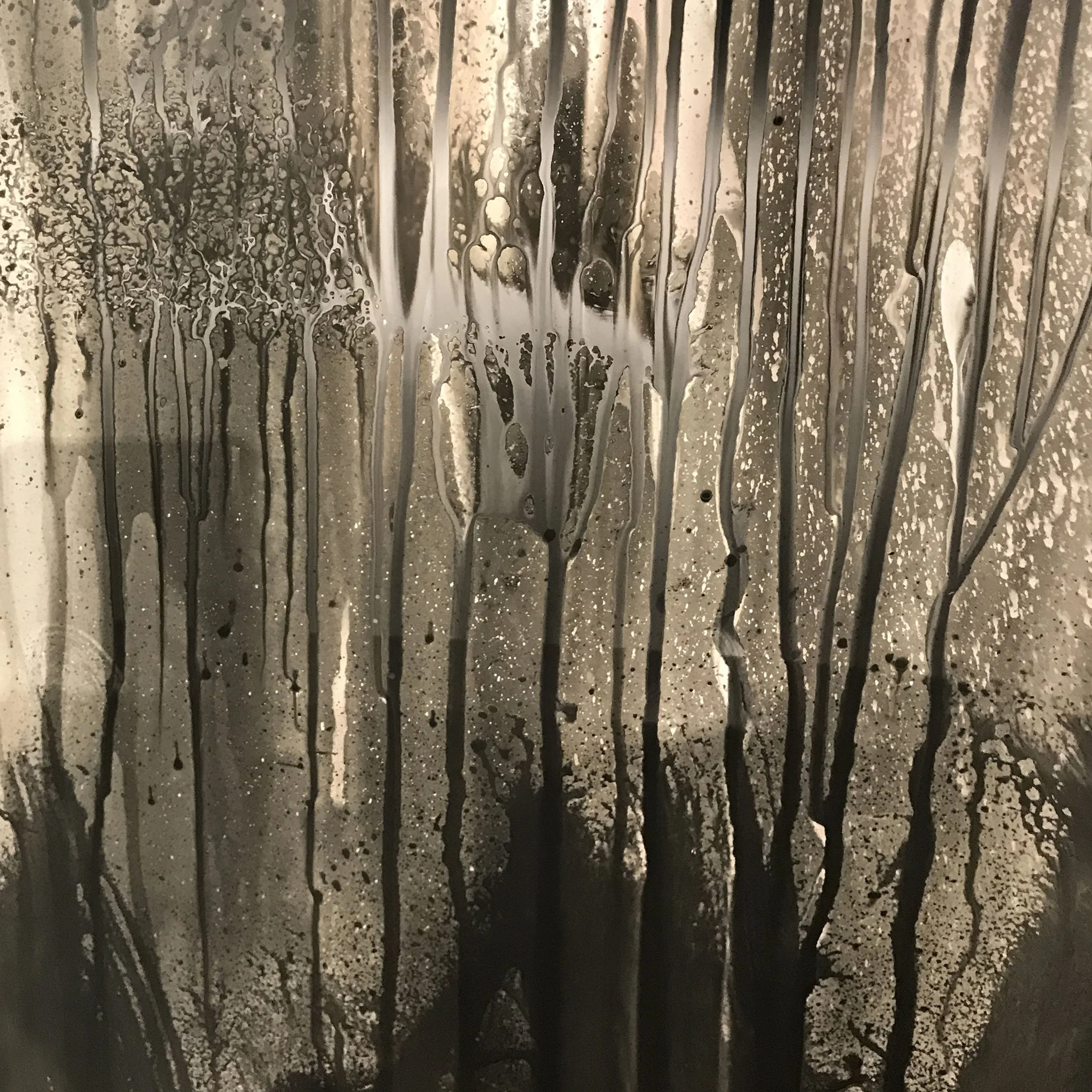
Figure 2. Truth (detail), 2023
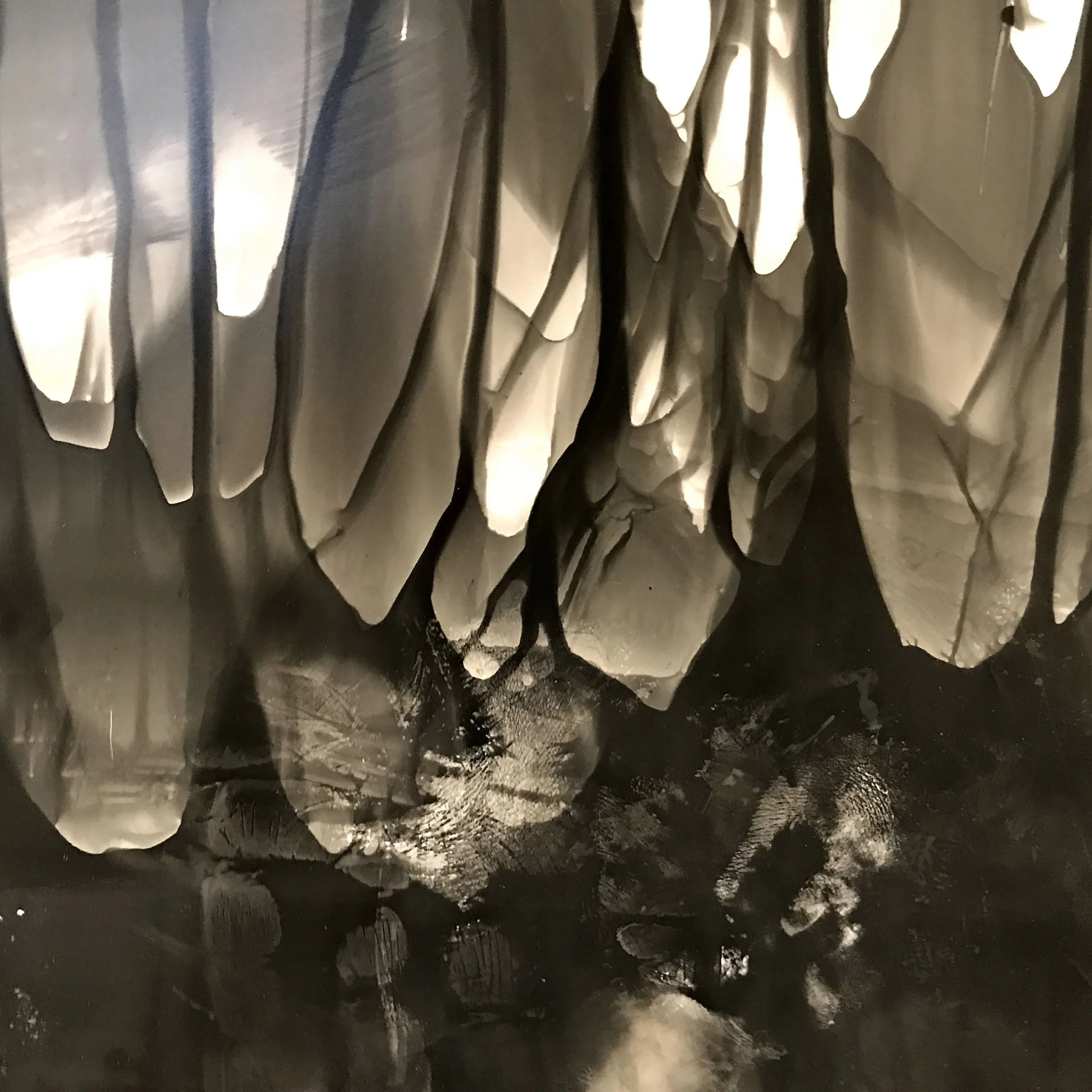
Figure 3. Truth (detail), 2023
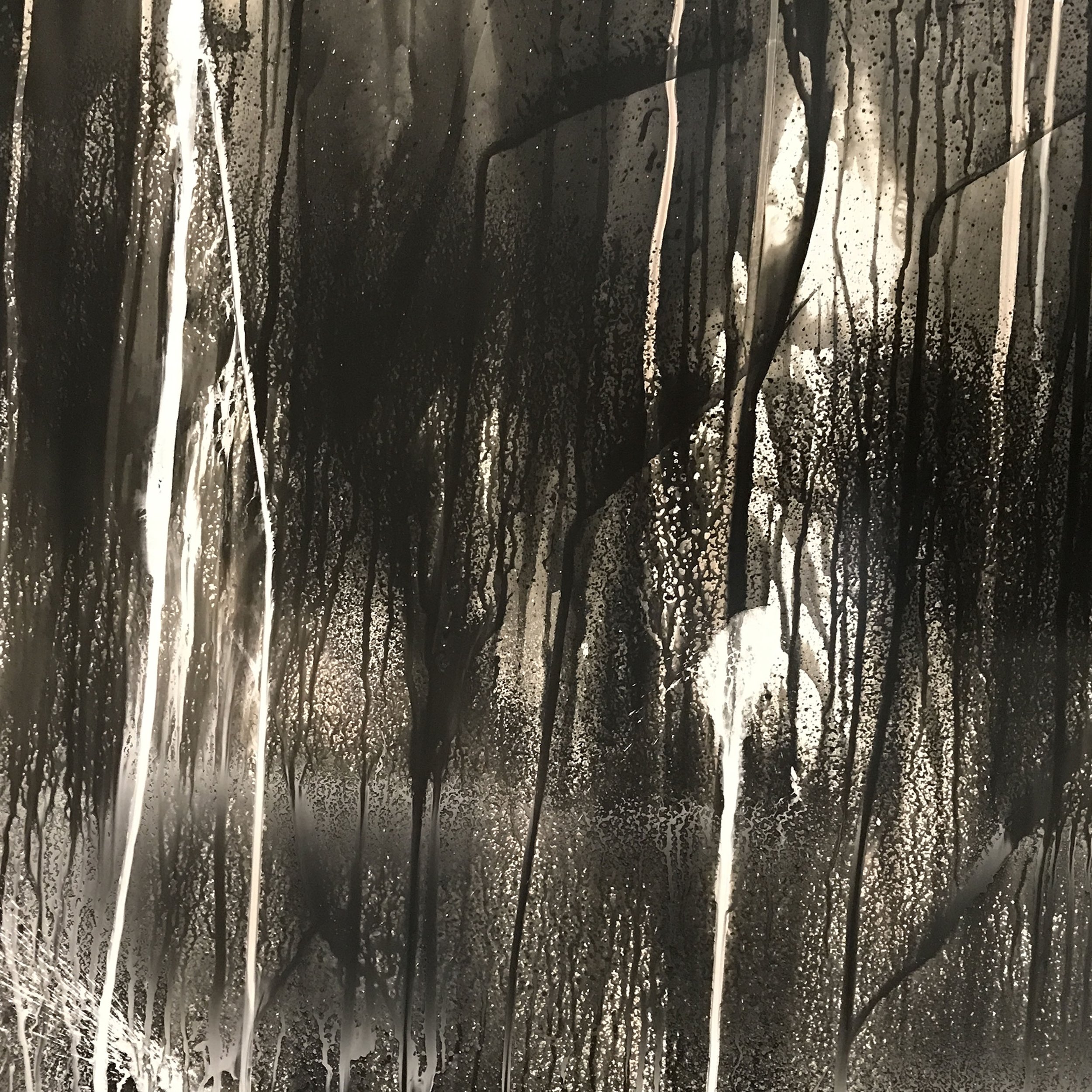
Figure 4. Truth (detail), 2023
Footnotes
Panchromatic paper is sensitive to the full spectrum of visible light – including darkroom safelights –and must be worked with in complete darkness.
Fogging and spray bottles
Developing Possibilities
To make "Possibilities", I exploited radical darkroom processes and the constraints of my home-based darkroom to evoke and – to some degree, isolate and control – specific abstractions into the work.
To illuminate, by embracing the ambient light leaking onto the balcony, I was able to exploit the occurrence of fogging.[1] This was achieved by applying chemical treatments with sponge brushes and spray bottles – in specific sections and with deliberate gestures – while the print continued to develop. In doing so, I was able to have control – albeit marginal – over the material agency of the brush strokes and indexical painterly gestures introduced into the artwork.
Figure 1. “Possibilities” (detail), 2023
Footnotes
[1] Ambient light during the development stages causes fogging. Like weather fogging, photographic fogging affects the entire surface of the light-sensitive substrate – film or paper – with an overall blanket of tone. The grey tone thus overtakes the whites – or light areas – in the resulting prints (Figure 1). The longer the exposure – as with other photographic exposure techniques – the darker the overall tone.
Possibilities 3
Zo Damage, 2023. "Possibilities", unique multi-panel print on gelatin silver paper, 127cm x 7M. Test installation view, Building 49, RMIT University Melbourne, 2023
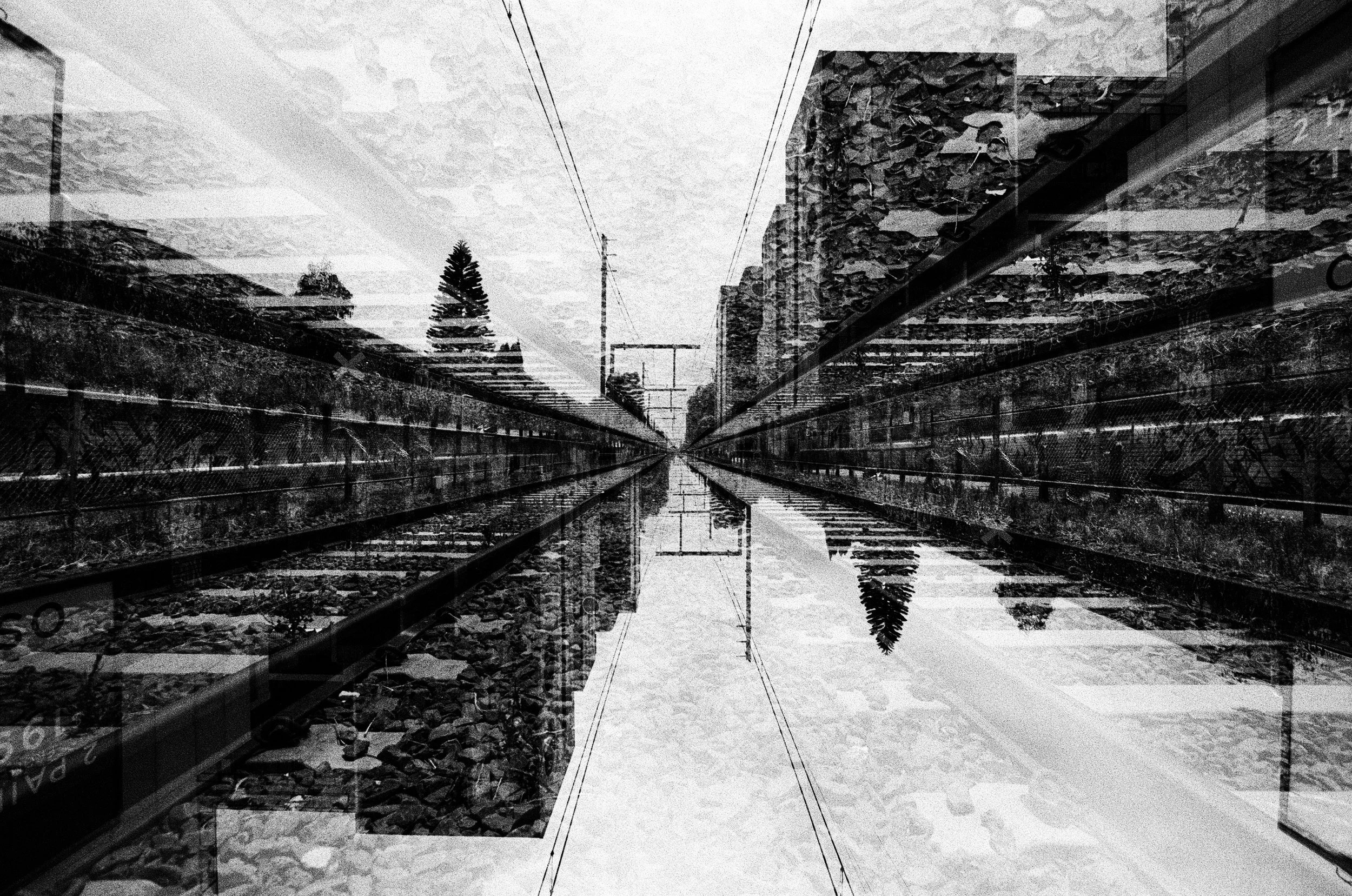
The artwork comprises an abstracted urban landscape captured using the in-camera multi-exposure technique to produce the interwoven and overlapping layers in the montage-like exposure. Spanning four 35mm frames, the negative was then exposed in sequence across eleven hand-torn panels of gelatin silver paper. Once exposed, each panel was individually developed by applying chemical treatments by hand (as opposed to chemical immersion) with foam brushes commonly used for painting and crafting
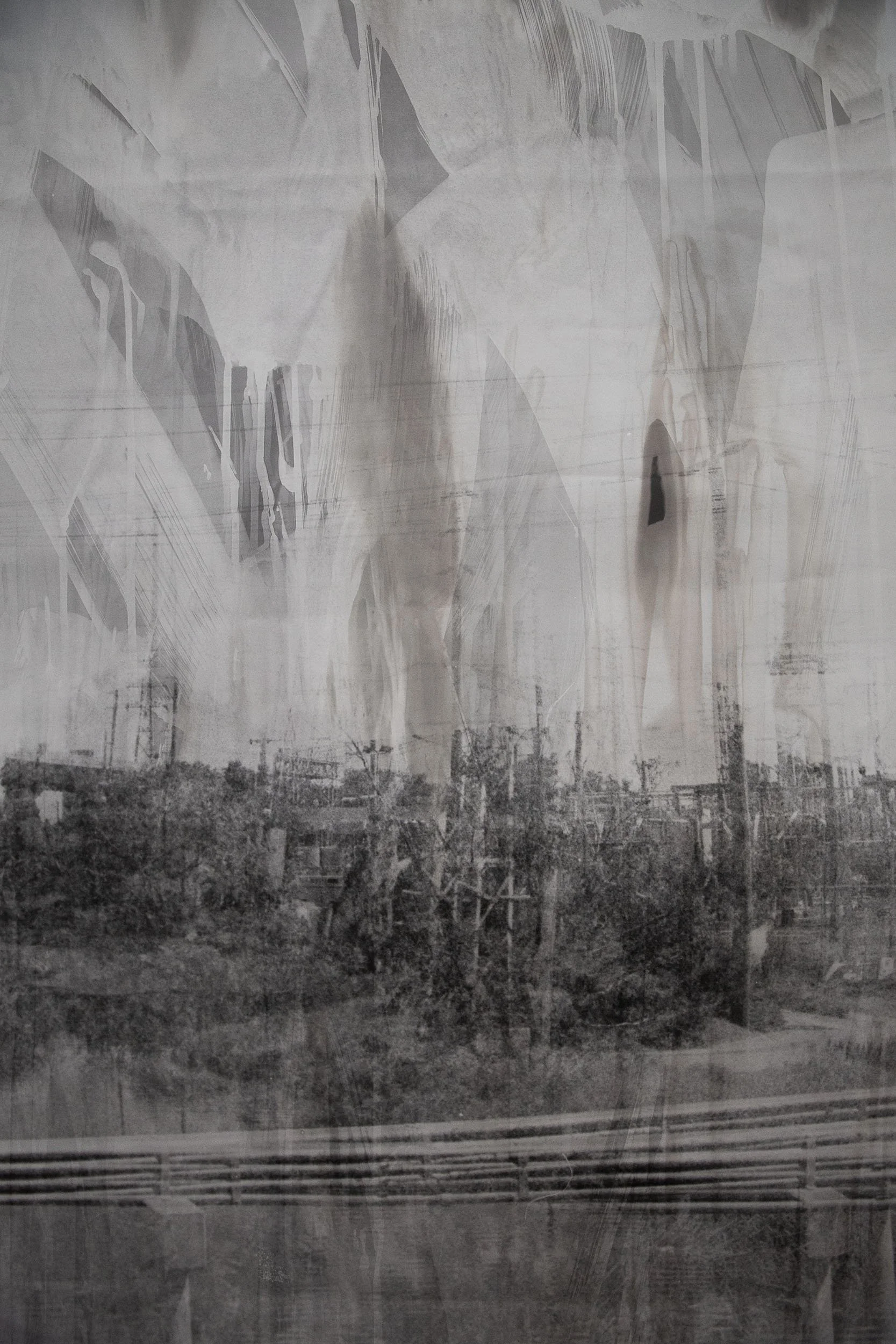
Figure 2. “Possibilities” (detail)
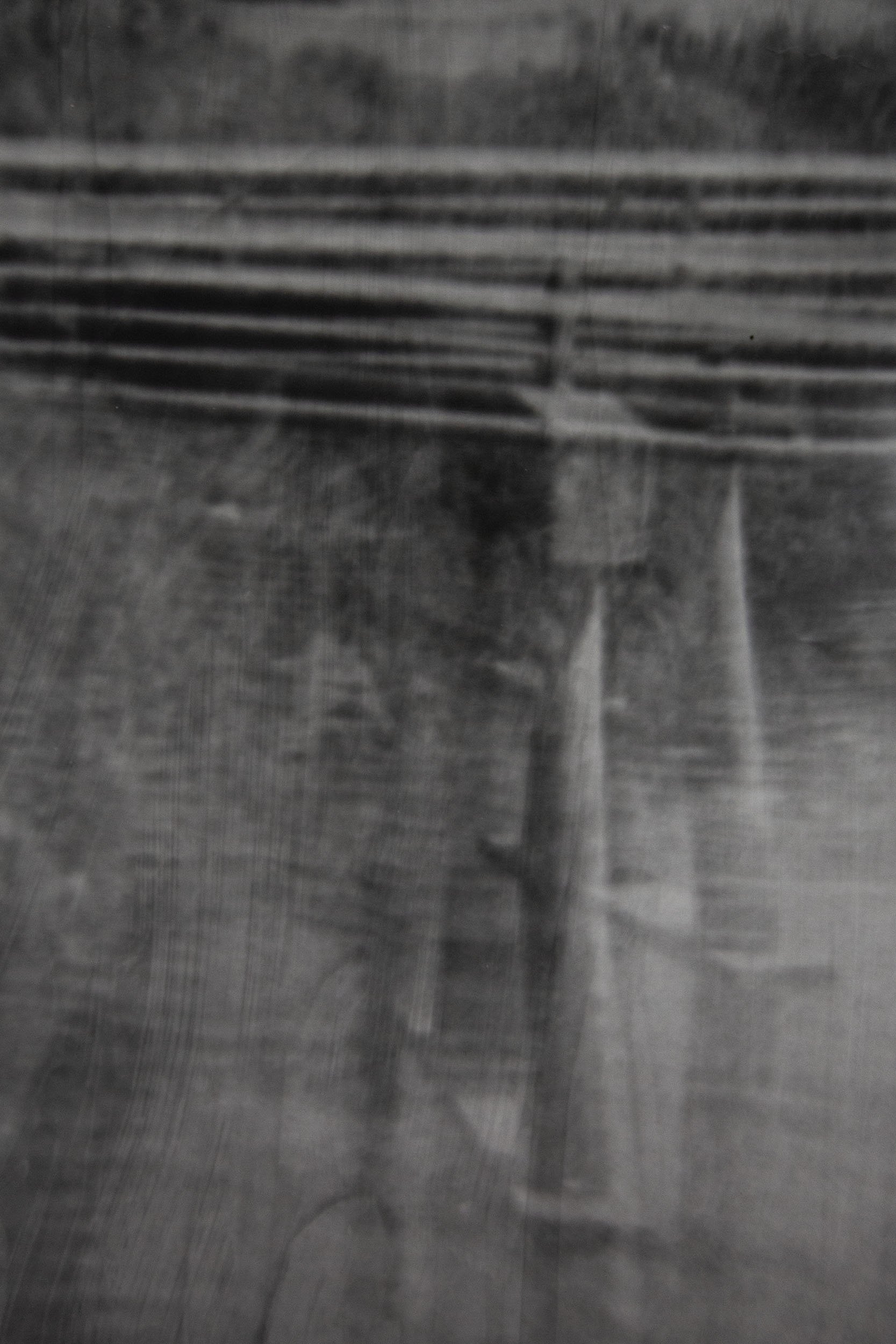
Figure 3. “Possibilities” (detail)
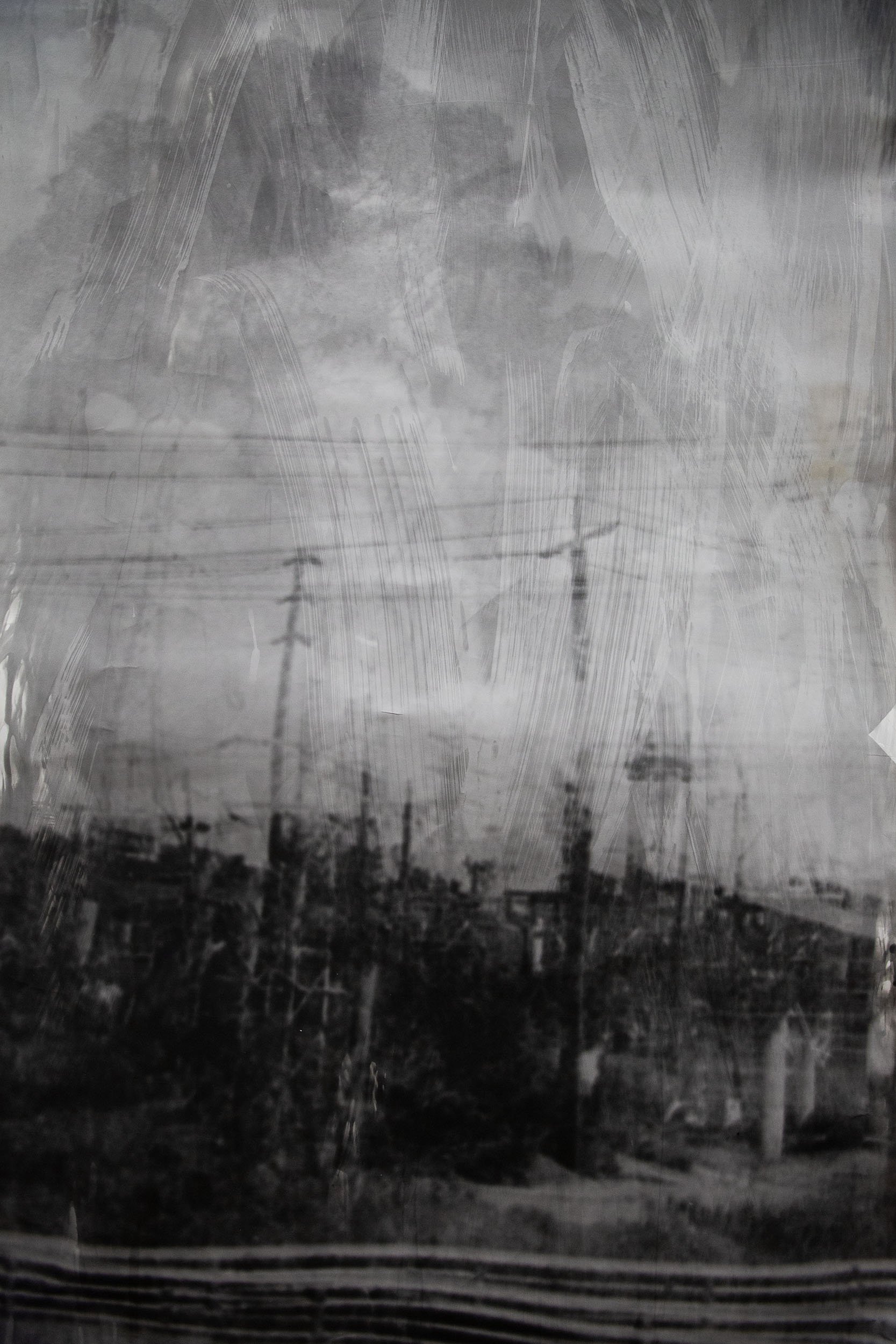
Figure 4. “Possibilities” (detail)
Figure 5. “Possibilities” installation view
Figure 6. “Possibilities” installation view
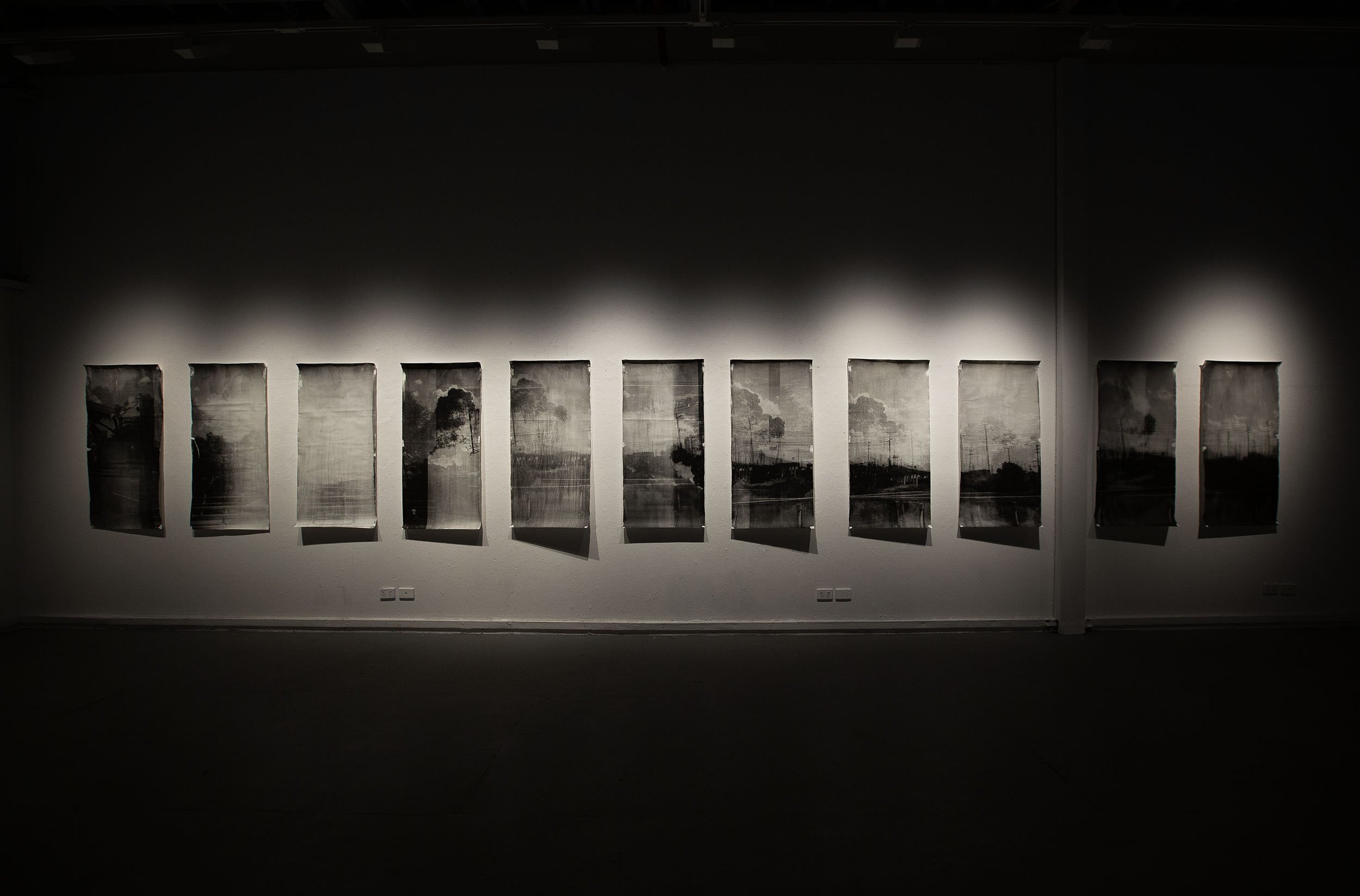
Figure 7. “Possibilities” installation view
Installing work for folio presentation
Trust
Installed as waves along cieling on trapeeze-like rods, dropping to the floor. I’m still unsure of the floor arrangement. This one is easy. Magnets with hooks on steel rafters will be the most efficient way to attach clear cables that thread through the hollow aluminum tubes of the trapeeze. Etc.


Respite
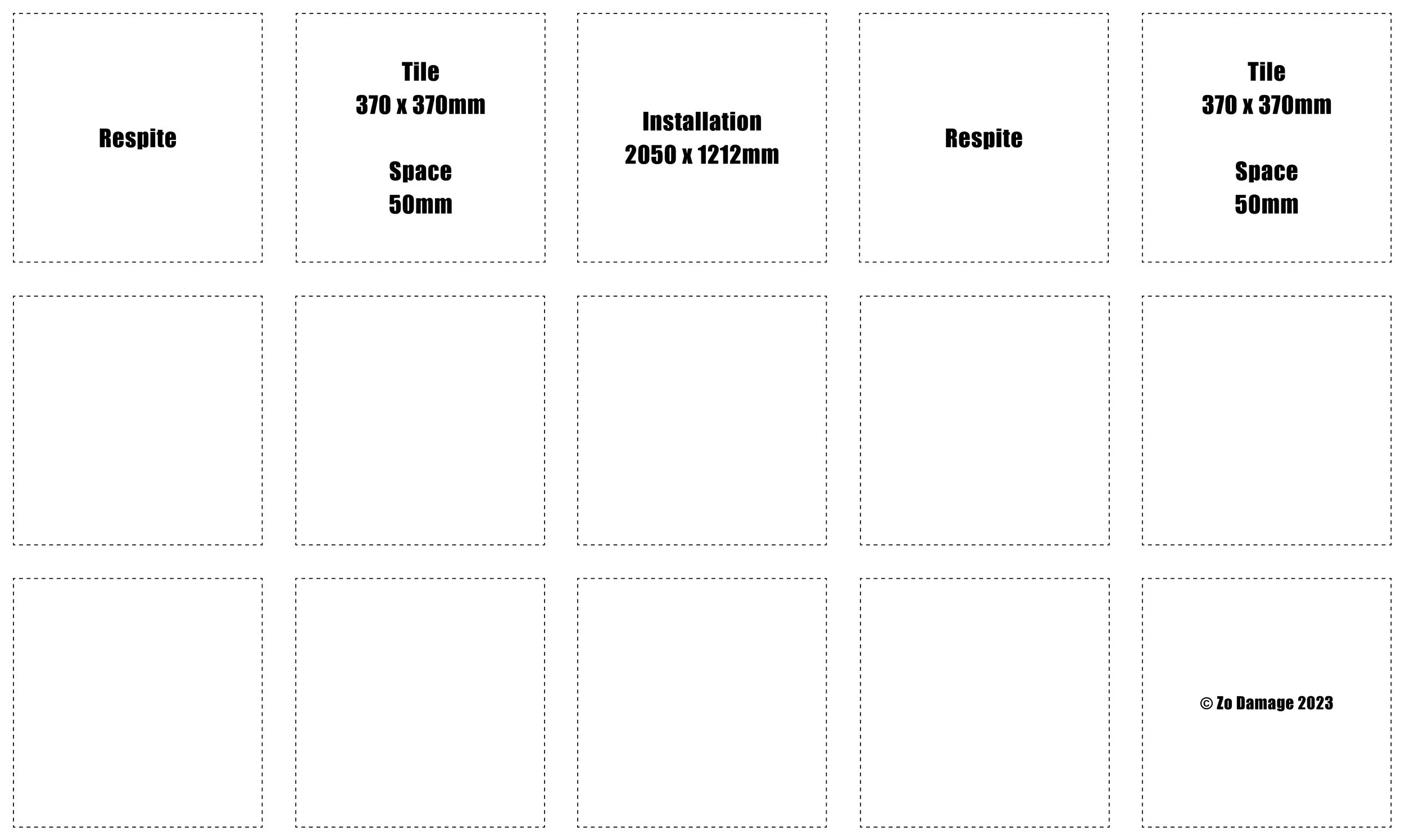
To streamline the installation of Respite, I am considering printing out a plain paper map or grid of the artwork arrangement, taping it to the wall as a guide, positioning the tiles with nails over the top of the grid, and then tearing the grid out from behind the installed works.
Time
Base grid: 10 min
Artwork installation: 10 min
Total: 20 min
Flow
The Flow installation needs to float off the wall between five and 10 millimetres with no nails.
Wall: Drill 11 pairs of 30x30mm plates, in a row along the wall.
Artwork: Tape a strong magnet on back top left and right corners of each sheet, inset approximately 30mm from the paper’s edge.
Installation: Use magnets to stick to steel plates.
This system is beneficial for several reasons. First, I can tape the magnets on the back of the artwork in my studio. The magnet system will make the installation very fast, particularly if I can drill them in the day before.
This plan is reliant on being able to install the fittings the day before and leave them up until there is a significant break in student folio presentations.
Time
Preparing artwork: 60 min
Installing fittings: 60 min
Installing artwork: 10 min
Bump out: 15-20 min (magnets need to be removed before packing to prevent damage to artwork)
Possibilities 2
Below is an installation view of the first iteration of my Master of Fine Art (MFA) capstone project, “Possibilities”, as presented for my final group tutorial. The feedback I received from the MFA cohort concentrated on the photographic. opposed to the materiality of the artwork, such as:
indexical painterly gestures built up on the substrate surface as evidence of my labour time and embodiment of my intent and authorship in and as the artwork,
scaring and ripping in the hand-torn paper panels,
the subtle movement of each panel in response to the surrounding environment of the presentation space,
the naturally occurring curls of the draping sections, and
the harsh shadows cast by the gallery lighting between the artwork and the installation's adjacent wall space.
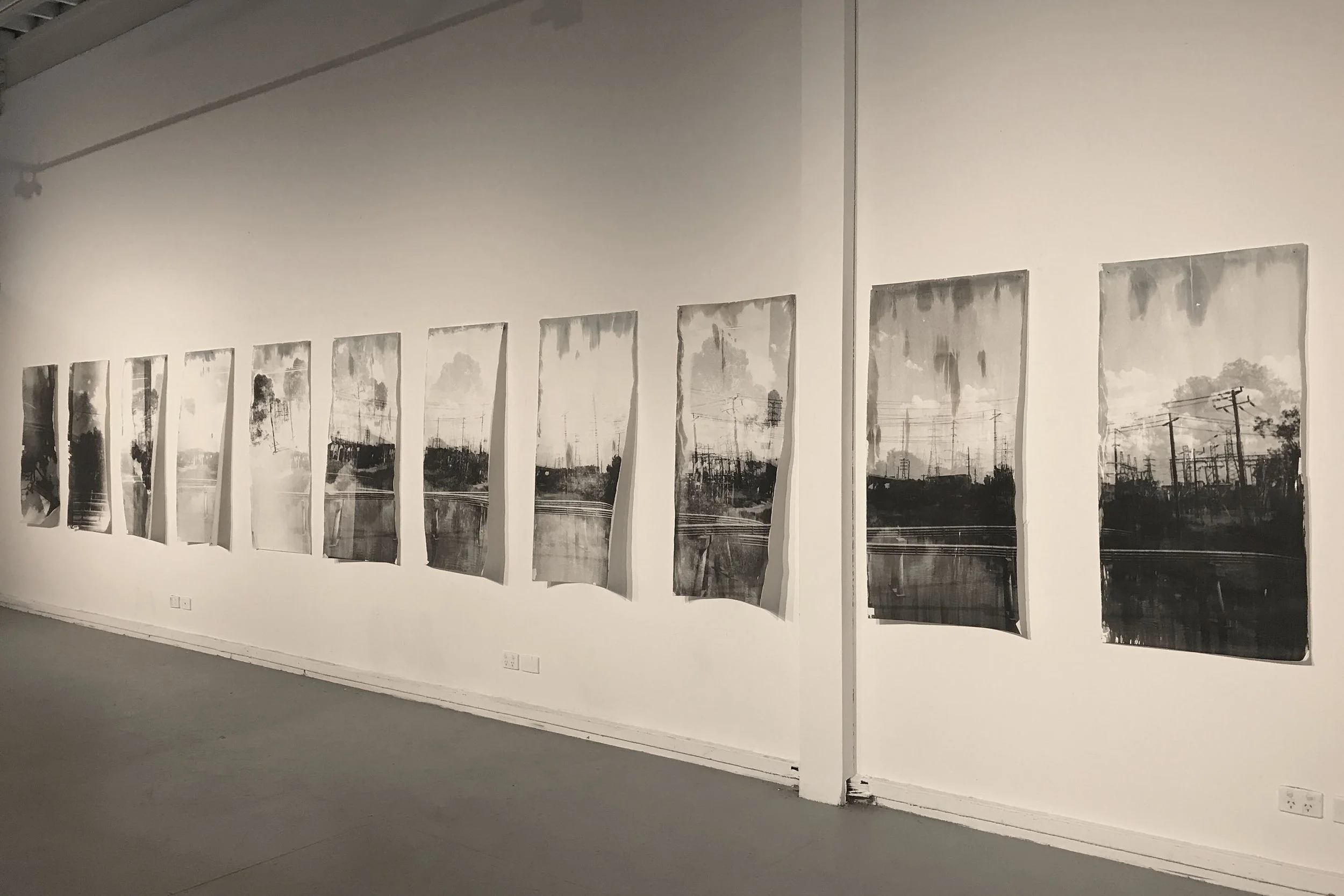
Zo Damage 2023, FLOW (AP), unique artist proof comprising an abstracted urban landscape exposed over eleven 60x127cm panels of hand-cut gelatin silver paper and measuring approximately seven meters installed. Test installation view, 2023
Birth of "Trust"
Following my initial experiments with installation and scale, Trust is a unique print created by exposing several 35mm negatives onto a single roll of 1100mm x 15-meter gelatin silver paper. The narrow width of the artwork is attached to a single horizontal bar suspended from the ceiling by two fine cords at opposing ends. The work drops approximately three meters vertically to the floor to traverse in soft undulating waves flowing gently across the length of the installation space.
The process, from exposing the negatives to developing the print, took approximately 5–6 hours. The titling of work denotes the willingness to let go and trust in the photographic process. The title further reflects my presence and intent echoed in the selection of subject matter and viewpoints and process manifest as the artwork to produce a hauntingly evocative creative artifact that emanates Zen aesthetic values associated with impermanence, transience and beauty in the inferred passage of time.
Abstraction enters the work through the darkroom, whereby traditional 35mm film captures are juxtaposed by overlapping end sections of each negative during exposure and hand brushing a single sheet of gelatin silver paper to develop (as opposed to chemical immersion). Further, omitting steps in the darkroom process coerces latent colour from the prints inherent in the black and white materials. This is in the context of creating works of art – grounded in process-based modes of the medium – that embrace novelty and innovation to generate photographic outcomes that promote and reflect “an introspective investigation of my life, surroundings”, and sense of humanity (Damage 2022a, 11). The process, from preparation to exposing the negatives and developing and drying the print, took approximately 24 hours.
As with Respite, Trust exemplifies the synergies between experimental analogue photography and the philosophical tenets of wabi sabi and kintsugi that contest conventional notions of beauty, valuing unwanted variation, such as breakage and wear marks. This relates to leaning into the chaos and mess of my mental health through experimental modes of the medium – particularly in the darkroom – where I can harness the phenomenological interplays between myself and my materials and processes to cultivate random innovative interactions to produce novel outcomes in my work.
Moreover, black and white photography is foundational to my practice. The monochromatic spatial relationships of the medium – texture, tone and form – take precedence in the absence of colour and can be exploited as forms of visual abstraction. As such, the “reductive simplicity” of the medium produces hauntingly evocative images that emanate Zen aesthetic values associated with impermanence, transience, ethereality and beauty in the inferred passage of time (Tobing 2013).
The titling of work denotes the willingness to let go and trust in the photographic process to reflect the presence and intent echoed not only in the selection of subject matter and viewpoints but also in the phenomenological interplays that unfold in real time, akin to the physical and psychological responses lived experience can induce (Berger 1972, 10).
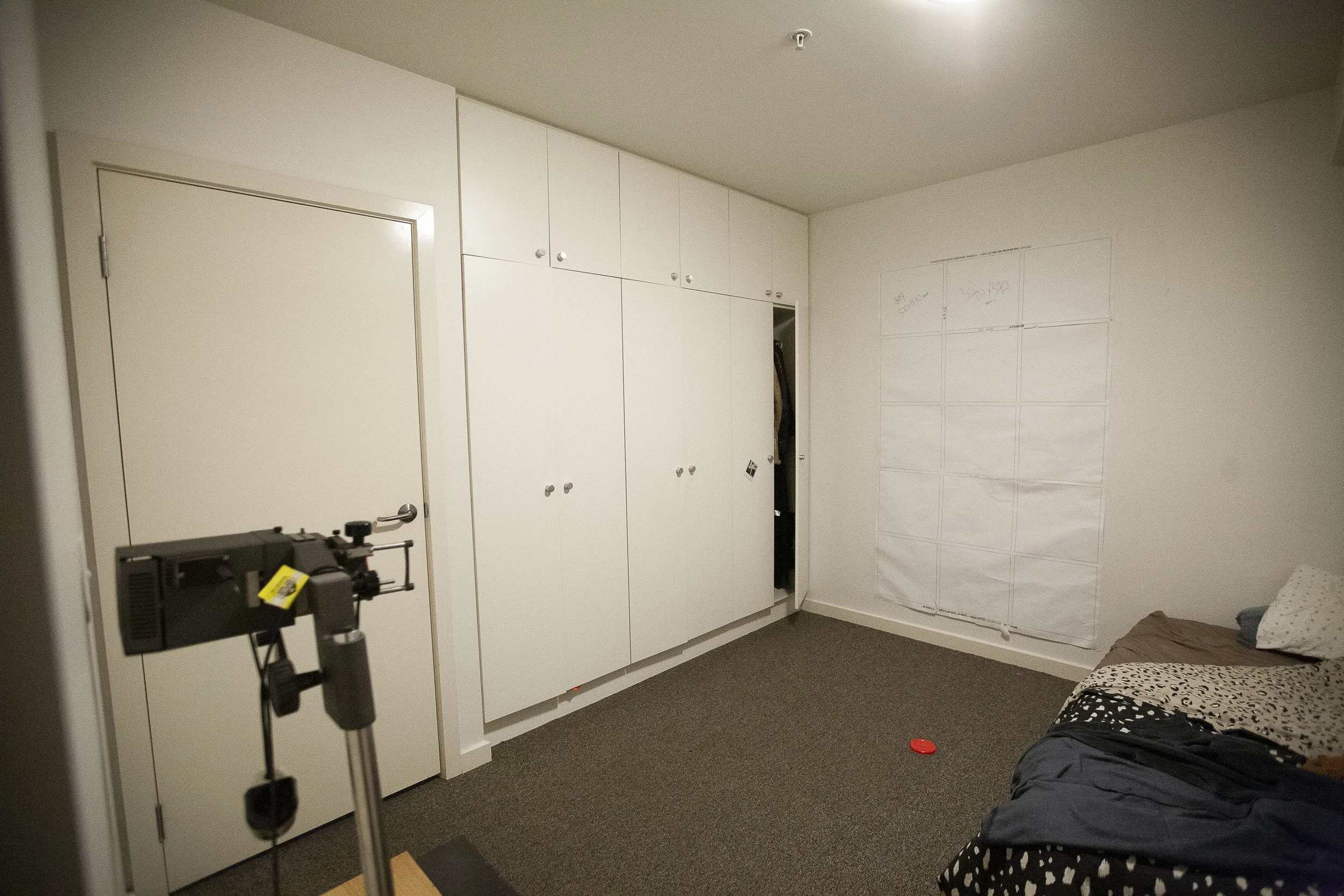
Figure 1. Bedroom darkroom and navigating space. Due to the size of the gelatin silver paper roll I had to find alternative spaces to work in. As such I set up my bedroom as the dry space to expose the negatives, 2022
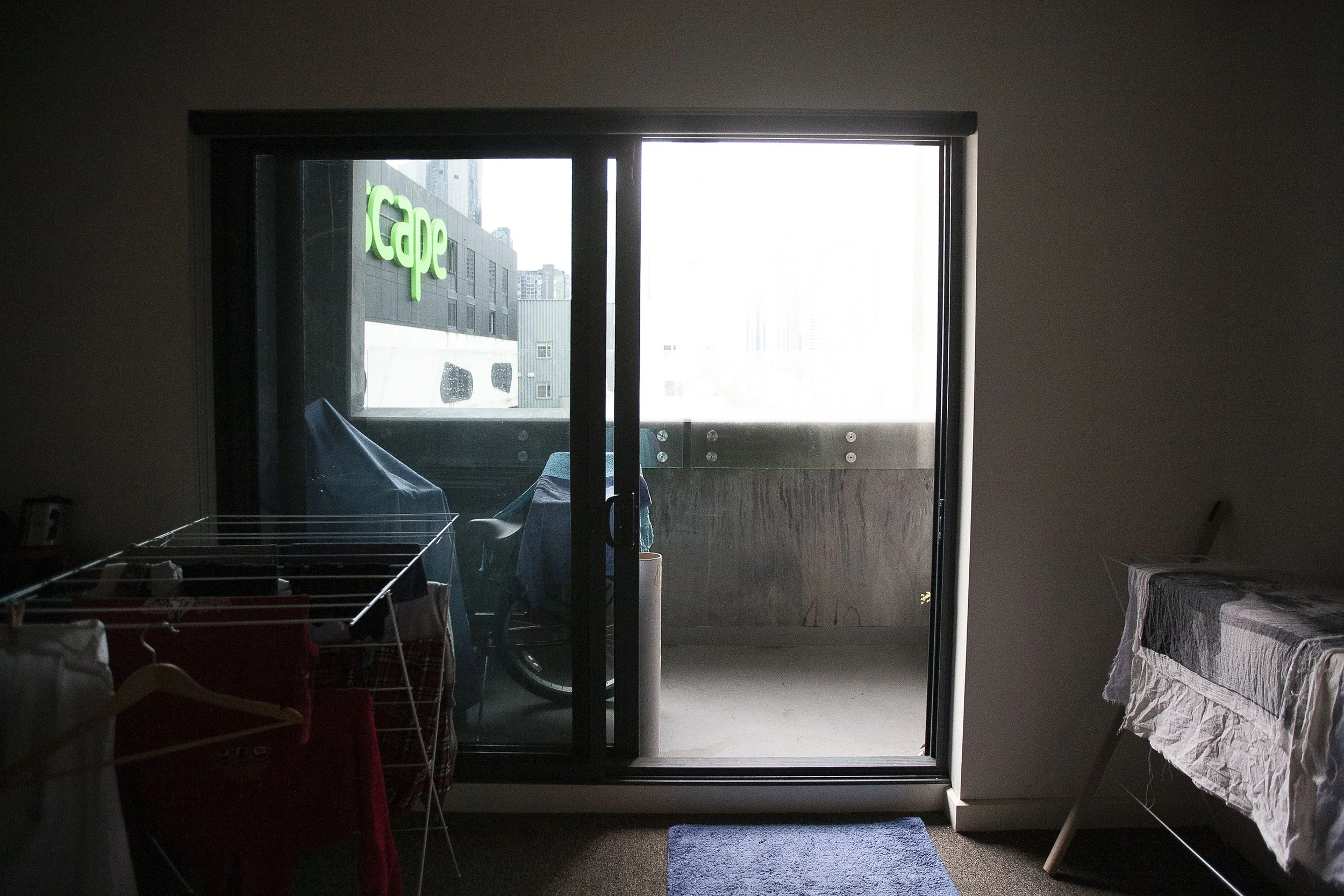
Figure 4. Chosen for its sealed concrete surface and runoff, the balcony of my flat was converted into a wet chemical treatment area for the project.
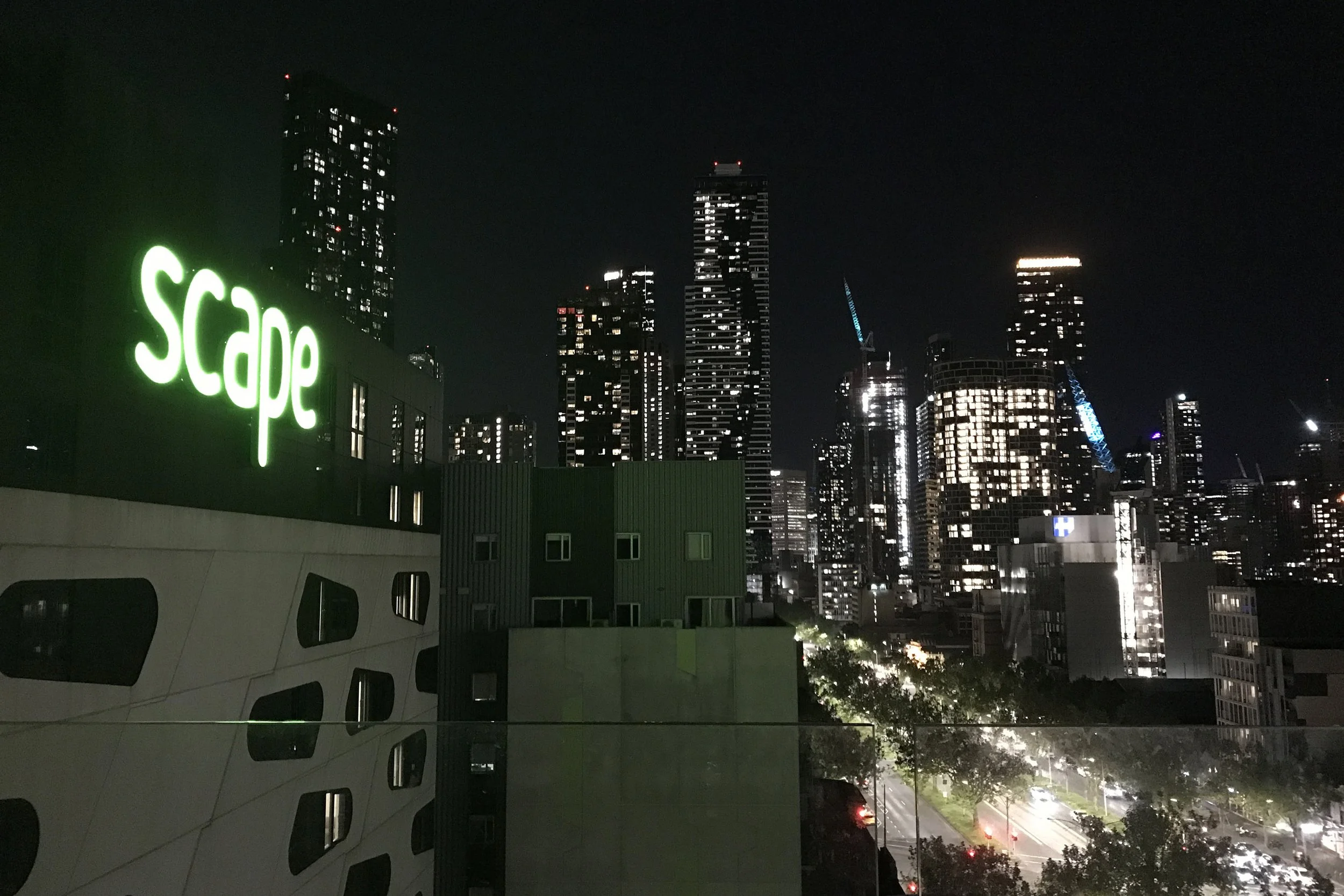
Figure 5. Adjacent building neon automatically turns off at 11pm every night, 2022
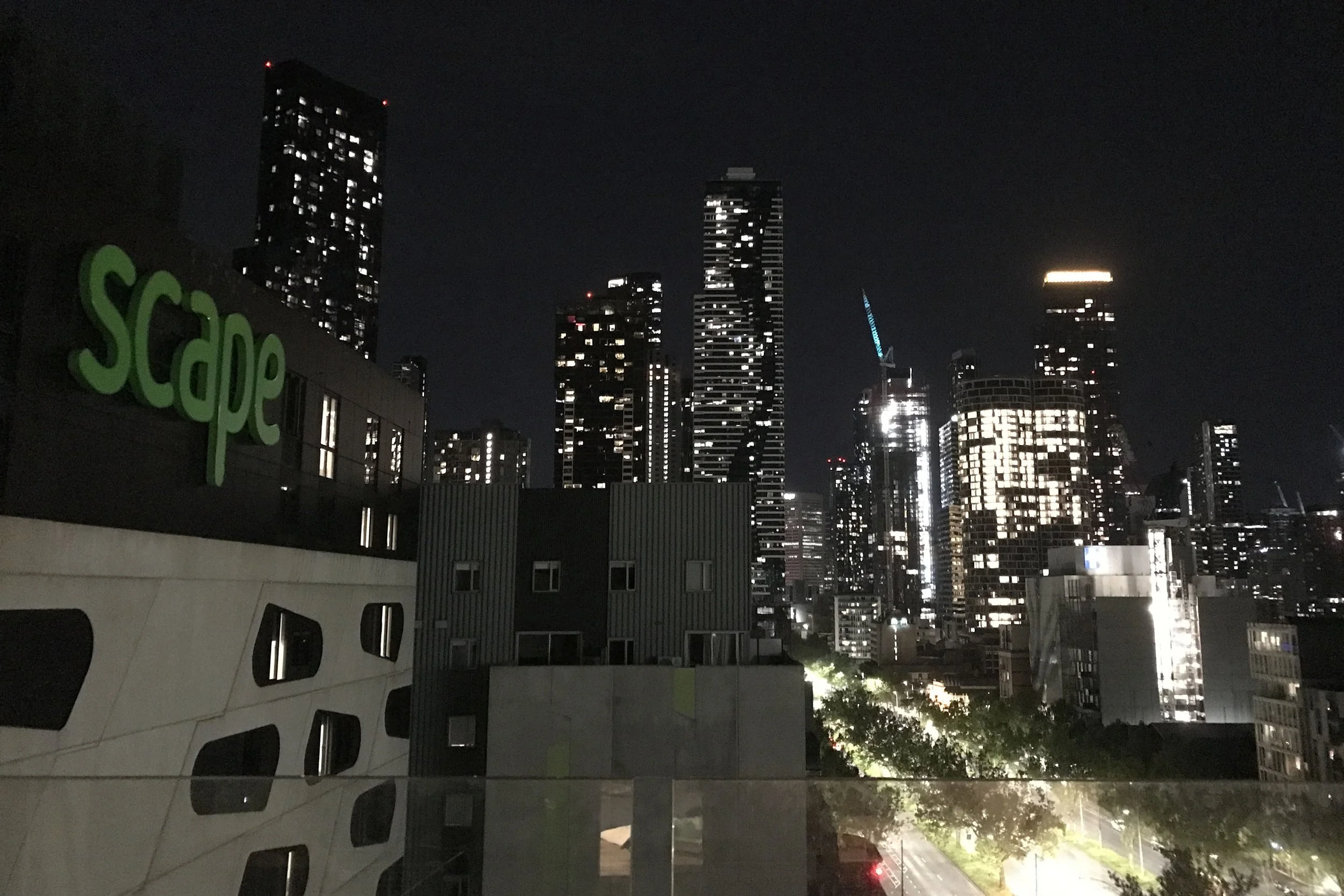
Figure 6. Once the neon is off, the ambient light spilling onto the balcony is insignificant
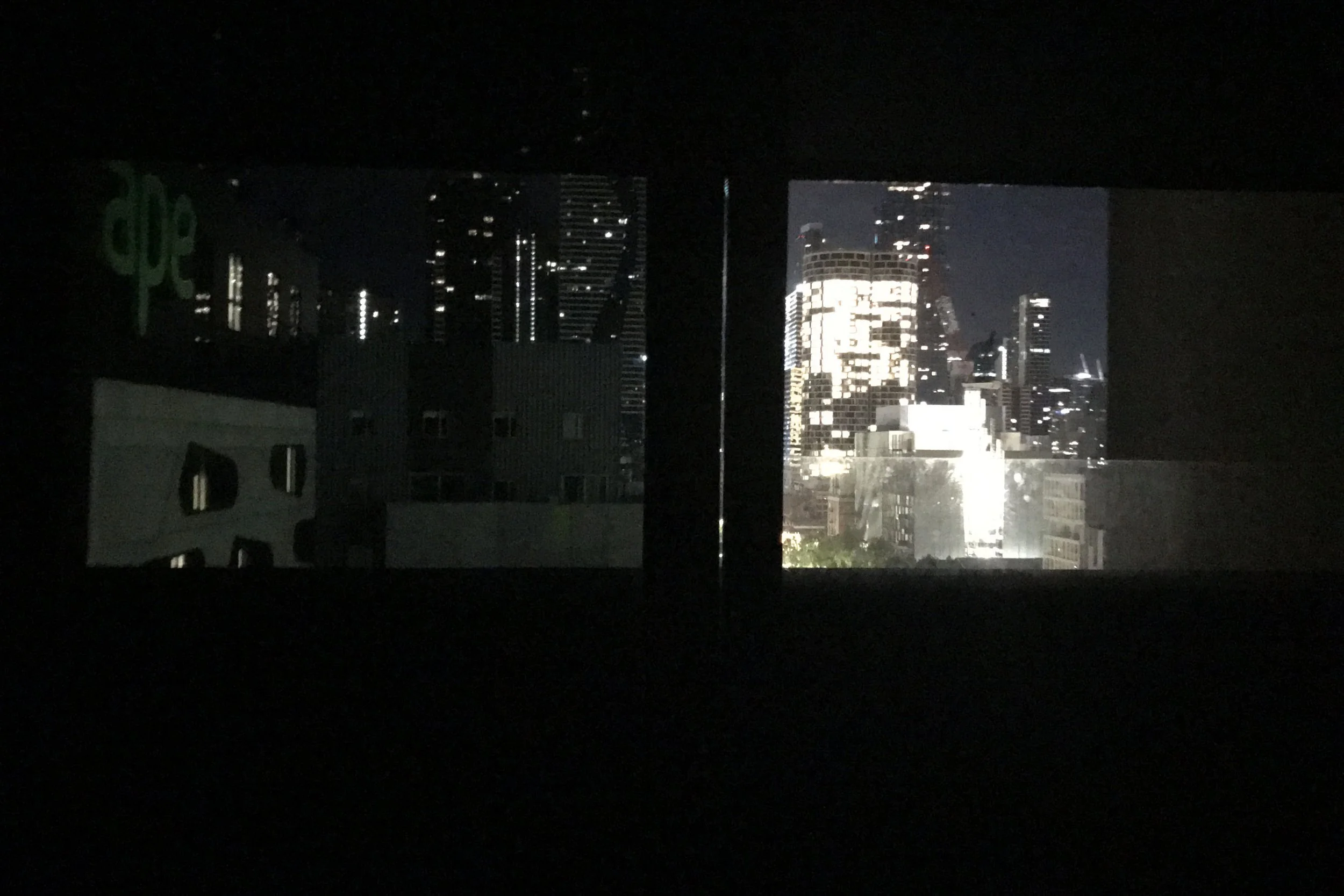
Figure 7. Looking onto the balcony from inside the darkened flat
Figure 2. It took months to troubleshoot ways to hold and stabilise the paper during the developing process. Once satisfied, I worked with RMIT studio tech Ceri Hann, who made the final prototypes.
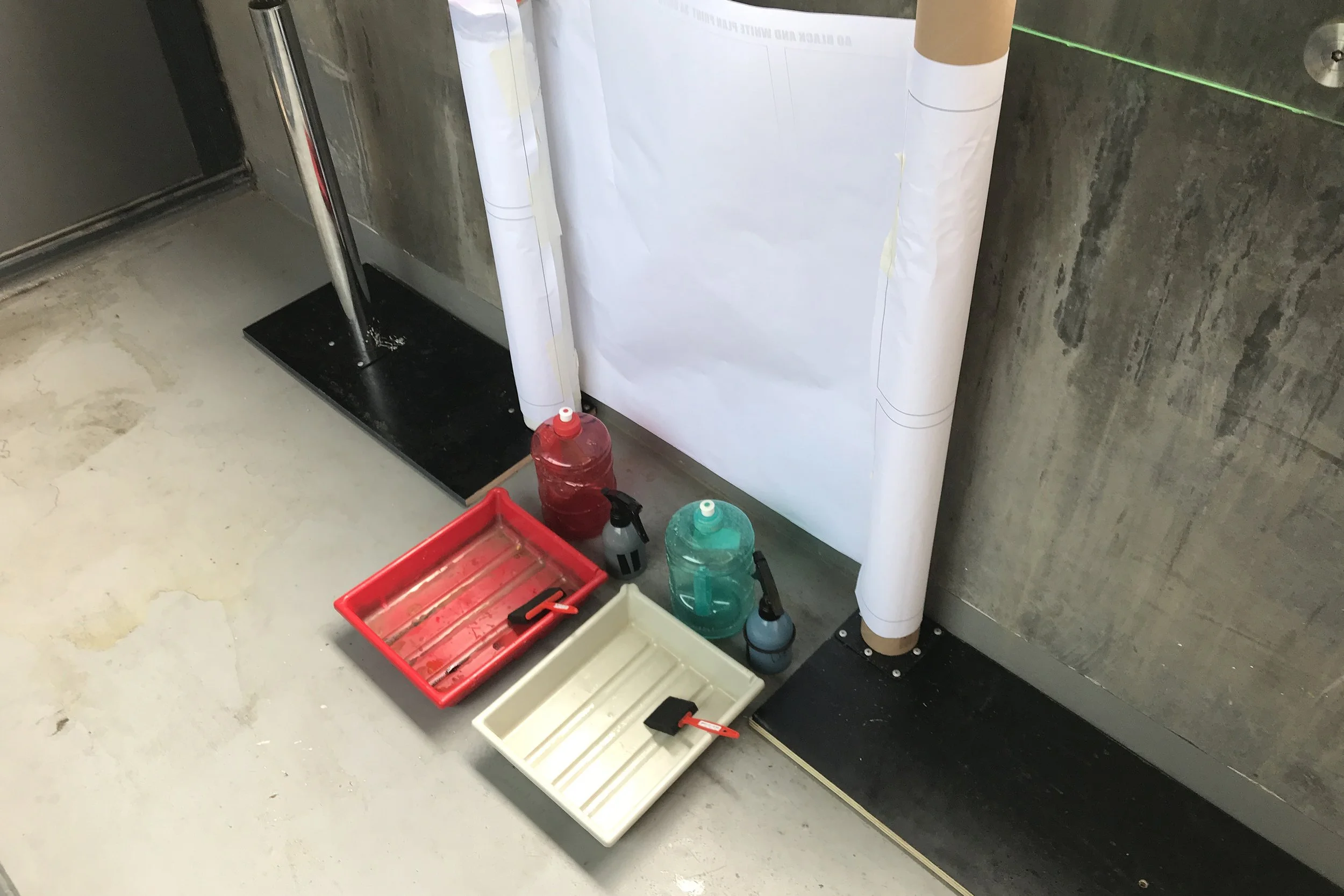
Figure 3. I set up two trays – one for the developer and another for fixer and (omitting stop bath process). The paper roll was loaded vertically on one side, turning it through to the other as the it was processed, 2022
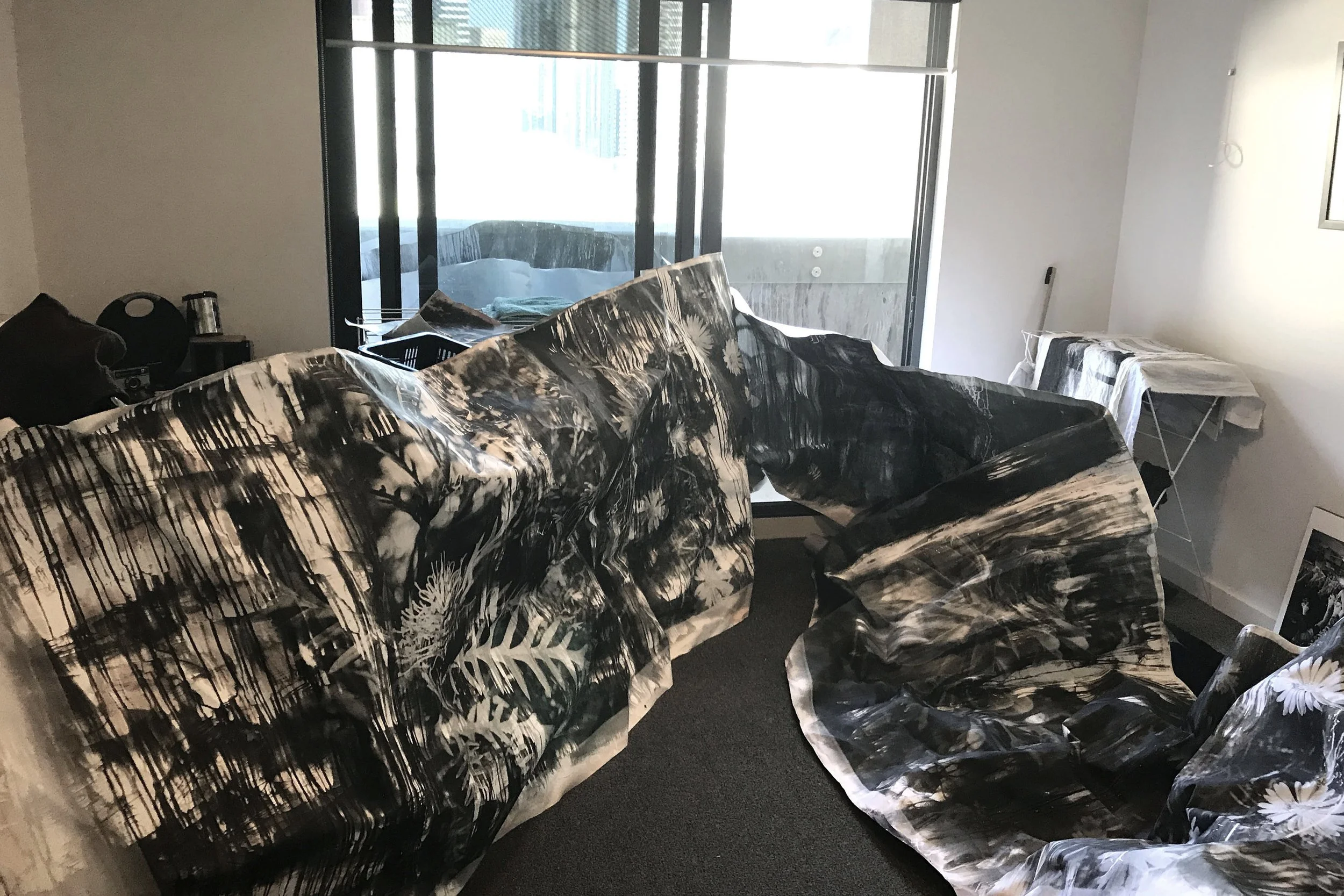
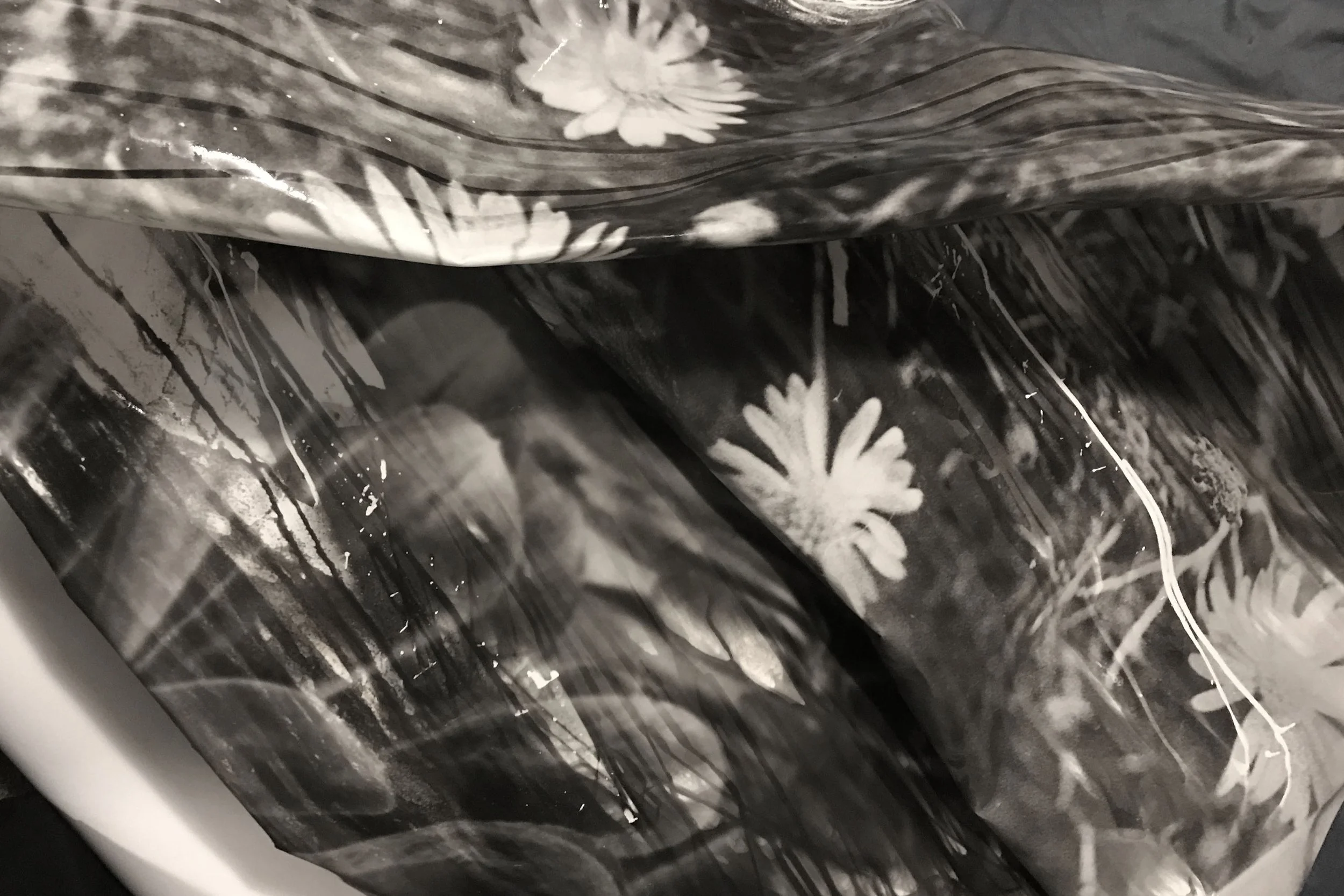
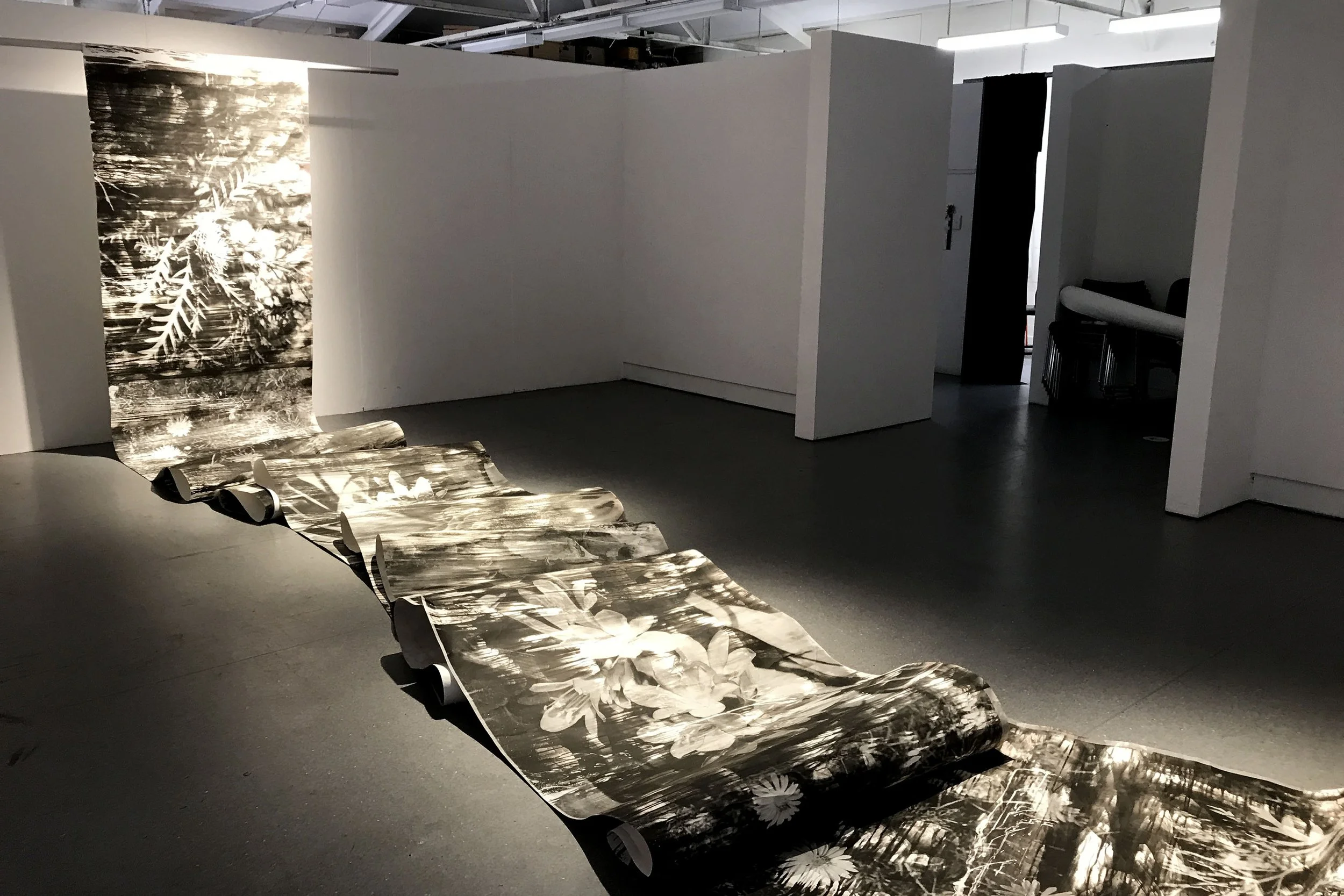
Phenomenological interventions
CONDUITS
The internal chaos of my mental health is a focused stream of consciousness that translates to order in the rhythmic landscape of my analogue photographic process.
I have realised that my practice is a collaboration between myself and my processes. The relationship is reciprocal and dependent on working with and challenging our respective material, technical and environmental constraints, made manifest as the creative artifact. To illuminate, permitting the paper to naturally curl and coerce latent colour from the monochromatic structures of materials through experimental darkroom processes. In addition, I cultivate novel gestalts in the prints through hand-brushing of chemical treatments (as opposed to chemical immersion) [ADD FOOTNOTE ABOUT PAPER BEHAVIOUR]. [Add something about the constraints of working in a non-commercial darkroom and how that shapes the phenomenology of my processes, influences the materials and technical equipment I use and impacts the creative outcomes].
Not quite.
I challenge the material, technical and environmental constraints of the medium. The medium challenges my physical, psychological and creative process.
I am also restructuring my community of practice to include alchemical photographic artists like myself, whose practice is located in the ecology of physical intervention made manifest as the artwork.
We both exist within the limits of our own existence.
Notes
Physical intervention: Phenomenological materiality of painting and sculpture.
Phenomenology of doing: A collaborative relationship between myself and my process
Possibilities 1
The latter half of my practice-led research for Studio 3 began with developing a new project titled Possibilities. A work in progress, the concept for the project is situated at the juncture where alternative modes of image capture meet radical darkroom processes to investigate the potentiality of “chaos and instability”, whereby chaos provides the system with an inevitable state of unknowing from which unexpected activity patterns can be developed (Schuldberg 2011, 188).[1]
In contrast to past work, including Across a synapse (Figure 1), Respite (Figure 2) and Spheres (Figure 3), Possibilities combines alternative analogue photography – using in-camera multi-exposed captures (Figure 4) – with radical experimental darkroom processes to create a unique gelatin silver polyptych wall mural comprising nine 700x1270mm vertical panels from the one negative, which, when installed, would measure approximately 7 metres (Figure 8).
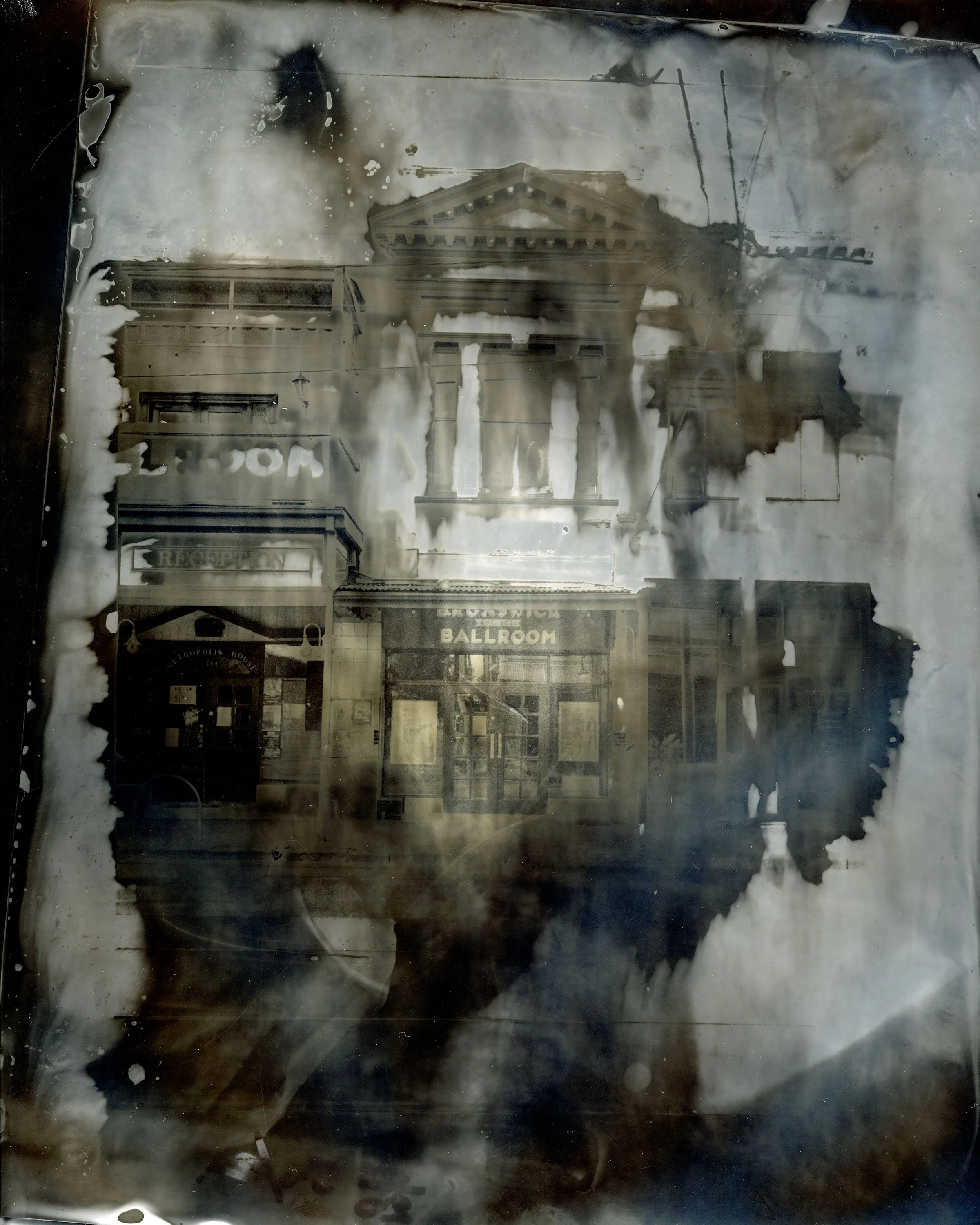
Figure 1. Across a synapse, 2022, digitally enhanced scan of unique 203x254mm (8x10”) solarised gelatin silver print
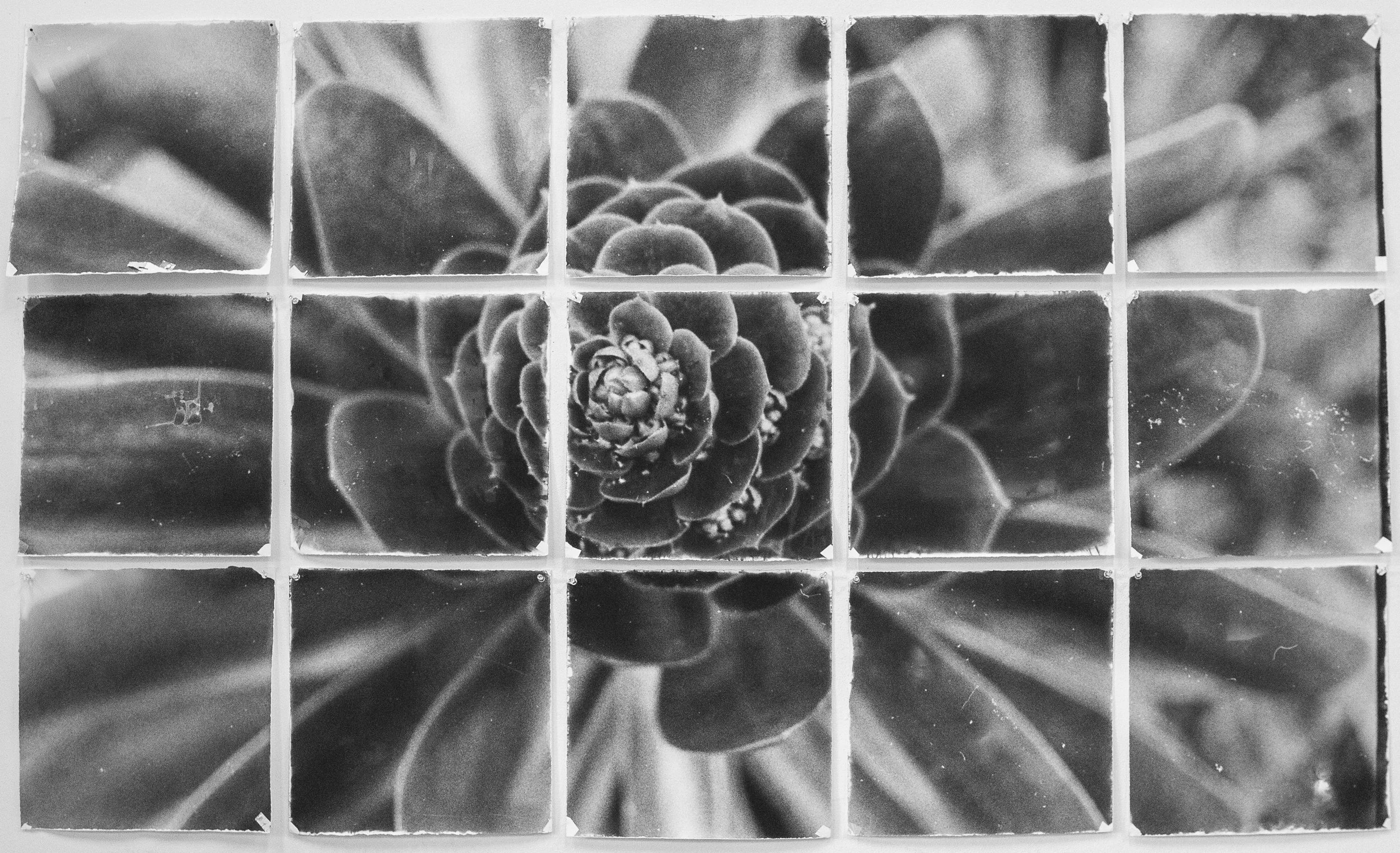
Figure 2. Respite, 2022, 1900x1200mm (approx) unique polyptych print comprising a single 35mm exposure over fifteen 370x370mm hand-torn sheets of gelatin silver paper, hand brushed to develop. Installation view, Level 3, Building 49, RMIT University Melbourne, 2023
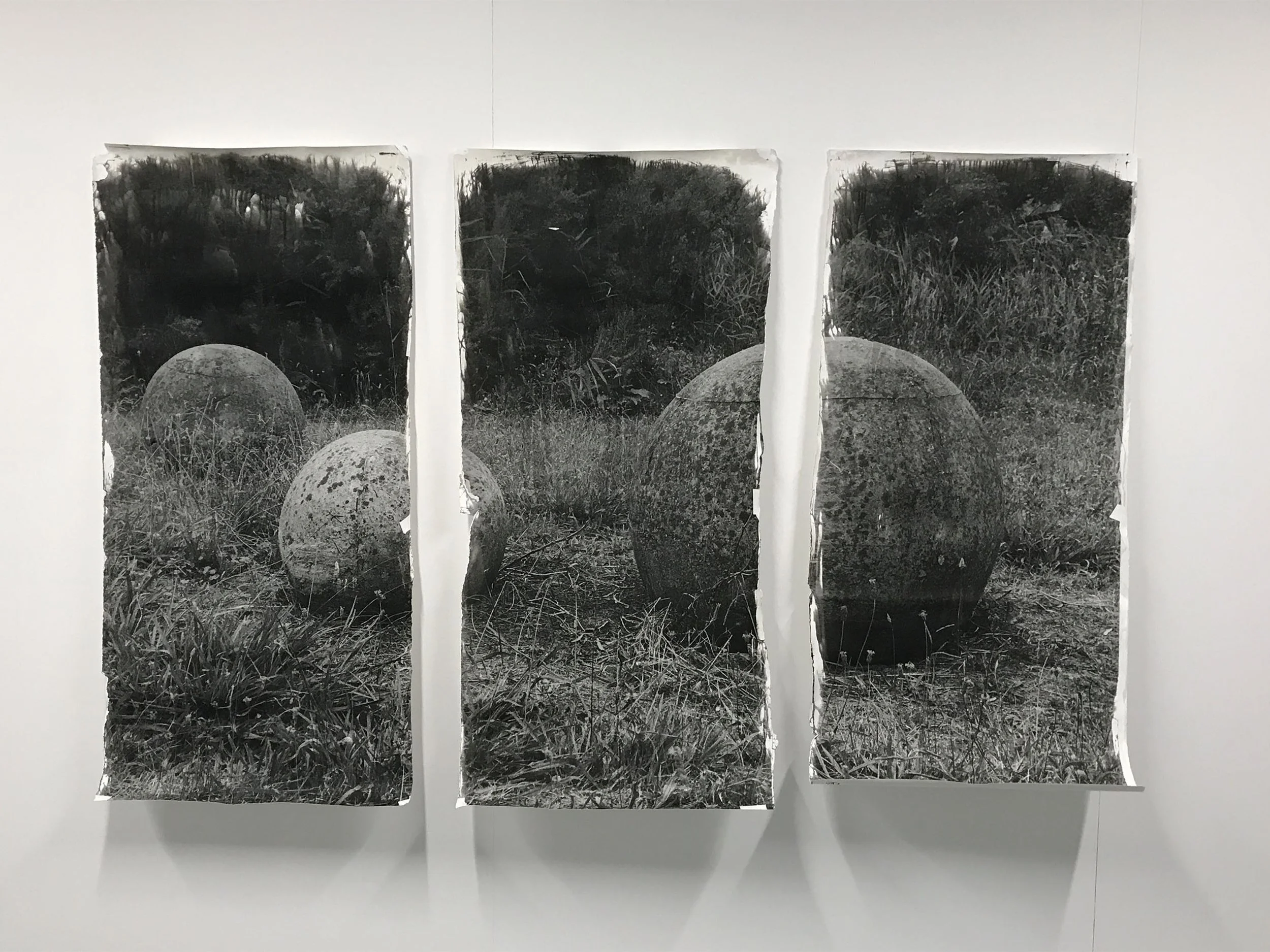
Figure 3. Spheres, 2023, unique print comprising single 35mm exposure over three hand-torn sheets of gelatin silver paper (650mmx1.27 metres approx sheet size), hand brushed to develop, 2.1x1.27 metres installed (approx). Installation view, Level 2, Building 39, RMIT University Melbourne, 2023
Figure 4. Possibilities, 2022, scan of 35mm in-camera multi-exposed negative (continous capture spanning 3.5 frames)
Recent studies have found that “Several characteristics of chaos are seen in the creative process and product”. The author continues, stating, “Artistic work is very sensitive to stimuli and speaks of the role of the ‘inconsequential’ in art, the unpredictable but not random influences” (Schuldberg 2011, 188). These theories contextualise several practice-led systems I have developed to explore and prompt novel and compelling ways to produce aesthetically informed works of art to extend my visual language (Bryant 1986, 102).
Notably, experimental photography, as with abstract painting seen in the work of greats such as Picasso, requires “proficiency in the conventional execution of techniques and strategies – such as composition, exposure settings and the inherent qualities of base materials, including film and substrates – is essential before understanding how to exploit and debase the rules of the medium that reflect intent and purpose to achieve successful results in the final works of art” (Damage 2022, 32).
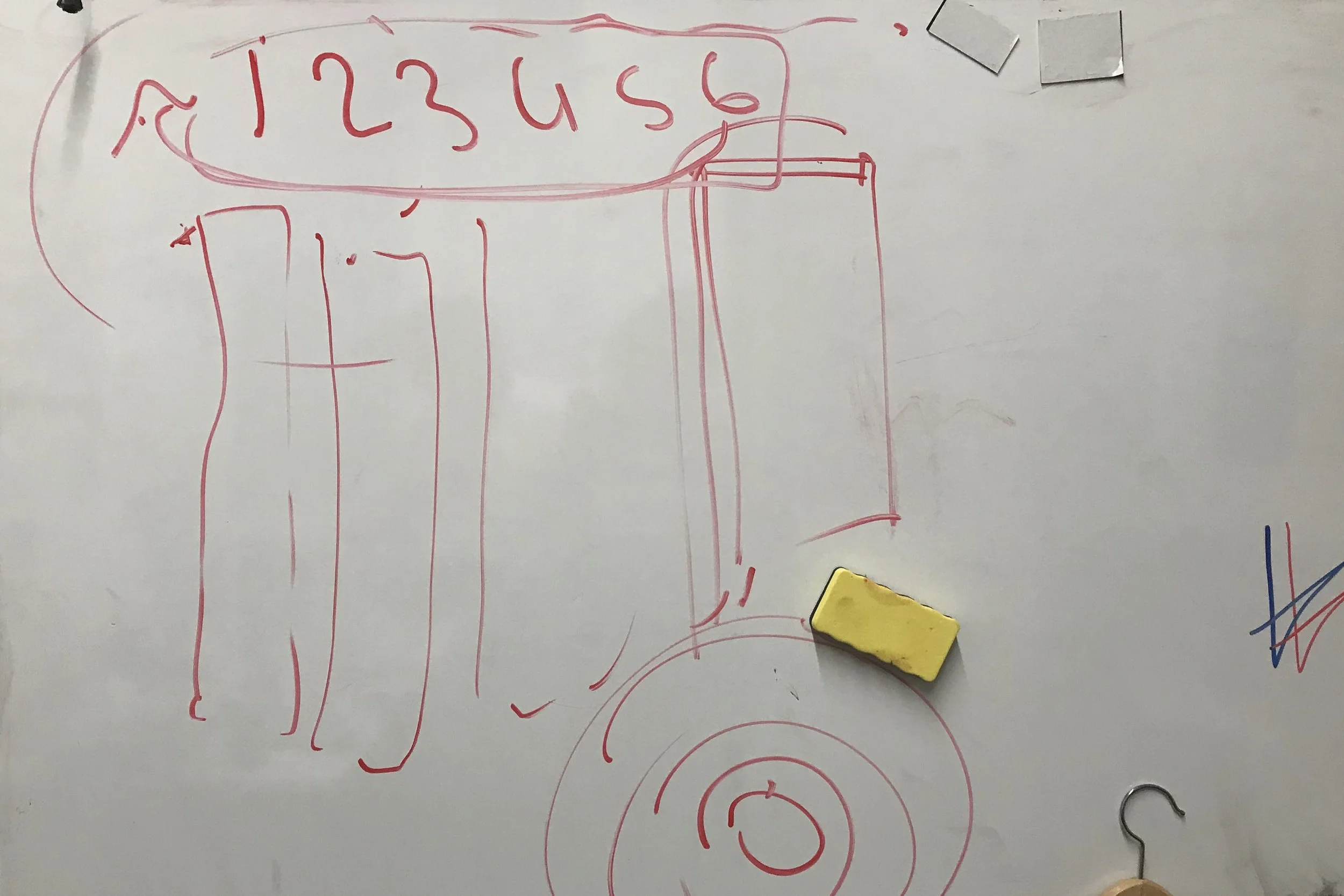
Figure 5. Drawing concepts for oversized polyptych wall mural during supervisor meeting, 2023. Getting ideas out of my head and onto paper is an important part of my creative process
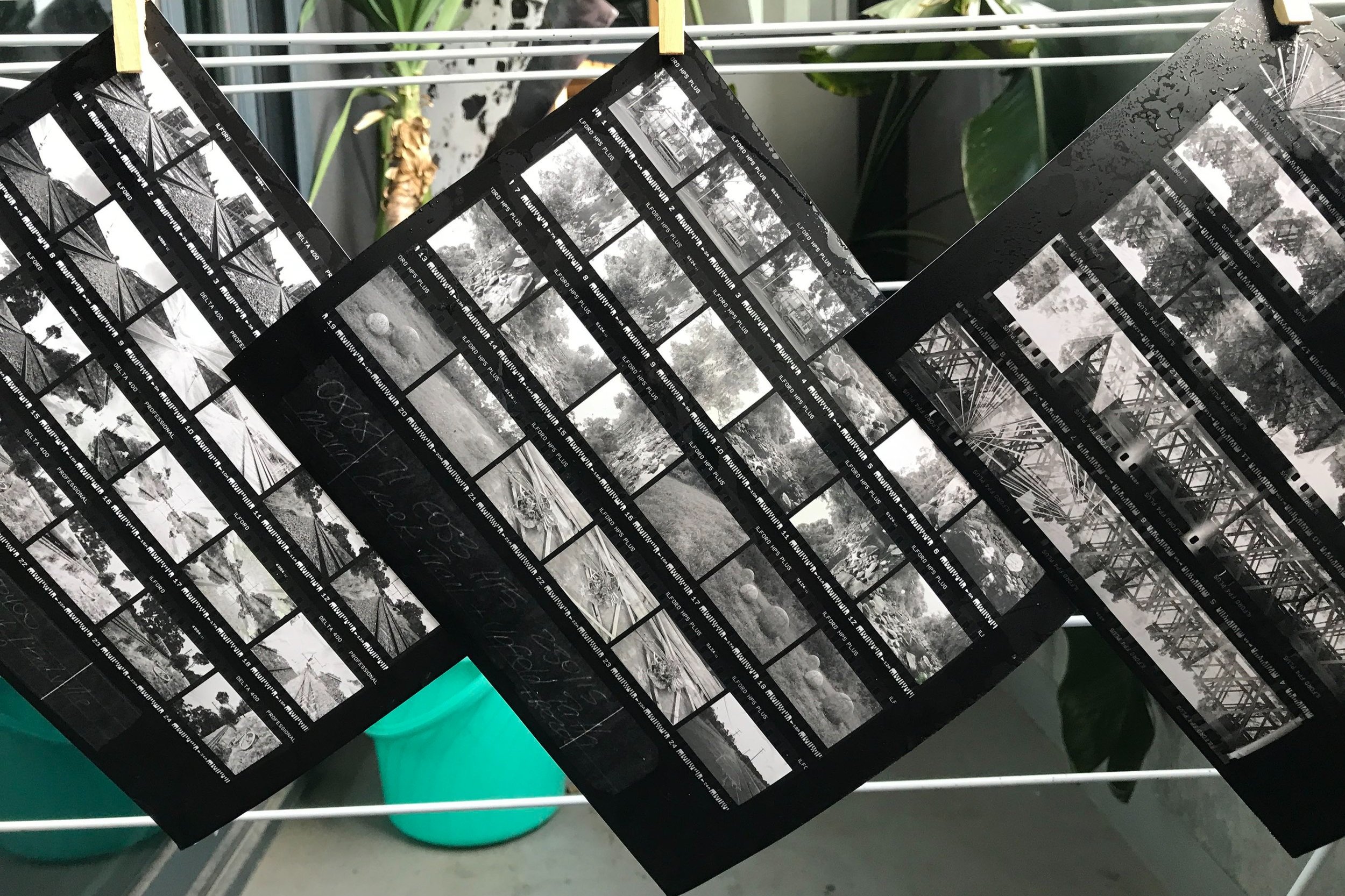
Figure. 6. Contact sheets of negatives are made to check the integrity of the captures in the first stage of shortlisting the images I will work with to create the oversized polyptych wall mural, 2023
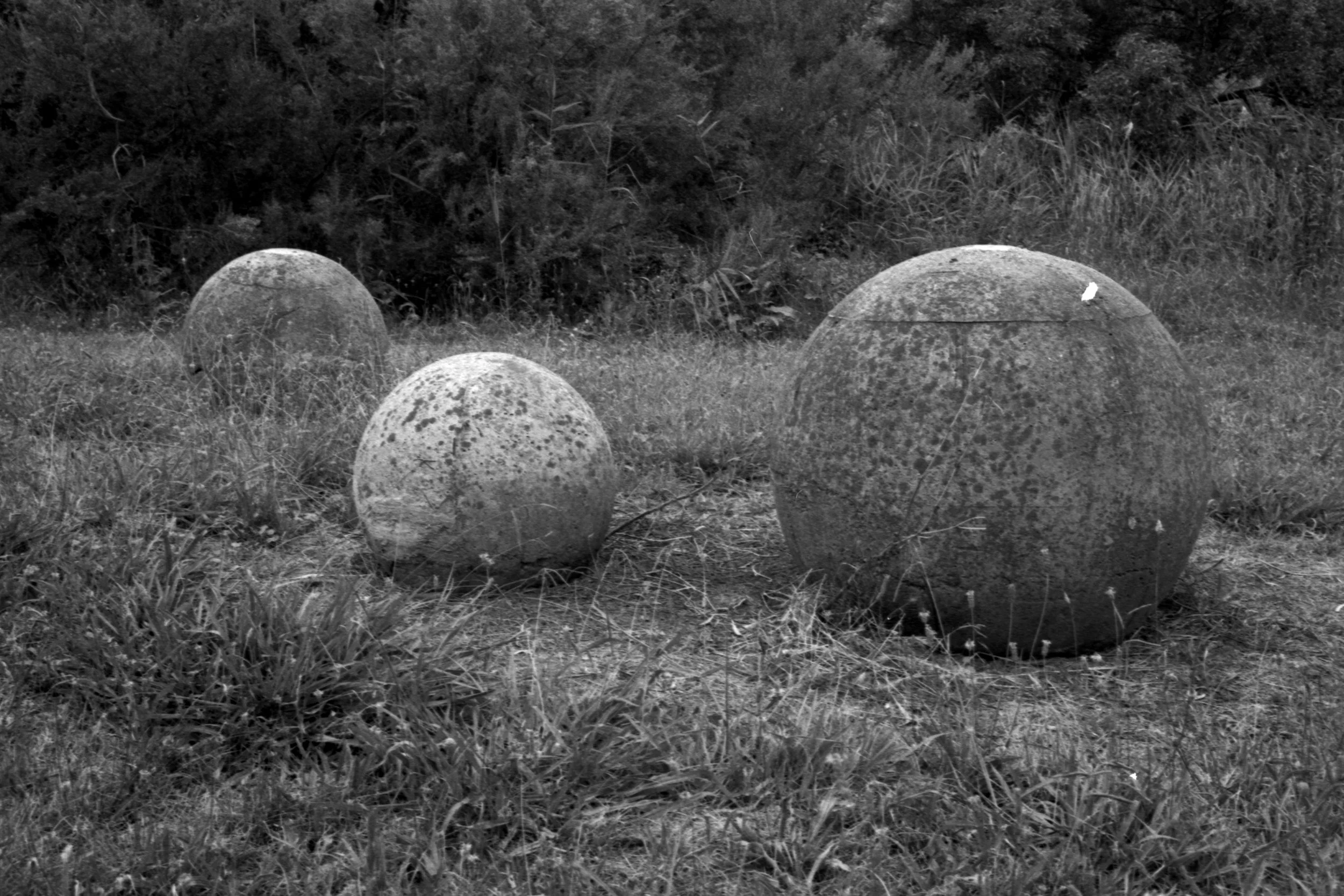
Figure 7. Untitled (Spheres), 2023, scan of 35mm negative used to create my unique gelatin silver print, Spheres
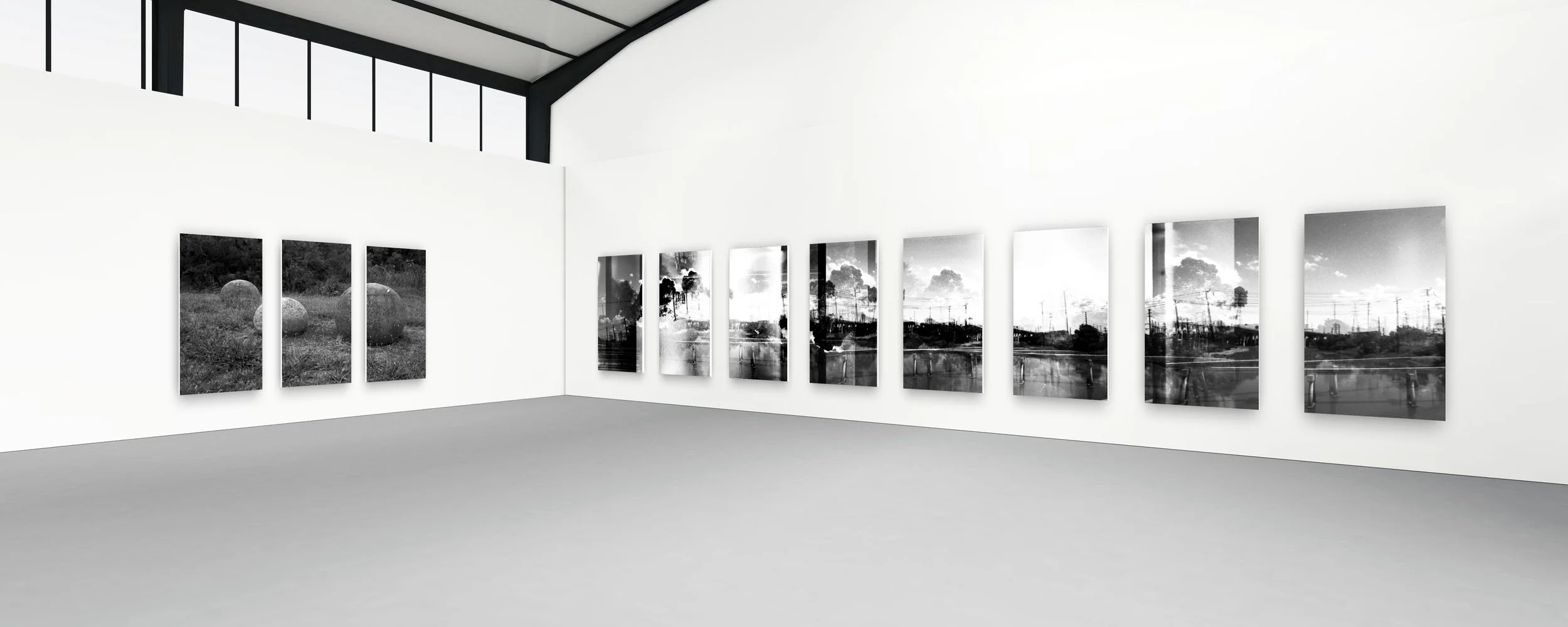
Figure 8. Virtual installation rough of Untitled spheres (Figure 3) and Possibilities (Figure 4) help troubleshoot what works and what does not, thus helping in shortlisting the selection of images I have chosen to work with, 2023
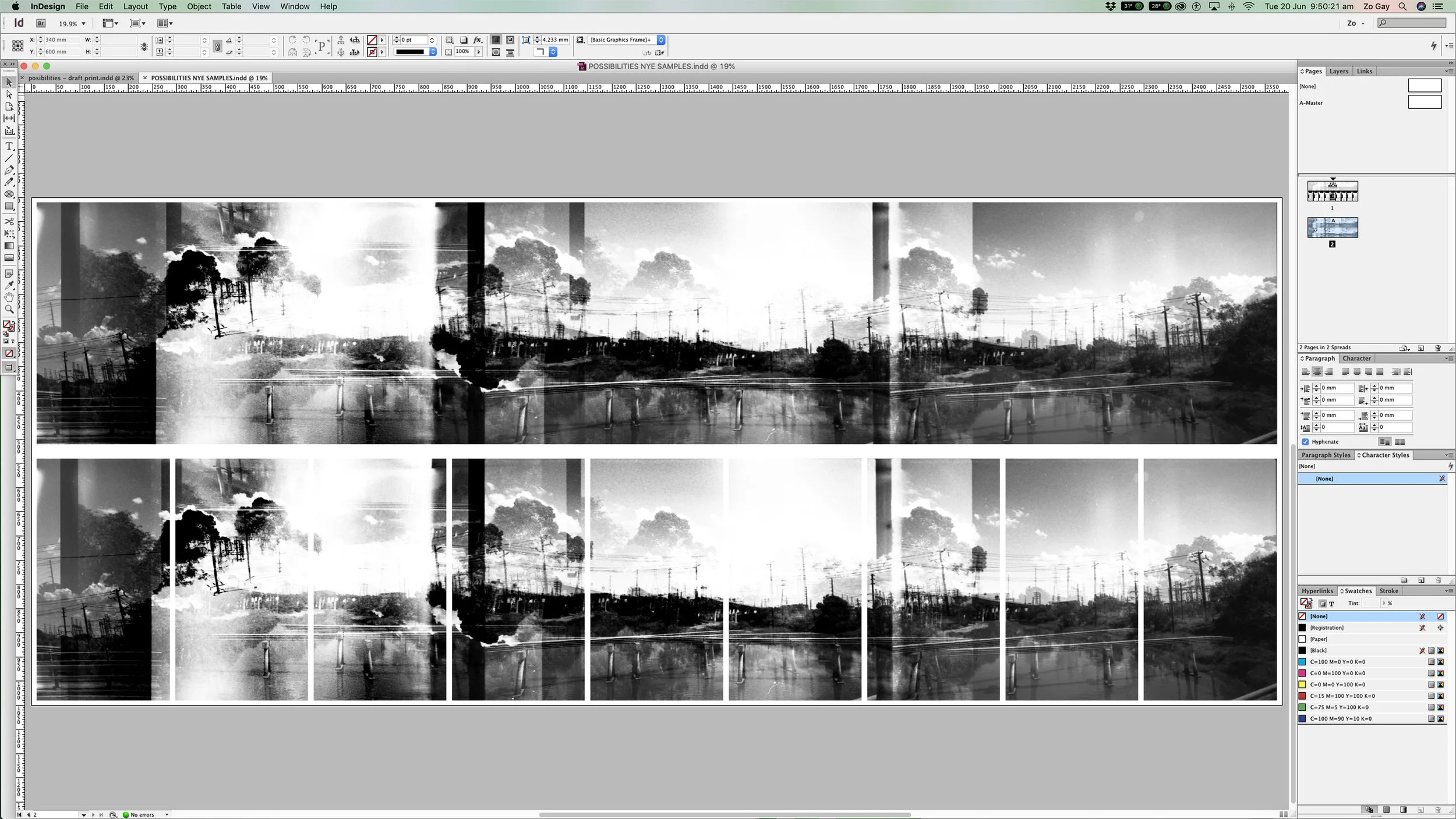
Figure 9. InDesign rough used to generate initial scaled laser print prototypes for Possibilities wave wall (Figure 11) and polyptych wall mural (Figure 12) concepts, 2023
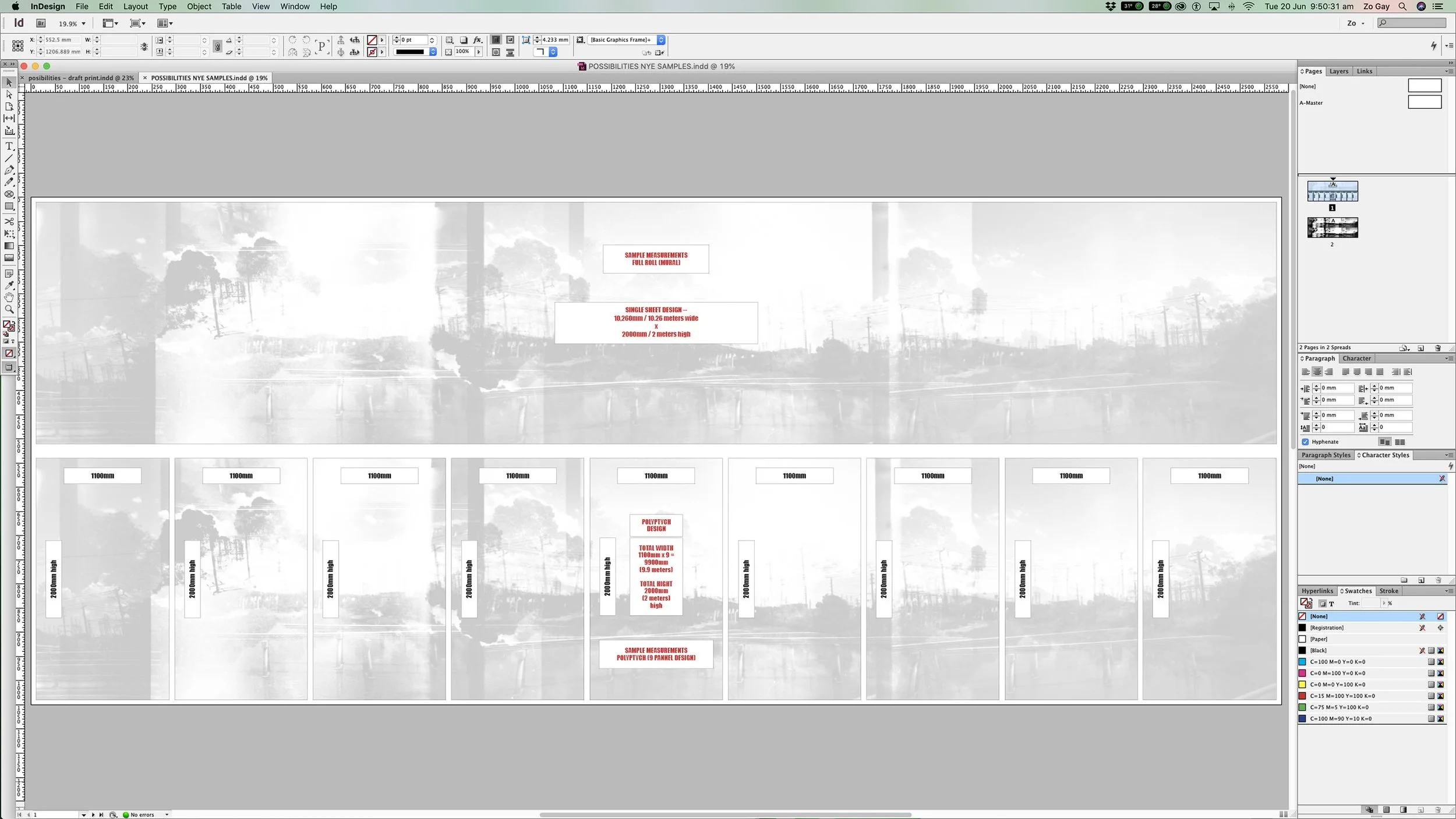
Figure 10. Notated InDesign rough used to generate initial scaled laser print prototypes for Possibilities wave wall (Figure 11) and polyptych wall mural (Figure 12) concepts, 2023
Figure 11. Initial scaled laser print prototype for Possibilities wave wall concept, 2023
Figure 1012 Initial scaled laser print prototype for Possibilities polyptych wall mural concept, 2023
Darkroom tests
Figure 13. Possibilities, 350x140mm gelatin silver proof, detail print of approx 2/3 of negative with 120 second exposure, 2023
Figure 14. Possibilities, 350x140mm gelatin silver proof, detail print of approx 2/3 of negative with a 60 second exposure, 2023. To expose the negative at its intended size (1.2 metres on the narrow edge), the enlarger must be approximately 4 metres from the substrate, weakening the light source, increasing the exposure times ten
Figure 15. Possibilities, 350x140mm gelatin silver proof, detail print of approx 2/3 of negative with 120 second exposure, 2023. Anticipated issues arising from excessive exposure include fogging, where the exposed print becomes murky like fog. As such, the darkroom processes must be reassessed to cultivate more desirable outcomes
Mural print tests
Footnotes
[1] According to Schuldberg (2011, 188), “The creative process must avoid stasis, stagnation, and premature closure, capture by fixed-point or limit-cycle attractors, and the strictures of an imperious environment. The author continues, stating that “Chaotic systems may demonstrate healthy flexibility, adaptability, readiness for change, resistance to environmental entrapment, autonomy, and openness to new information” (ibid).
Bibliography
Bryant, Eric. 1986. “Photoworks: When Pictures Vanish.” Library Journal 121 (10): 102. https://www-proquest-com.ezproxy.lib.rmit.edu.au/docview/196788978/citation/37E6B5F915B5444APQ/1?accountid=13552.
Damage, Zo. 2022. “Master of Fine Art, Studio 2, Combined methodology report with folio of artworks”. PDF.
Schuldberg, D. 2011. “Chaos Theory And Creativity”. Encyclopedia of Creativity, 183-191.doi:10.1016/b978-0-12-375038-9.00037-6.
Phenomenology of photography
Minissale (2021, 138) draws on neuroscience to “develop a new interpretational framework for artworks that make rhythm and matter explicit”, further applying emergence theory – per James D Herbert’s Brushstroke and Emergence (2015) – to analyse art by painters, including (but not limited to) Simon Ingram (Figure 1), Jean Dubuffet (Figure 2), Georges Braque (Figure 3) and Paul Cézanne (Figure 4).
According to Minissale, “the concept of emergence is to suggest that an entirely new phenomenon with novel features can arise from the interactions between components or processes which themselves possess none of these novel features” (ibid). The author states that “Neural activity and the movements of the artist’s hand, refined or stylised through learned routines and practice, produce brushstrokes that are rhythmically worked up into a greater whole, forming the image […] What comes together is the recognisable style of an artist” (ibid, 139).
To illuminate, Minissale (ibid, 199) claims Ingram’s titling of Automata Painting No. 3 (Figure 1) refers to “cellular automata, modelling squares in a grid that produces a certain patterning based on some kind of simple rule, for example, whether or not certain numbers of neighbouring cells are occupied”. Ingram offers “a glimpse of matter as both simple, in its principle of physical extension, and complexifying through time […] the complexity of which transfers and adapts cellular automata to art-making” (ibid, 200).
Figure 1. Simon Ingram, Automata Painting No. 3, 2004, acrylic on canvas, 900x900mm
Of Dubuffet, Minissale observes, “the striations, pockmarks and erosion in these works, the marks of deep time without an author, can also be read as delicate and rhythmic traces of the artist’s fingering and pressing of inanimate matter” (ibid, 182).
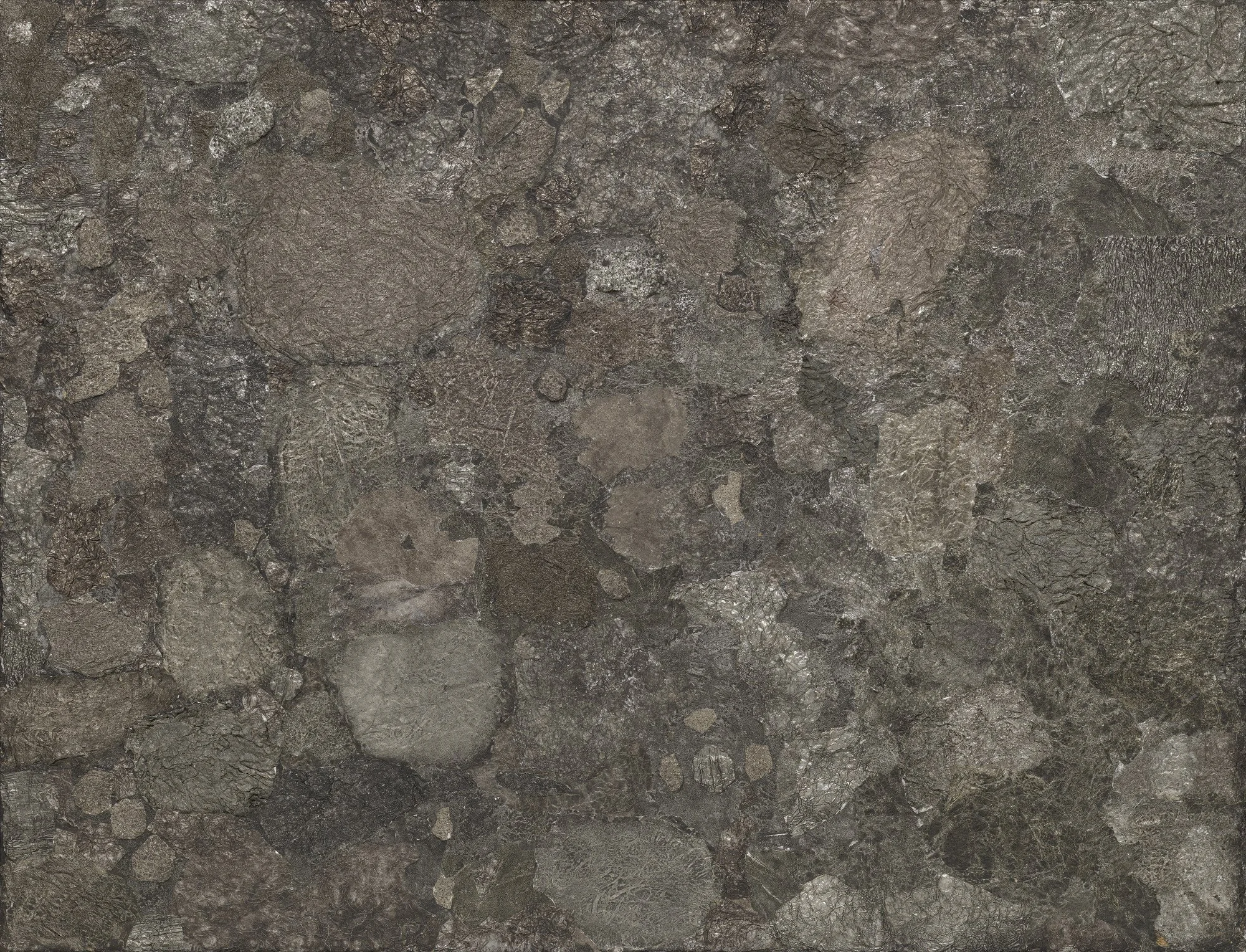
Figure 2. Jean Dubuffet, Soul of the Underground, 1959, oil on aluminum foil on board, 1496x1950mm
In Braque, Minissale (2021, 146-147) observes different facets of “cube-like form repeated in space appears pass through phases from past to present to future […] This serves to stimulate a broader metastability where the sense of order and stability is thrown into disarray. The painting appears to anticipate the viewer’s shifts of position while moving itself, and no matter how often this ‘trick’ is viewed, again and again it erodes stability delightfully”.
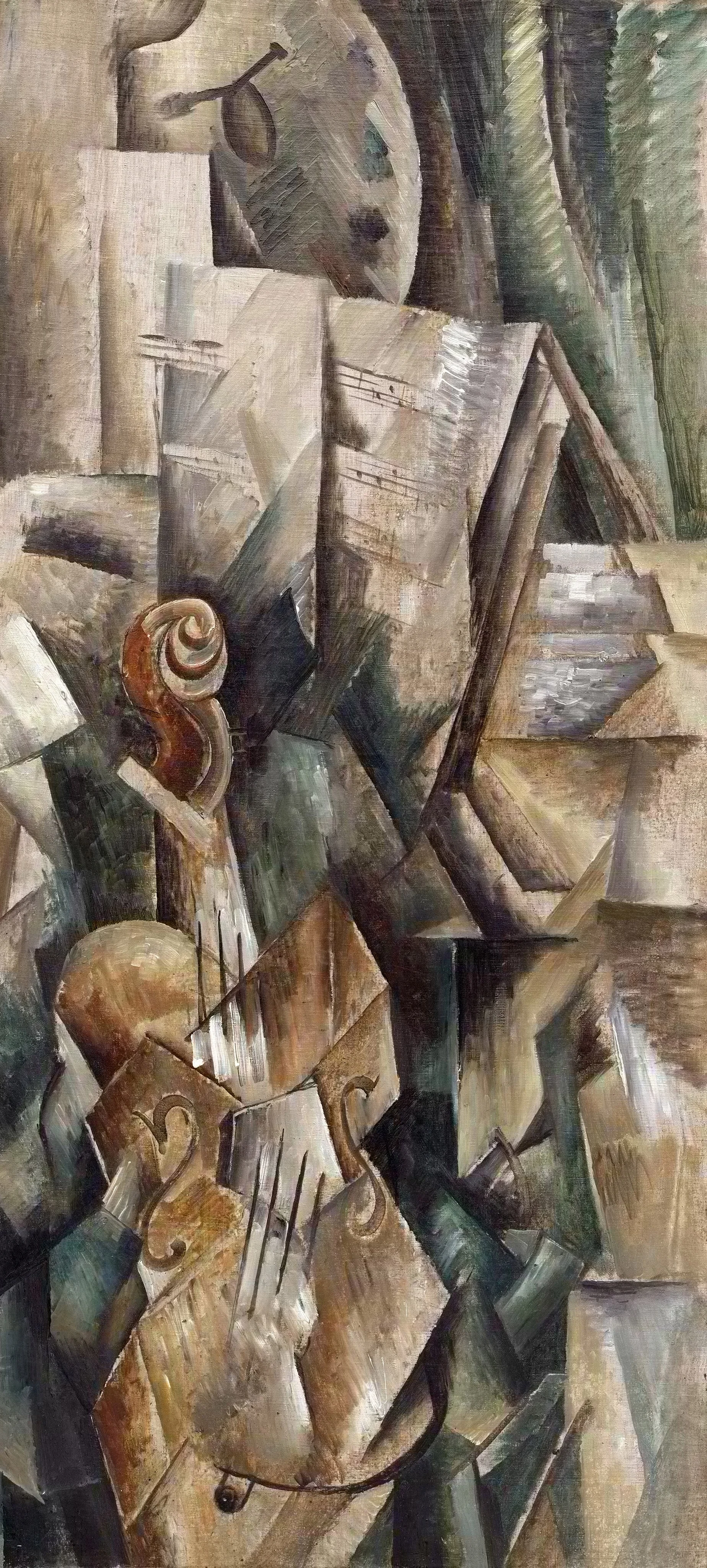
Figure 3. Georges Braque, Violin and Palette (Violon et palette, Dans l’atelier), 1909, oil on canvas, 917x428mm
Likewise, the author asserts that Cézanne’s distribution of brushstrokes creates “a dense metastability”, whereby a “whole view can be maintained in the working memory and can degrade when the brushstrokes are viewed individually to provide a shimmering effect where finegrained details and larger shapes are in tension with each other” (ibid 2021, 141).
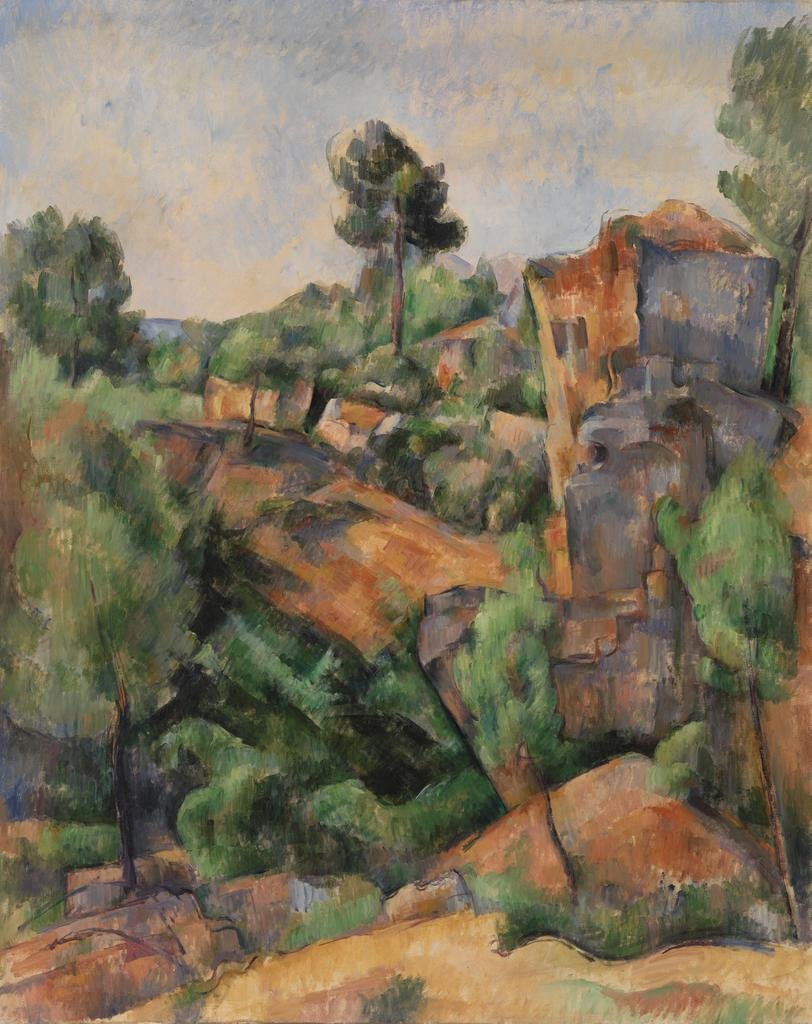
Figure 4: Paul Cézanne, Bibémus Quarry (Carrière de Bibémus), c.1895, oil on canvas, 920×730 mm
Prompted by the theories outlined above, my research further aims to challenge traditional ideals and common tropes of photography (a) applying notions of the indexicality of the painterly gesture – whereby “painting can be regarded as a trace of an activity, that it evokes […] the subjectivity of painting […] and suggests agency” (Graw 2016, 79), and (b) contesting that the “indexicality of painting differs from that of other art forms insofar as it brings its author into play and can therefore be perceived as a manifestation of the artist” (ibid, 2).
While Minissale contextualises cognitive aesthetics in response to making and consuming art through the medium of painting, the author does not consider trace activity, subjectivity or agency in terms of photography.
Graw (ibid, 81) acknowledges photographers such as Wolfgang Tillmans, who relentlessly demonstrate how the medium "can take up the representative and narrative strategies of painting". Despite this, the author asserts that the resultant material surfaces merely “emulate the surface of abstract painting” and that the indexical signs of photography, such as scratched negatives (Figure 6) and deliberate gestalts in exposures (Figure 7) “can be read as manifestations of the author”.[1] Therefore, this suggests “a physical connection to the one who made it [whereby] the picture on canvas offers a condensed store of labour and time in a manner that photography cannot” (ibid, 11).
In contrast, Merleau-Ponty declares that “no sharp difference can be made between the physical work of art and the aesthetic object, even though works of art can exist in multiple copies … and can be lost or destroyed” (Merleau-Ponty (1996, 32).
“no sharp difference can be made between the physical work of art and the aesthetic object, even though works of art can exist in multiple copies … and can be lost or destroyed” (Merleau-Ponty (1996, 32).
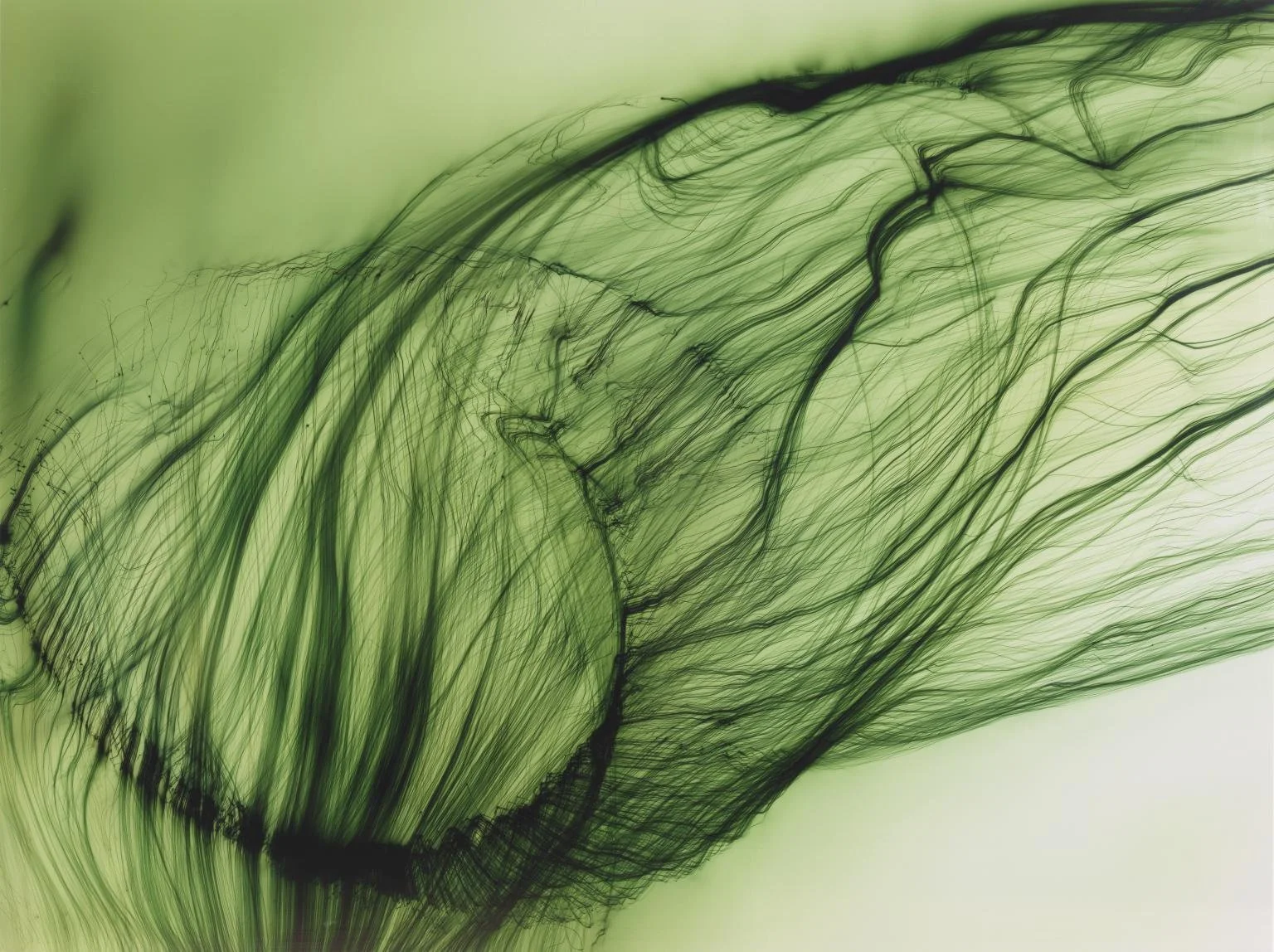
Figure 5. Wolfgang Tillmans, Freischwimmer 16, 2003, c-type print on paper, 2395×1797mm
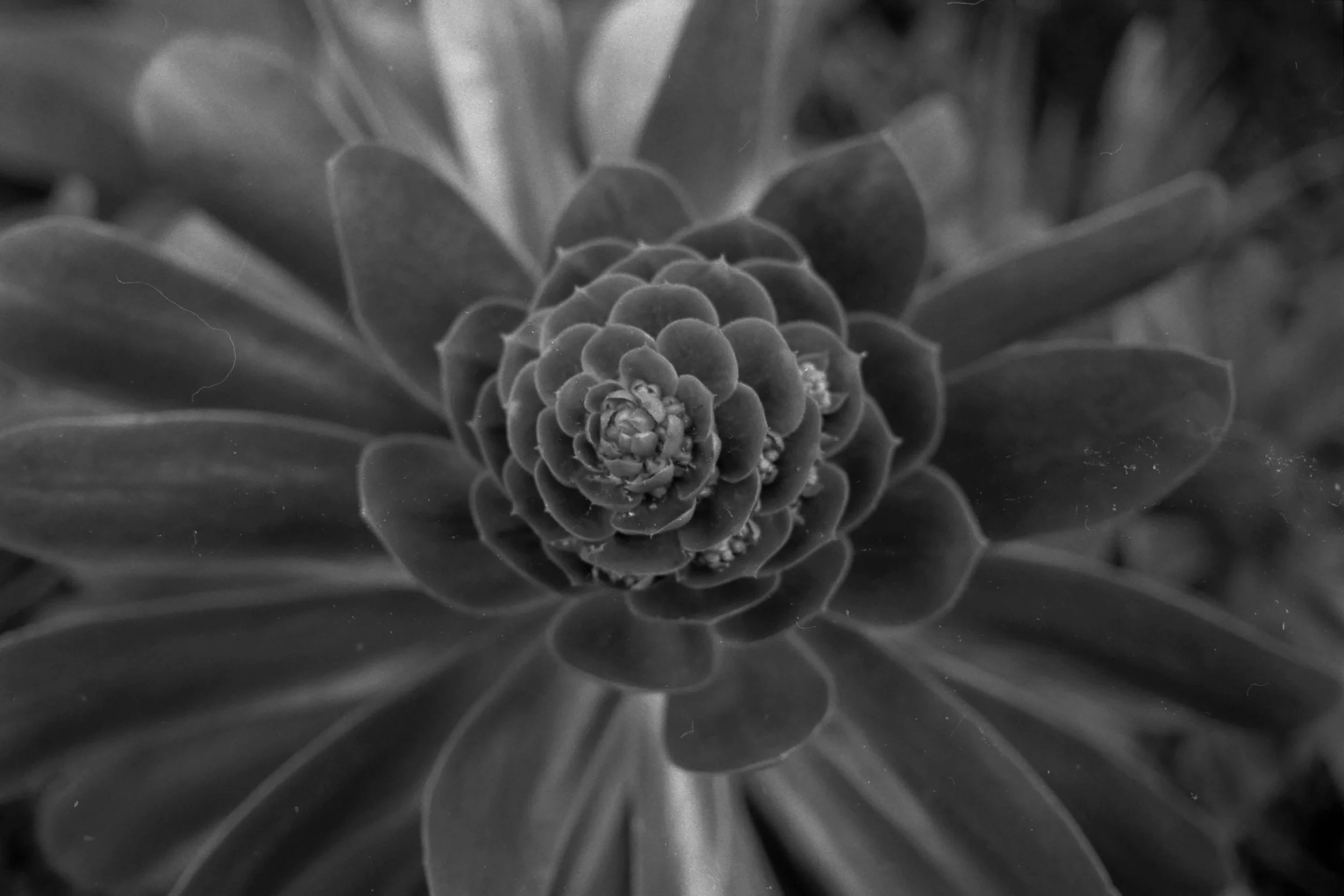
Figure 6. Zo Damage, Untitled succulent. 2022, scan of 35mm negative
Reflecting on the theoretical assumptions of Graw and Minissale as outlined above, my research aims to develop a hypothesis that indicates indexicality – in terms of the painterly gesture as opposed to the photographic index – also applies to process-based modes of photographic practice “insofar as it brings its author into play and can therefore be perceived as a manifestation of the artist” (Graw 2016, 2).
To better inform my theoretical study and practice-led research in generative analogue modes of the medium, I am reading The Merleau-Ponty Aesthetics Reader: Philosophy and Painting (Smith 1996). My aim is to apply Merleau-Ponty’s theories to generative analogue photographic practices. This considers the real-time and unrepeatable occurrence of phenomenological interplays between artist, materials, and methods manifest in part or entirely as the artwork.
In contrast to Graw – who speaks to the photographic image – my study considers “engagement with the photographic object”, where each element influences the other and may be independently or simultaneously altered, built upon, reduced and manipulated to achieve unique outcomes that reflect indexical painterly gestures (Lager Vestberg 2008, 49). This further questions the potential of process-based modes of the medium to deny the medium "of its innate power to record visible reality" (Chao 2017, 302) and subvert common ideals of what defines photography and the photographic image (Persinger 2014, 13).
I propose that Graw fails to recognise that – in the case of Tillmans and artists such as myself, Sigmar Polke, Eileen Quinlan and Mariah Robertson – the artwork, as with painting, is a real-time, unrepeatable manifestation and layering texture, tone and form through the manipulation of light-space time tensions.[2]
To illuminate and in reference to my own practice, I will briefly outline four analogue photographic processes that relate to and refute the theories proposed by Graw.
First, alternative modes of lens-based capture where traditional darkroom techniques are applied in their creative outcomes.
Second, conventional modes of lens-based photography that are realised using experimental darkroom techniques.
Third, cameraless and conventional modes of the medium that use experimental darkroom techniques in the making of the finished artwork.
Also considered are installations that bring “the author into play as a manifestation of the artist” (Graw 2016, 11) while “cultivating interactions between observer, artworks and space [that] can interpret and synthesise individual real-time experiences” (Damage 2021, 9).
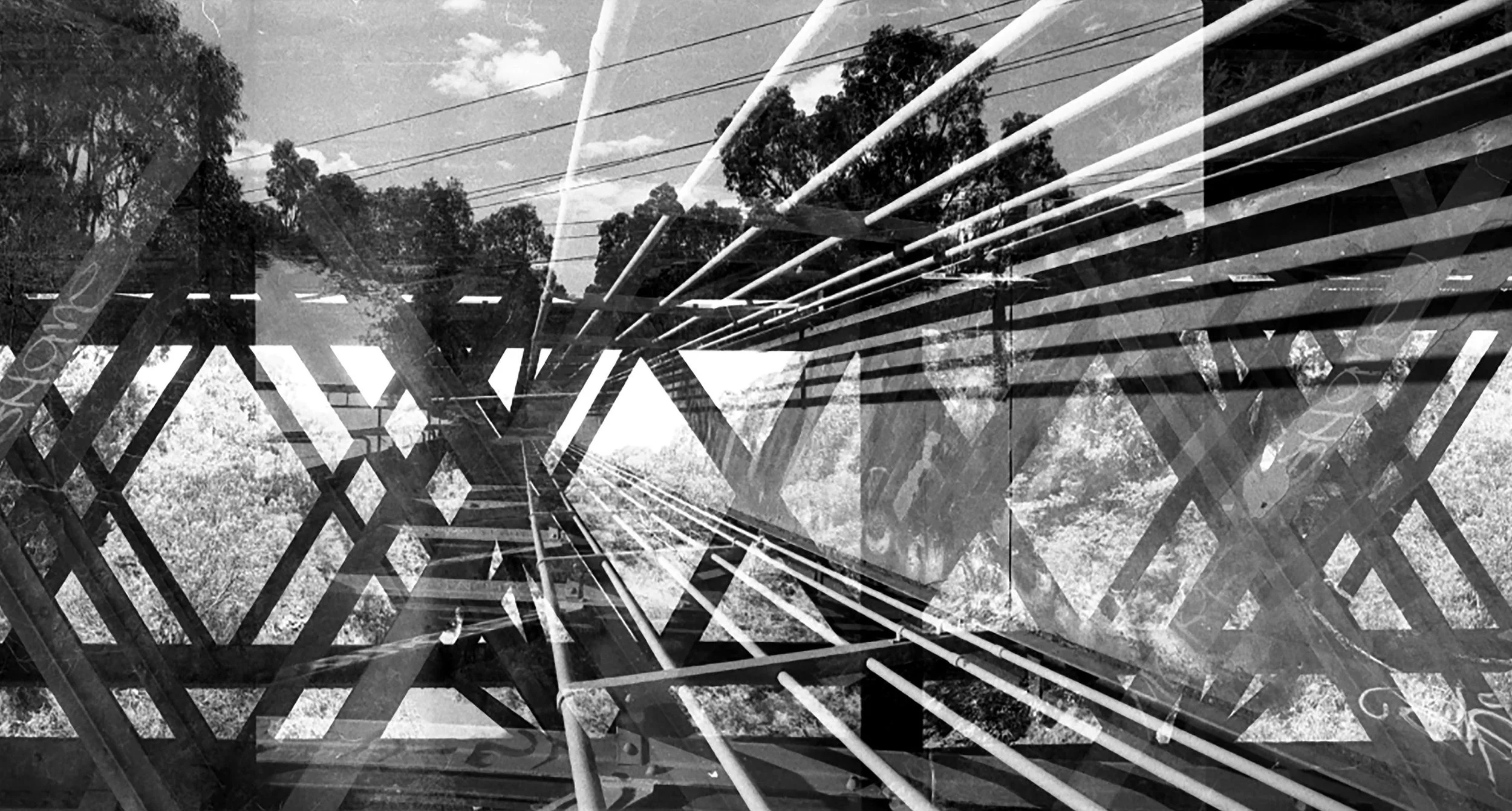
Figure 7. Zo Damage, Bridging gaps with Asimov, 2022, scan of 35mm in-camera multi-exposure negative
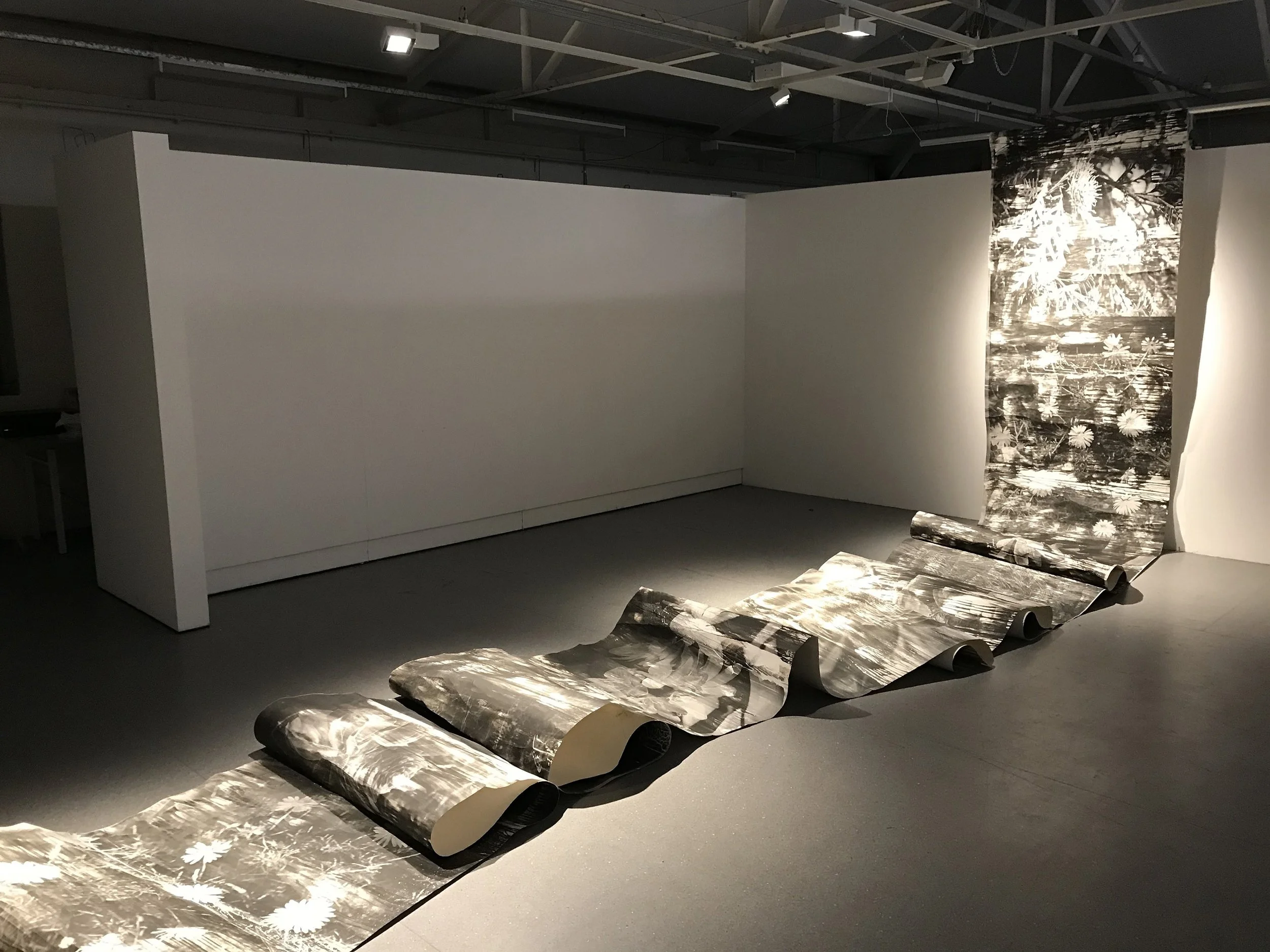
Figure 8. Zo Damage, Trust, 2022, installation view Building 50, RMIT University, Melbourne, 2023
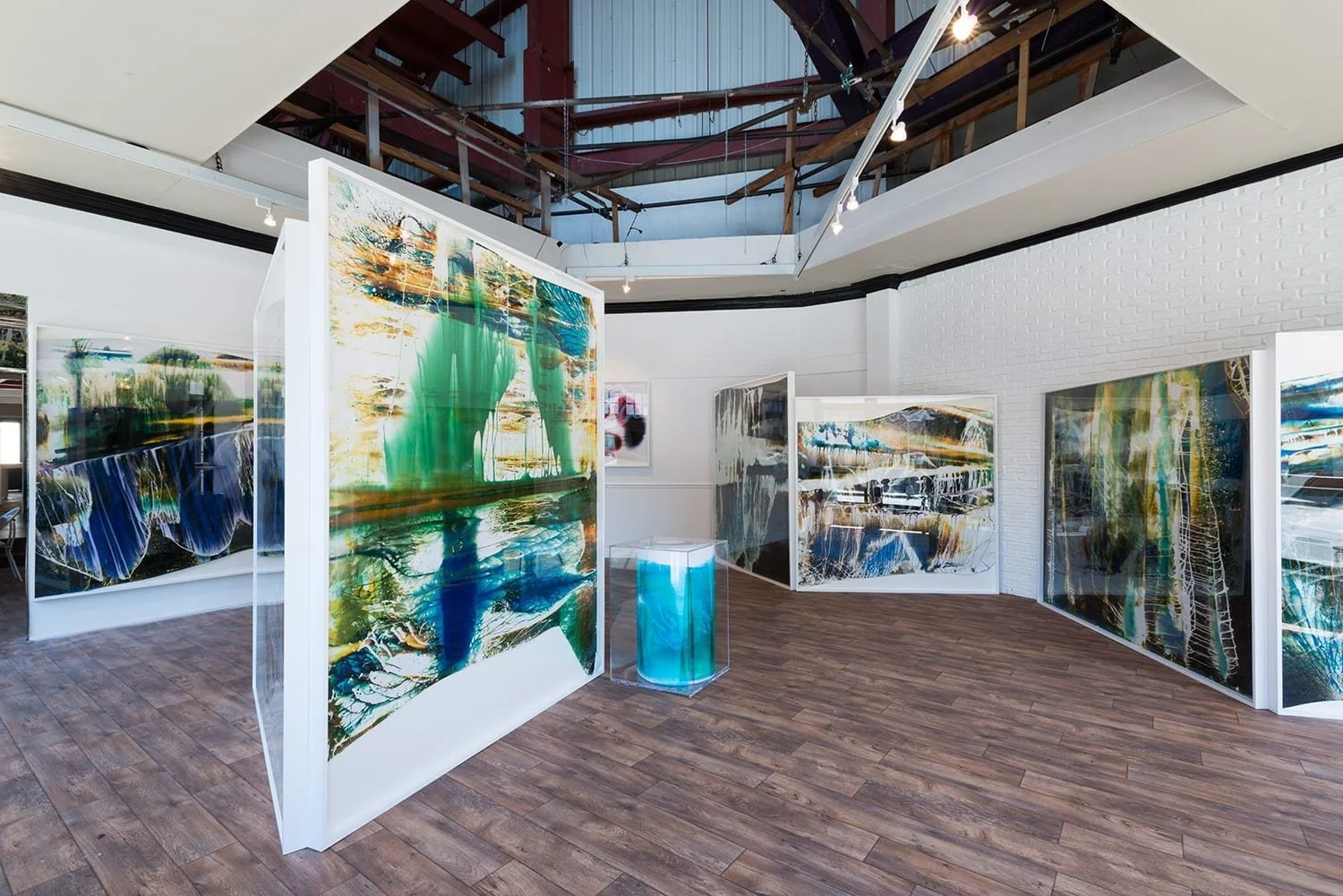
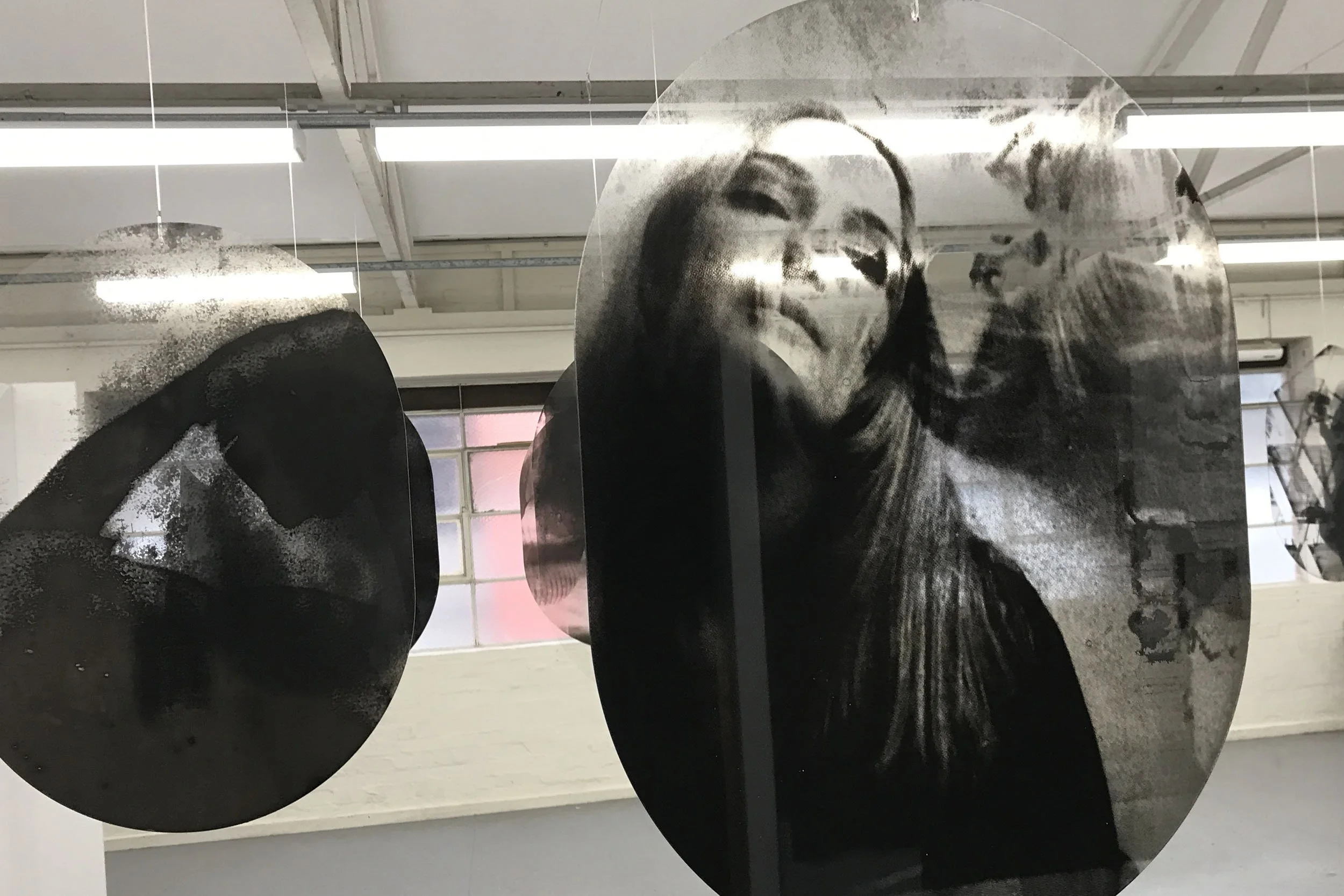
Figure 10. Zo Damage, Frisson installation view Building 50, RMIT University, Melbourne, 2021
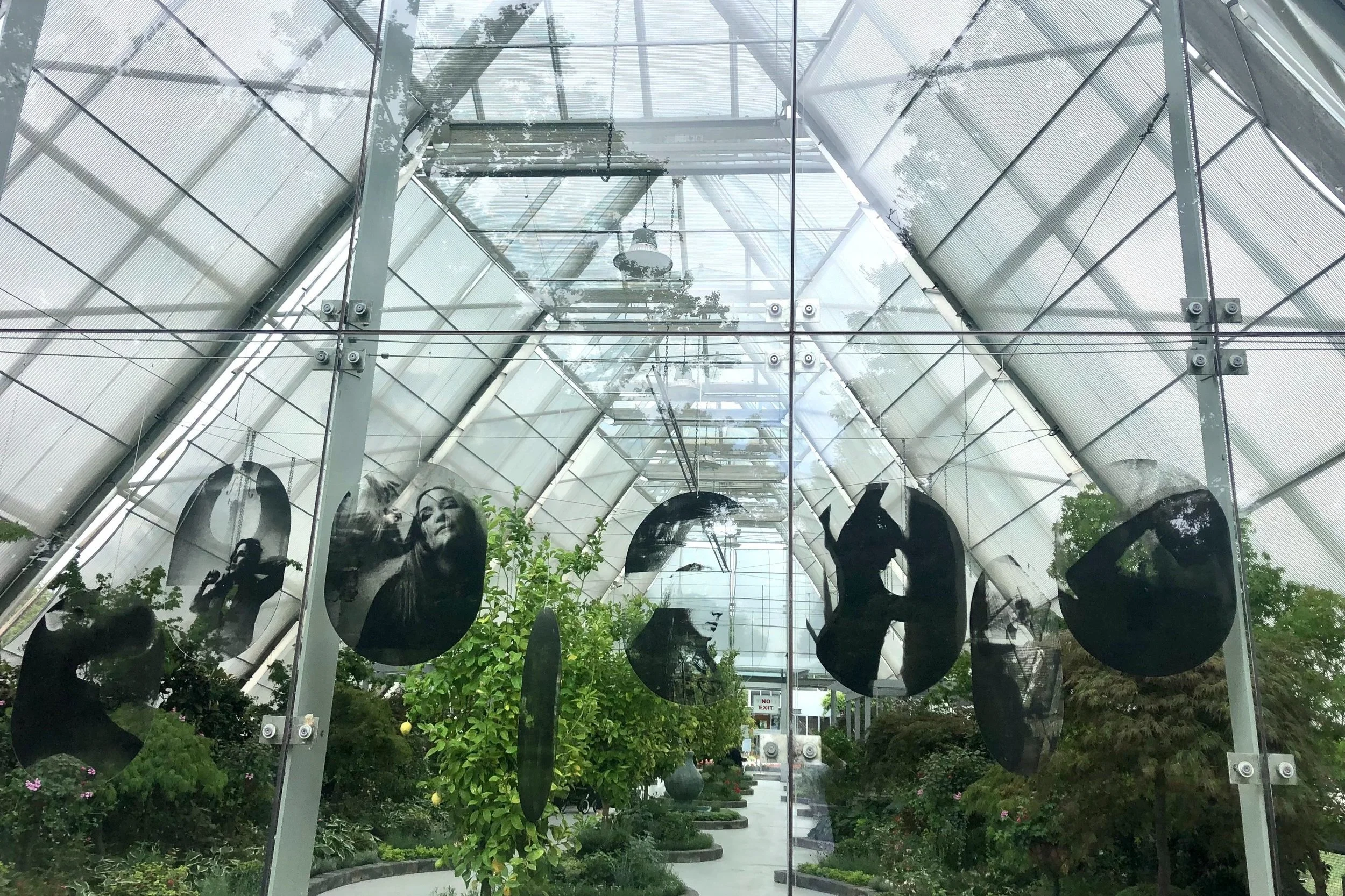
Figure 11. Zo Damage, Essence – reiteration of works from Frisson (Damage 2021) – Ballarat Conservatory, Ballarat Botanical Gardens for the Ballarat International Foto Bienalle, 2021. Photo courtesy Steven Boxshall, 2021.
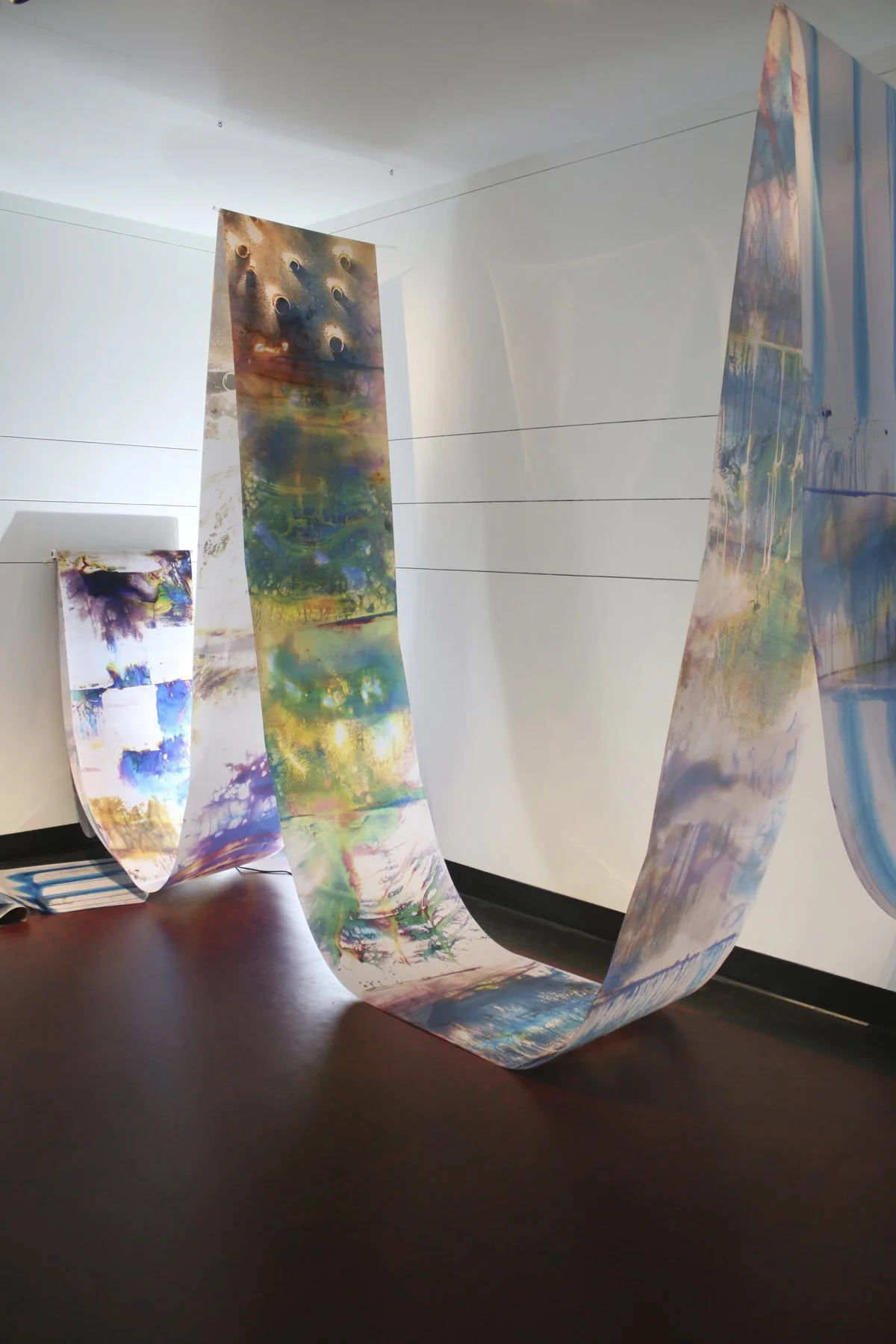
Figure 12. Mariah Robertson, 209, 2019, unique c-print, Ilfotrans, 760x 36940mm
Footnotes
[1] Gestalt in visual art occurs when the brain strives to make sense of impartial or ‘fragmented’ image (Behrens 1998, 301).
[2] Per Laszlo Moholy-Nagy, Bauhausbucher 8: Painting Photography Film, 1925.
Bibliography
Moholy-Nagy, Laszlo. 1925. Bauhausbucher 8: Painting Photography Film. Zurich: Lars Müller Publishers, 2019.
Tillmans, Wolfgang. 2003. Freischwimmer 16. Image. https://www.tate.org.uk/art/artworks/tillmans-freischwimmer-16-p20284
Make what you love, love what you make
I have been experimenting with the cyanotype process for a month now. My experiments and test have proved unsatisfactory. Upon reflection, there are two takeaways.
First, without considering how much I dislike the process, I thought cyanotype would be a cost-effective way to produce a massive single-exposure print on a bolt of linen. While it is affordable, the process is very messy – the scale I am working in is not suited to a small flat – and not producing the results I was hoping for.
I have a great concept for a polyptych gelatin silver print. It will be expensive. Although I have enough materials to begin the troubleshooting process in the darkroom, I am worried that I will not have the resources to create the final artwork. On the other hand, I have always found a way.
Thus, the takeaways are simple. Make what I love, love what I make and get on with it. The rest be damned.