
Mark Rothko
Buckley (2010) quotes Rothko, who stated, “I'm not interested in relationships of color or form or anything else. I'm interested only in expressing basic human emotions—tragedy, ecstasy, doom and so on—and the fact that lots of people break down and cry when confronted with my pictures shows that I communicate these basic human emotions”.
Mark Rothko, 1956, “Untitled (Red)”
Bibliography
Buckley, Peter J. 2010. “Mark Rothko, 1903-1970.” American Journal of Psychiatry 167 (11): 1304–4. https://doi.org/10.1176/appi.ajp.2010.10050701.
Rothko, Mark. 1956. "Untitled (Red)". Image. https://www.ngv.vic.gov.au/work-of-the-week-untitled-red-1956/.
Marco Breuer
Breuer poses the question if he could technically be considered a photographer despite his work being grounded in and having studied photography (Breuer 2018, 00:09).
“The series Notes, Queries is part of an ongoing investigation of the conditions of the photographic medium. The early photographic processes of gum bichromate and cyanotype are utilized here to point towards a moment in photography's history when the medium was exploratory and fluid — a site for inquiry not yet dictated by conventions or expectations. These works constitute recordings of phenomena: on a ground of white paper, layers of emulsion are built up in between physical acts—impacting the surface through abrasion, folding, puncturing, and piercing — to create images of their own construction and destruction. Often resembling aerial views of terrain scarred and shaped over time, these works stand as evidence of a process which folds multiple views into a single image. Instead of pictures that illustrate something outside of themselves, these surfaces speak of their own coming into being. Emulsion and support are not mere vehicles for the image; they, in fact, are the image. The related series. Obstructions, is a group of images that have been e extracted from the daily flood of newspaper photographs. Altered via Xerox, silkscreen, and physical abrasion, they functioned as source material for many of the gum prints and cyanotypes in Notes, Queries” (Breuer, Siber, and Goldberg 2006).
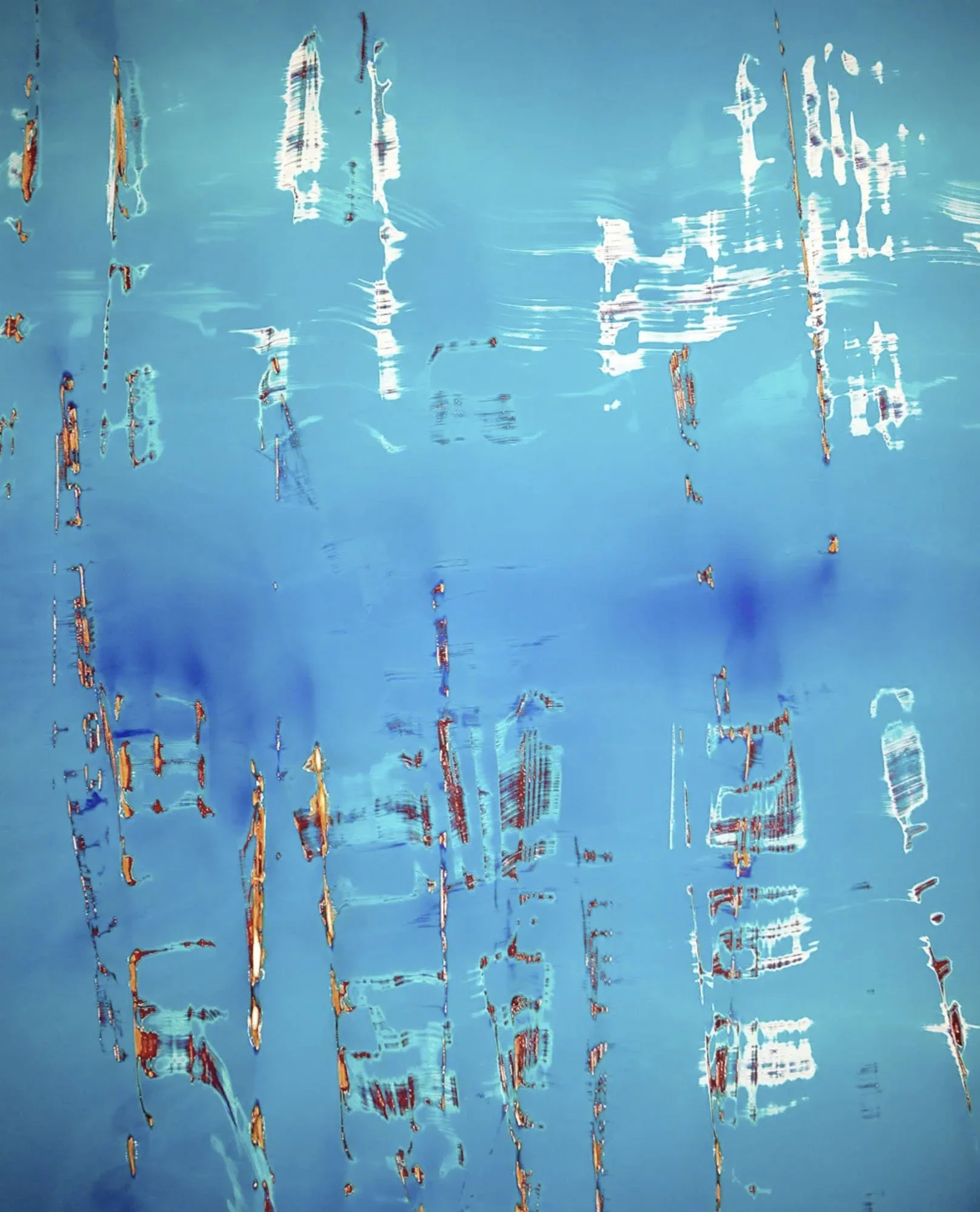
Marco Breuer, “Untitled (C-1189)”, 2012
Bibliography
Breuer, Marco, Matt Siber, and Jim Goldberg. 2006. “Artist Statements.” English Language Notes 44 (2): 133–34. https://doi.org/10.1215/00138282-44.2.133.
Breuer, Marco. 2012. “Untitled (C-1189)”. Image. https://www.newyorker.com/culture/photo-booth/what-is-a-photograph.
———. 2016a. "Marco Breuer: Pushing the boundaries of photography". San Francisco Museum of Modern Art. September 25, 2018. YouTube video, 03:16. https://youtu.be/3hQ_3yuk_Cc.
———. 2016b. "Lecture with Marco Breuer". Pier 24. April 21, 2016. Vimeo video, 38:03. https://vimeo.com/193584102.
Ruth Maddison
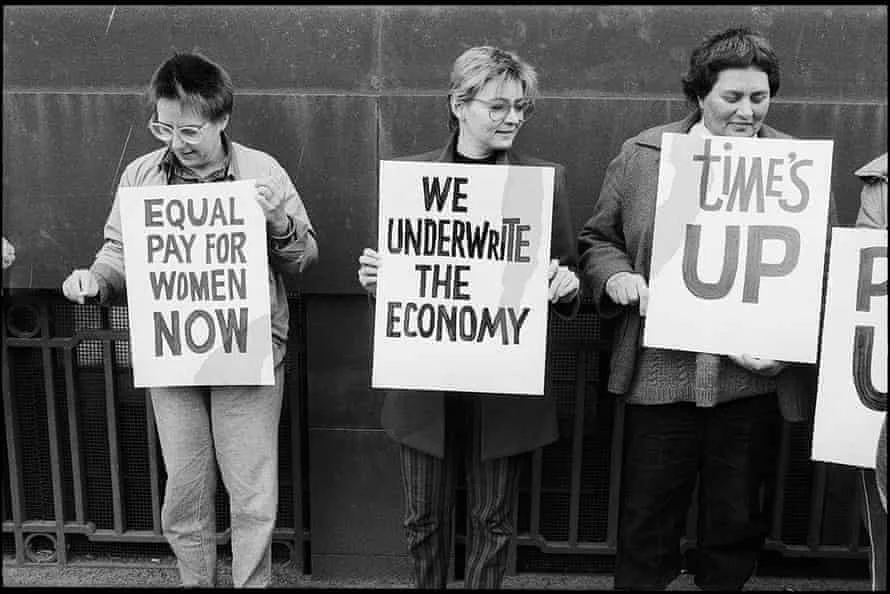
Touted as “one of Australia’s leading feminist photographers” (Inside Imaging 2021), Maddison’s documentary and creative fine-art photographic histories span from 1976 to the current day. From political protests in the early 1970s, to visual documentation of the 2019 bushfires that ravaged her hometown of Eden in NSW, Maddison “presents the shifting nature of long held personal and historical truths” (ibid).
El Lissitzky
Russian Constructivist El Lissitzky's interests were expansive. As with Laszlo Moholy-Nagy, Lissitzky worked in “graphic arts, architectural forms, photography, painting, and other formal types into a unique and dynamic art” (Sarabianov 2022). In meeting and working with other artists – including Alexander Rodchenko and Lazlo Moholy-Nagy – “Lissitzky became a transformational figure, intermin-gling the innovative arts of Europe and Russia and advancing the exchange of experimental forms and ideas” (ibid).
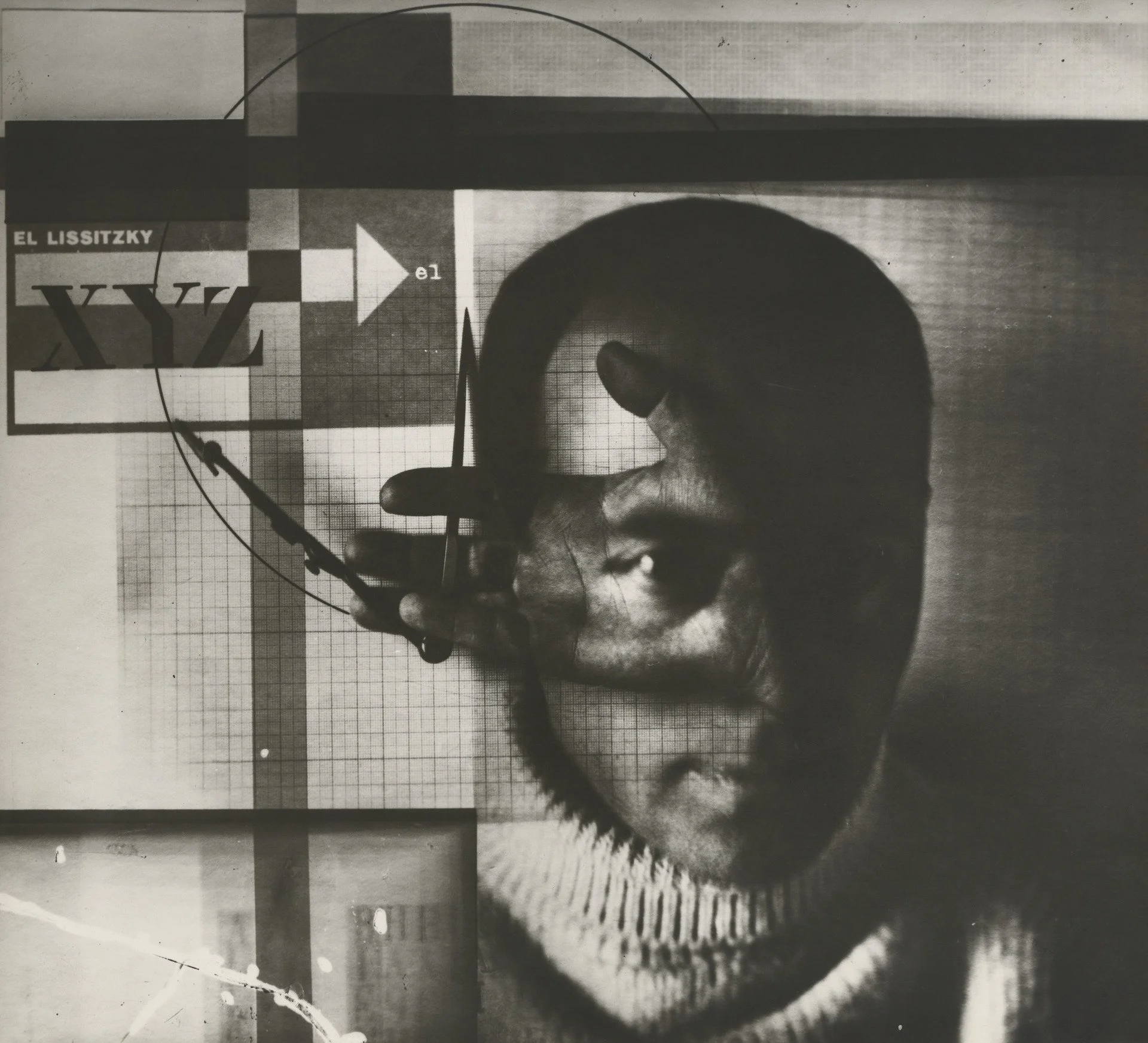
El Lissitzky, The constructor – Self-portrait/Photomontage, 1925
Bibliography
Levinger, Esther. 1989. “Art and Mathematics in the Thought of El Lissitzky: His Relationship to Suprematism and Constructivism.” Leonardo 22 (2): 227. https://doi.org/10.2307/1575236.
Perloff, Nancy, and Brian Reed. 2003. Situating El Lissitzky. Vol. 12. Los Angeles, CA: The Getty Research Institute.
Rocco, Vanessa. “Activist Photo Spaces: ‘Situation Awareness’ and the Exhibition of the Building Workers Unions.” Journal of curatorial studies 3, no. 1 (2014): 26–48.
Sarabianov, Andrei D. 2022. “El Lissitzky | Russian Artist.” Encyclopedia Britannica. https://www.britannica.com/biography/El-Lissitzky.
Mariah Robertson
First published 7 August 2020
“There’s always a bit of that chemical mess at the edge of a photograph […] I enjoy trying to make something out of the unwanted thing and go deeper into the disaster.”
Mariah Robertson is a New York-based contemporary photographer. Best known for her abstract and conceptual images and photographic installations, Robertson combines technical knowledge and photography application juxtaposed with the random application in her methods.
Robertson manipulates photographic processes – for example, the artist omits and reverses specific steps in the darkroom and applies chemical treatments using instruments or tools such as brushes, sponges and spray bottles – to create unique works on paper, described by art critics as the photographic equivalent of “action paintings” (Robertson 2020).
Robertson has influenced my practice in the darkroom and in the innovative ways the artist displays immense artworks in gallery settings, including draping enormous loops from the ceiling or having the artwork traverse the entire floor in cascading undulations of chromatic brilliance (Neville 2014).
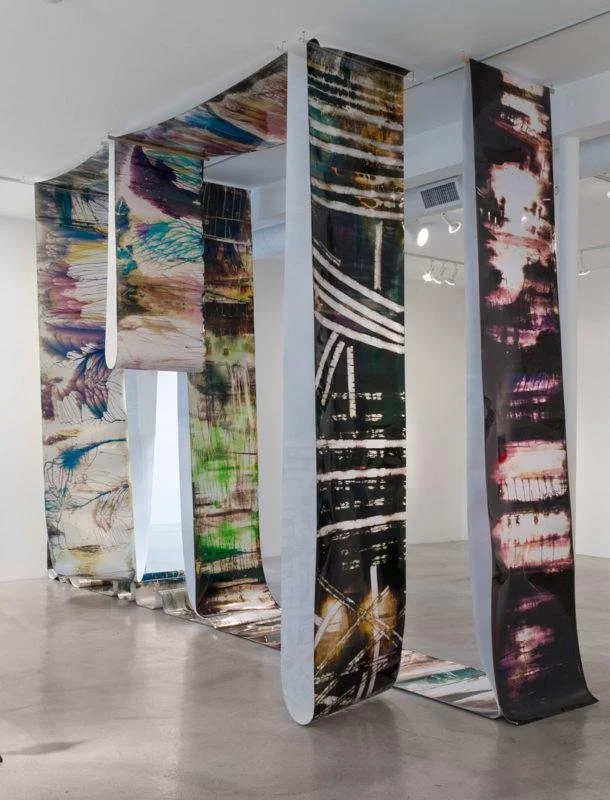
Figure 1. Mariah Robertson, 113, 2012, unique colour print on metallic paper, 30x1968 inches (762x49987mm)
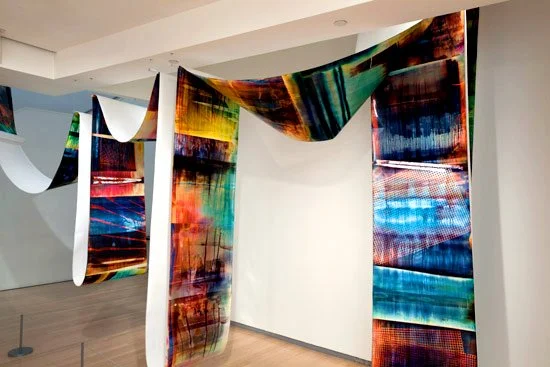
Figure 2. Mariah Robertson, 154, 2014
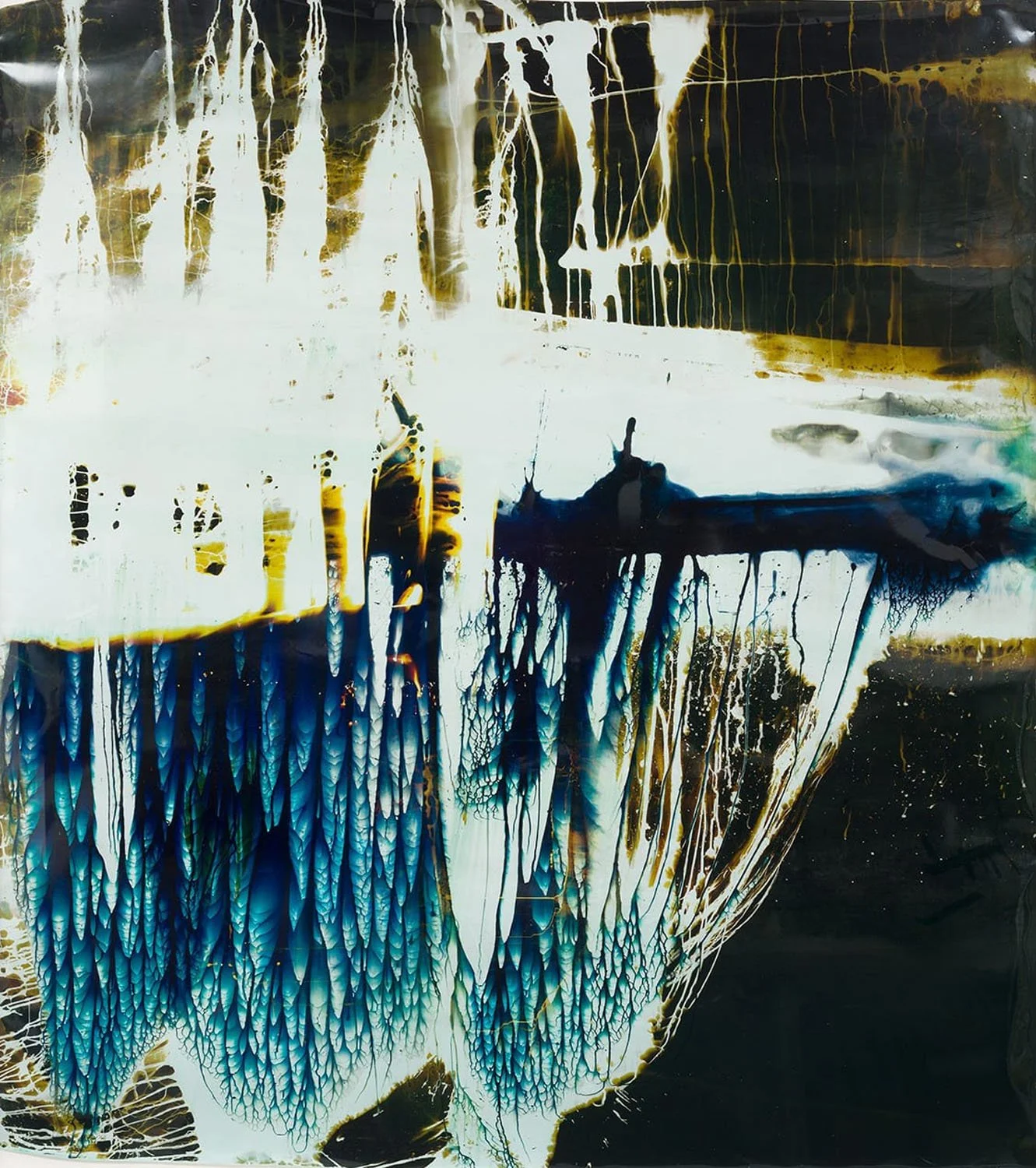
Mariah Robertson, 16, 2014, unique chemical treatment on RA-4, 2108x1854mm
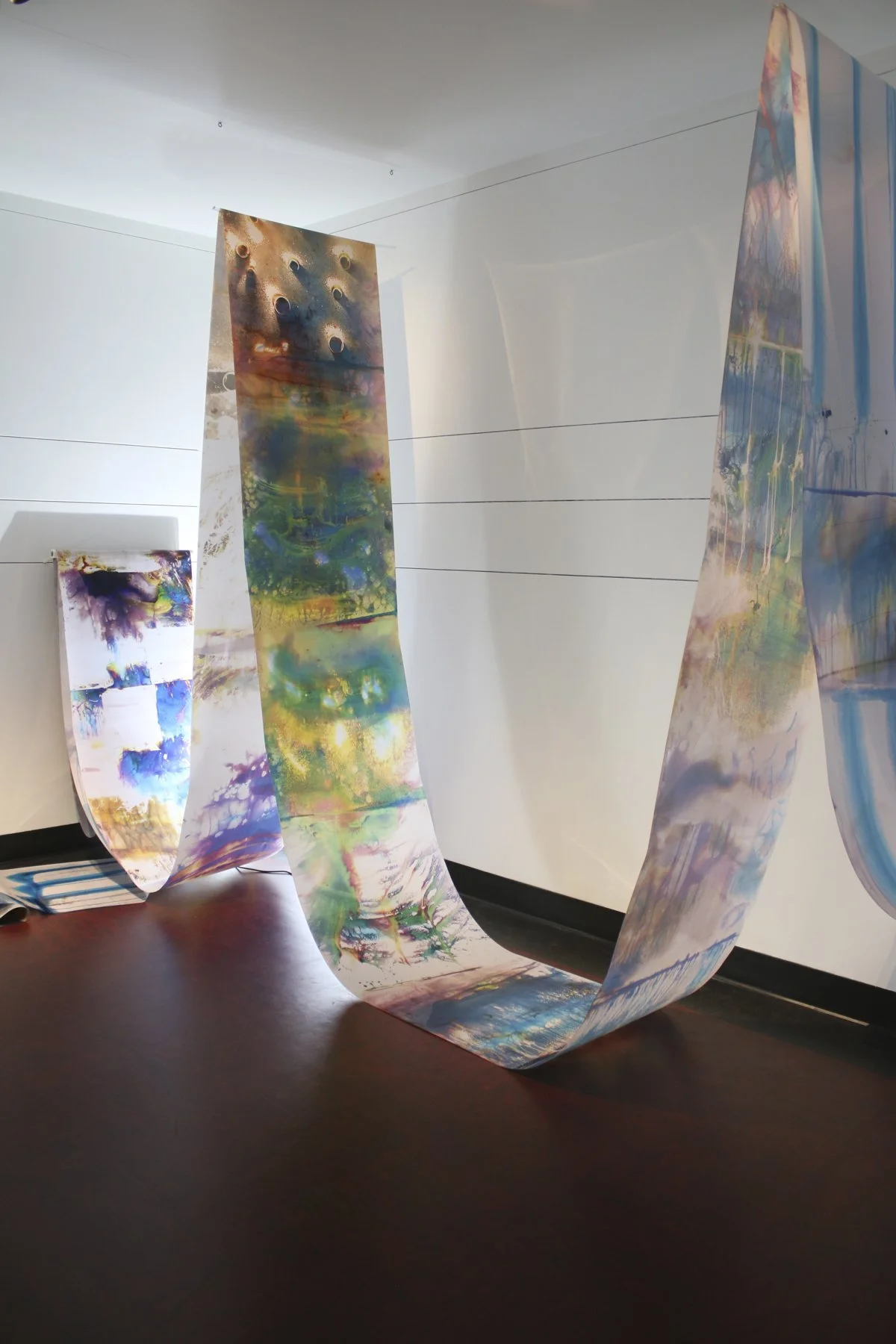
Mariah Robertson, 209, 2019, unique c-print, Ilfotrans, 760x 36940mm
Keywords
Chemical, Camera-less, Contemporary, Abstract, Photography
References
Robertson, Mariah. 2012. 113. Image. https://art21.org/artist/mariah-robertson/.
2014b. 16. Image. https://www.mbart.com/exhibitions/119/works/artworks-10103-mariah-robertson-16-2014/.
Robertson, Mariah. 2014. 154. Image. https://greg-neville.com/tag/mariah-robertson-prints/.
Robertson, Mariah. 2014. “New York Close Up, ‘Mariah Robertson's Chemical Reactions.” Art21. October 18, 2014. YouTube video, 09:21. https://www.youtube.com/watch?v=Dv17mnCyq0A.
Robertson, Mariah. 2019. 209. Image. https://www.mariahrobertson.com/work/entire-box-of-photo-paper-works
Robertson, Mariah. 2020. “Tapping Into the Subconscious with Mariah Robertson” Interview by Kinji Fujishima. Fine Art Globe. https://fineartglobe.com/exhibitions/tapping-into-the-subconscious-with-mariah-robertson/.
Squires, C, Batchen, G, Baker, G & Steyerl H 2013, What Is a Photograph?, International Center for Photography and DelMonico Books, New York, NY
Justine Varga
Justine Varga’s practice is located in the landscape of antique photographic processes. Varga’s photogenic drawing, Maternal Line (2017), presents an alternative perspective of portraiture (Figure 10).[1] Cultivating interaction between subject and medium, the image was created with the saliva of Varga’s grandmother drawn directly onto a large format negative. Varga describes Maternal Line as evoking a relationship between people (Lakin 2017, 72).[2]
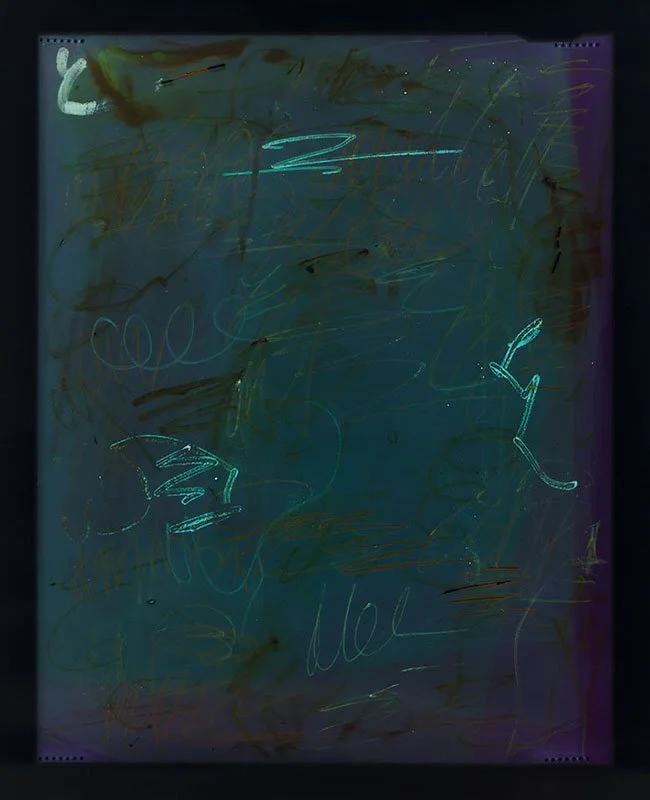
Justine Varga, Maternal Line, 2017, c type photograph, 1570x1220mm
Footnotes
[1] Cliché verre, or glass printing, is an early nineteenth-century cameraless process in which an image or impression is handcrafted onto a transparent substrate to create a photographic negative or matrix, which can be printed onto any commercial and handcrafted photosensitised (light-sensitive) material, such as gelatin silver, C-type, salt and albumen paper, Polaroids, and photographic film (Schenck 1995).
[2] Varga received the “Olive Cotton Award” (2017) for Maternal Line. The contemporary image of portraiture provoked great debate in the rank and file of traditionalists, with Dr Shaune Lakin – senior Olive Cotton Awards judge – receiving unfavourable feedback condemning his choice for the prestigious prize (Shoebridge, Saunders and Turnbull 2017).
Hiroshi Sugimoto
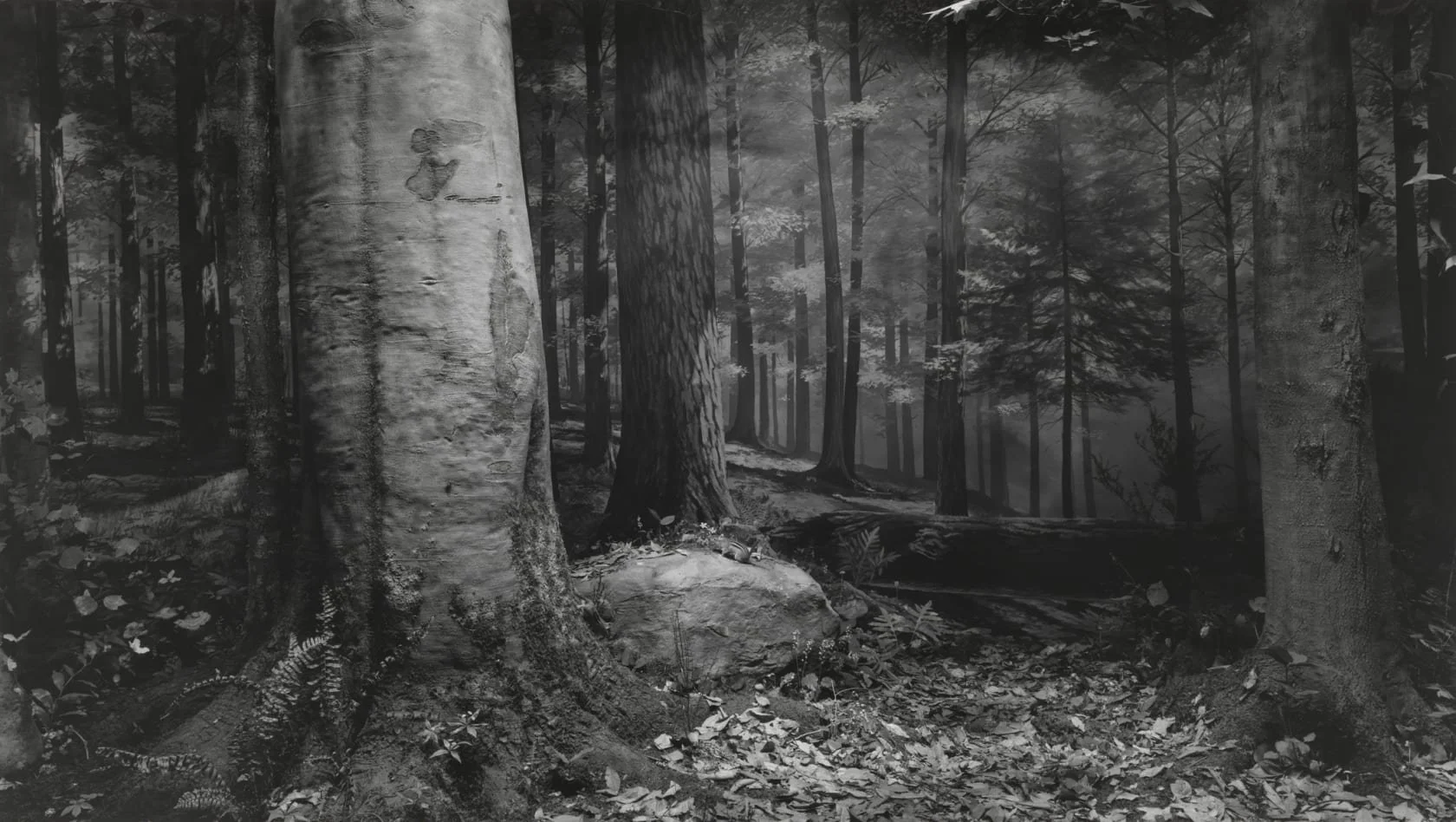
Hiroshi Sugimoto, Original Forest in Northern Pennsylvania, 1980, gelatin silver print, 1194×2108mm
Bibliography
Sugimoto, Hiroshi. 1980. Original Forest in Northern Pennsylvania. Image. https://www.artsy.net/artwork/hiroshi-sugimoto-original-forest-in-northern-pennsylvania
Elieen Quinlan
First published 18 May 2020
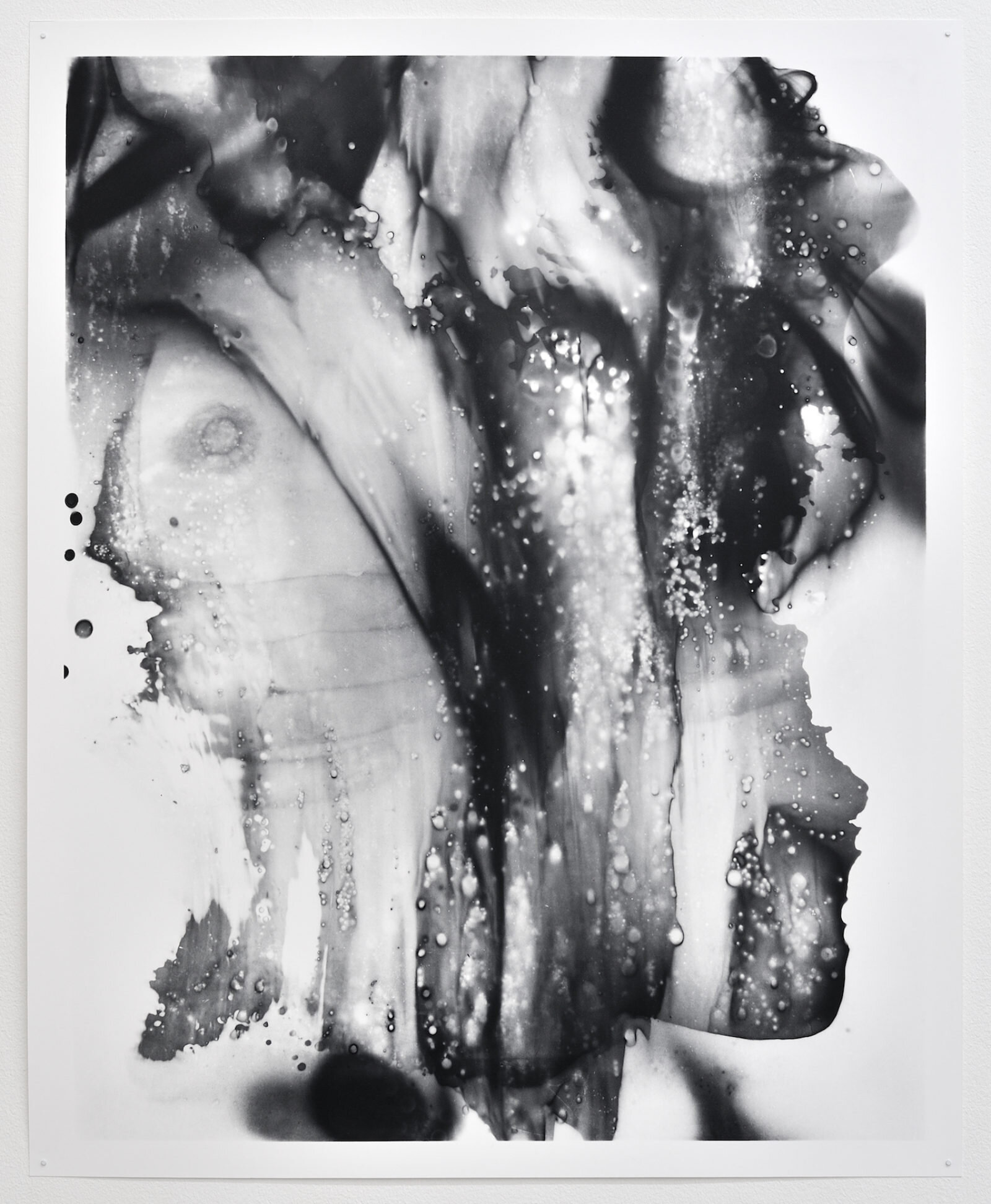
American contemporary photographer Eileen Quinlan challenges "the conventions of photography", turning the lens inwards to explore the durational transformation of lived experience, memories and materials (Cotton 2013, 366). Following in the footsteps of practitioners from Moholy-Nagy to James Welling”, the artist deconstructs the intricacies of photographic technique and technology to reveal “new means of expression" (Stillman 2011).
Quinlan's work and approach to photography have contributed to my deepening appreciation of the potentiality of the medium, "present as a quality of the image due to the irreducibility of the abstract and the real, on the one hand, as well as the incorporation within any understanding of their work of the techniques of which they are the result, on the other (Benjamin 2010,199).
All but mirroring my own experience, Quinlan (2013) recalls how music “lifted me out of a […] tremulous adolescence, connecting me for the first time to like-minded souls”. The artist reflects, “Through music, I discovered joy, community, and hope, not to mention an identity” (ibid).
In 2020 I commenced study in the Master of Photography program at RMIT University Melbourne. Less than six weeks into the course, the pandemic's onset and ensuing lockdowns forced me to look outside my 20-year career in the live music sector as a concert and social documentary photographer (Damage 2021, 8-9). Through my research, I discovered the work of Eileen Quinlan. The artist inspired my exploration of abstraction and development of practice in alchemical modes of the medium – as seen in Invent Define Destruct (ibid, 34-40) –Quinlan’s multidisciplinary approach in selecting subject matter and processes – continues to inform my practice four years on.
Eileen Quinlan, No One Sleeps 2014
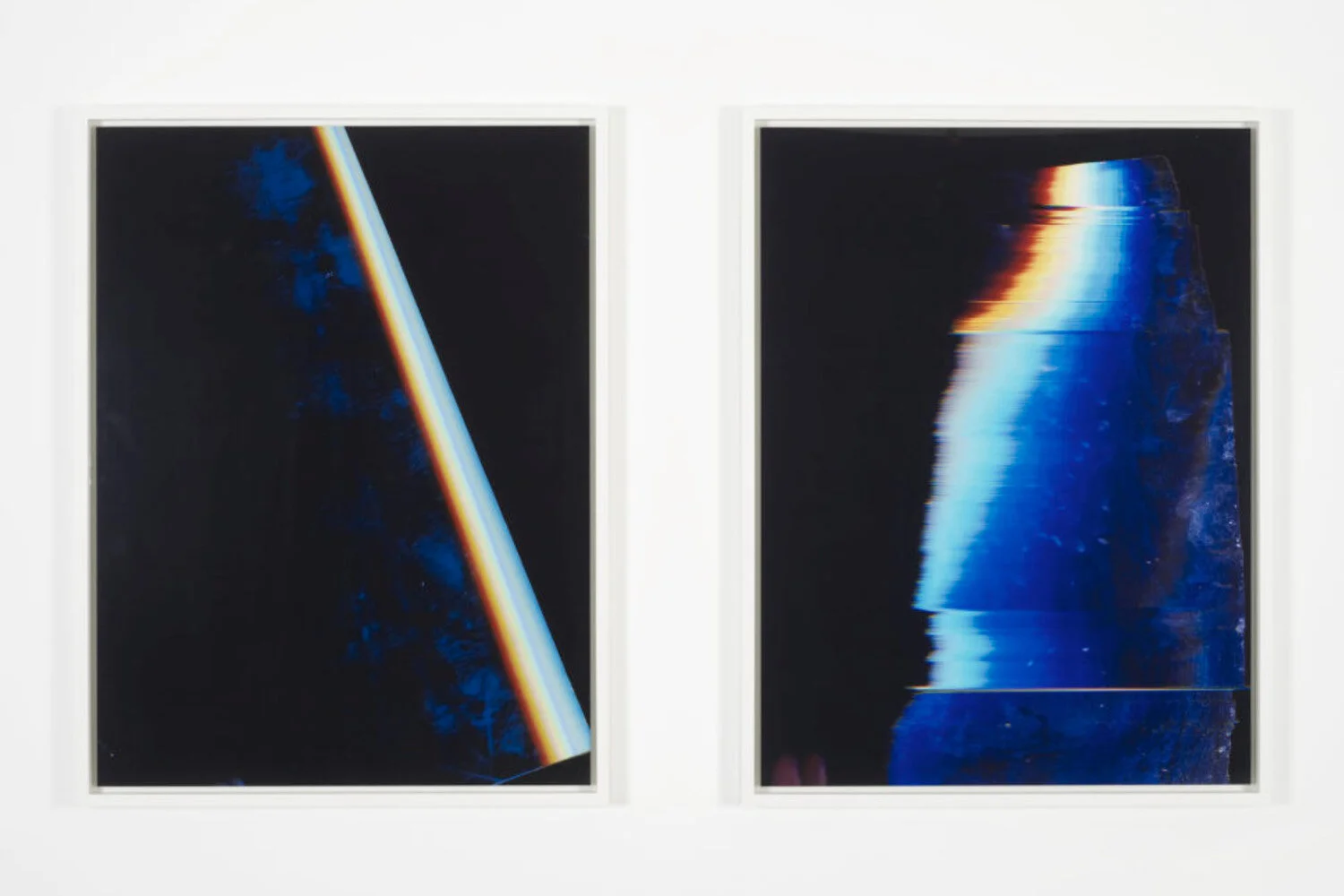
Eileen Quinlan, Fried Sensor 2015
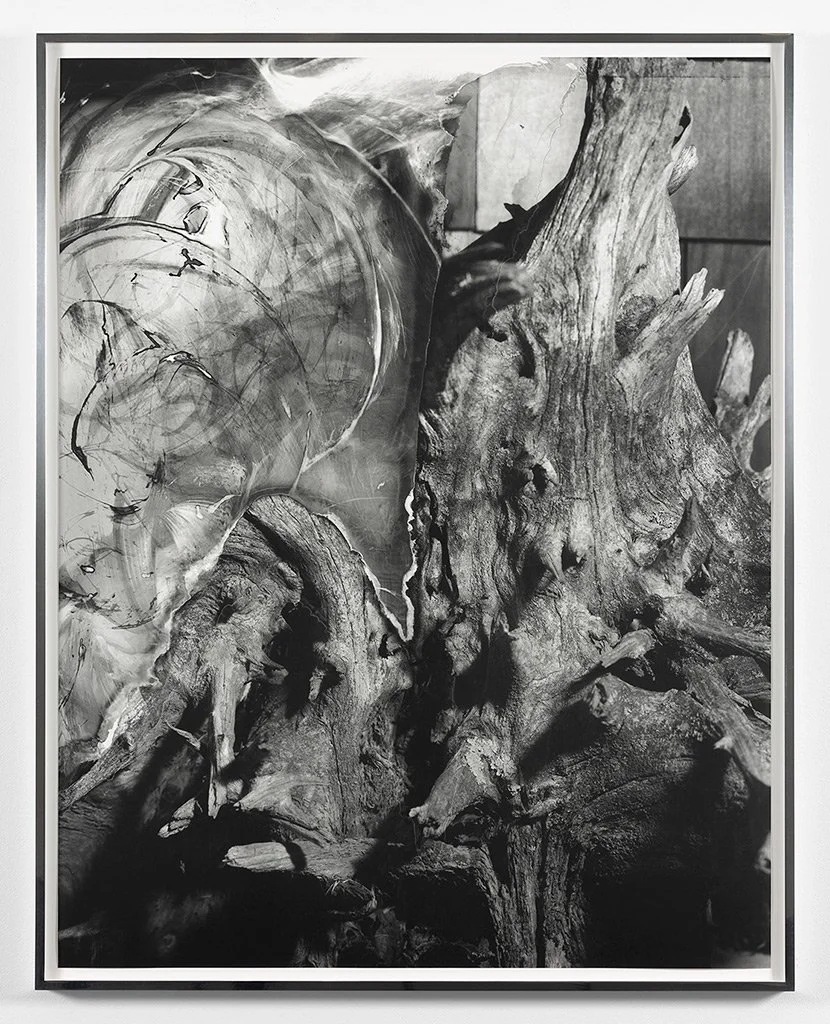
Eileen Quinlan, Camp Creek, 2020, gelatin silver print, 1168x914mm
Relevance to practice
Abstraction, Contemporary, 21st-century, Photography, Alternative photography, Film, Large format, Darkroom, Alternative printing
Keywords
Eileen Quinlan, Contemporary, Photography, Abstract, Photogram, Chemography, Large format, Medium format, 21st-century artists, Community of practice
References
Cotton, Charlotte. 2015. Photography Is Magic. New York: Aperture.
McDonough, Thomas. 2016, "Eileen Quinlan Between Substrate and Sublimate". Eileen Quinlan Selected Press: 2-5. Miguel Abreu Gallery. PDF. https://miguelabreugallery.com/wp-content/uploads/2014/07/EQuinlan_SelectedPress_opt-2.pdf>
Quinlan, Eileen. 2013. “THIS LONG CENTURY.” Thislongcentury.com. 2013. http://www.thislongcentury.com/eileen-quinlan.Cotton, C 2015, Photography is Magic, Aperture Foundation, New York, NY
Quinlan, Eileen. 2014. No One Sleeps. Image. https://www.campolipresti.com/artists/eileen-quinlan/bio.
Quinlan, Eileen. 2015. Fried Sensor. Image. https://miguelabreugallery.com/artists/quinlan/works/.
Quinlan, Eileen. 2020. Camp Creek. Image. https://miguelabreugallery.com/artists/quinlan/works/.
Squires, C, Batchen, G, Baker, G & Steyerl H 2013, What Is a Photograph?, International Center for Photography and DelMonico Books, New York, NY
Stillman, Steel. 2011. “Eileen Quinlan: An Interview”. Art News. https://www.artnews.com/art-in-america/features/eileen-quinlan-2-62881/.
Klea McKenna
Klea McKenna embodies the ideal of what defines contemporary photography, applying innovation to create unique photographic works of art with striking detail and immaterial abstraction (Figures 1 and 2). In her series Automatic Earth, McKenna underscores the materiality of photograms, hand embossing the “rings of cross sections of trees and into cracks in the earth” to create imprints of their surfaces on photographic paper. McKenna then exposes the imprinted substrate to light, producing what the artist defines as a “photographic relief” (McKenna 2023). As seen in the images that are the foundation of Trust, Possibilities and Spheres – that acknowledge the rejuvenation of Melbourne’s inner-city waterways and parklands – the artist honours the histories of the referents through physical engagement with her techniques, equipment and subject matter to reveal profound nuance and energy.
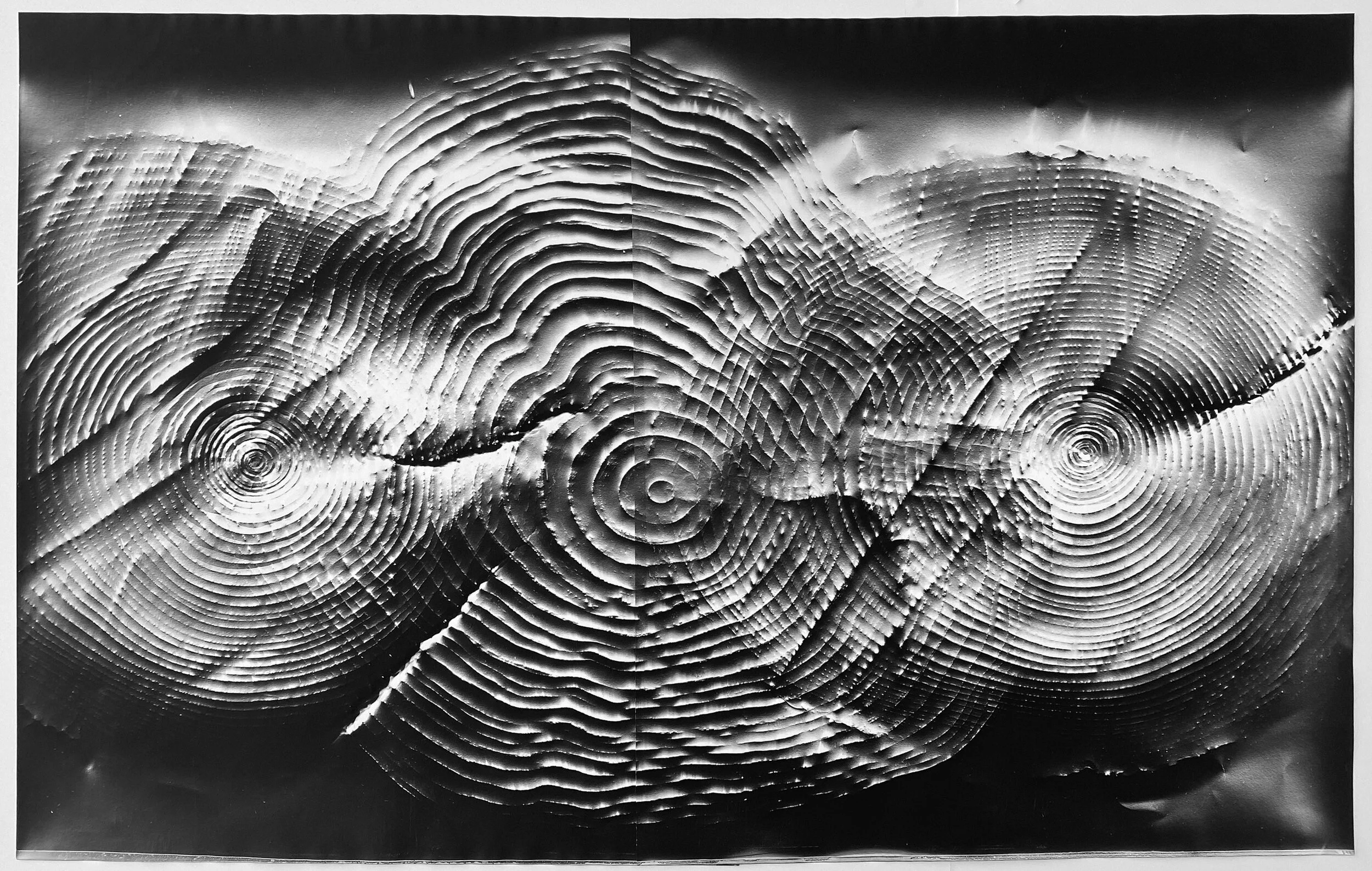
Klea McKenna, Your Generation, 2016, photographic rubbing, unique gelatin silver photogram, 610x940mm
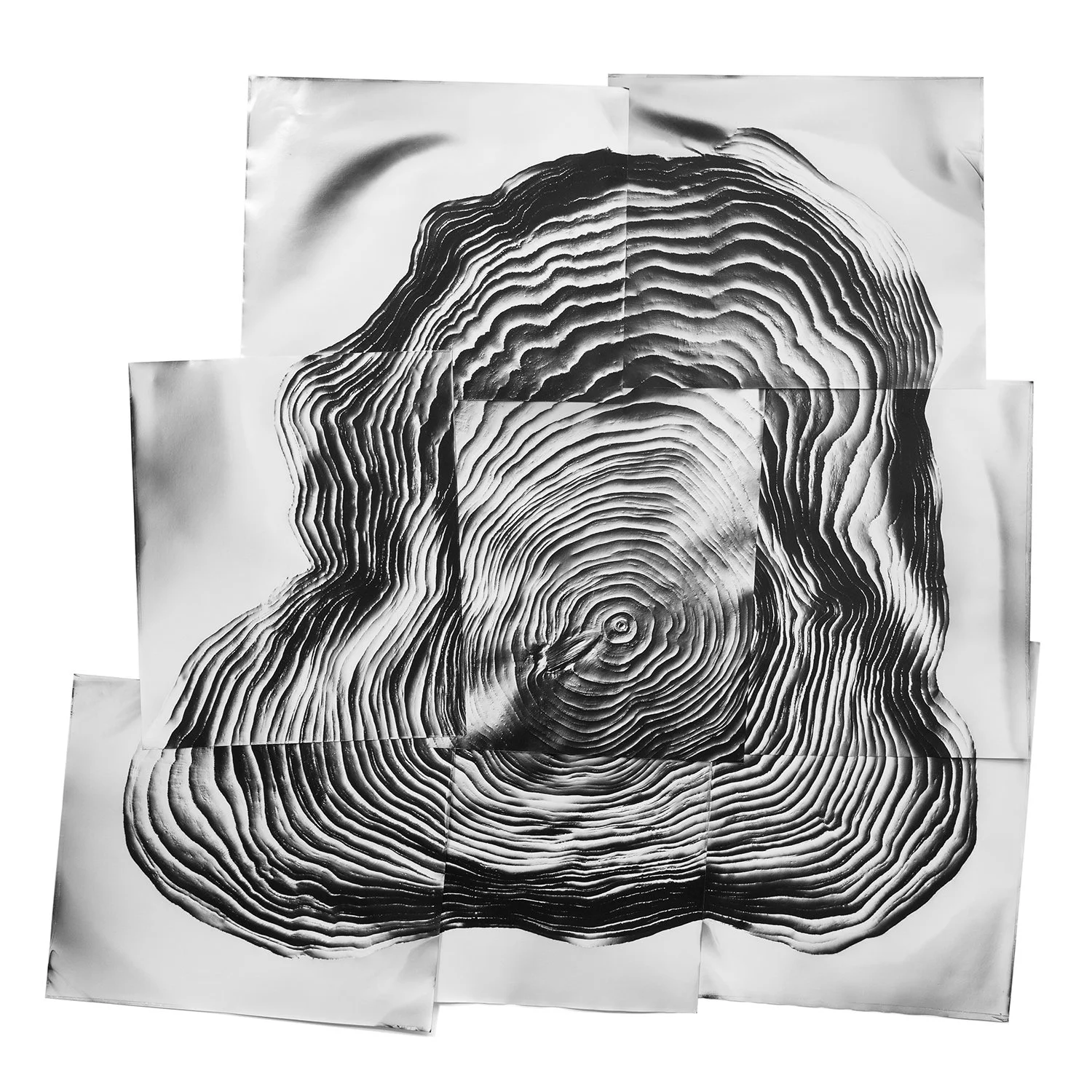
Klea McKenna, Motherland #2, 2017, photographic rubbing, unique gelatin silver photogram, 1524x1524mm
Bibliography
McKenna, Klea. 2016. Your Generation. Image. https://www.euqinomgallery.com/mckenna_automaticearth.
McKenna, Klea. 2017. Motherland #2. Image. https://www.euqinomgallery.com/mckenna_automaticearth.
McKenna, Klea. 2023. “Automatic Earth”. ISSUU. PDF. https://issuu.com/euqinomprojects/docs/klea_mckenna_automatic_earth_available_inventory.
Wolfgang Tillmans
First published 18 April 2020
Last updated 6 June 2023
Wolfgang Tillmans’ Frieschwimmer series was created using dry, cameraless analogue photographic processes. The artist used his hands to manipulate light to create the patterns on the paper during development. The colour was introduced into the images by way of Tillmans’ use of a colour head enlarger and C-type paper. Many art critics regard Tillmans’ work to be situated between observational and abstract photography, creating new narratives while offering a significant contribution to the overarching field of contemporary photography.
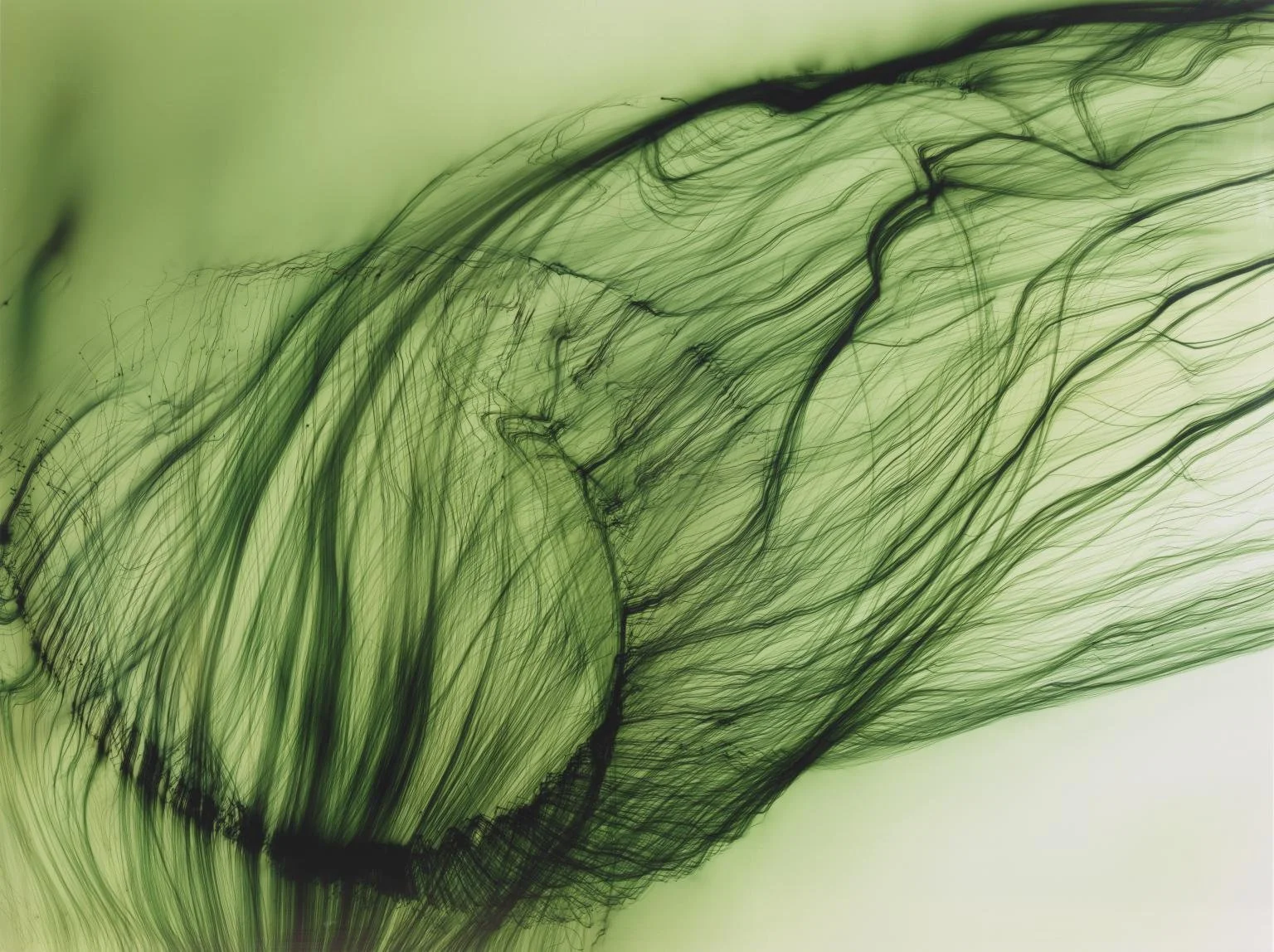
Wolfgang Tillmans, Freischwimmer 16, 2003, c-type print on paper, 2395×1797mm
Relevance to practice
Alternative printing, Abstraction, Darkroom, Analogue, Experimentation, Technical, Paradoxical
Keywords
21st century, Art, Photography, Technology, Digital, Perspective, Arrangement, Exploration, Contemporary
References
Artspace Editors. 2016. “8 New Classics of 21st-Century Photography You Need to Know Now.” Artspace. 2016. https://www.artspace.com/magazine/art_101/book_report/phaidon-photography-21st-century-list-53466.
Tillmans, Wolfgang. 2003. Freischwimmer 16. Image. https://www.tate.org.uk/art/artworks/tillmans-freischwimmer-16-p20284.
Uta Barth
First published 15 August 2020
Uta Barth
Germany
1958–
Practice: Photography
Movement/Style: Contemporary
Uta Barth is best known for her alternative use of light, colour and focus, producing abstraction and distortion, resulting in an elusive and ethereal discourse of her images and subject matter. Barth considers her work never directly addresses the literal subject matter of the photograph but attempts to ask questions about vision itself, photographing sound, non-space and in-betweens. In her presentation for The Modern Art Museum of Fort Worth (2011), Uta Barth discusses her work over the past 20 years. Barth shares her influences and inspirations as she questions the interpretation of visual perception. Describing her work as visceral, Barth continues, explaining the application of psychological theories, including phenomenology, to her practice.
“The discussion of these photographs, or anything that lacks focus for that matter, as being ‘painterly’ or ‘pictorialist’, drives me crazy. It assumes that a photograph would secretly–or overtly–aspire to the attributes of painting in order to justify itself as an artwork” (Higgins 2013).
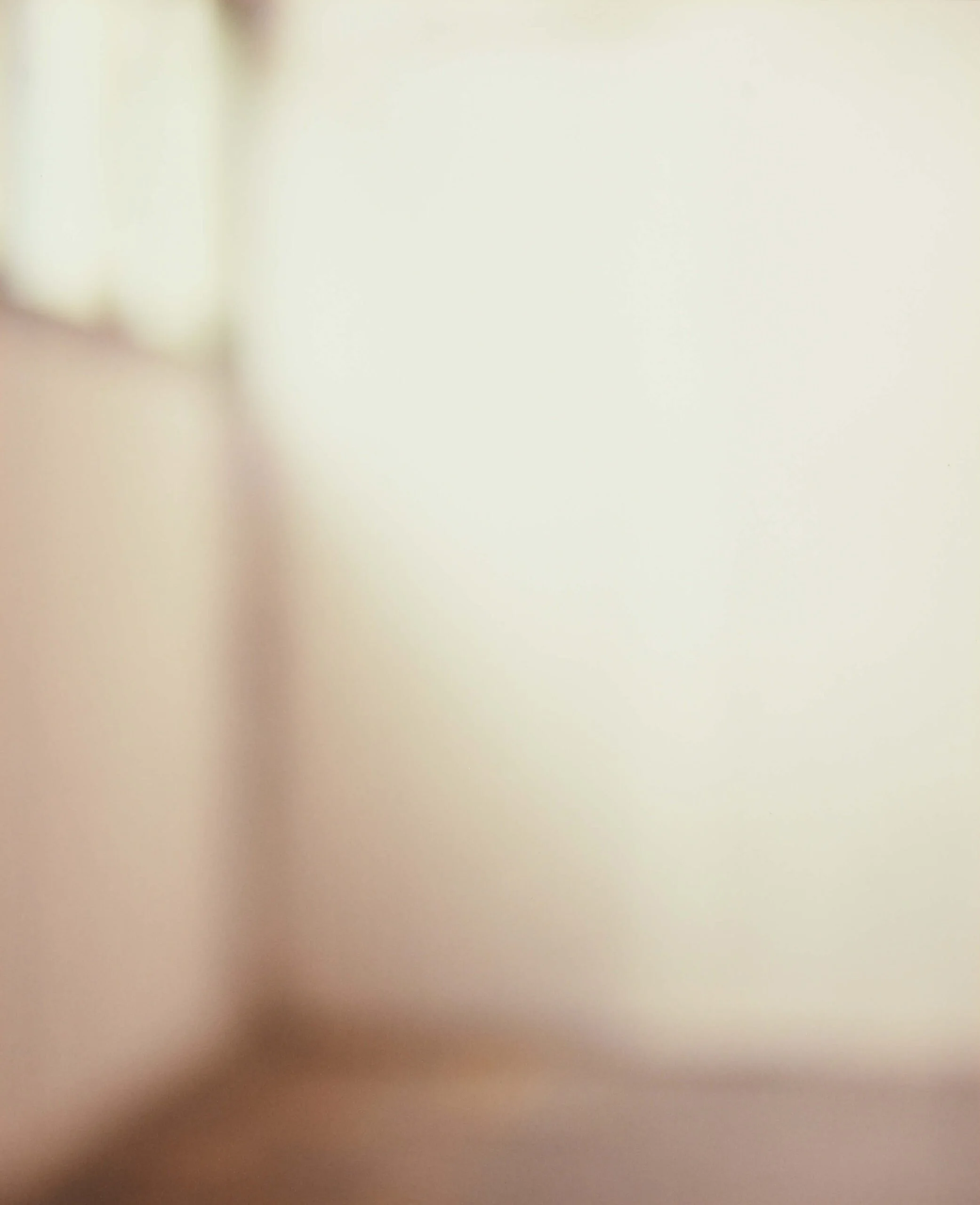
Uta Barth, Ground #56, 1995
Bibliography
Barth, Uta. 1994. Ground #30. Image. https://utabarth.net/work/ground/#image-3.
Barth, Uta. 2011. "Uta Barth 2.8.11". Podcast. Modern Art Museum Of Fort Worth. https://soundcloud.com/themodernpodcast/uta-barth-2811.
Barth, Uta. 2012. "Conceptual Photographer Uta Barth: 2012 MacArthur Fellow | MacArthur Foundation". macfound. October 2, 2012. YouTube video, 03:10. https://youtu.be/xxYcpPDq5iQ.
Sigmar Polke
First published 14 April 2020
Similarly, lens-based German artist Sigmar Polke (Figure 9) applies radical techniques, such as creating in-camera multi-exposures and omitting, bypassing and reversing steps in the darkroom to subvert traditional ideals of the medium.[1] The artist documents his life and surroundings, “altering the aesthetic heredity of his mediums by debasing the integrity of each, cultivating crossovers of material and meaning” (Halbreich 2016, 69). Like myself, Polke is as self-taught photographer, considers “the darkroom as an arena for exploration” and displays a recklessness for “the conventions of photography [which] often resulted in scratched negatives, under- and overexposures, and prints that further obscured details to create visually disorienting compositions” (The J. Paul Getty Museum 2007).
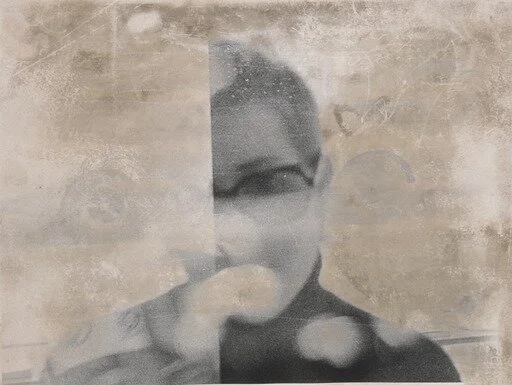
Sigmar Polke, Untitled (Mariette Althaus), c. 1973, unique gelatin silver print, 180x240mm
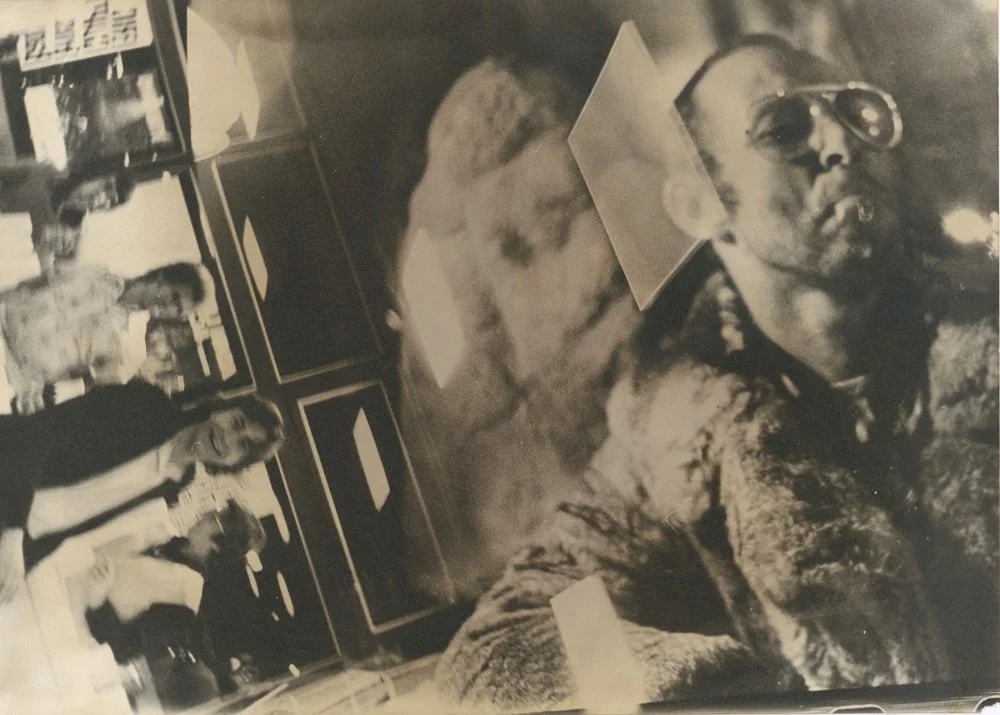
Sigmar Polke, Untitled (Sigmar Polke), c. 1975, photograph on AGFA C90 paper, 210x296mm
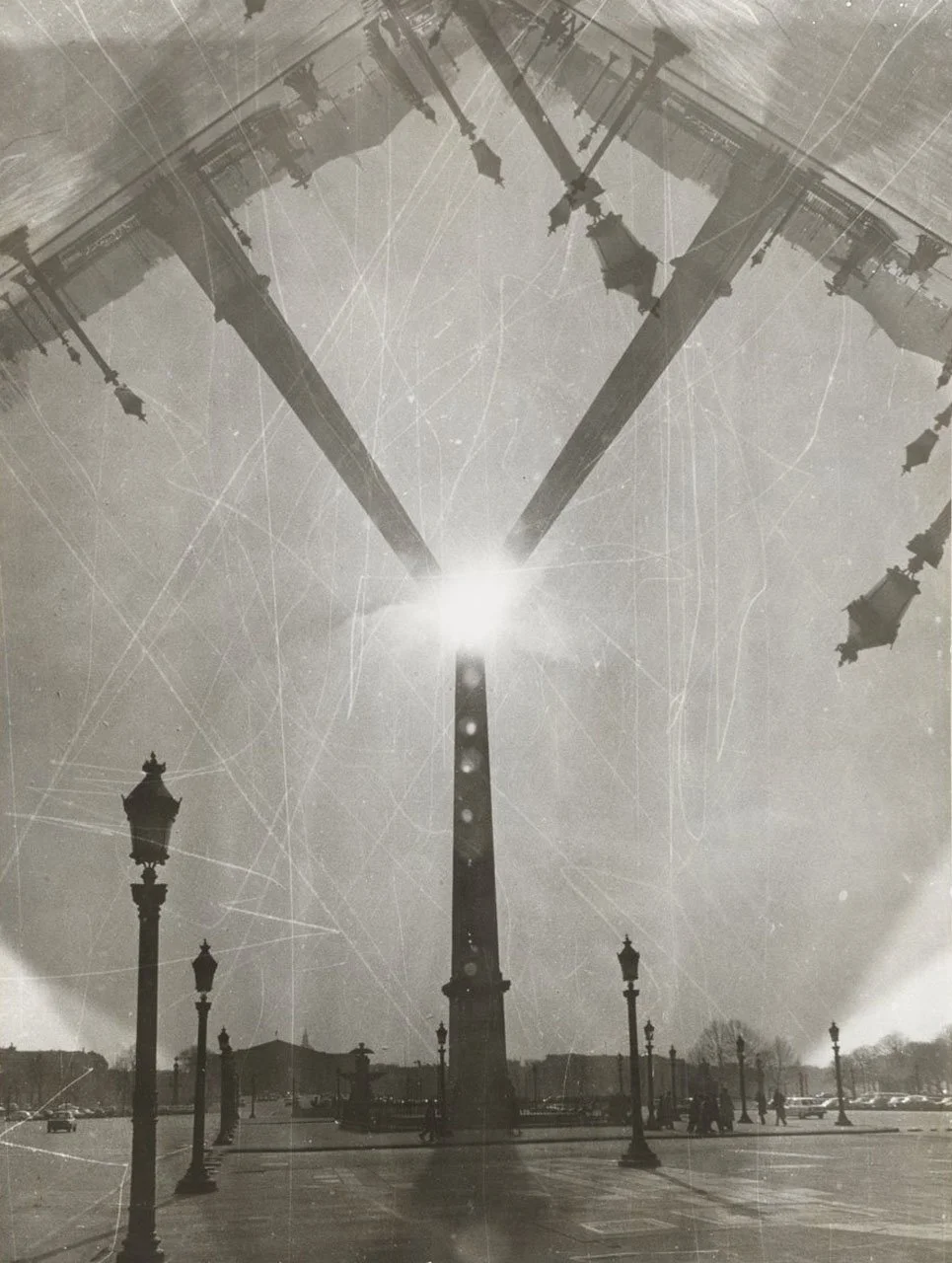
Sigmar Polke, Untitled (Obelisk, Paris), c. 1970. Courtesy Kicken Berlin, Berlin & Sies + Höke, Düsseldorf
Footnotes
An in-camera multi-exposure is when the film is rewound in the camera and repeatedly exposed, resulting in montage-like images embedded directly into the negative.
Keywords
Sigmar Polke, Painting, Photography, Capitalist realism, Abstract, Art, Community of practice, Expressionism, Contemporary, Alternative, Film, Darkroom, Courage, Pushing boundaries
References
Polke, Sigmar. c. 1975. Untitled (Obelisk, Paris). Image. https://news.artnet.com/market/sigmar-polke-at-paris-photo-11451237.
Polke, Sigmar. c. 1973, Untitled (Mariette Althaus). Image. https://www.moma.org/collection/works/149078.
Polke, Sigmar. c. 1975. Untitled (Sigmar Polke). Image. https://www.maxhetzler.com/zh/exhibitions/sigmar-polke-zeitreise-photographs-1966-1986collection-georg-polke-2020/works/#img27.
Rowell, Margit, Michael Semff, and Bice Curiger. 1999. Sigmar Polke WORKS on PAPER 1963-1974. New York: Museum Of Modern Art. PDF. https://www.moma.org/documents/moma_catalogue_187_300100396.pdf.
Squires, Carol and George Baker 2013. What Is a Photograph?. New York: International Center for Photography and DelMonico Books.
Thistlewood, David. 1996. Sigmar Polke: Back to Postmodernity. Liverpool: Liverpool University Press And Tate Gallery Liverpool.
Williams, Gregory. 2016. "Gregory H. Williams. Review of 'Alibis: Sigmar Polke, 1963–2010' by Kathy Halbreich". caa.reviews. http://www.caareviews.org/reviews/2337#.Yq2CS-xBzUI.
Halbreich, Kathy, Mark Godfrey, Lanka Tattersall, and Magnus Schaefer. 2014. Alibis: Sigmar Polke 1963–2010. London: Tate Publishing.
Oscar Munoz
Colombian artist Oscan Muñoz considers his art practice an effort to recollect and, to some degree, exploit notions of perception and memory. Moreover, Muñoz poignantly redefines the history of Colombia in his work and installation art. Munoz's Invisibilia is a retrospective that spans four decades of work, comprising charcoal drawings from the 1970s to multimedia pieces of today. Invisibilia curator Vanessa Davidson states that Colombia's historical bloodshed is emphasised in Muñoz's work, associating "the precariousness of life with the fragility of the image". Although known as a photographer, Munoz's half-century career extends to the artist working in other mediums such as painting, printmaking, sculpture, and installation art (Greenwood 2022).
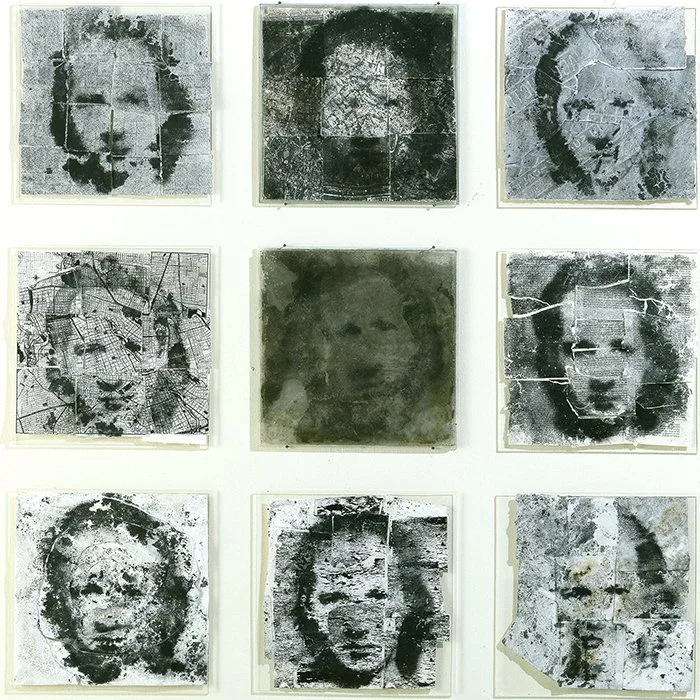
Figure 1. Oscar Muñoz, Narcisos secos (Dry Narcissi), 1994–1995, charcoal powder and paper in plexiglass containers, six elements, 51x352x352mm (each)
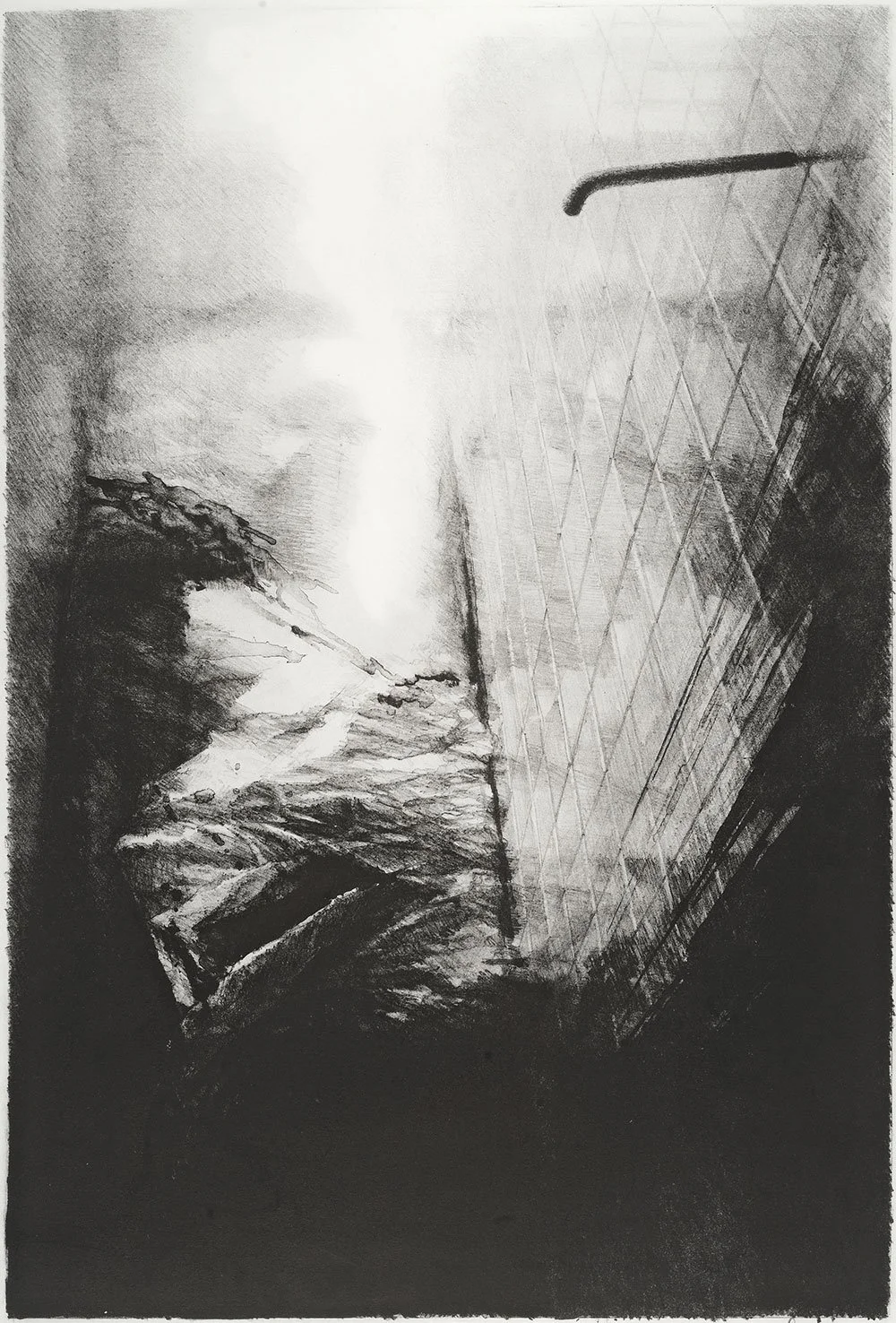
Figure 2. Oscar Muñoz, Interior, c.1987, lithograph, 762x508mm
Bibliography
“ÓSCAR MUÑOZ - Arts of the Americas.” n.d. Art of the Americas. Accessed August 21, 2022. http://www.oas.org/artsoftheamericas/oscar-munoz.
Greenwood, Caitlin. 2022. “Imagining the Invisible: Oscar Muñoz’s Retrospective at the Blanton.” Arts and Culture Texas. http://artsandculturetx.com/imagining-the-invisible-oscar-munozs-retrospective-at-the-blanton/.
Muñoz, Oscar. c.1987. Interior. Image. http://www.oas.org/artsoftheamericas/oscar-munoz.
Muñoz, Oscar. 1994-95. Narcisos secos (Dry Narcissi). Image. http://artsandculturetx.com/imagining-the-invisible-oscar-munozs-retrospective-at-the-blanton/.
Doug and Mike Starn
Doug Starn and Mike Starn “address issues such as beauty and impermanence” through the materiality of non-traditional modes of the medium to create immense installations of bespoke photographic works on paper. Their work illuminates an expanded investigation of how installation art cultivates interactivity and shared experience while debasing photography’s emphasis on the single image and the constraints held within the frame (Higgins 2013, 86). According to the brothers, “Photography isn’t just an image, any more than a painting is just paint. The print is an object, and this object becomes the embodiment of a concept” (ibid).
To create the Attracted to Light series, the brothers first captured images of moths using a custom macro lens developed and constructed by the brothers to achieve incredible detail of the tiny insects. Next, exposures on bespoke mulberry paper, hand-painted with photographic silver emulsion – the minute flakes of the light-sensitive materials washing away to “[mimic] the moths’ delicate and tattered wings, while the soft paper echoes their velvety texture” (Lehmann Maupin 2014). According to Higgins (2013, 86), Doug Starn and Mike Starn use photography to explore how the "microcosm informs the macrocosm".
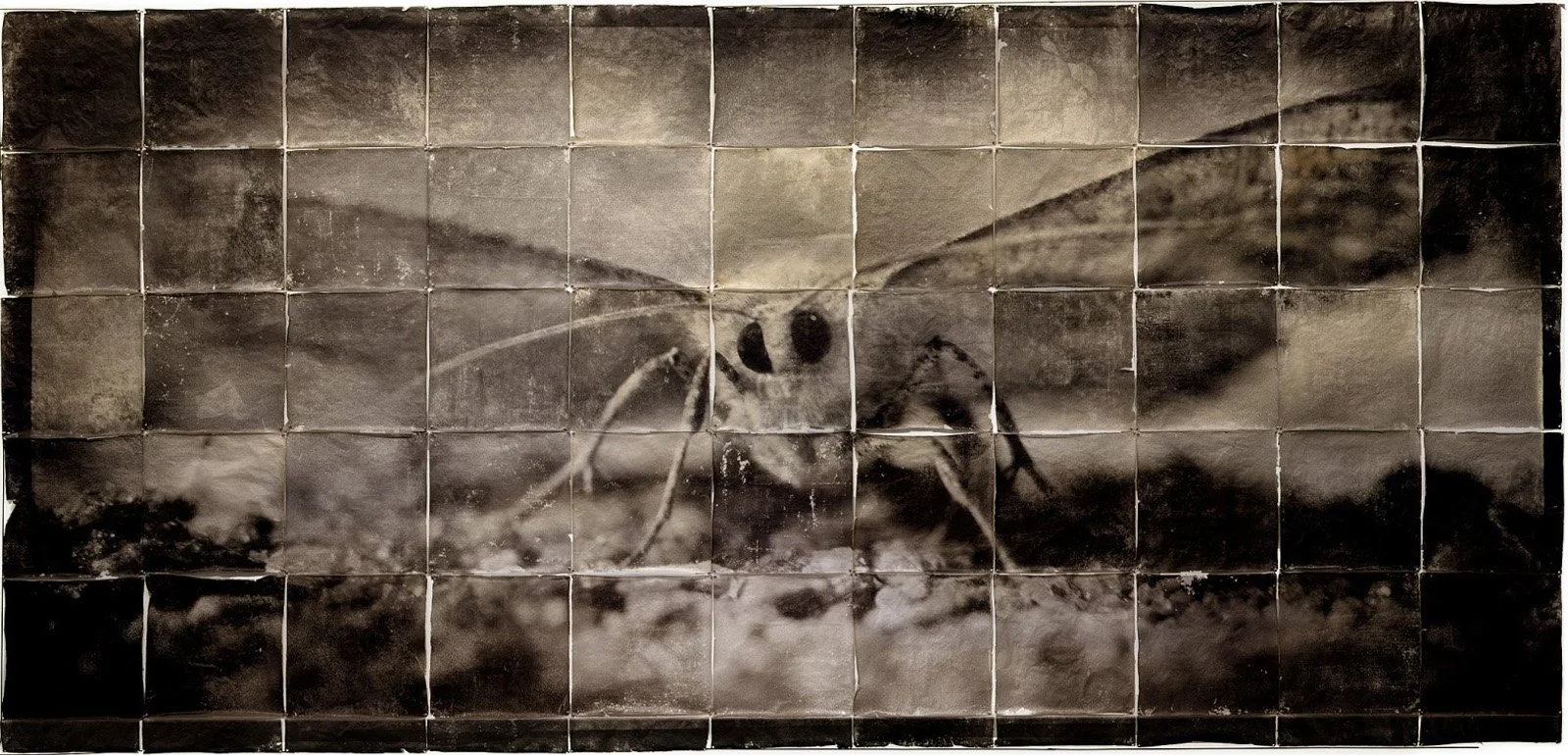
Figure 1. Doug and Mike Starn, Attracted to Light 1, 2000–2003, sulfur-toned and tea-stained silver print on Thai mulberry paper, 3048x6401mm
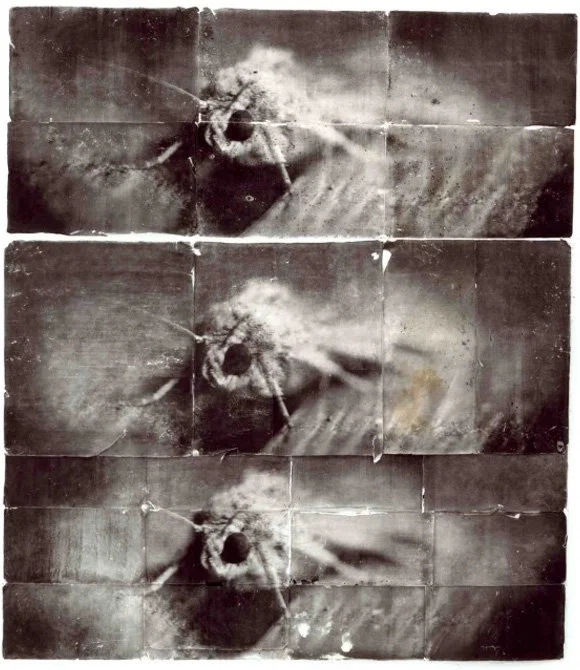
Figure 2. Doug and Mike Starn, Attracted to Light 2 (Triple), 2000, sulfur toned silver prints hand-coated on Thai mulberry paper, 1600x1600mm
Bibliography
“Attracted to Light (H).” n.d. Philadelphia Museum of Art. Accessed August 21, 2022. https://philamuseum.org/collection/object/93670.
“Mike & Doug Starn.” n.d. Wetterling Gallery. Accessed August 21, 2022. https://www.wetterlinggallery.com/artists/mike-doug-starn.
Higgins, Jackie. 2013. Why It Does Not Have To Be In Focus. London: Thames & Hudson.
Starn, Doug, and Mike Starn. 2000. Attracted to Light 2 (Triple). Image. https://www.mandatory.com/living/1003235-like-moth-flame-drawn-art-mike-doug-starn.
Starn, Doug and Mike Starn. 2000-2003. Attracted to Light. Image. https://www.lehmannmaupin.com/ch/zhan-lan/doug-mike-starn.
Christine Cornish
Australian contemporary artist Christine Cornish combines painting and drawing with photography. Cornish investigates "the self-consciousness of individual perception", particularly interested in the relationship "between perception, memory and knowledge". Cornish relates "subjective vision" as being restricted by governance and principles that stem from cultural and scientific rhetoric than from an "understanding of perception itself. Merging physical and faux space with "objects that suggest ephemeral cultural phenomena", Cornish aims to unpack "the inextricable yet abstruse materiality of things that make up our ordinary daily experiences". Moreover, Cornish "modulates the images through layering and drawing before photographing to distancing materiality from the material and objects from their origins and their objections" (Cornish 2006).
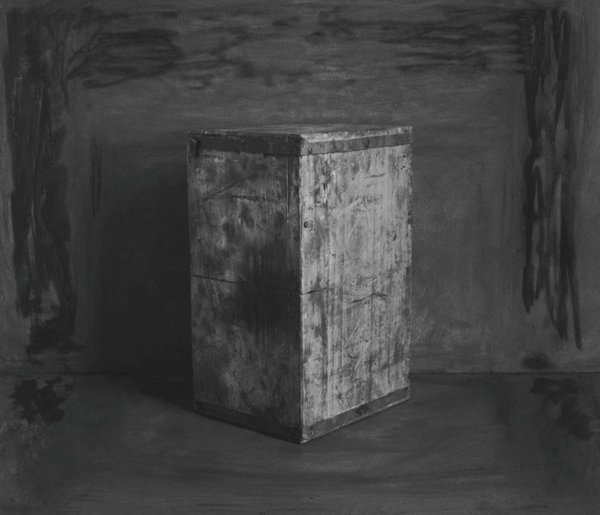
Figure 1. Christine Cornish, Natura Morta V, 1987, gelatin silver print, 377x414mm
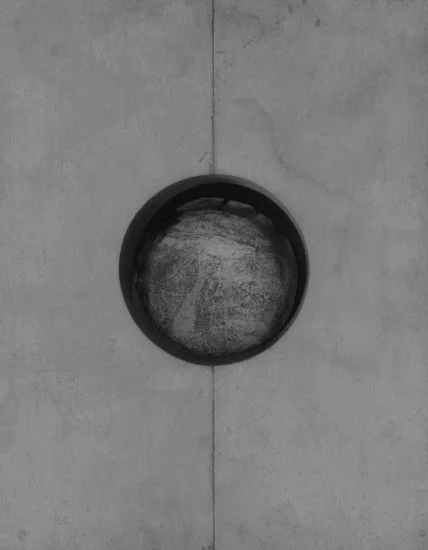
Figure 2. Christine Cornish, Datum 17 , 2001, gelatin silver print, 495x408mm
Keywords
Christine Cornish, Analogue photography, Contemporary photography, Australia
Bibliography
Cornish, Christine. 1987. Natura Morta V . Image. http://www.australianphotographers.org/artists/christine-cornish/photos#301.
Cornish, Christine. 2001. Datum 17. Image. http://www.australianphotographers.org/artists/christine-cornish/photos#313.
Cornish, Christine. 2006. "Christine Cornish". Australian Photographers. http://www.australianphotographers.org/artists/christine-cornish.
David Tatnall
David Tatnall, regarded as one of Australia’s foremost experts in large format (Lane 2007) and pinhole photography (Hodgkinson 2015), pushes the boundaries of the medium, epitomising the ephemerality of time and space, particularly evident in the atmospheric potency of the artist’s long exposure pinhole photographs.
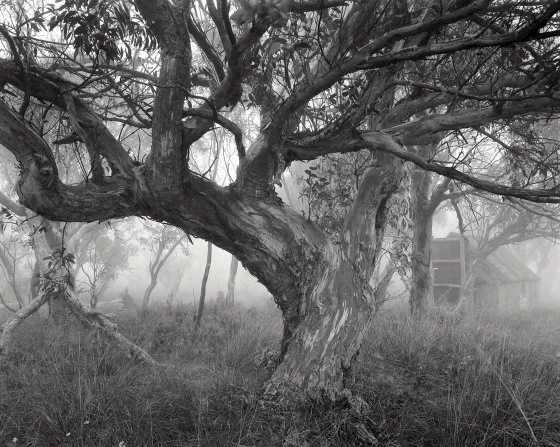
Figure 1. David Tatnall, Snow Gum and CRB Hut, 2012, gelatin silver print, 508x406mm
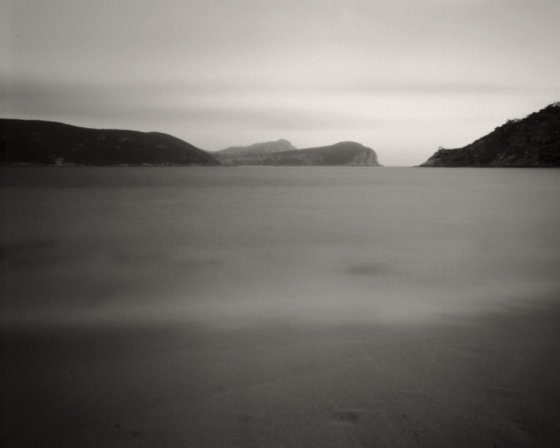
Figure 2. David Tatnall, Erith Island Bulli Bay, 2012, pinhole photograph gelatin silver print, 279x356mm
Keywords
David Tatnall, Photographer, Large format, Pinhole
Bibliography
Hodgkinson, Veronica. 2015. "David Tatnall – Capture Create Share". Veronica-Hodgkinson.Com. http://veronica-hodgkinson.com/?tag=david-tatnall.
Lane, Terry. 2007. “Big Ideas”. Podcast. The Terry Lane Interviews - That Photograph. https://www.abc.net.au/radionational/programs/bigideas/the-terry-lane-interviews---thatphotograph/3212556.
Tatnall, David. 2012. Erith Island Bulli Bay. Image. https://chrysalis.com.au/Artwork-Tatnall-ErithIslandBulliBay-3088.htm.
Tatnall, David. 2012. Snow Gum and CRB Hut. Image. https://chrysalis.com.au/Artwork-Tatnall-SnowGumandCRBHut-3118.htm
Chronophotography
“Similar to what we know today as ‘time-lapse’ photography, the Chronophotography technique is where a sequence of still images are captured over a pre-determined period, then arranged into a single photograph for analysis. A precursor to cinematography, chronophotography was used to study changes in movement” (Corbett 2008).
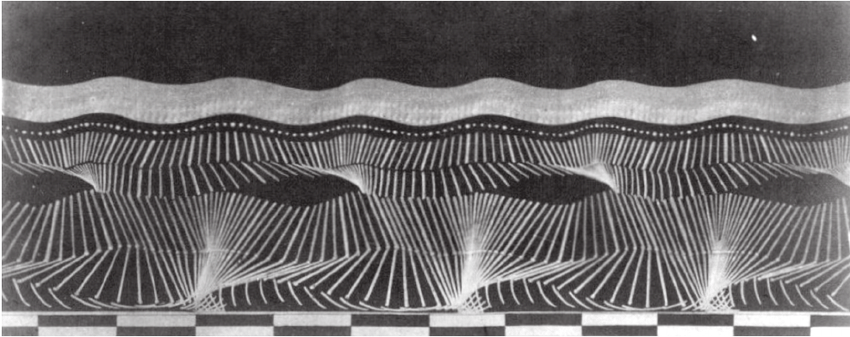
Étienne-Jules Marey, Walking Man, chronograph, 1884
Keywords
Marey, Chronography
Bibliography
Corbett, J. Martin. 2008. "Towards Neuroscientific Management? Geometric Chronophotography And The Thin-Slicing Of The Labouring Body". Management & Organizational History 3 (2): 107-125. doi:10.1177/1744935908092134.
Marey, Étienne-Jules. 1884. Walking Man. Image. https://www.researchgate.net/figure/Etienne-Jules-Marey-Walking-Man-chronophotography-1884-This-was-based-on-adding_fig2_252066643.Marey, Étienne-Jules, and Jackie McAllister. 1997. "Chronophotographs". Grand Street, no. 59: 174. doi:10.2307/25008135.
Marey, Étienne-Jules. 1902. The history of chronophotography. Smithsonian Institute Annual Report 1901. Washington, DC: Smithsonian Institute Publications.
Scharf, Aaron. 1976. "Marey And Chronophotography". Artforum.Com. https://www.artforum.com/print/197607/marey-and-chronophotography-37960.
Sipe, Daniel. 2020. "Aesthetics And The Methods Of Visual Enquiry In The Photography Of Étienne-Jules Marey". French Studies 74 (4): 554-571. doi:10.1093/fs/knaa170.
Tenesh Webber
Tenesh Webber applies photographic techniques to manipulate the image in the darkroom and in-camera in the negative, extending her investigation of photographic mediums through the photogram [1]. Webber's process involves first making sketches to develop her concepts and ideas. The artist then composes the image by arranging objects such as sewing thread and drawing directly on a sheet of clear, transparent acetate akin to a pane of glass to create a film negative-like 'exposure plate'. The 'exposure plate' is then positioned on or over a light-sensitive substrate from which Webber creates 'cameraless' photographic images. Although I have made several photograms in the traditional sense of placing objects directly onto light-sensitive surfaces, I had not considered using acetate sheets to create ‘exposure plates’ and look forward to exploring how to incorporate these methods into my practice moving forward.
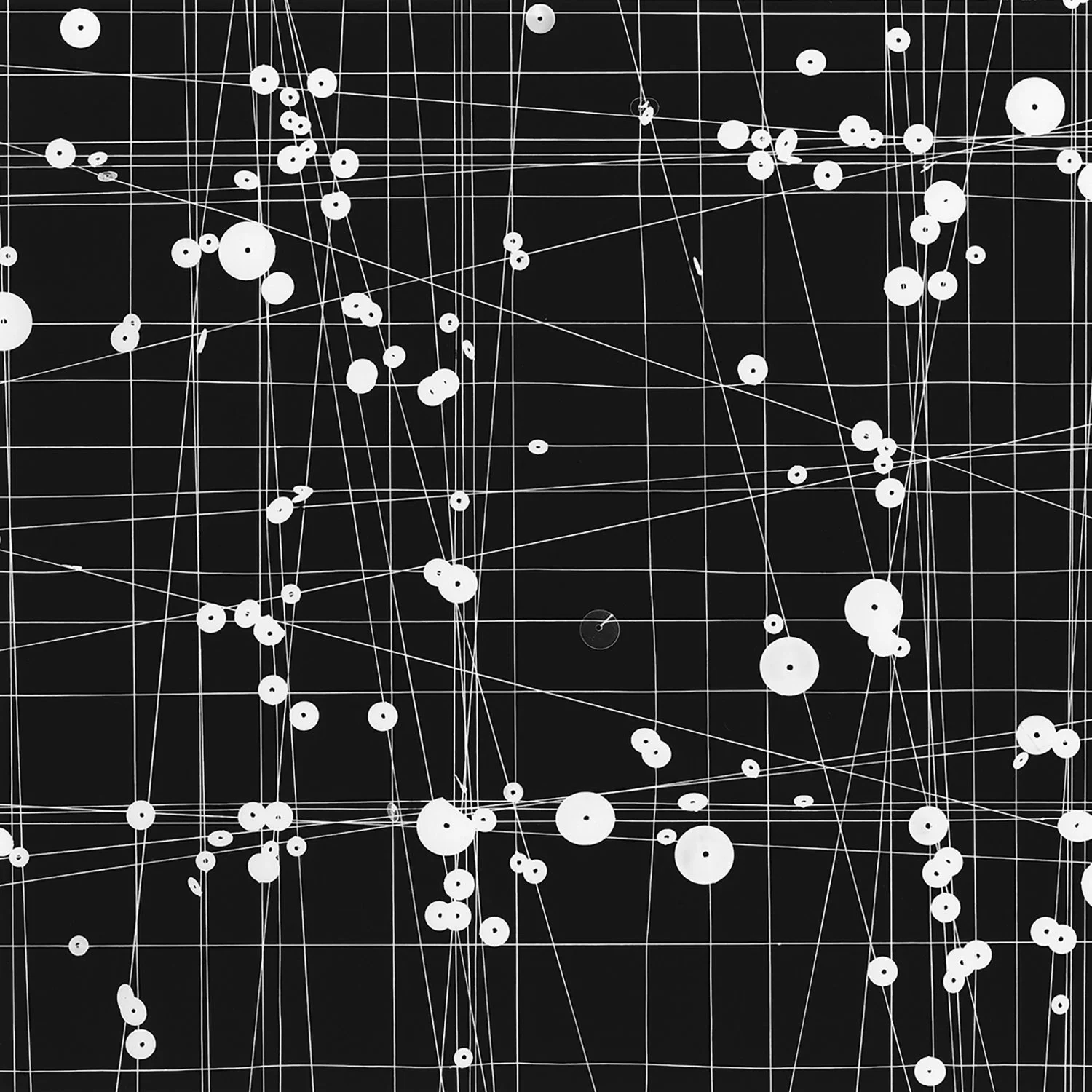
Tenesh Webber, Midpoint 3, 2015, photogram on paper, 280x280mm
Keywords
Tenesh Webber, Photogram, Contemporary photography
Bibliography
"Tenesh Webber". 2022. IdeelArt. Accessed May 28. https://www.ideelart.com/artist/tenesh-webber.
Webber, Tenesh. 2022. Midpoint 3. Image. https://www.widewalls.ch/artwork/tenesh-webber/mid-point-3.
Christian Marclay
American multimedia artist Christian Marclay creates unique cyanotype contact prints of unravelled cassette tapes to investigate "visual abstraction to capture the old soundtracks" (Bunyan 2016). Marclay titled his work acknowledging the cassette and "media technology that is rapidly approaching extinction" (Higgins 2013, 212). Marclay further applies the "cyanotype process to portray their demise and simultaneously summon beauty from banality" (ibid)
To create Memento, Marclay first coated the substrate with cyanotype solution, commonly applied by hand using brushes, sponges or spray bottles. Next, the treated substrate must be laid out to dry. After drying, the prepared substrate must be arranged, and the desired objects placed on the surface and exposed to light to create the photographic impression. Finally, the substrate must be developed, dried and prepared for installation.
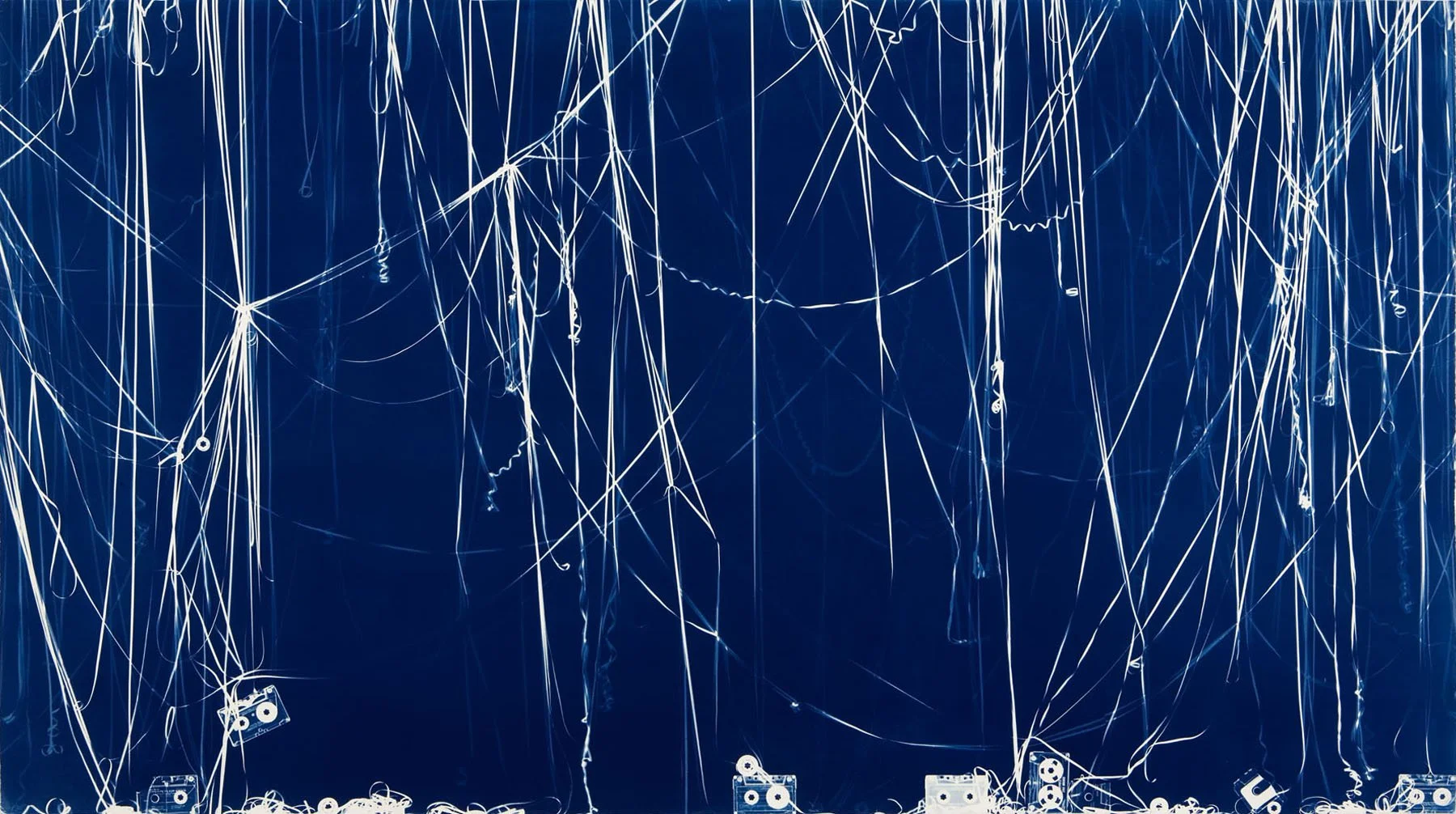
Christian Marclay 2008, Memento (Survival of the Fittest), unique cyanotype print on paper, 1310x2340mm
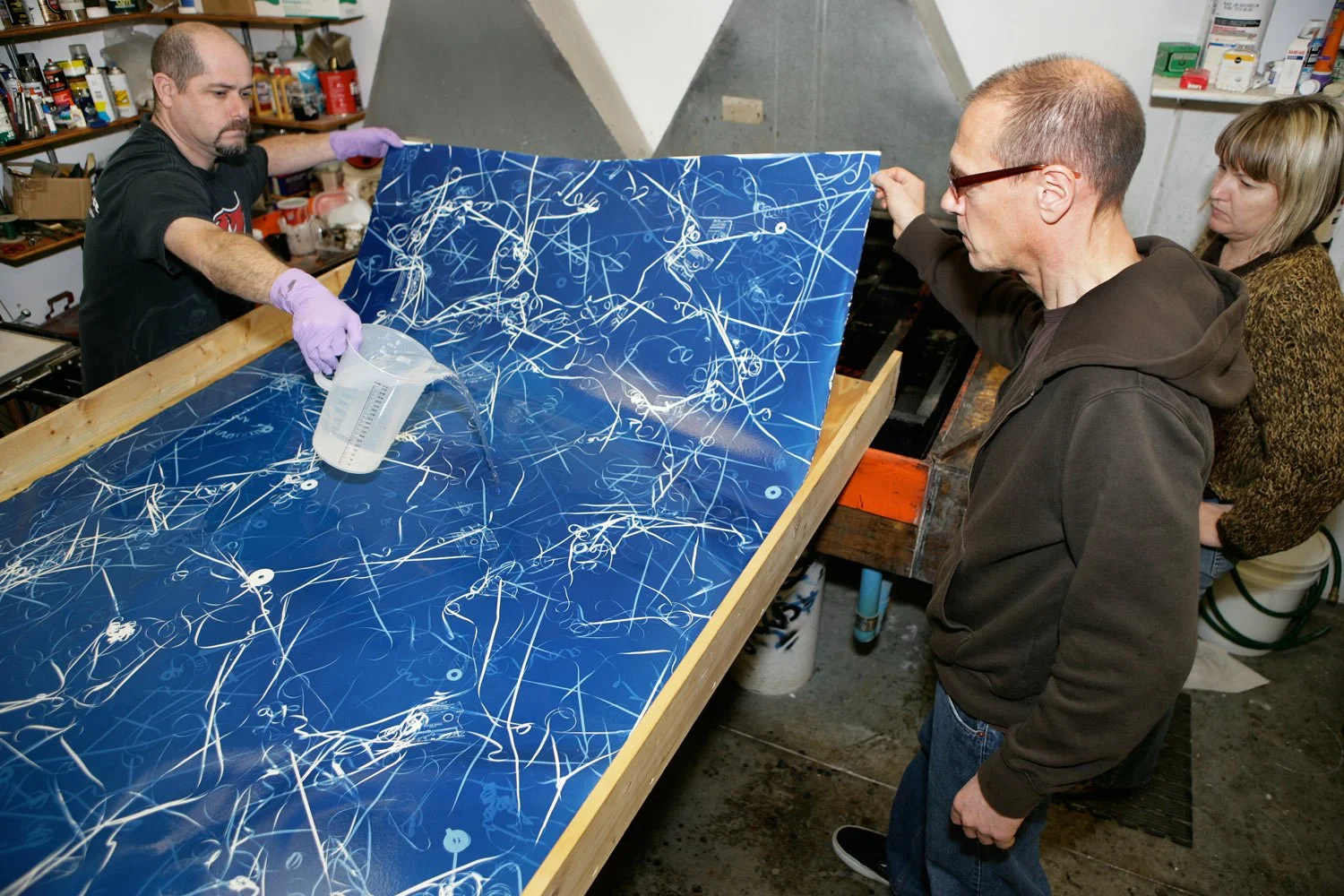
Christian Marclay (center) producing a unique cyanotype at Graphicstudio, University of South Florida, Tampa. Image courtesy of USF Graphicstudio. Photo: Will Lytch.
Keywords
Christian Marclay, Cyanotype, Contemporary photography
Bibliography
Bunyan, Marcus. 2016. "Christian Marclay Memento (Survival Of The Fittest)". Art Blart. https://artblart.com/tag/christian-marclay-memento-survival-of-the-fittest/.
Higgins, Jackie. 2013. Why It Does Not Have To Be In Focus. London: Thames & Hudson.
Lytch, Will. n.d.. “Christian Marclay (center) producing a unique cyanotype at Graphicstudio, University of South Florida, Tampa”. Image. https://artinprint.org/2014/wp-content/uploads/2016/10/6.4_Marclay_01.jpg.
Marclay, Christian. 2008. Memento (Survival Of The Fittest). Image. https://artblart.com/tag/christian-marclay-memento-survival-of-the-fittest/.
Tallman, Susan. 2016. "To The Last Syllable Of Recorded Time: Christian Marclay". Art In Print 6 (4). https://www.jstor.org/stable/26408703.
Stan Brakhage
Stan Brakhage was an American filmmaker who utilised the “plactics” and “material” of film incorporating these elements of the medium in both method and methodology. (Sheddon 1998)
Anticipation of Night (Brakhage 1958) is considered a significant shift for Brakhage as he begins applying new approaches to his filmmaking, including filming techniques and angles, the methods intended to eliminate the mediator to carry the emotions whereby the person behind the camera becomes the protagonist. (Shedden 1998)
Mothlight, Stan Brakhage 2063
Relevance of practice
Brakhage believes that by removing sound, it becomes more possible to ‘see’. This aligns directly with colour theory, whereby colour implies a pre-determined emotional state. Thus, I propose that restricting colour offers a heightened interpretative viewing experience.
Bibliography
Brakhage, Stan. 1963. Mothlight. Teddy LARUE, November 26, 2012. YouTube Video. https://youtu.be/S5P5vkegmvU.
Sheddon, Jim, director. 1998. Brakhage. Films We Like, 2018. Video. https://rmit.kanopy.com/video/brakhage.
Smigel, Eric. "Metaphors on Vision: James Tenney and Stan Brakhage, 1951-1964." American Music 30, no. 1 (2012): 61-100. muse.jhu.edu/article/488557.