
Plagiarism
I believe there is a plagiarist in the cohort. It is interesting to witness their development of ideas and concepts as they are in direct response to other students, including what is shared in class. The plagiarists trajectory follows the path exactly. They question the other students (or listen) from the position of how it will assist themselves, rather than how they can contribute to the others progress. Equally interesting is their approach in that they are using other peoples concepts and ideas to pass off as their own. In the commercial art industry a production controller or director is given a brief, finds the best talent for the job and works to use that talent to have the brief realised. It is not a personal creative project.
Building a website
I have redesigned my student online journal. Website templates can be very challenging to work with. Choosing the most suitable template to meet the specific needs of a site can be frustrating.
A number of elements need to be considered.
Choosing a hosting platform
Hosting platforms such as Wix, Weebly, WordPress and Squarespace differ in varying degrees. Some are suited to the beginner. Others are geared toward people with advanced developer skills. Apps are also available for many, offering a means to post and blog directly to your site from handheld devices. Before choosing a hosting platform, the following should be considered:
Web design experience
App availability
Range of templates
Client — Self or others
Cost
Template basics
Each hosting platform offers a variety of templates. Some templates are free while others must be purchased. Basic design elements within a free or purchased template (such as fonts) can be easily customised.
Primarily these are related directly to aesthetics and functionality.
Font sizes and colours (including links and metadata)
In-text image display
Unique gallery displays
Summary block gallery displays
Image captioning
Linking (URL/PDFs/Downloads/Direct email/Phone call) options
Choosing the right template
Functionality varies from template to template. It is important to research the template features. Read the information provided by the hosting platform. Navigate and look through previews of templates you are interested in.
A well-designed website should be visually appealing on any device. However, compromises when choosing a template are particularly relevant in relation to desktop or handheld device optimisation. Knowing the intention of the website and the target audience is critical.
An example of this is if the target audience is industry professionals, who will most likely be viewing the website on desktop devices. In this instance, it is important to understand how images and image galleries behave within different templates. Some template image galleries do not show captions others show captions on desktop devices only.
Writing a list of what is and is not needed will help in choosing the most appropriate design template.
PCP assignment 1
My assignment project for Professional Creative Practice is to write a submission proposal for State Library Victoria Fellowship “Tate Adams Memorial Residency at Baldessin Press & Studio” Fellowship.
With Covid-19 presenting ongoing and fluctuating constraints, including lockdowns, I do not think this is a viable opportunity. I will submit the application, but in all honesty, am no longer interested.
However, I will use the Professional Creative Practice and Themes in Contemporary Creative Practice course structures to assist in writing my PhD application.
Keywords
Professional Creative Practice, PCP, Themes in Contemporary Creative Practice, TCCP, PhD, Application, Writing
Advice from Shane
Response to my initial email to Shane:
For example;
I am investigating the physicality of rhythm, emotion, and energy in image-making, exploring temporal elements of the creative process and its relationship with enduring artistic footprints through alternative analogue photography, abstraction and printmaking.
This is a process, a way of working and something an artist would do as part of a creative investigation - the OUTCOMES of this would be of benefit to you, but does not go towards addressing a problem within an identified field of research.
My research extends to neuroscience and the brains interpretation of rhythm and energy and how that manifests through emotion and the creative process.
This is more interesting, as it links into existing areas of knowledge and research. There is something within this that could be framed as a potential finding our outcome.
There is much research from a science perspective, but there does not seem to be a great deal from the perspective of visual artists, particularly in photography.
You would have to be able to support this ... Bau Lotto is a good place to start. You would also need to be able to identify specific aspects of visual art and photography where this knowledge is missing, or where it can be further developed.
We should also be clear about what a PhD is and is not;
IS - A rigorous and scholarly investigation into a specific field of knowledge through which new ideas, or the validation of existing ideas, can be explored. There is a clear investigation, with a proposed methodology and ultimately a series of findings that is evidenced through the creative practice.
IS - of benefit to a community, an existing area of knowledge or field of enquiry.
IS NOT - a creative process or the making of a body of artwork or photographs related to a theme or topic (because that would simply be your ongoing practice).
IS NOT - about you learning something about yourself, or exploring your interests.
Have another go at the proposal, perhaps simply a one pager of text, with some clear headings to help;
INTRO - what is the project aiming to research
QUESTIONS - 2 specific research questions that you are seeking to answer. Should really include How or Why.
METHODOLOGY - How are you planning to undertake the research?
FIELD OF INQUIRY - Where is the research placed? How do you know it has not been done before?
RATIONALE - Why is this research needed? What problems or issues will it address or solve?
They that and send it back to me. Not about volume, more about shifting your thinking.
Thanks Zo.
Regards
Shane
Studio 4 resources: Canvas
Zo Gay S9753760
Studio 4 resources, Canvas
VART3637
Pages
S2_PRAXIS_W1
Course module, Week 1
21 July 2021
Received an email on 18 July 2021 to notify of an announcement in canvas regarding Thursday Praxis classes.[1] Links in the week 1 module [2] were broken or denying access.
With class beginning Thursday 22 July, I have been on canvas again to prepare for the day, finding no changes to resources with links either still broken or access denied (Figures 1–4).
As a Studio 4 student, it is critical to prepare and plan for my study. This also potentially impacts my application to enrol in Masters by Research for 2022.
The resources must be available to ensure students have the utmost opportunity to achieve the best grades possible. This also provides students with adequate time to access resources, class preparation, thus minimising stress.
Figure 1: Screen Shot 2021-07-21 at 8.40.46 pm
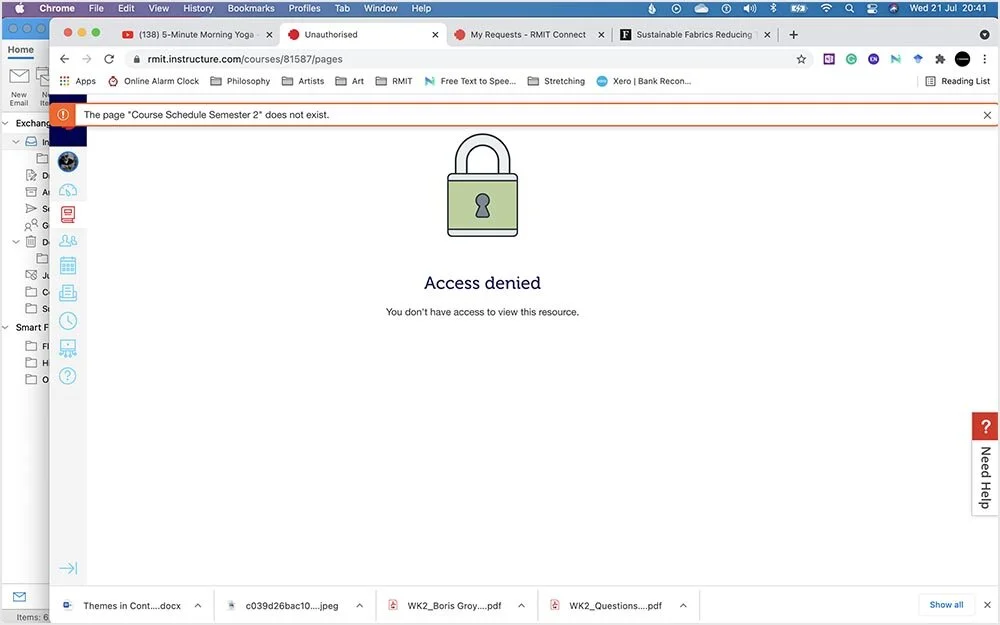
Figure 3: Screen Shot 2021-07-21 at 8.41.00 pm
Figure 2: Screen Shot 2021-07-21 at 8.40.51 pm
Figure 4: Screen Shot 2021-07-21 at 8.43.36 pm
Footnotes
Bennett, Alison. 2021. “VART3637 Announcements Welcome & class prep”.
Bennett, Alison. 2021. “SEMESTER 2 STUDIO 3 & 4: THURSDAY STUDIO PRAXIS”.
Bibliography
Bennet, Alison. 2021. “Welcome & class prep”. https://rmit.instructure.com/courses/81834/discussion_topics/1296337.
Bennet, Alison. 2021. “SEMESTER 2 STUDIO 3 & 4: THURSDAY STUDIO PRAXIS”. https://rmit.instructure.com/courses/81834/pages/s2-praxis-w1?module_item_id=3451356.
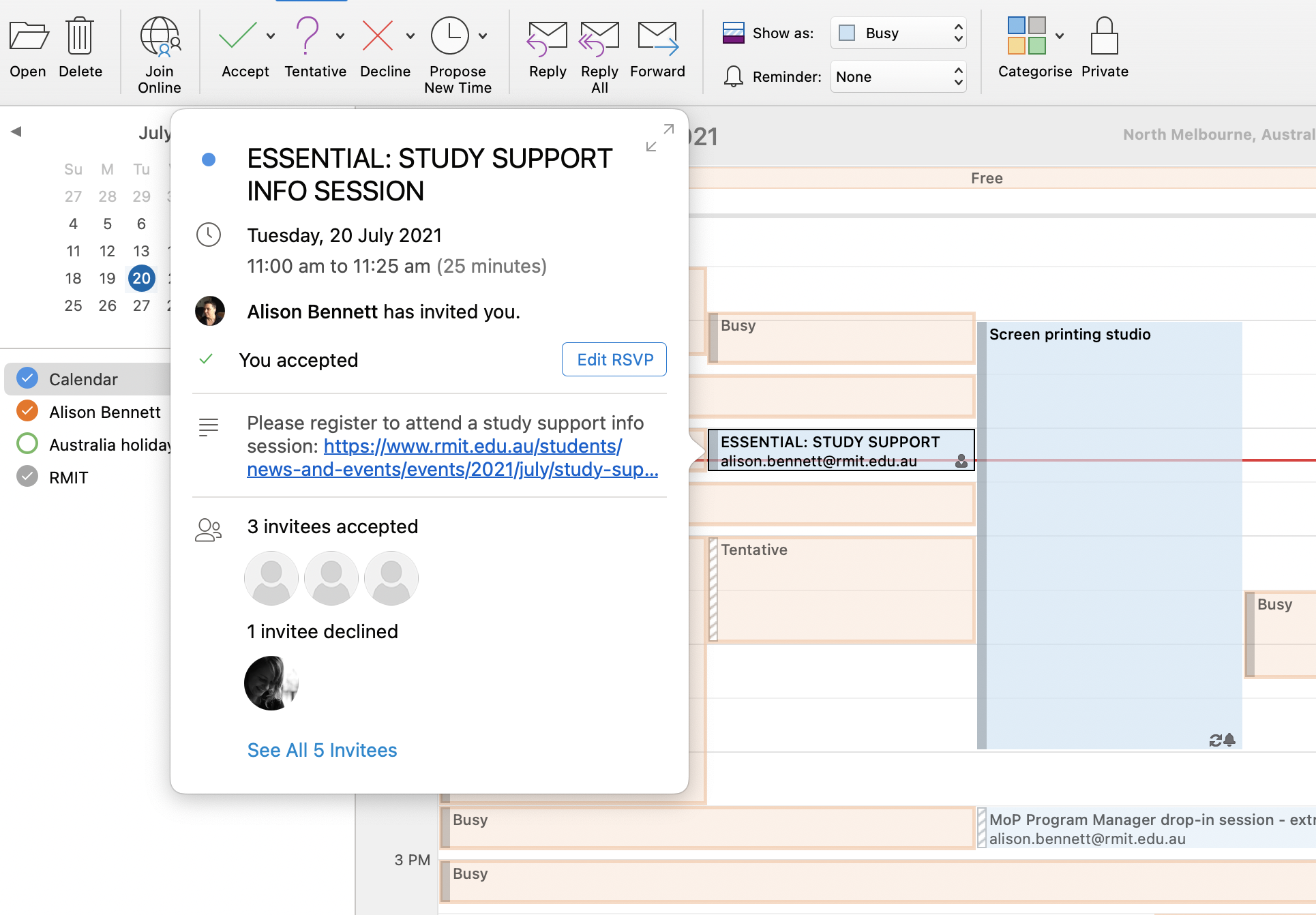
Study support group 20 july 2021
Registered as per instructions.
No link provided or follow up email offering update on support session.
Group crits and folio presentation
Group crit and review conduct and protocols are posted in the Master of Photography “studio” course modules.
Group crits
Module link: https://rmit.instructure.com/courses/81718/pages/7-thu-studio-3-group-critique-with-dr-alison-bennett-in-2-dot-2-1?module_item_id=3145436
Content posted in module for crit conduct
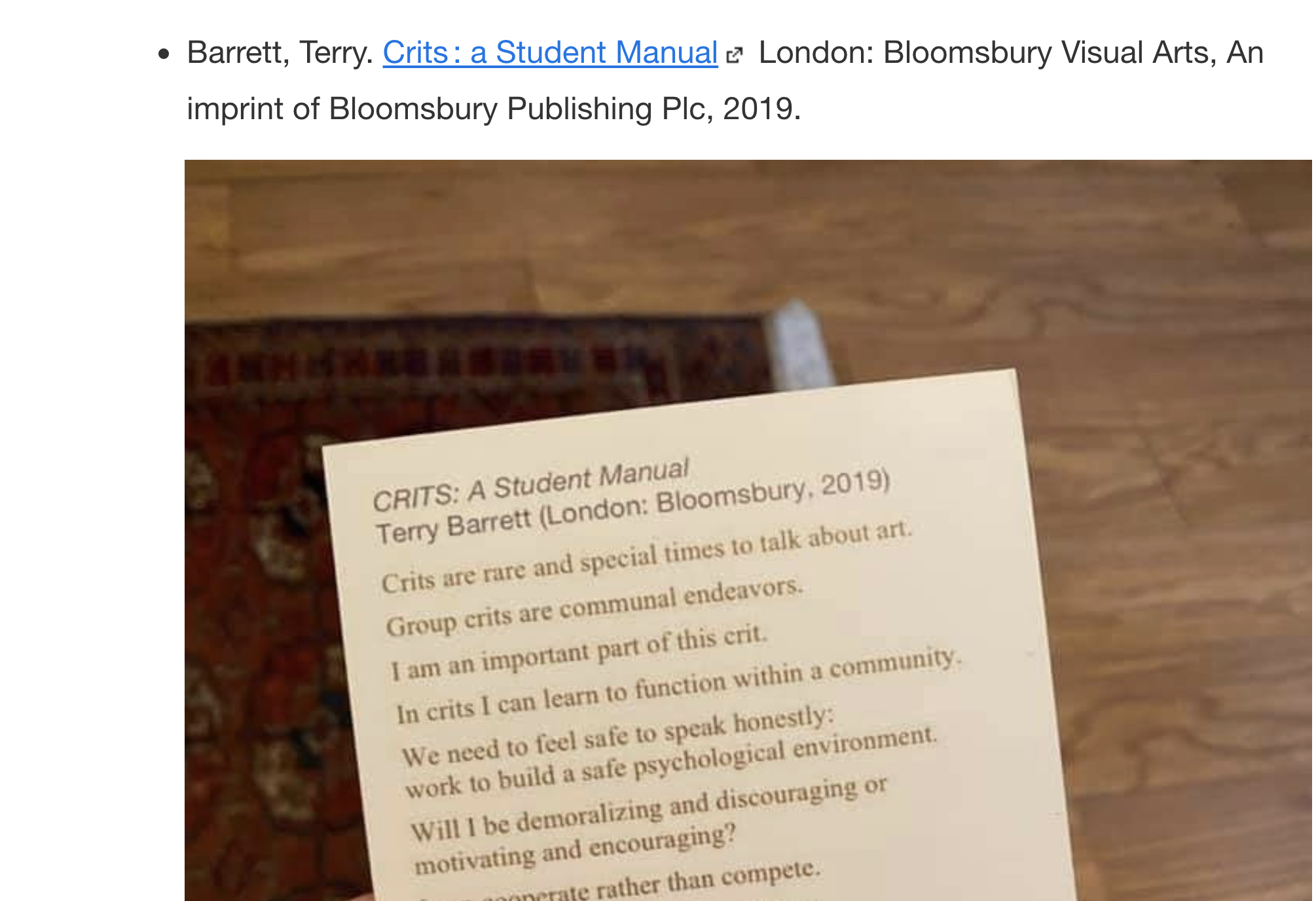
RESOURCES: Barrett, Terry. Crits : a Student Manual (Links to an external site.) London: Bloomsbury Visual Arts, An imprint of Bloomsbury Publishing Plc, 2019.
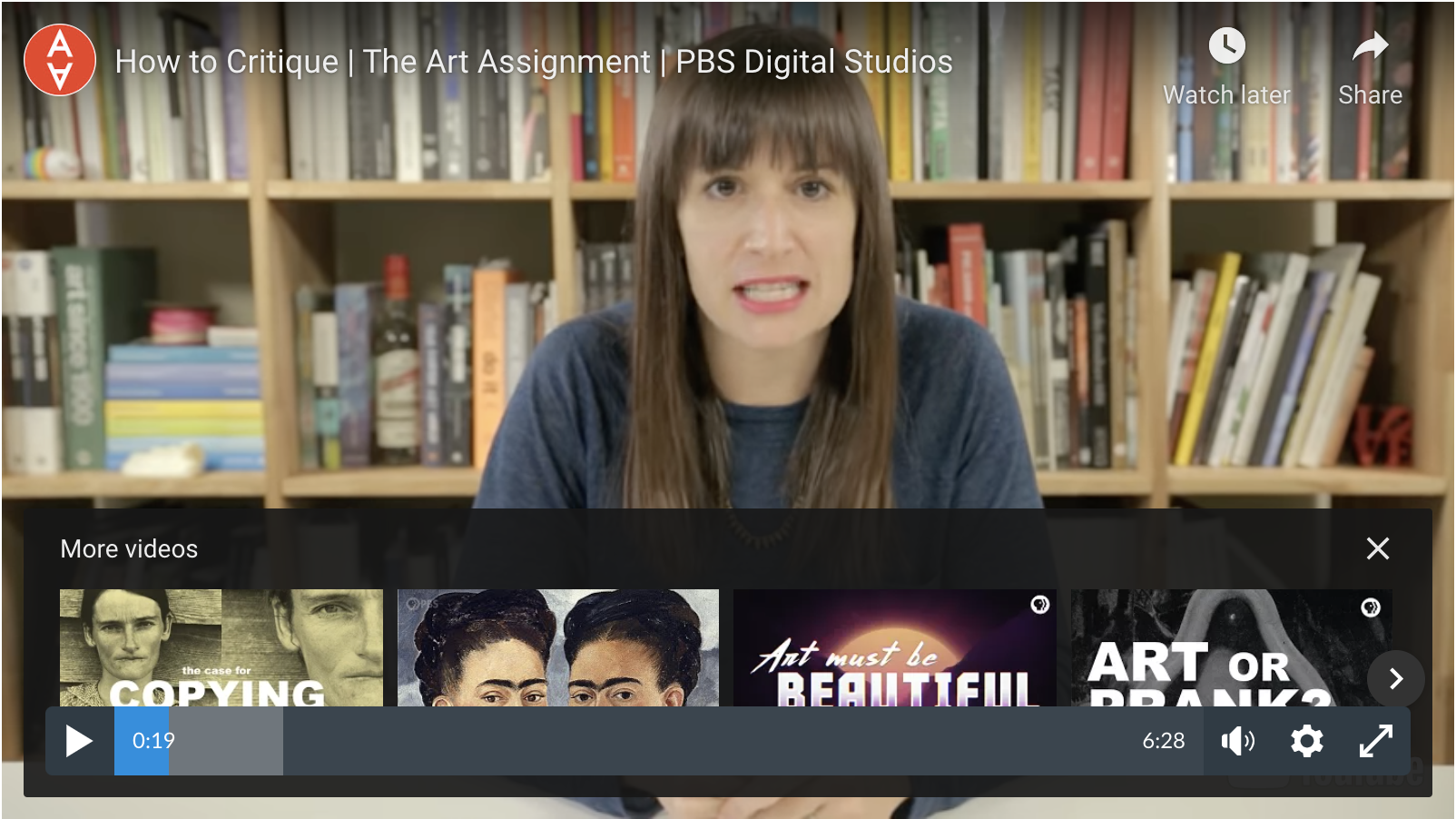
How to Critique | The Art Assignment
Video posted to the course module. No link provided.
A screenshot is posted from “VART3637 Pages 7 THU: Studio 3 Group Critique with Dr Alison Bennett in 2.2.1” module post of group crit conduct and protocols.
“We need to feel safe.”
I did not feel safe in my review, nor did I feel secure in sharing the work with an objective audience. Please refer my folio review at
Folio presentation and grade comments
My grade was posted on 29 June and then disappeared. I contacted Alison Bennett for clarification. As I did not receive a response, I sent a follow-up email on 13 July, after which the grade was again visible.
I did receive notification that the grade had changed and do not know if it was graded up or down.
The assessors comment on the assignment is rudimentary at best.
Grade comments
Studio 3 assignment: Skills & Expertise - Part C Reflection
No comment on assignment from the assessor
Studio 3 assignment: Folio of Photographic Works for Presentation
link to recording of presentation and feedback https://web.microsoftstream.com/video/0ad7fbcf-44c1-4a02-9e95-16a09875233d
210709 ELS meeting
Meeting with ELS team in support of my Masters by Research application for 2022.
Enrol or apply for Master by Research first.
Deal with scholarship and ELP once enrolled.
Enrol before completion of MoP.
Make appointment with student welfare — assist with scholarship and Masters of Research applications.
Student welfare to advise on grades and application process.
JESSICA
Available scholarships
INCLUDE EQUITABLE LEARNING PLAN ON APPLICATION.
ELS flexibility for “milestones” for Masters by Research students.
ELP needs to be updated.
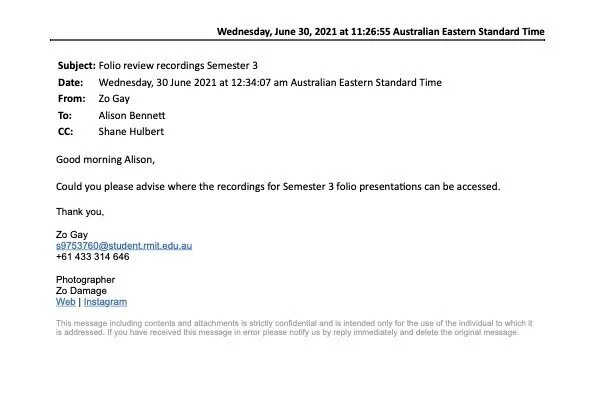
210630 Request for folio review recordings
Request for folio review recordings.
Updated 14 July 2021
I requested a link to the recordings for the folio presentations on 30 June. Although I did receive an initial response no links were provided. I sent a follow-up email on 13 July and received the link. The link has been posted in my assessment feedback with a note to “view recording for assignment feedback”.
I believe this is inadequate for a semester 3 student and for an assignment that is worth 50% of the course grade and considering the manner in which some of the review panel conducted themselves.
Email
Posted 30 June 2021
210629 Grade change clarification email
Canvas
Updated 1 July 2021
After sending the email below and adding it as a comment on my assignment submission the grade was changed back to an HD.
I am concerned that the assessors are leaving very little feedback on my assignments if any at all. My understanding is that this is part of the assessment process and protocols.
Email send to Alison Bennett regarding grade change.
Posted 30 June 2021
Hi Alison, Thank you for the feedback on my Critical Review and I am glad you enjoyed reading it. I have been reading about TEEL and appreciate the advice on addressing my HOW with more academic rigour, as well as using assignment headings.
I have just received an email advising that my grade for Part C Skills and Expertise assignment has been reduced by 10% from 8/10 to 7/10, taking the grade from HD to DI.
I cannot see any comments/feedback or rubric so do not know how to gauge the change, although Canvas could be misbehaving. I am missing something, please do let me know.
Thank you, Zo
Zo Gay , 29 Jun at 23:44
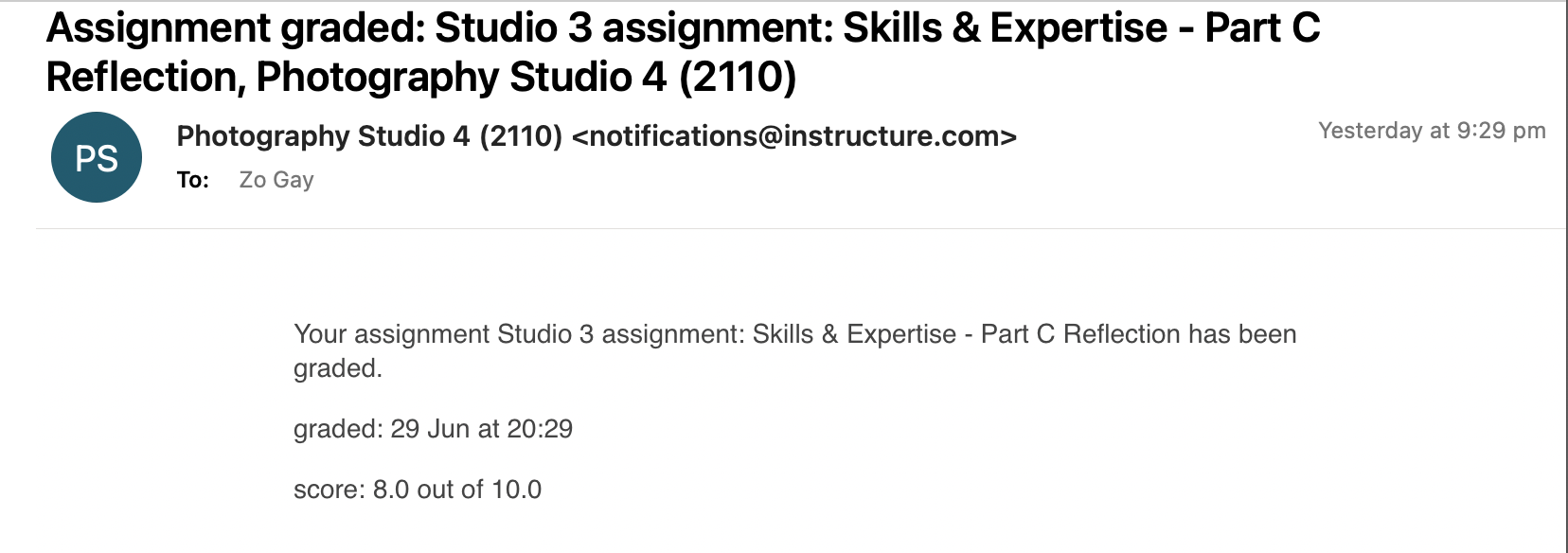
First notification of grade. Note no comment, feedback or rubric provided.
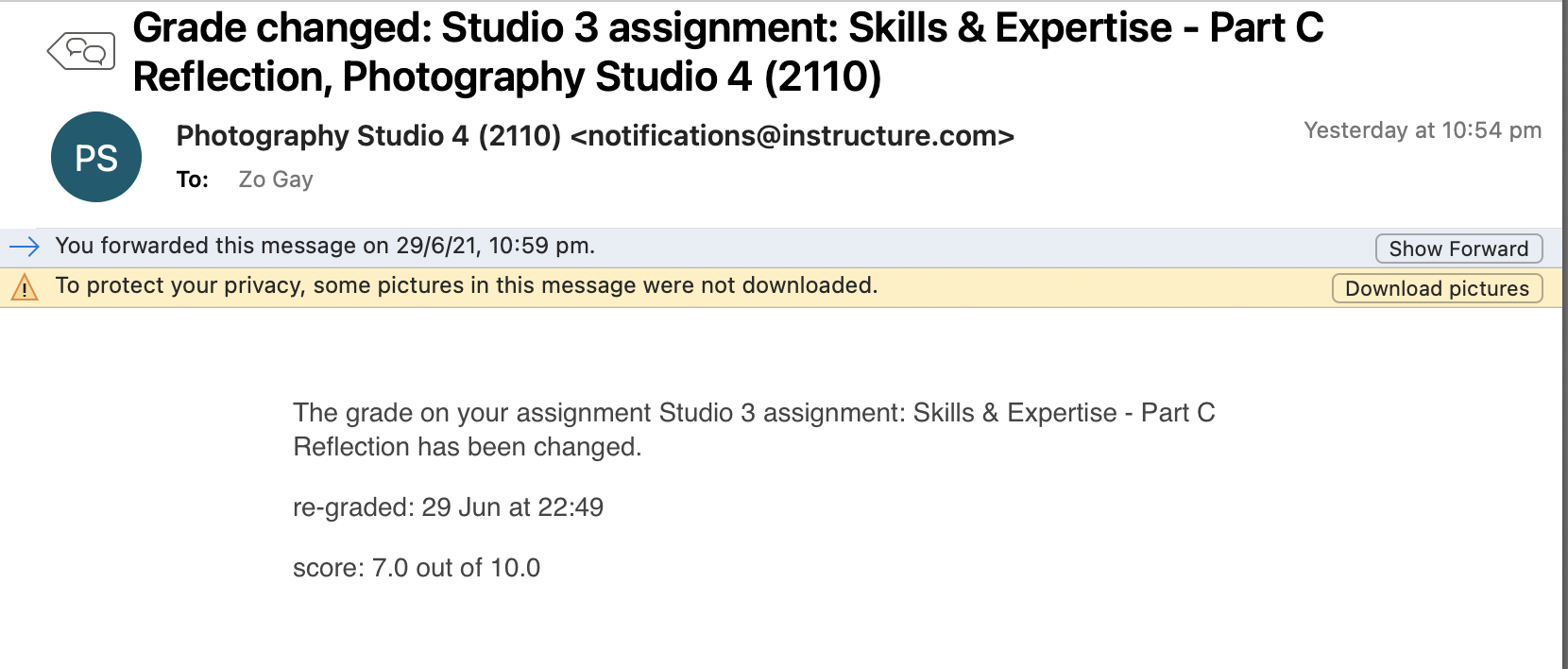
Notification of adjusted grade. Note no comment, feedback or rubric provided.
Email send to Alison Bennett, 29 June 2021.
Course structure proposal
The course this year has been unbalanced and unfocused. Most classes are theory-based and students in Semester 3 have not had the opportunity for formal feedback of works in progress leading into the Folio presentations (weighted at 50% of semester grade).
I used to teach TAFE, have run a magazine for 5 years, and been a band booker at a leading Melbourne venue. I am also good at production control.
Below is a basic program structure designed to offer a compelling and immersive learning experience for mature aged students studying at a Masters level.
Theory — 1 class per week.
Theory and academic writing. Includes fortnightly (group) reading.
Guest speakers — 1 class per month.
Guest industry speaker. Different fields and genera in each session. Include people that are not RMIT alumni. Students to write 300-word reflection and post to process journal and in a group on canvas for brief discussion in next class.
Group exercise — 1 class per month.
Discuss the work of photographers/art movements/genres of photography. Students to write 300-word reflection and post to process journal and in a group on canvas for brief discussion in next class.
Group crits & Pop quiz — 1 class per month.
Part A: Group critique. Students to write 300-word reflection and post to process journal and in a group on canvas for brief discussion in next class.
Part B: Pop quiz/photography trivia. Have some fun. Lollies and chocolates for everyone.
Speaking formally — 1 class per month.
Formal review of works in progress.
Fashion and professional conduct
Margit presented today.
A lecturer from the RMIT fashion cohort was in attendance.
Alison's conduct was unprofessional. Mainly opening the session by claiming, "ok, we are going to do this one formally". To emphasise the importance of one student above others is an abuse of authority and departure from the high standards one should expect of RMIT.
Inviting a lecturer from the fashion department was intriguing as the MoP were ill-prepared for delivering the project and holding a professional discussion concerning fashion.
Rebecca stated that the primary objective should be photography, not fashion.
The review panel agreed in a complete turnaround from how the review began, emphasising commercial possibilities.
I asked Margit if she had researched the ethical and environmental issues related to fast fashion. She had not.
I feel Bronek tried to bully and embarrass me in his response to my question. I am not intimidated by him.
Although I appreciate how excited people are about Margit's work, it would be worth considering private consultations with potential collaborators, thus offering a safe environment for all parties to openly discuss their objectives while maintaining the excellent standard of equality and shared learning that RMIT is renowned.
Below is an excerpt of an email sent to Shane.
Friday 25 June 2021
Hi Shane,
Good to see you in class today, and sorry I didn't have time to catch up afterwards (I had an appointment I was running late for!).
Margit's presentation was all class as to be expected! A stunning outcome of a fascinating concept.
I wanted to follow up with you on my question about fast fashion as I believe it is imperative, even if the primary objective is photography.
When I hear sustainability, H&M, and consumer in the one structure, particularly in the position of "solution", I am immediately drawn to thinking about the horrendous ethical and environmental impact of the fast fashion industry.
The response to Bronek's comment about "consumer accessibility" would depend on a person's position on sustainability in the textiles industry and fast fashion.
Also, it is worth considering there is a massive market for bespoke products – including fashion.
I'm afraid I have to disagree with placing Margit and her talent in the mass consumer marketplace. Forgive me if I misunderstood Bronek's direction on this.
The likes of H&M have their garments made in regions of great poverty, exploiting the local communities while providing little security. Much of the work takes place in unsafe conditions, and yes, lives are lost. Then there is the environmental impact.
Consumerism and fast fashion are multifaceted issues that promote waste in producing throw away goods and dubious industrial practices.
Discussing sustainability and textiles with fast fashion (pros or cons), ethical and environmental issues are immediately brought to the forefront.
My comment also considers RMIT's position on environmental issues and social justice.
Interestingly, so many people, including the affluent, scream injustice, but when it comes to that hot leopard print top for under $30, dang girl!
Anyhoo.
I hope this finds you well.
Thank you,
Zo
Sent as a postscript
Friday 25 June 2021
I feel that understanding these relationships could be of great benefit in continued project development and, through photography, establish an irrefutable position of contributing to a solution.
Semester 3 folio review
Further reflection on my folio review has left me believing that most of the feedback was given so as not to appear ignorant or unknowledgeable on the part of many of the assessors.
Bronek began the session by stating “I don’t like it”.
Bronek also stated he had not looked at my work, read any of my material, or viewed my process journal (which has extensive documentation of my study) prior to the folio review.
I believe that Bronek has been remiss of his responsibility and did not comply to “review protocols” as outlined by the course coordinator, particularly for the Folio presentation, a formal review with the assignment at 50% of the semester grade,
I am also concerned that Alison specifically asked Bronek to begin the review, as he has little knowledge of the processes, and would most likely be unable to speak to the work adequately while ignoring Rebecca, who on the other hand, is very familiar with my community of practice, methods and methodology.
There were some positive comments, but little that spoke in a constructive manner to the work, academically or otherwise, which is, as I understand it, the purpose of a review.
Alison brought up language and spent a lot of time explaining how I had used performativity incorrectly in my introduction.
Again, not addressing the work.
My grades are in and I am amazed I got a Distinction, although I believe I deserve more than that given the research, work and constraints that were at play.
NIk 2
Over the last two weeks, I read Jesus’ Son (Johnson 1992) and On Photography (Sontag 1977). I have also dug deeper into Diane Arbus, watched a documentary about Kurt Schwitter [1], the New York School[2], and watched a Stan Brakhage film[3].
This week I am looking into Joel Peter Witkin[4].
Feedback on my end of semester work (images and writing) from my friend and tutor Nik was invaluable. He suggests I consider speaking to the paradoxical dimension of my project aims – Performance/movement/event versus the stillness of photography – questioning how the latter presents or models the former? What can this seemingly contradictory aim help us understand about stillness and movement, photography and performance?
I don’t dare write about this in my journal as I believe there will be a price to pay. Particularly considering everything that happened between semester two in 2020 through to mid-first semester this year.
Don’t poke the dragon.
Footnotes
Schwitters, “Kurt Schwitters”, 2010.
Blackwood, “The New York School”, 2005.
Brakhage, “Mothlight”, 1963.
Bibliography
Blackwood, Michael. 2005. “The New York School”. Directed by Michael Blackwood. Michael Blackwood Productions, 2005. Video. https://rmit.kanopy.com/video/new-york-school.
Brakhage, Stan. 1963. “Mothlight”. Teddy LARUE. November 26, 2012. YouTube Video, https://www.youtube.com/watch?v=S5P5vkegmvU.
Johnston, Denis. 1992. Jesus’ Son. Methuen Publishing, 2007.
Nerdwriter1. “How to design a comic book page”. Nerdwriter1. November 23, 2017. YouTube Video. https://www.youtube.com/watch?v=1dQEfL2BfUM.
Schwitters, Kurt. 2010. “Kurt Schwitters”. Directed by Kurt Schwitters. Arthaus Musik. Video. https://rmit.kanopy.com/video/kurt-schwitters-schwitters-scandal.
Sitney, P Adams, 2017. “Reintroducing Metaphors on Vision”. Accessed June 25, 2021. https://www.criterion.com/current/posts/4959-reintroducing-metaphors-on-vision.
Sontag, Susan. 1977. On Photography. Penguin Books, 2007.
Witkin, Joel Peter. 1999. The Bone House. Twin Palms Publishers.
Nik 1
Nik is fashion victim, intellectual snob, has his PhD in psychology (specialising in phenomenology) a dear friend, and my new tutor. I have asked Nik if he could help me in building academic confidence, he had kindly said yes.
We talk about books, theorists, film, photography and art in general. He gives me homework each week. The first week was to read two books and look up Stan Brakhage and Diane Arbus. The second week we discussed the books. This week we talked about Sontag, fashion and Joel Peter Witkin.
I sent Nik all the material for my folio presentation (including images, artist statement and introduction) as well as my critical review assignment.
His feedback is as follows.
Your work is brilliant.
For my part, what I’d like to see is you speaking to the paradoxical dimension of your aims. Performance/movement/event V the stillness of photography. How exactly does the latter question, present or model the former? What can this seemingly contradictory aim help us understand about stillness and movement, photography and performance?
Exceptional feedback! Thank you Nikolai!
Textiles, fashion and photogrphy
In August 2020 I contacted a fashion designer friend of mine to discuss if they would be interested in working on a collaborative project incorporating their design and my photographic prints on textiles. I was working with liquid emulsion on muslin. Although they loved the concept and proposal, their workload was too great.
I have produced enough work (photograms and screen prints on fabric) this semester to revisit the concept with another friend who is a designer and RNIT alumni. It could be a great collaborative project and a means to make use of all the test prints I have made.
Whenever we catch up all we talk about is fashion and music. Our style is very different. Despite this, we also have a lot in common, particularly with designers and periods that inspire and influence us. Yes. I am a fashion nerd. I love it. Magazines, documentaries, designers, and of course clothes.
Unsent email
Friday 25 June 2021
Hello Shane, Alison
Thank you for your ongoing support.
Although I understand everyone is busy with professional and personal commitments, discussing the issues outlined below is necessary.
As you may recall, there was an issue last year with several review panel not being prepared for formal presentations, particularly in familiarising themselves with student's work.
Being in Semester 3, to be told by a review panel member that they have not seen any of my work leading into my folio presentation (50% semester grade) is remiss of their responsibility. Stating that I have not provided adequate documentation is unfathomable.
Additionally disappointing is that the above-mentioned comments are not reflective of the unbiased and exemplary standards of RMIT educators.
Please advise on how this issue will be resolved moving forward.
Respectfully,
Zo Gay
Keywords
Reviews, Folio presentations, Semester 3, Studio, Email
Reviews and crit session
Notes
On other presentations.
The guy with too many images. Unfathomable. 14 images (of a brief stating 3-7) presented in a series of 7 diptychs It came across as indecision and the inability to self-moderate under the guise of “I have a lot to say”. This is very interesting as when photographed well, a single image has the ability to speak more clearly than 100. The critique was baffling at best. The guy is a commercial photographer. So what if he knows how to use light.
Commending “pin sharp” focus: This is redundant as the student used high-end DSLRs. No skill required.
Paper stock. I advised Ki she should try matte paper as, given her subject matter and topic, it would be more immersive. The gloss paper, like glass, acts as a barrier, particularly being reflective. Full bleed and unframed was also discussed. Although she did present her work on matte, the framing and scale of the work make me believe that she did not understand the selection and purpose.
I’m am thrilled my newsprint suggestion for Jack worked out. Why he scrunched up 2 of the works is a mystery considering the reductive text and plastic toy soldiers instil a sense of disposability in their mere existence. The wet plates are sublime, but the presentation falls very short and lets the work down. I’m thinking woodblock mounts in separated rows to maintain a connection with the 3x5 grid of the chapel windows (I can’t remember the name of it) that has inspired him. We discussed this a month ago and he seemed pretty intent on keeping them on the mount. Rebecca gave Jack great feedback about ways to explore presenting the plates. I hope he takes it on board.
Anna copped it. It was very disappointing to see her work get pulled apart with many of the delicate nuances, including the stunningly humble image of the Maltese man at prayer, overlooked entirely. He holds a bible, resting the bottom of the book gently on the pristine 1970s kitchen table. Equally pristine matching chairs are visible on the left and right edge of the frame. Chin down and eyes on the pages, his hands reflect love and respect for that which lays within. His face is shadowed as the sun glows through the fine mesh curtains behind him. I can hear the angles …
Semester 3 reviews
I have written to Shane expressing my concern with the lack of reviews. The communication is objective and professionally polite.
Shane has replied, saying that he will discuss with Alison. This is of no concern to me. Sadly, the only response I have had to the last 5 emails sent to Alison has been once in berating me for getting the list of models to her without enough notice although the previous three emails (list of models) did not receive a reply.
The emails I have sent have been structured in a business-like manner with legitimate requests.
I do find it interesting that the comment Alison left on my internship assignment (which had nothing to do with the assignment at all) has now been removed (after I made a formal complaint). Sadly, the bullying and passive-aggressive behaviour continue. An additional interesting note is that I have found out I am not the only one.
From: Zo Gay <s9753760@student.rmit.edu.au>
Sent: Friday, June 11, 2021 8:09:15 PM
To: Shane Hulbert <shane.hulbert@rmit.edu.au>
Subject: Reviews – Semester 3
Hello Shane,
I hope this finds you well.
You have always been supportive and acknowledge the importance of students participating in the overarching discourse of art and photography, the MoP cohort reviews (2020) are one of many examples.
I am concerned that Semester 3 students have not had a review this year, especially as the folio presentation is worth 50% of our grade.
The reviews are invaluable for many reasons, including having the opportunity to participate in a broader discussion of art. In addition, they were an essential part of the learning process for me last year.
I understand everyone is very busy with professional and personal commitments and do not expect a response. However, I do feel that discussing the issues is necessary.