
The holy trinity — Bailey, Donovan and Duffy
Holy trinity
David Bailey, Terence Donovan and Brian Duffy
Brian Duffy
Keywords
David Bailey, Terence Donovan, Brian Duffy, Fashion, Photography
Bibliography
Johansen, Kevin. 2013. THE REAL BLOW UP SIXTIES FILM DOCUMENTARY PART1. Video. https://www.youtube.com/watch?v=7FPIaZfQCbY&t=1536s.
Quinn, James. 2014. Brian+Duffy SD. Video. https://youtu.be/xh7VowciA4g.
Olafur Eliasson
Meteorological circles (Eliasson 2016) comprise twenty-seven oval yellow mirrors (Figure 1). Arranged on the wall in three rows, each mirror was created from silvered, hand-blown glass. The discs are tilted and in three sizes, the installation giving the impression of a set of rotating discs. Olafur's installation art utilises visual uncertainty of forms and viewer perspective. While in Baroque Baroque (Eliasson 2015), Eliasson combines and reunites works from collections spanning two decades. The installation (Figure 2) “explores the affinities between the artworks and opulent baroque setting of Belvedere’s Winter Palace of Prince Eugene of Savoy in Vienna (Olafur Eliasson Baroque Baroque n.d.).
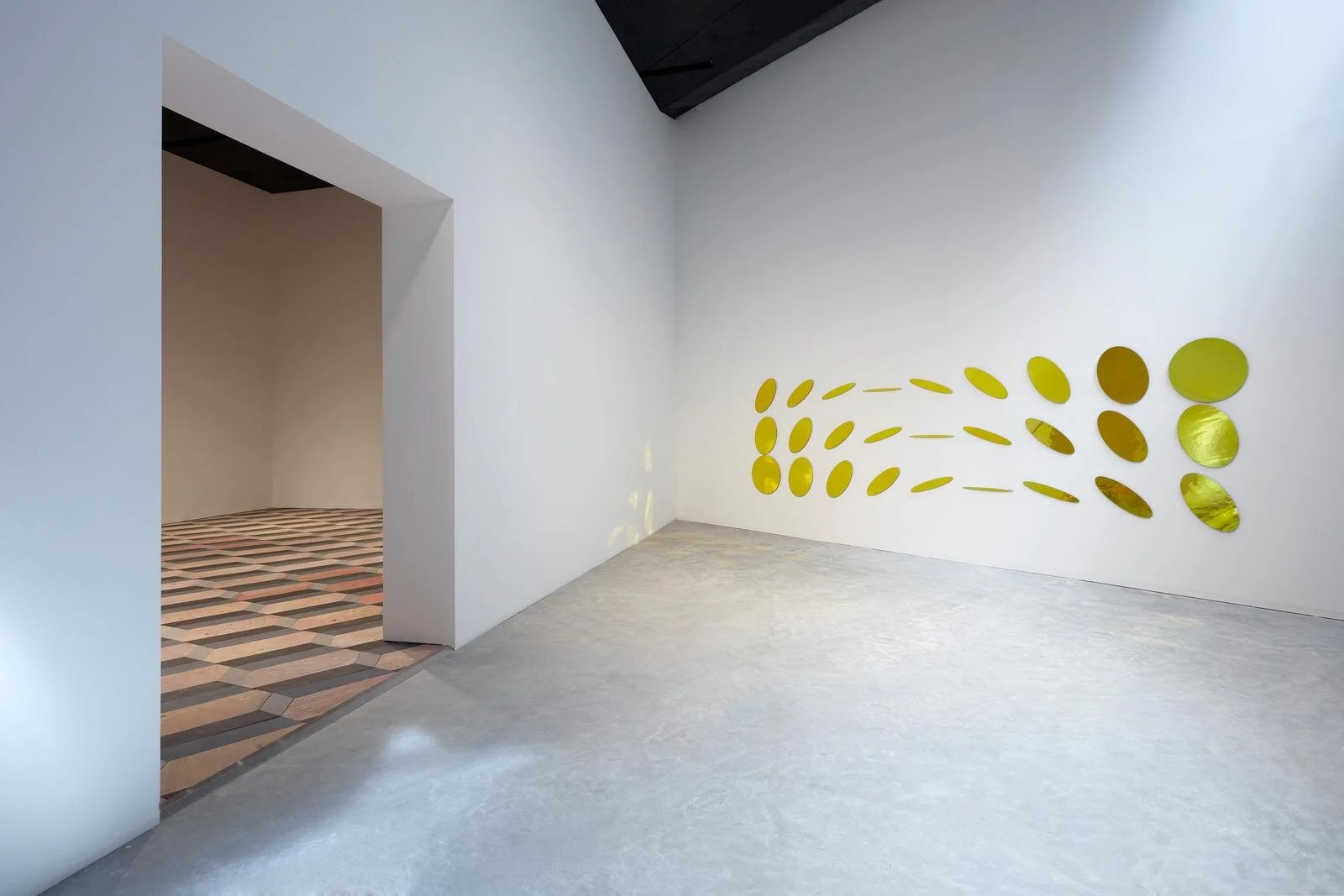
Figure 1. Olafur Eliasson, Meteorological circles, 2016, Leeum, Samsung Museum of Art, Seoul
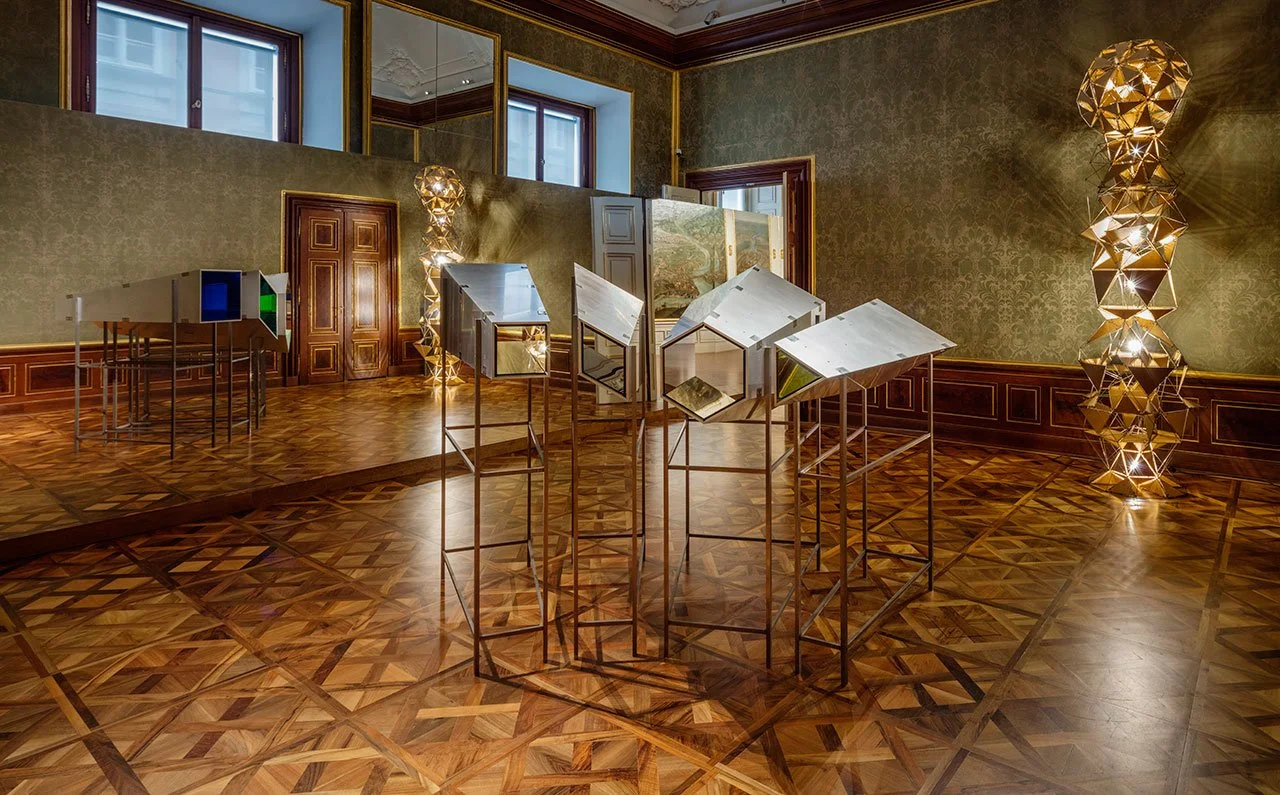
Figure 2. Olafur Eliasson, Baroque Baroque installation view, The Winter Palace of Prince Eugene of Savoy, Vienna 2015. Photo by Anders Sune Berg

Olafur Eliasson, Five orientation lights, 1999, stainless steel, coloured glass, halogen bulbs and fresnel lenses, 200x70x70cm, installation view, The Winter Palace of Prince Eugene of Savoy, Vienna 2015. Photo by Anders Sune Berg
Keywords
Olafur Eliasson, Installation, Art, Installation art
Bibliography
“Olafur Eliasson Baroque Baroque.” Sternberg Press. Accessed August 20, 2022. https://www.sternberg-press.com/product/baroque-baroque/.
Eliasson, Olafur. 2015. “[Baroque Baroque] installation view, The Winter Palace of Prince Eugene of Savoy, Vienna 2015.” Image. https://www.yatzer.com/olafur-eliasson-baroque-baroque.
Eliasson, Olafur. 1999. Five orientation lights. Image. https://www.yatzer.com/olafur-eliasson-baroque-baroque.
Eliasson, Olafur. 2016. "Meteorological Circles". Olafur Eliasson. Image. https://olafureliasson.net/archive/artwork/WEK109680/meteorological-circles.
———. 2016. "Meteorological Circles". Olafur Eliasson. https://olafureliasson.net/archive/artwork/WEK109680/meteorological-circles.
Dada Japan
Although Dada strongholds were located in Zurich, Berlin, Hannover, Cologne, New York and Paris the movement reached as far as Japan. This is mind blowing and must be researched.
Bibliography
“Dada and Surrealism in Japan.” 2016. Blackwell Companions to Art History: A Companion to Dada and Surrealism. https://rmit.primo.exlibrisgroup.com/permalink/61RMIT_INST/4t5l5f/cdi_credo_entries_26969661.
Dickerman, Leah, and Brigid Doherty. 2006. Dada. Washington: National Gallery of Art.
Gopnik, Blake. 2016. "Was Japanese Dada Tougher Than Its European Versions?". Artnet News. https://news.artnet.com/opinion/japanese-dada-new-york-public-library-622340.
William. 2016. "Tokyo Goes Dada For Art Anniversary". Japan Trends. https://www.japantrends.com/tokyo-dada-art-anniversary-festival/.
Beau Lotto
Beau Lotto is a neuroscientist and expert in perception. His research explores how we experience the world through personal versions of reality.
In his TED Talk "Optical illusions show how we see" (2009), Lotto discusses how music can be made with colour. Children were asked to create images while being encouraged to think about what pictures they see would sound like if they could be heard. Lotto then translated the children's artworks into sound. The sample presented was a collage created by a six-year-old translated into a musical composition of a 32-piece orchestra.
Although Lotto does not explain how the process is achieved, it instantly reminds me of Kandinsky's colour theory, where different colours co-relate to and represent emotional states.
The colours used by Lotto in many of the illusions were opposites on the colour spectrum, such as green/red and yellow/purple, which omit the same light frequency and are thus often used in such experiments and demonstrations.
Thinking about this, I wonder if Lotto uses light spectrum frequencies are used to generate sound.
Shane suggested I research Lotto in response to an email I had sent him asking for advice on applying for a PhD Candidature, in which I also provided a basic outline of my research topic.
Lotto, as with many other scientists, turns toward art to define and broaden their research.
My research turns to neuroscience, exploring how the brain interprets rhythm and energy. Does the brain perceive rhythm and energy as physical? Do rhythm and energy affect the making and consumption of art? If so, how? To what means can scientific knowledge be utilised from the perspective of the artist?
Keywords
Beau Lotto, Neuroscience, TED, Illusions, Colour, Colour spectrum, Sound
Bibliography
Lotto, Beau. 2009. "Optical Illusions Show How We See". Ted.Com. https://www.ted.com/talks/beau_lotto_optical_illusions_show_how_we_see?utm_campaign=tedspread&utm_medium=referral&utm_source=tedcomshare.
Liz Deschenes
Deschenes explores the relationships between the mechanics of seeing, image-making processes, and display modes, expanding on photographic concepts. Inspired by Herbert Bayer's principle of extended vision (1935), Deschenes Tilt/Swing (360° field of vision, version 1) offers an inclusive picture of possibilities. The installation comprises six photograms, the light-sensitive paper exposed to delicate nuances of light from the moon, stars, and surrounding buildings. Positioned on the ceiling, walls and floor, the photograms function as obscure mirrors, reflecting details of the gallery setting. The reflective interplays extend within each of the six pieces and the gallery space, challenging the concept that a photograph represents a single (past) moment. In contrast to a traditional gallery exhibit, the display invites the viewer "to look in any direction, rather than simply straight ahead". (MoMA n.d.)
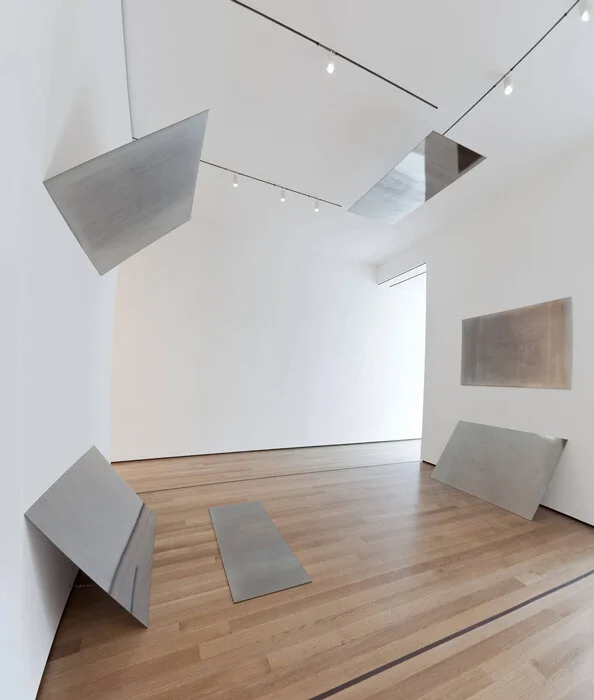
Liz Deschenes, Tilt/Swing (360º field of vision, version 1) installation view, 2009, MoMA
Bibliography
Deschenes, Liz. 2009. Tilt/Swing (360º Field Of Vision, Version 1). Image. https://www.moma.org/collection/works/161348.
"Liz Deschenes. Tilt/Swing (360º Field Of Vision, Version 1) 2009". The Museum Of Modern Art. https://www.moma.org/collection/works/161348.
Anne Ferran
Look up art historian Thierry de Duve
Ferran’s work is a carbon copy of Neussüs and Fuss. Look it up and cross reference. Who influenced who?
The similarities between Ferran, Mann, Scully Osterman, Fuss and Neussüs
Liu, Jessica. 2021. “How to Write a Strong Essay Conclusion.” Scribbr. February 8, 2021. Educational video, 3:50. https://youtu.be/2UElC_YZ0Eo.
Anne Ferran. 2008. “Anne Ferran (Art Forum).” University of Tasmania. Online video, 01:00:59. https://eprints.utas.edu.au/9180/
Francis Bacon
In the early years of his career, Francis Bacon[1] was best known as an interior designer. However, attending an exhibition in Paris in the early 1930s, Bacon was inspired to become a painter after viewing the work of Pablo Picasso.
In 1933 Herbert Reed featured Bacon’s “Crucifixion 1933” in the highly regarded and influential publication “Art Now”. However, his first solo exhibition was not a success.
Despite the acknowledgement of Reed, Bacon’s submission to the “International Surrealist Exhibition” in 1936 was rejected for being insufficiently surreal. In the years to follow, disheartened, Bacon destroyed nearly all of his paintings. (Photographer Brian Duffy also destroyed most of his negatives in the 1960s out of frustration).
Bacon aims to make concentrations of images – to deconstruct and reconstruct reality in his own vision, stating that his aim is not “to create an illustration of reality, but to create images that are a concentration of reality and a shorthand of sensation”.
Figure 1. Untitled self-portrait by Zo Damage, 2021. Photogram (unique print) on gelatin silver paper (600x1200mm). Click to open in light box view.
Relevance to practice
Bacon asserts that he aims to make concentrations of images – to deconstruct and reconstruct reality in his own vision, stating that his aim is not “to create an illustration of reality, but to create images that are a concentration of reality and a shorthand of sensation”. This resonates strongly in my own work, particularly with the photograms and in-camera multi-exposures.
Despite my not liking the colour of the fibre-based paper, my photograms are particularly relevant as they are unique prints – artifacts, which relates directly to Bacon as the artist asserts “Art is artefact”. Streaks and textures have been created purposefully and with performative gestures during the development process, representing agency, impermanence, movement and emotion in my photograms (Figure 1) may be compared with many of Bacon’s paintings (Figure 2).
Figure 2. Study from the human body by Francis Bacon, 1953
I strongly identify with Bacon’s passion for chaos in his painting. I began exploring chaos through film photography using in-camera multi-exposure in 2018, further developing my practice at university (Figure 3).
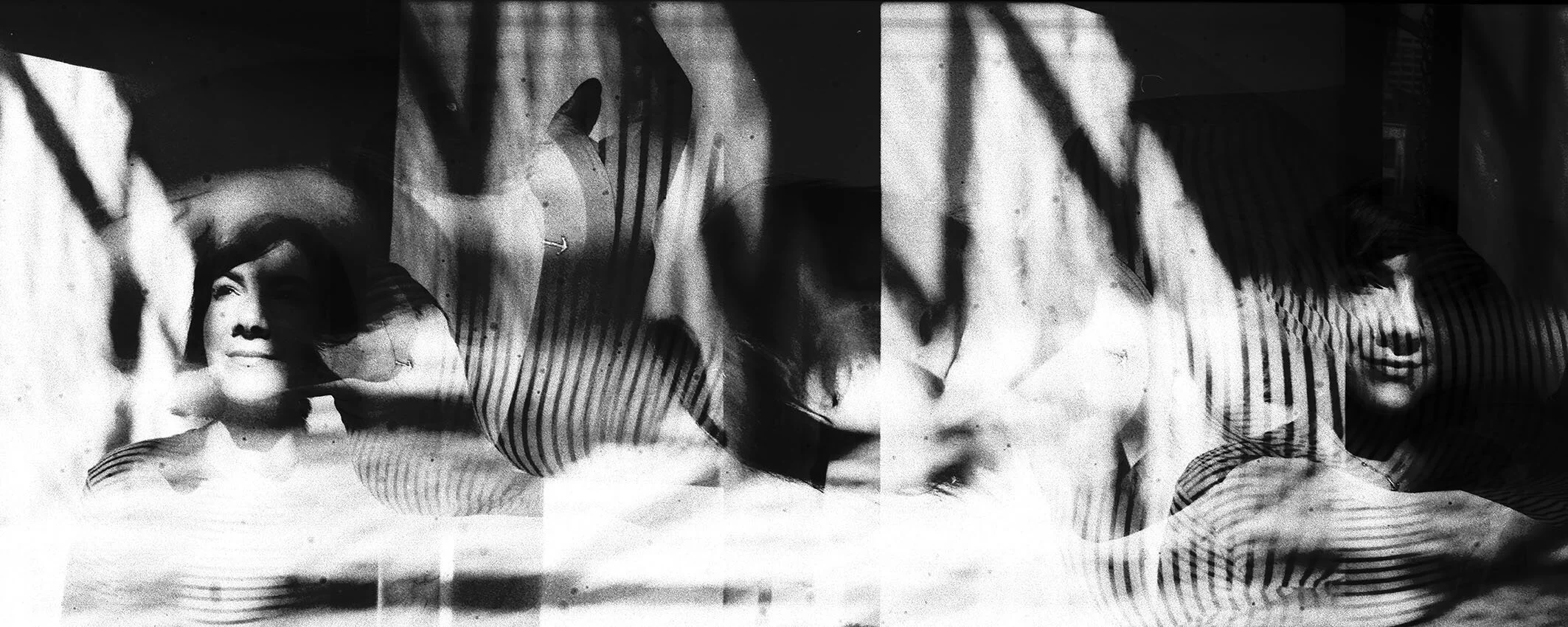
Figure 3. Hanamax. In-camera multi-exposure on 35mm film by Zo Damage, 2021
Quotes
“Chaos for me breathes images.” — Francis Bacon.
“I believe in deeply ordered chaos.” — Francis Bacon. (I love this guy!)
Keywords
Community of practice, Francis Bacon, Agency, Epherial, Surrealism, Photogram, Painting
Footnotes
Francis Bacon. David Hinton. et. al. 2013.
Bibliography
Hinton, David. et.al. Francis Bacon. Australia: ABC1 [broadcaster], 2013. https://rmit.primo.exlibrisgroup.com/permalink/61RMIT_INST/tcai14/alma9921628248001341.
Bacon, Francis. 1953. Study From The Human Body. Image. Accessed June 3, 2021. https://www.ngv.vic.gov.au/explore/collection/work/3761/.
Damage, Zo. 2021. Hanamax. Image.
Damage, Zo. 2021. Untitled self-portrait. Image.
Naroa Perez
Naroa Perez is a London based photographer. Specialising in furniture and interior design photography their fine-art practice is situated in alternative film photography, working with large and medium formats. In 2014 Perez, moved from Spain to London to study for a BA in London College of Communication, immersing themselves in colour and liquid emulsion darkroom techniques. Perez graduated in 2017 and has exhibited work in several galleries throughout London and UK.
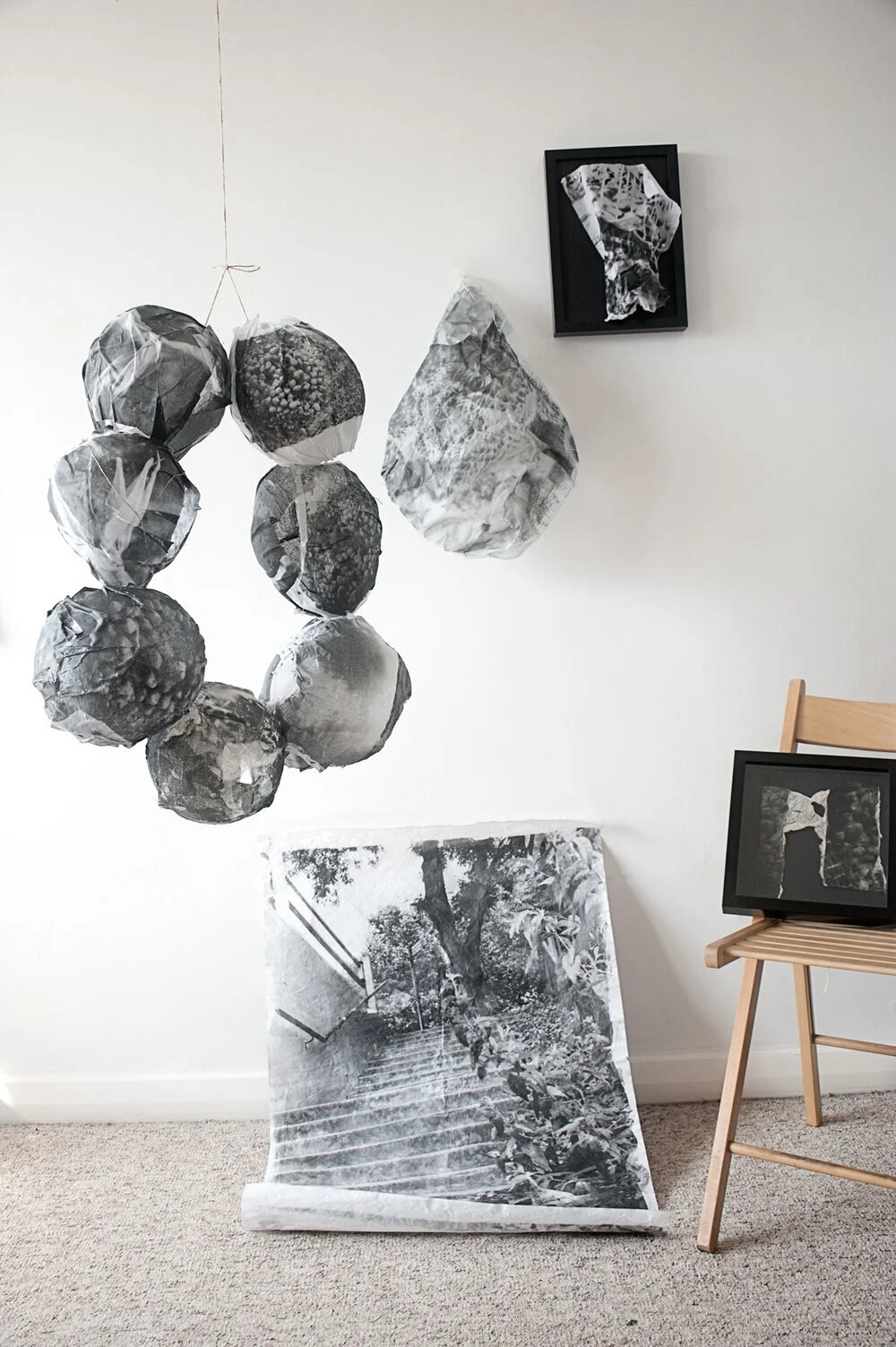
Figure 1: Trail of Touch installation (Perez 2017)
Lens Culture features an article on the Perez “Trail of Touch” project, an artistic and photographic exploration of the haptic through the alternative darkroom process of liquid emulsion printing. The technique allows them to print images on different materials to create tactile photographic sculptures. The concept creates a tension between sight and touch.
Perez explains, "The sense of touch is a silent language of mutual support. Touch is capable of creating networks of emotional solidarity that unite and comfort. To feel alive and connected to other human beings we need touch. It is essential for our survival. That's why we always seek contact, and that's what I call tactile nostalgia. During childhood, touch is essential to feel security and calm."
The artist continues, outlining how touch is directly linked to the human immune system, stating that, "Our skin develops the defence system of our entire body. It warns us of danger. And it generates and transfers all the responses to an attack. The skin is our watchdog."
Perez also highlights the darkroom's relevance, where the sense of touch is essential when working under safelight conditions.
The Merriam-Webster Dictionary definition of haptic (adjective) is “relating to or based on the sense of touch, characterized by a predilection for the sense of touch.”
Keywords
Naroa Perez, Alternative photography, Darkroom, Liquid emulsion, Fabric, Haptic
Bibliography
Arts Thread. "Naroa Perez – Profile". Accessed April 1, 2021. https://www.artsthread.com/profile/naroaperez/.
Lens Culture. 2017. "Naroa Perez – Trail Of Touch". https://www.lensculture.com/projects/702007-trail-of-touch.
Merriam-Webster Dictionary. "Haptic". Accessed April 1, 2021. https://www.merriam-webster.com/dictionary/haptic.
Perez, Naroa. NAROA Photo. Accessed April 1, 2021. https://naroaphoto.com/.
Danica Chappell
Chappell explores the materiality of creating photograms [1], investigating light-play and the indexicality of time and place (Chappell 2016, 01:06). The artist exploits rhythmic [2] and durational elements of music as a timekeeping device when working in the darkroom (Chappell 2021) as a way of "remembering the components of an exposure or process" (Nelson n.d.). The Wabi Sabi notion of temporality in photography and an associated space-time duality [3] is evident in Chappell's photograms and titles. Light Shadow (4 sec : 5 days : 2.5 hrs + flash, torch & 30 sec) (Figure 3), for instance, indicates the significance of time and process to the artist, denoting the durational activity of its making and the "commitment to analogue process, navigating the space, the materials, objects and the desire to produce" (Chappell 2012, 48).
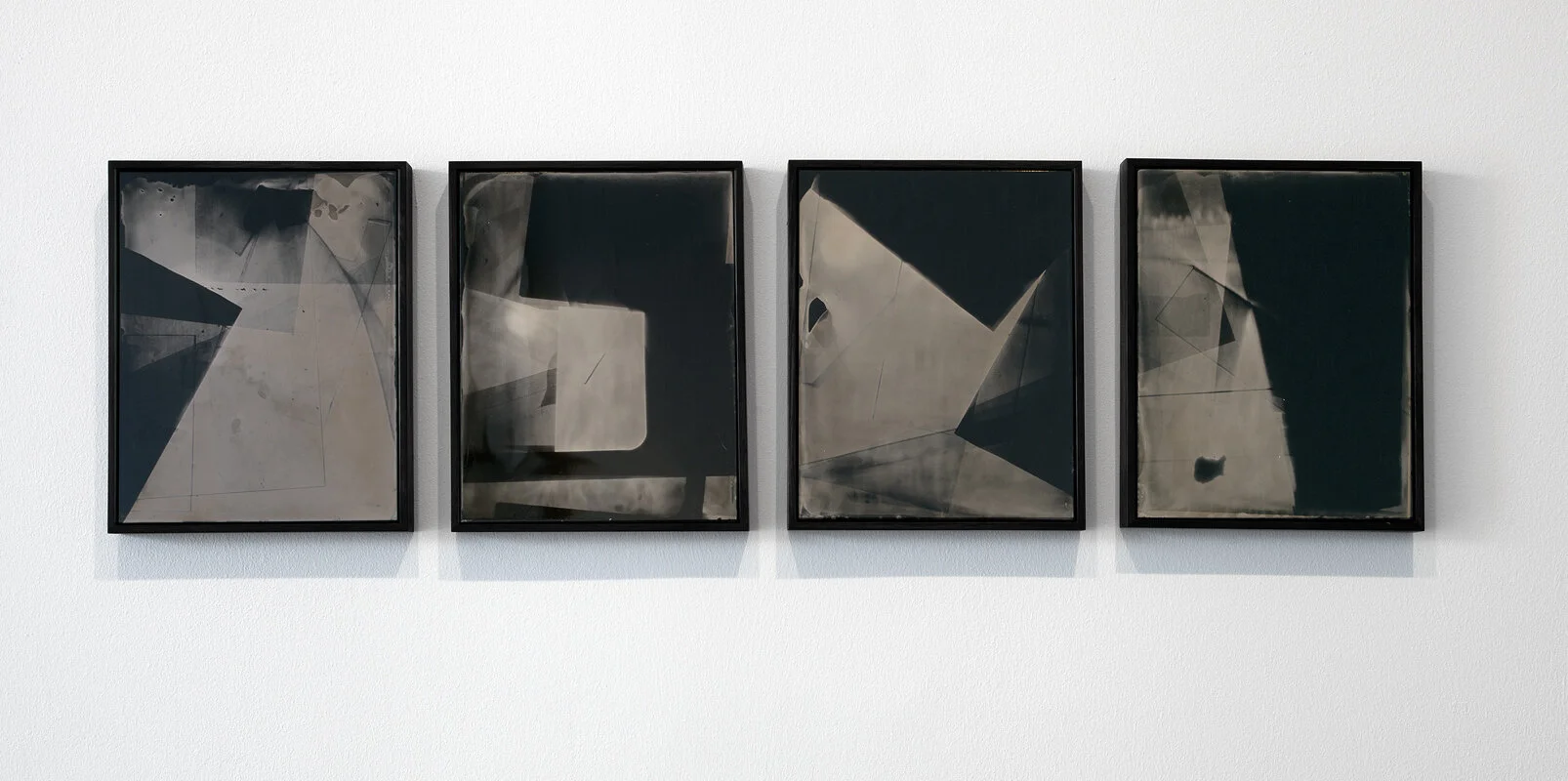
Figure 1. Danica Chappell, Piloting #1 #2 #3 #4
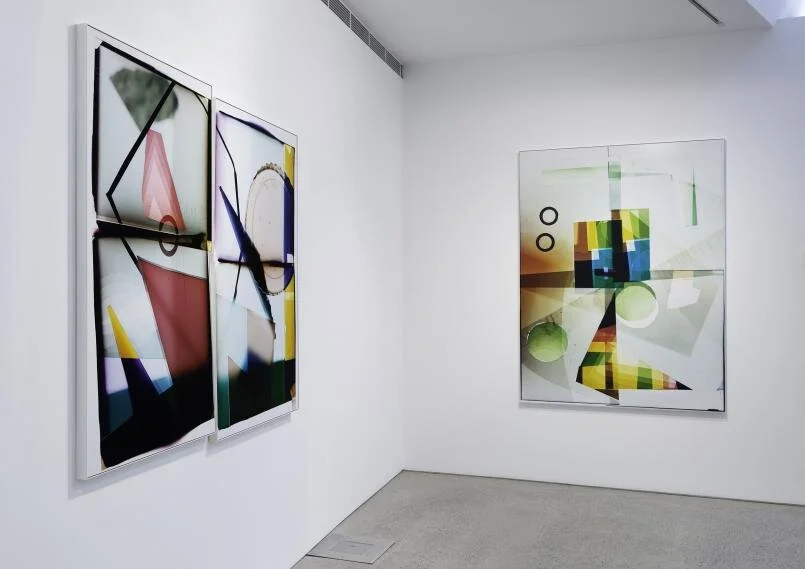
Figure 2. Installation view, Danica Chappell: Thickness of Time. Photo by Christian Capurro 2018
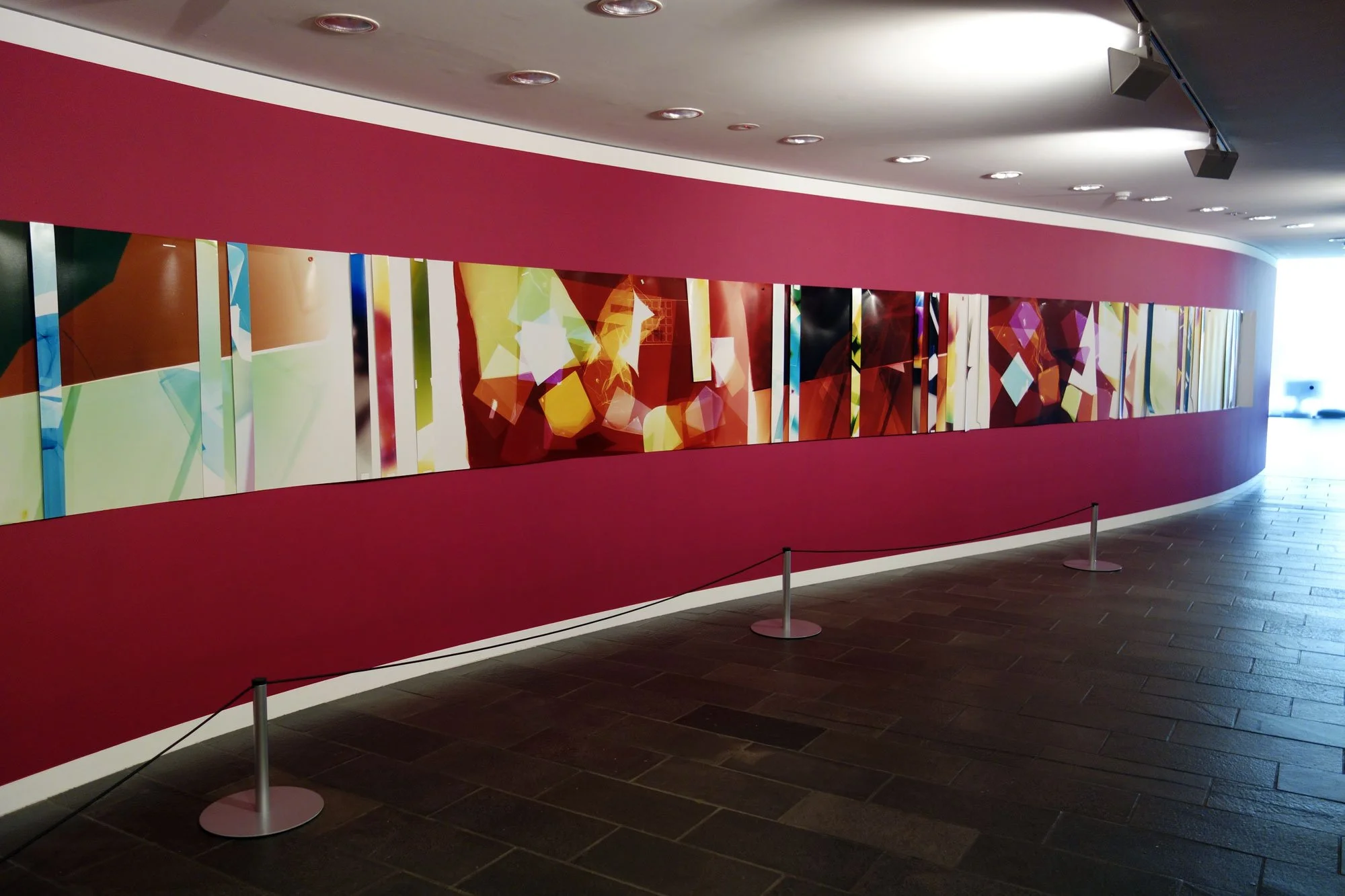
Figure 3. Danica Chappell, Light shadow (5 days + 5 hrs in 8 parts + test strips), 2012–15, Monash Gallery of Art installation view. Photo by Marcus Bunyan, 2015
Footnotes
A photogram is a cameraless photograph. Prints are made by laying objects onto a light-sensitive substrate, such as silver gelatin paper, and exposing it to light. Photograms are best known in the work of artists Laszlo Moholy-Nagy and Man Ray.
According to Thaut (2005, 39), rhythm assumes a critical syntactical role in communicating "symbolic and associative" meaning in music and is the core feature that ties sound patterns into organised and coordinated forms in the brain, underlying the principles of "musical language" (ibid, 40).
"The space-time duality considers the parallels between the spatial and temporal propagation of light" (Foster et al. 2011, 30).
Keywords
Alternative printing, Tintype, Daguerreotype, Avant Garde, Danica Chappell
References
Chappell, Danica. 2018. Thickness of Time installation view. Image. https://www.heide.com.au/exhibitions/danica-chappell-thickness-time.
Chappell, Danica. Piloting #1 #2 #3 #4. Image. https://danicachappell.com/portfolio/uncategorized/nudge-into-form/.
Chappell, Danica. 2016. "Danica Chappell Artist Interview, Emanations: The Art of Cameraless Photography". Govett-Brewster Art Gallery. July 15, 2016. YouTube video, 05:26. https://youtu.be/Ct5JxAHw-i0.
Chappell, Danica. 2016. "Danica Chappell Artist Interview, Emanations: The Art of Cameraless Photography".
Govett-Brewster Art Gallery. July 15, 2016. YouTube video, 05:26. https://youtu.be/Ct5JxAHw-i0.
Cramer, Sue. 2018. “Everything Has Time.” Danica Chappell Thickness of Time, 2018. ISSUU. https://issuu.com/heidemuseumofmodernart/docs/617.danicachappell__catalogue_fa-is.
Heide Museum of Modern Art. 2018. “DANICA CHAPPELL THICKNESS OF TIME”. https://www.heide.com.au/exhibitions/danica-chappell-thickness-time.
Modernism
The Modernist period is considered to be the most influential and important art movement since the Renaissance. Simply put, I love Modernism, many of the Modernist art movements have, and continue to influence and inform my practice.
Dada, Constructivism, Surrealism, Expressionism, Abstract and the Avant Guard.
I would like to research the ongoing impact and influence of the Modernist period on contemporary art. There are numerous theoretical definitions of contemporary art. I lean toward the definition of contemporary art being of a period in time, of the now, with no specific relationship to tech-driven methods of creating.
Relevance to practice
My practice is in film photography (35mm and 4x5 large format) which extends to alternative printing, including photogravure and printmaking. In recent months I have begun to explore cameraless photography experimenting with photograms. Artist from the Modernist period, and Contemporary artist influence by styles and movements of the period form my community of practice. These include Man Ray, Minor White, Laszlo Moholy-Nagy, Wassily Kandinsky, Marcel Duchamp, Eileen Quinlan, Floris Neusüss, Sigmar Polke, Adam Fuss and Uta Barth, all of which are listed on the Artists & Styles page on this site.
Keywords
Modernism, Cameraless photography, Contemporary, Alternative printing, Photogravure, Printmaking, Community of practice
Man Ray
Man Ray was a significant contributor to the Dada and Surrealist movements, although his ties to each were informal. Man Ray worked in a wide range of mediums and considered himself a painter. Best known for his photography, Man Ray was a renowned fashion and portrait photographer. Man Ray is also known for his work with photograms, which he called "rayographs", a reference to himself.
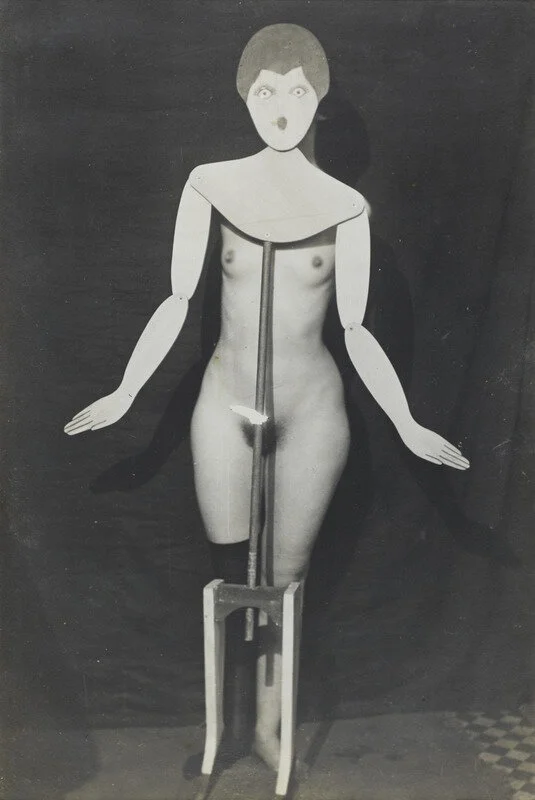
Man Ray, The Coat-Stand (Porte manteau), 1920
Keywords
Experimental, Sculpture, Photography, Modernism, Community of practice
References
Dupêcher, N 2017, ‘Man Ray (Emmanuel Radnitzky)’ , MoMA, viewed 31 March 2020, <https://www.moma.org/artists/3716>
Ray M 1920, The Coat-Stand (Porte manteau), photograph, viewed 31 March 2020, <https://www.centrepompidou.fr/cpv/resource/czzAepB/rXKKqz>
Bauhaus
The Bauhaus (The Staatliches Bauhaus) was a German art school (1919–1933) that became famous for its approach to design, which strove to combine beauty with function and attempted to unify the principles of mass production with individual artistic vision.
The Bauhaus movement had a profound influence on subsequent developments in art, architecture, graphic design and typography.
Although the school was closed by its own leadership under pressure from the Nazi regime who believed the Bauhaus was a centre of communist intellectualism, the staff continued to spread its idealistic precepts as they fled Germany and emigrated all over the world.
Russian painter, printmaker and graphic artist, Wassily Kandinsky was a teacher at The Bauhaus. Kandinsky is credited for creating the first purely abstract works, and as a pioneer of Abstract which I question in my journal entry Futurism (Gay 2020). Kandinsky is considered to be one of the great Modernists. No arguments from me on that point, in fact I would go so far as to say that Kandinsky is an undisputed great of the Modernist period.
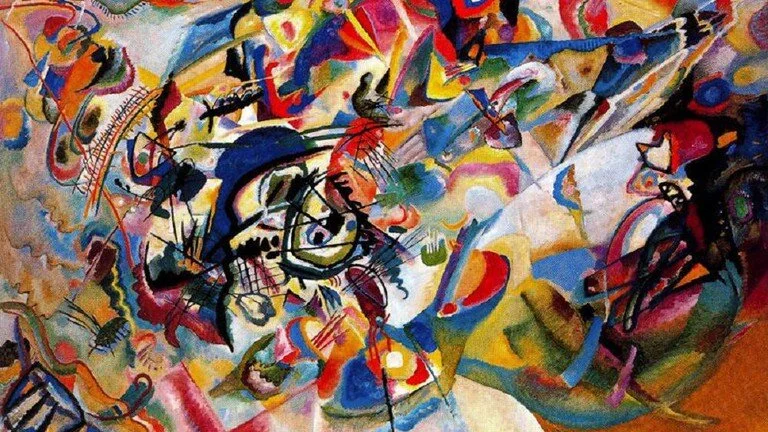
Composition 7, Wassily Kandinsky 1913
László Moholy-Nagy, a teacher of the Bauhaus, is my favourite artist. Of all the creatives I have researched and discovered throughout the year, Moholy-Nagy has had the most powerful and profound impact on me and my practice.
Moholy-Nagy authored Bauhausbücher 8: Painting Photography Film (1925). As represented by the title, the first half of the book finds Moholy-Nagy discussing various styles of art with a focus on painting, photography and film and theory. Curated by Moholy-Nagy, the second half of Bauhausbücher 8: Painting Photography Film presents a collection of works – ranging from sheet music to photograms – by artists of the Bauhaus.
In the introduction to Bauhausbücher 8: Painting Photography Film, Moholy-Nagy states that “This book is in defence of photography, which many people still think of as an inferior mechanical operation of recording.”
One hundred years down the track, Moholy-Nagy stands strong as a profound thinker and creative. His art and writing continue to be a powerful influence on contemporary artists, particularly in the field of photography. To me, Moholy-Nagy is God.
Things to come, László Moholy-Nagy 1936
Community of practice
I identify many of the teachers and artists from the Bauhaus movement in my community of practice, particularly Moholy-Nagy and Kandinsky. I am a book designer and typesetter by trade. My father (an illustrator, photographer, commercial artist, graphic designer and typographer) has also had a significant impact on my creative development. Considering this, it comes as no surprise that I am so passionately drawn to the Bauhaus movement.
Quotes
With few exceptions, music has been for some centuries the art which has devoted itself not to the reproduction of natural phenomena, but rather to the expression of the artist's soul, in musical sound. — Wassily Kandinsky (Kandinsky n.d.)
Keywords
Moholy-Nagy, Kandinsky, Mondrian, Constructivism, Bauhaus, WWII, Germany, Bauhausbücher, Books, Modernism, Futurism, Expressionism, Dada, Abstract, Typography, Film, Design, Photography, Art history
References
Kandinsky, Wassily. n.d. “Quotes”. Wassily Kandinsky. https://www.wassilykandinsky.net/quotes.php.
Kandinsky, Wassily. 1913. Composition 7. In ‘10 Artworks By Kandinsky You Should Know’. Culture Trip. https://theculturetrip.com/europe/russia/articles/10-artworks-by-kandinsky-you-should-know/.
Maholy-Nagy, Laszlo. [1928] 2019. Bauhausbücher 8: Painting Photography Film. Switzerland: Lars Müller Publishers.
Moholy-Nagy, Laszlo. 1936. Things to come. Image. http://www.artnet.com/artists/l%C3%A1szl%C3%B3-moholy-nagy/special-effect-f%C3%BCr-things-to-come-njNeWNe6qcXCU1TD_H-W1A2
Clyde Butcher
Butcher is best known for his black and white, large format landscapes of the Florida everglades and country surrounds. An environmentalist, the veteran photographer, raises awareness through his photographs of the natural environment which he loves.
In an interview with Steven Crandell (2014), Butcher talks about his relationship with the environment and how both nature and photography restored his soul after a drunk driver killed his teenage son. Butcher explains, "Wilderness, to me, is a spiritual necessity. The mysterious spiritual experience of being close to natural restored my soul. My experience reinforced my dedication to use the art of photography as an inspiration for others to work together to save nature's places of spiritual sanctuary for future generations."
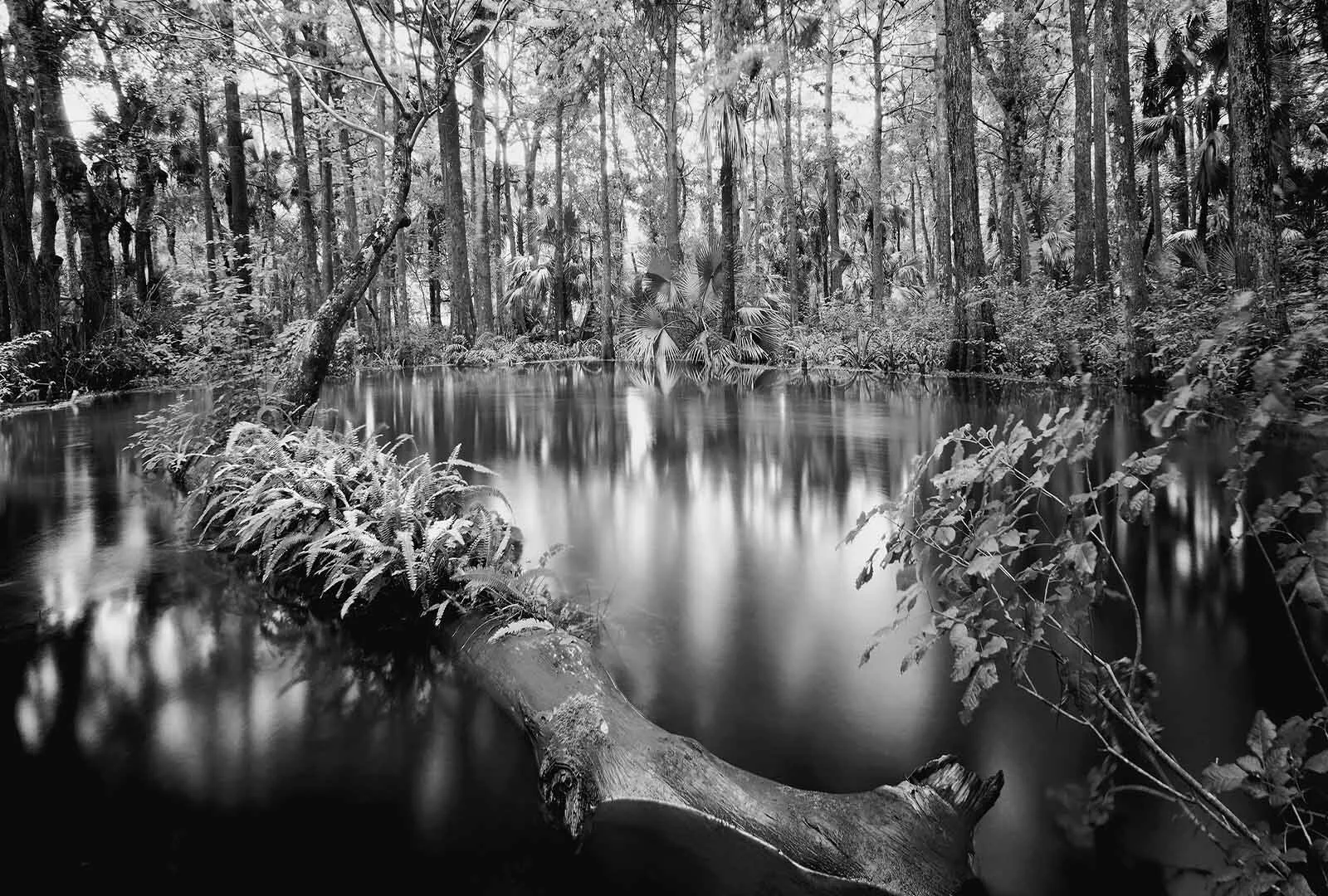
Clyde Butcher, LOXAHATCHEE RIVER 1, 1991
Relevance to practice
Film photography, Large format, Black and white, Colour is overrated, Composition, Courage, Commitment
Keywords
Clyde Butcher, Drive, Vision, Self-promotion, Salvador Dali, Black and white, Large format, Landscape, Florida, Photography, Colour, B&H
References
Butcher, C 1991, LOXAHATCHEE RIVER 1, photograph, viewed 20 June 2020, <https://clydebutcher.com/s/photographs/florida-collection/state-parks/jonathan-dickinson-state-park/loxahatchee-river-1-south-east-fl/>
Crandell, S 2011, ‘Extreme Exposure: Everglades — Clyde Butcher's Wilderness Intuition’, Huffington Post, viewed 8 August 2020, <https://www.huffpost.com/entry/clyde-butcher_b_810107>
B&H Photography Podcast 2020, Clyde Butcher - Photographing the Everglades and Selling Clocks, podcast, B&H Photo Video, viewed 20 June 2020, <https://soundcloud.com/bh-photography-podcast/clyde-butcher-photographing-the-everglades-and-selling-clocks>
Frank Hurley
Frank Hurley
Australia
1885–1962
Practice: Photographer
Movement/Styles: Documentary, War
A powerful documentary of the beauty of the Antarctic landscape, wildlife and living conditions, Hurley’s best known Antarctic images are from the 1914-1916 expedition led by Shackleton. Despite the expedition members efforts, The ship Endurance became trapped in the ice. The Endurance eventually being crushed by the ice despite the expedition members efforts to free the ship, leaving the crew stranded camping on the pack ice and Elephant Island for 11 months before being rescued.
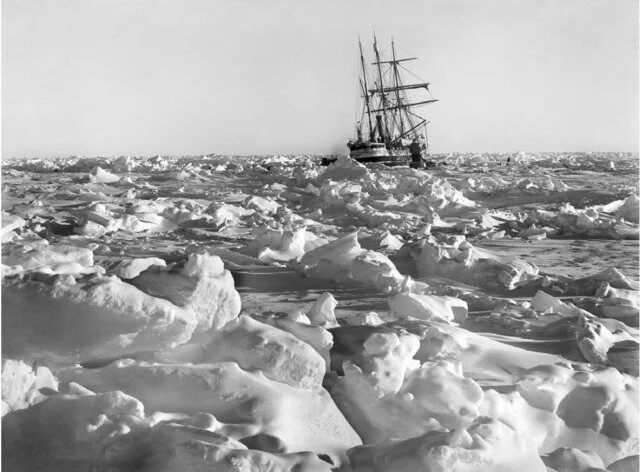
Frank Hurley, Endurance in the ice, 1914–17
Hurley pioneered composite imagery, most notably in his photographic documentation of WW1. Hurley found himself having to justify this practice, as many believed that the composites were not actual photographs. In his article 'War photography', published in The Australasian photo-review in 1919, Hurley explains that, "None but those who have endeavoured can realise the insurmountable difficulties of portraying a modern battle by the camera. To include the event on a single negative, I have tried and tried, but the results are hopeless."
Hurley continues, justifying his application of composite imaging where, "[…] if negatives are taken of all the separate incidents in the action and combined, some idea may then be gained of what a modern battle looks like."
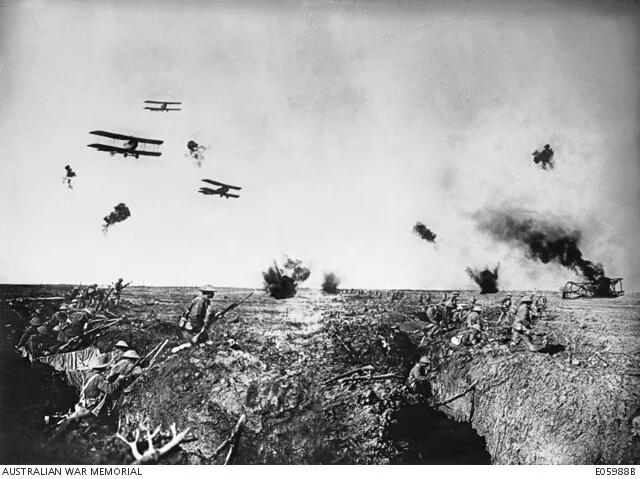
Over The Top (Glass plate composite), Frank Hurley 1918
Relevance to practice
There is no direct relevance to practice. Hurley's vision and approach to storytelling are fantastic. His courage and dedication to documenting Antarctica and war, particularly in his use, and defence of his WW1 photo composites is admirable. It is essential to acknowledge that photographers from the modernist period (including documentary photographers such as Hurley) shaped the medium. Their work continues to resonate through photographic practice in the digital age. Hurley's composites are a powerful example, dating back to the early 1900s.
Keywords
Frank Hurley, Glass plate, Composite, WW1, Antarctica, The Endurance, Shackleton, War photography
References
Groom, L 2004, Frank Hurley's Antarctic photographs, National Library of Australia, viewed 6 August 2020, <https://www.nla.gov.au/pictures/frank-hurley-antartic-photographs>
Hurley, F 1914–17, Endurance in the ice, photograph, viewed 6 August 2020, <https://www.artsy.net/artwork/frank-hurley-endurance-in-the-ice>
Hurley, F 1918, Over The Top, photograph, viewed 6 August 2020, <https://www.awm.gov.au/articles/encyclopedia/official_photo>
Hurley, F 1919, 'War Photography', Australian photo-review, vol. 26, no. 2, p. 164–5, <https://nla.gov.au/nla.obj-427900504/view?sectionId=nla.obj-474303506&partId=nla.obj-462852813#page/n35/mode/1up>
State Library New South Wales n.d., Frank Hurley's World War I photography: Truth and photography, viewed 6 August 2020, <https://www.sl.nsw.gov.au/stories/frank-hurleys-world-war-i-photography/truth-and-photography>
Ryan McGinley (opinion)
OPINION
The GQ online article about American photographer Ryan McGinley titled 'Naked and Famous'. Written by Alison Gregory in 2014, the author states that, "McGinley's vision has evolved and expanded into a tidal wave of influence, affecting the look of art, advertising, music videos, film, even Instagram—and making him arguably the most important photographer in America."
A bold statement.
Firstly, there is nothing new in the style or subject matter presented in McGinley's work with similarities to that of many other photographers, including Uta Barth, David Bailey and Nan Goldin. Although there are some lovely images, most of the work looks to like nothing more than smut.
Portraying extremes in a body of work (young and beautiful, old and fat, the disfigured, the disadvantaged), that which makes us feel better about our greed and the insatiable desire for fame, beauty, wealth, acceptance and fit into that society/social conditioning deems worthy.
Perhaps the popularity or approval of such works is in direct relation to political correctness and the insatiable infliction of "middle-class guilt" on today's society. Alternatively, could the lack of objection is driven by fear to protest this zeitgeist. This hypothesis can be applied to countless artists today.
Sitting through so many classes with feminist threads raises the question of how works such as McGinley's receive the accolades that they do. Perhaps the day will come where people have to stand by their work – present and accountable for itself.
20 January 2022
McGinley’s photography is very white-middle class. The New York Times (Gefter 2007) claims McGinley “paid each model a day rate and paid for everyone’s food and lodging, as well as the flights home”, further quoting McGinley as stating, “a three-month trip it comes close to $100,000 for everything.”
Relevance to practice
There are similarities in composition. I do like McGinley's soft-focus work and use of scale.
Keywords
Ryan McGinley, GQ, Nude, Porn, Social, Fashionable, Questionable
References
Gregory, A 2014, 'Ryan McGinley: Naked and Famous', GQ Magazine, viewed 17 May 2020, <https://www.gq.com/story/ryan-mcginley-photographer>
Gefter, Philip. 2007. "A Young Man With An Eye, And Friends Up A Tree (Published 2007)". The New York Times. https://www.nytimes.com/2007/05/06/arts/design/06geft.html.
France Scully Osterman
France Scully Osterman
USA
Practice: Photographer
Movement/Style: Vintage processes, Portraits
I discovered the work of France Scully Osterman watching ‘A&A Portrait 2011’ series on YouTube and was taken by the photographer’s excitement toward her work practices, eye for beauty and composition and enthusiasm. In the video, Osterman takes the viewer through the collodion process, from preparing plates through to hanging finished works. It was interesting seeing the process and approach to the work from the photographer’s perspective and I was greatly inspired in the way Osterman presented the finished pieces. So much so that I have experimented with splitting/creating polyptych displays of my own images for my Invent, define, destruct series. Although Osterman’s style is very different from my own, there are cross overs in practice in her vision, enthusiasm, application of vintage technology and methodology. Osterman’s eyes smile when she talks about photography and her work. There is a lot to be said about that in itself.
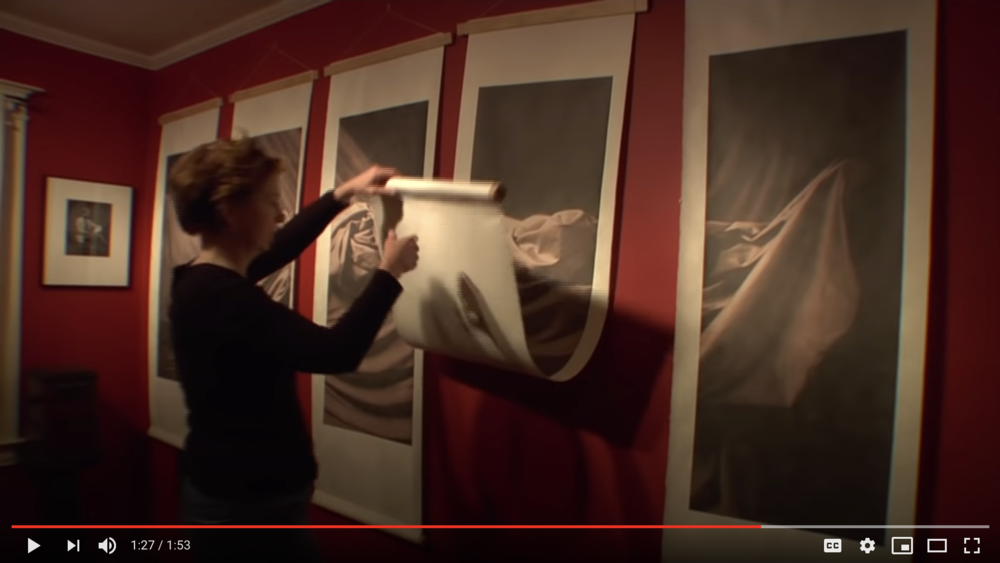
A&A Portraits (2011) France Scully Osterman (screenshot)
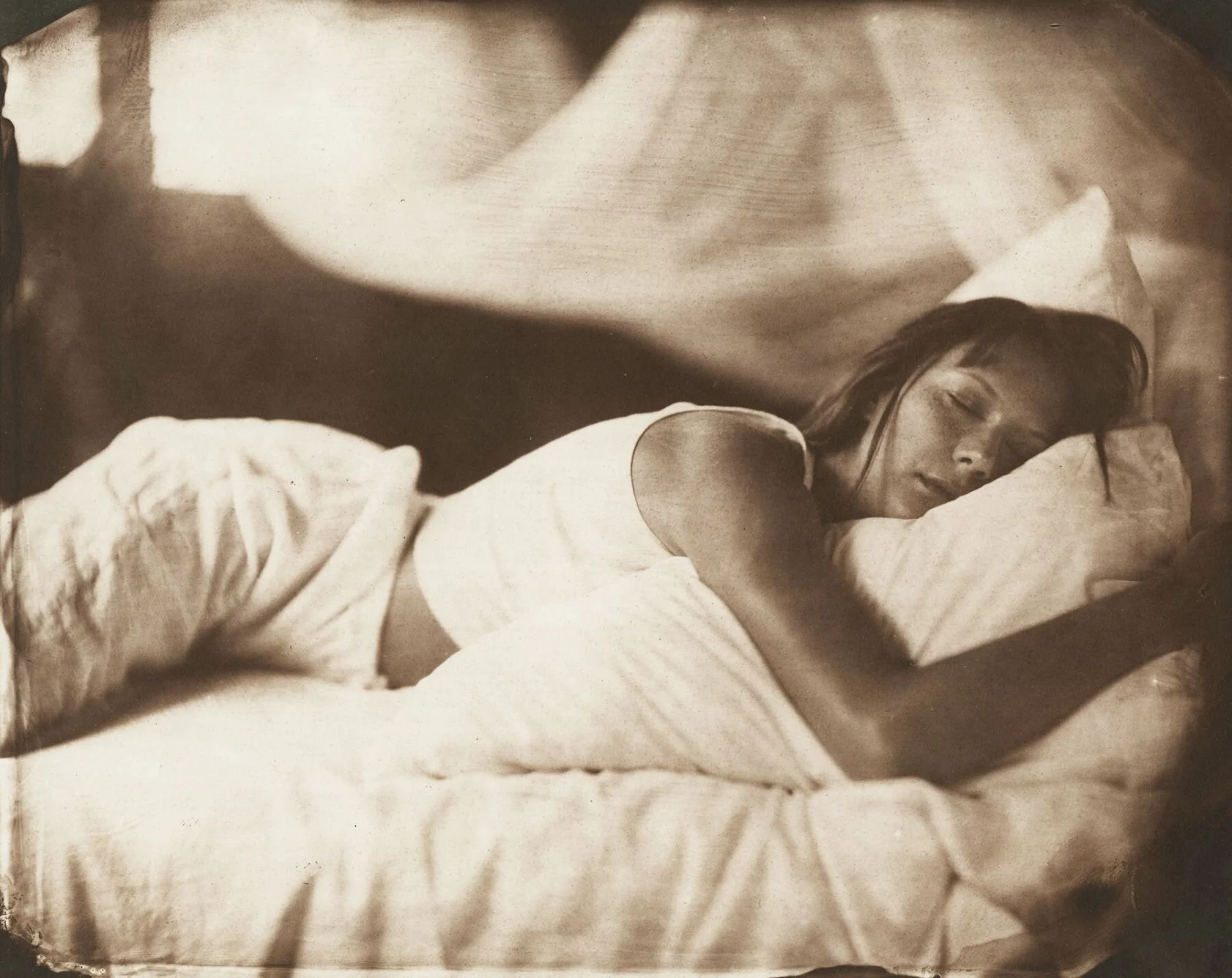
France Scully Osterman, Daydream , 2001
Relevance to practice
Alternative printing, Large format, Analogue, Composition, Design
Keywords
France Scully Osterman, Wet plate, Collodion, Large format photography, Community of practice
References
123marketstreet 2011, A&A Portrait – France Scully Osterman, online video, YouTube, viewed 3 May 2020, <https://www.youtube.com/watch?v=qfcfVVsz4xc&feature=youtu.be>
Scully Osterman, F 2001, Daydream, photograph, viewed 13 May 2020, <http://www.howardgreenberg.com/artists/france-scully-osterman>
Minor White
Minor White
1908–1976
USA
Practice: Photography
Movement/Style: Contemporary art, Photography
Although many consider White to be an abstract photographer, the environmentalist and Buddhist was primarily a landscape photographer. White blurred the lines of reality while combining his emotional and spiritual connections with nature and environment with his unique vision and approach in his work. Thought-provoking with vast scope for interpretation, I am attracted to the beauty, serenity and textures of White’s exposures and the courage and conviction of the artist as he pushes against boundaries in his expression and image-making. Relationship to practice is in White’s persistence to push boundaries and think outside the box in the narrative of his work. Bold and hauntingly beautiful with seemingly endless possibilities for interpretation, White is fearless and unapologetic in the images he makes.
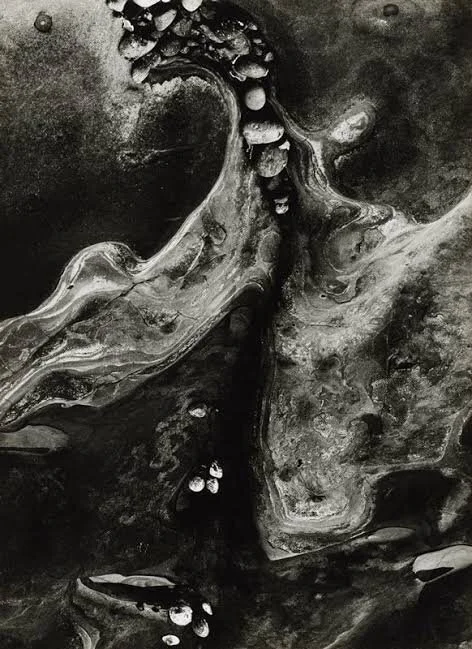
Minor White, Nature Abstract, 1963
Quotes
If all your life means to you is water running over rocks, then photograph it, but I want to create something that would not have existed without me. — Minor White (Graf, M 2016)
Relevance to practice
Large format, Abstraction, Black and white, Contemporary, Texture, Tone, Composition
Keywords
Minor White, Contemporary art, Photography, Texture, Tone, Abstraction, Alternative view, Composition, Film, Analogue, Black and white, Community of practice
References
Artnet n.d., Minor White, viewed 11 May 2020, <http://www.artnet.com/artists/minor-white/>
Graf, M 2016, ‘Art from the Moment’, Notes from the Woods, blog post, 20 March, viewed 2 June 2020, <https://www.grafphoto.com/2016/03/20/art-from-the-moment/>
White, M 1963, Nature Abstract, photograph, viewed 2 June 2020, <https://collections.artsmia.org/art/115964/nature-abstract-minor-white>
Floris Neusüss
Adventurous and innovative, Contemporary artist Floris Nuesüss has a great impact on my work practice, particularly in exploring shape, texture and methodology. Best known for his photograms, I am drawn to Neusüss’ willingness to think outside the box, push boundaries and explore the craft of photography.
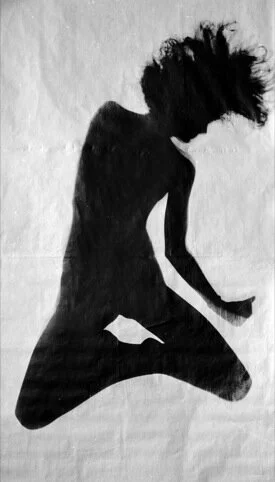
Floris Neusüss, Nudogrammm, 1964
Floris Neusüss is a contemporary experimental German photographer known for his use of camera-less photography (photograms) … “Photograms don’t show us what’s beyond the visible, but they give us a hint of it,” Neusüss has said. “It is true that the subject resting on the photo-sensitive paper presents its reverse side to be recorded, the side that is in shadow, the shadow cast by the object itself. This intimate physical connection inscribes into the paper, and this, if you are open to it, is the real fascination of photograms: the tension between the hidden and the revealed.” … Today, his works are held in the collections of the Victoria and Albert Museum in London, the San Francisco Museum of Modern Art, and the Art Institute of Chicago, among others. (artnet, nd)
Quotes
A true pioneer of photographic art, inspired by the camera-less photography of Làszló Moholy-Nagy and by Man Ray’s Surrealist photograms, Floris Neusüss has dedicated his whole career to the practice, study and teaching of the photogram, exploring its technical and visual possibilities and pushing the boundaries of the medium. — Twenty 6 Magazine
Relevance to practice
Alternative printing, Darkroom, Film, Contact printing, Obscure, Abstraction, Tone, Texture, Questioning, Experimentation
Keywords
Photograph, Monochrome, Photography, Camera-less, Abstract, Contemporary, 20th century, Community of practice
References
Artnet n.d., Floris Neusüss, viewed 15 April 2020, <http://www.artnet.com/artists/floris-neus%C3%BCss/>
Atlas Gallery n.d., Floris Neusüss, viewed 8 May 2020, <http://www.atlasgallery.com/artists/floris-neususs>
Gosling, Emily. 2012. “Floris Neusüss: Ancient and Modern.” Design Week. https://www.designweek.co.uk/issues/may-2012/floris-neususs-ancient-and-modern/.
Neusüss, Floris. 1964. Nudogramm. Image. https://www.designweek.co.uk/issues/may-2012/floris-neususs-ancient-and-modern/.
Squires, C, Batchen, G, Baker, G & Steyerl H 2013, What Is a Photograph?, International Center for Photography and DelMonico Books, New York, NY
Adam Fuss
Adam Fuss creates a visual language of beauty and strength, exploring and redefining notions of what constitutes a photograph or an image. Fuss is less interested in the meaning of the picture than the making of it (Kellein 2013), depending on the rudimentary infrastructure of pinhole cameras, photograms and other commonly considered ‘redundant’ processes to create spectacular conceptual deconstructions of the transforming medium (Lundström 2005) (Jolly et al. 2015, 6).
I am officially in love … and not sure how to approach writing about Fuss or the relationship to practice.
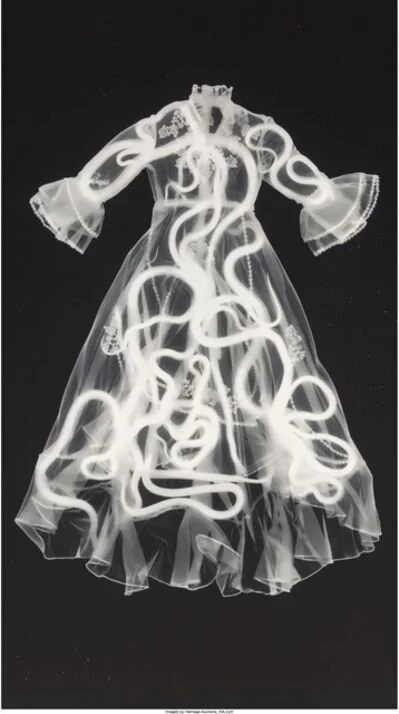
Adam Fuss, Medusa, 2010
Quotes
I’m not interested in the meaning of the picture, I’m interested in the making of it. — Adam Fuss (2013)
Keywords
“Adam Fuss.” n.d. Fraenkel Gallery. Accessed September 11, 2022. https://fraenkelgallery.com/artists/adam-fuss.
Adam Fuss, Camera-less photography, Photogram, Water, Chemigram, Contemporary, Energy, Movement Rebel, Focused, Narratives, Alternative printing, Abstraction, Obscure, Texture, Contrast, Emotive, Community of practice
References
123marketstreet 2011, A&A Portrait – Adam Fuss, online video, YouTube, viewed 3 May 2020, <https://www.youtube.com/watch?v=QxpeNIN0iRA>
Cheim & Read 2013, Adam Fuss Documentary, online video, YouTube, viewed 3 May 2020, <https://youtu.be/LHvByy7950Q>
Douglas Udell Gallery 2013, Adam Fuss in Conversation with Thomas Kellein, online video, YouTube, viewed 3 May 2020, <https://youtu.be/HrgvCngcf40>
Fuss, A 2010, Medusa, photograph, viewed 3 May 2020, <https://www.artsy.net/artwork/adam-fuss-medusa-from-the-series-home-and-the-world>
Fuss, Adam. 2013. "Adam Fuss in Conversation with Thomas Kellein." February 10, 2013, 26:07. YouTube video. DouglasUdelGalery. https://youtu.be/HrgvCngcf40.
Jolly, Martin, Cherine Fahd, and Suzanne Buljan. 2015. The Alchemists: Rediscovering Photography In The Age Of The Jpeg. Sydney: The University of Sydney. PDF. https://martynjolly.files.wordpress.com/2015/10/
thealchemistscatalogue.pdf.Lundström, Jan-Erik. "Fuss, Adam." In The Oxford Companion to the Photograph. : Oxford University Press, 2005. https://www-oxfordreference-com.ezproxy.lib.rmit.edu.au/view/10.1093/acref/9780198662716.001.0001/acref-9780198662716-e-601.
Rafferty, E 2013, Art Movements Through Photography, online video, YouTube, B&H Photo Video, viewed 2 May 2020, <https://www.youtube.com/watch?v=r-Bx5krtLZY&t=3444s>
Victoria and Albert Museum 2018, Camera-less photography: Adam Fuss, online video, YouTube, viewed 2 May 2020, <https://www.youtube.com/watch?v=RHNvVm0Rp_4>
Wassily Kandinsky
Wassily Kandinsky
Russia
1866–1944
Practice: Painting, Graphic art
Movement/Style: Expressionism, Abstract art, The Bauhaus
Russian painter, printmaker and graphic artist Wassily Kandinsky is credited for creating the first purely abstract works, and as the forefather or pioneer of Abstract art. Considered to be one of the great Modernists, Kandinsky was also a teacher at the Bauhaus school. Kandinsky’s use of colour is the opposite of my use of black and white, while at the same time having notable similarities.
I use monotone/black and white to encourage in the viewing a very personal interpretation and free emotional connection with the work – I believe that by applying colour is to imply a pre-determined emotional state. Kandinsky, on the other hand, uses abstract form, applying many colours to the work, my personal interpretation of this is that there is such an abundance of shape, texture and colour that it removes any given, or predetermined, emotional state thus, as in my own work, enabling the viewer freedom of interpretation and emotional connection.
As a live music photographer, my primary goal is to photograph energy, sound and emotion over and above any given subject.
Discovering that Kandinsky referred to colour as sound and music as art was an added bonus.
The Kandinsky website quotes the Modernist master: “With few exceptions, music has been for some centuries the art which has devoted itself not to the reproduction of natural phenomena, but rather to the expression of the artist's soul, in musical sound.” (Kandinsky n.d.)
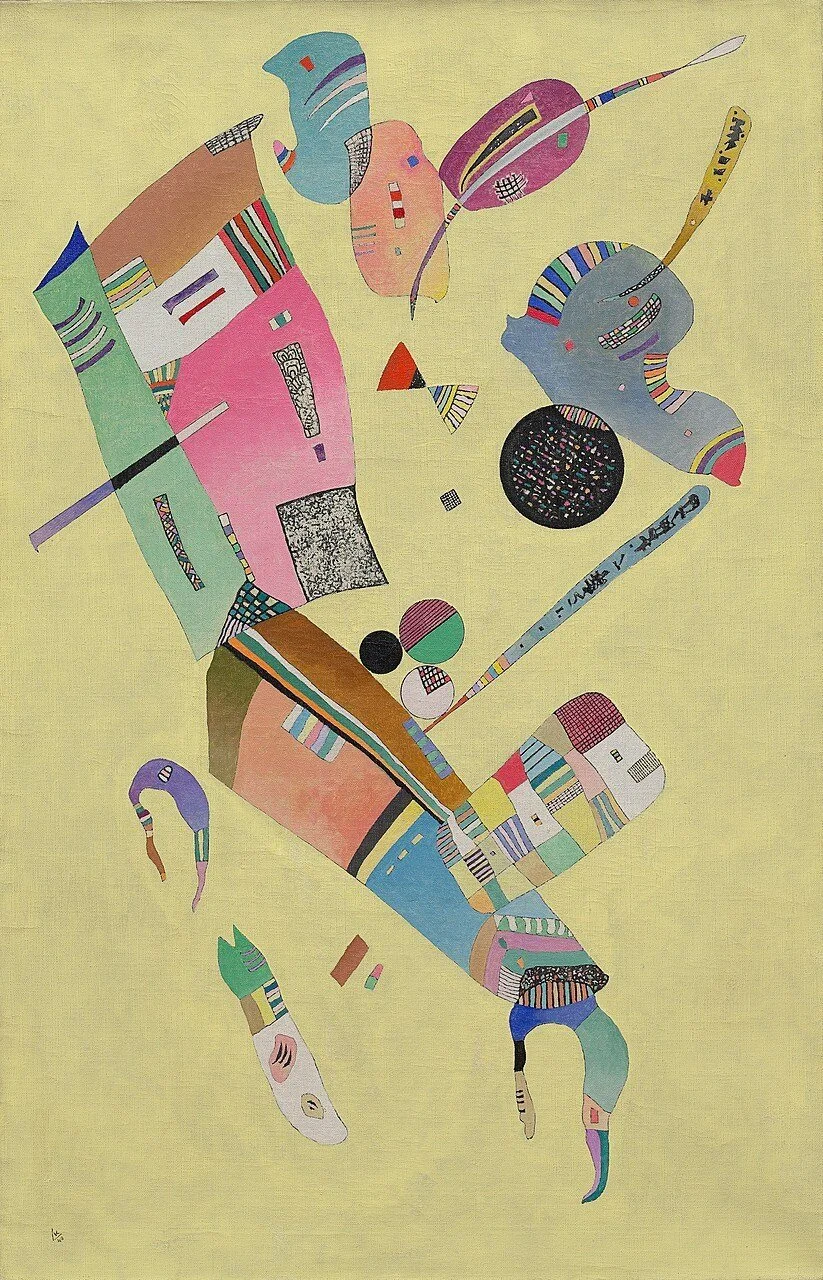
Wassily Kandinsky, Moderation, 1940
Keywords
Wassily Kandinsky, Bauhaus, Painting, Graphic art, Abstract, Expressionism, Colour, Form, Music, Sound, Community of practice, Abstraction, Emotive, Sound, Energy, Music, Tone, Energy, Kinetics, Obscurity, 2-dimensional, Organised chaos, Structure
References
Kandinsky, W n.d., Quotes, viewed 14 April 2020, <https://www.wassilykandinsky.net/quotes.php>
Kandinsky, W 1940, Moderation, painting, viewed 14 April 2020, <https://www.guggenheim.org/artwork/artist/vasily-kandinsky>
Manhattan Arts International n.d., Wassily Kandinsky, viewed 14 April 2020, <https://manhattanarts.com/wassily-kandinsky/>
Tate n.d., Wassily Kandinsky, viewed 14 April 2020, < https://www.tate.org.uk/art/artists/wassily-kandinsky-1382>