
Justine Varga
Justine Varga’s practice is located in the landscape of antique photographic processes. Varga’s photogenic drawing, Maternal Line (2017), presents an alternative perspective of portraiture (Figure 10).[1] Cultivating interaction between subject and medium, the image was created with the saliva of Varga’s grandmother drawn directly onto a large format negative. Varga describes Maternal Line as evoking a relationship between people (Lakin 2017, 72).[2]
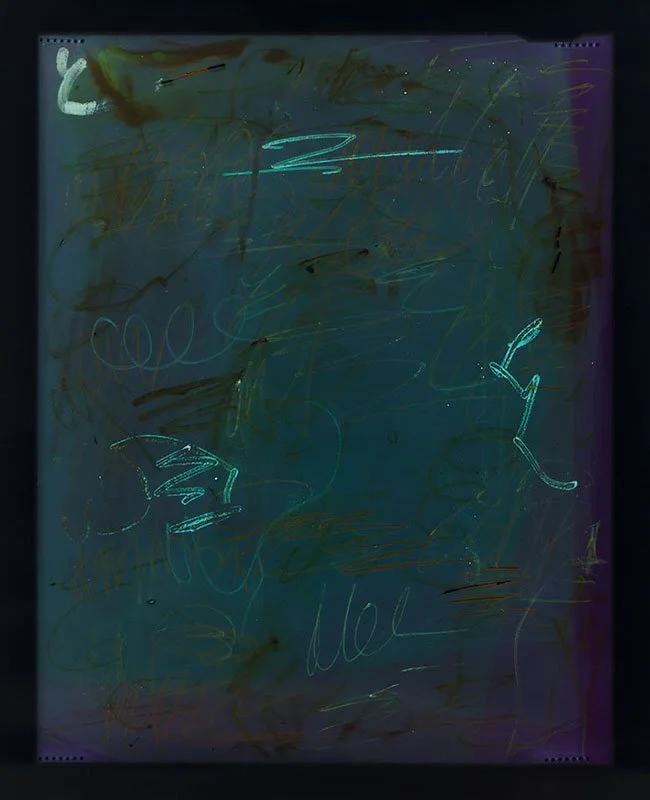
Justine Varga, Maternal Line, 2017, c type photograph, 1570x1220mm
Footnotes
[1] Cliché verre, or glass printing, is an early nineteenth-century cameraless process in which an image or impression is handcrafted onto a transparent substrate to create a photographic negative or matrix, which can be printed onto any commercial and handcrafted photosensitised (light-sensitive) material, such as gelatin silver, C-type, salt and albumen paper, Polaroids, and photographic film (Schenck 1995).
[2] Varga received the “Olive Cotton Award” (2017) for Maternal Line. The contemporary image of portraiture provoked great debate in the rank and file of traditionalists, with Dr Shaune Lakin – senior Olive Cotton Awards judge – receiving unfavourable feedback condemning his choice for the prestigious prize (Shoebridge, Saunders and Turnbull 2017).