
Preparing and making photogravure [1] plates, inspired by and repurposing printmaking artefacts.
Artefacts
Photogravure (photopolymer) printing plates are placed on a magnetic sheet taped to the workbench, stabilising the plate and preventing it from slipping during the inking process. A sheet of newsprint is placed between the magnet and plate to help keep the workstation clean and enable lifting the plate off the magnet post-inking. The black marks on the paper in Figures 1 and 2 clearly show the position of the photopolymer plates and the rub-over of ink from the buffing or polishing in preparation to print. The “under-sheets” are then discarded after two or three uses. The traces of ink are captivating, beautiful and immersive.
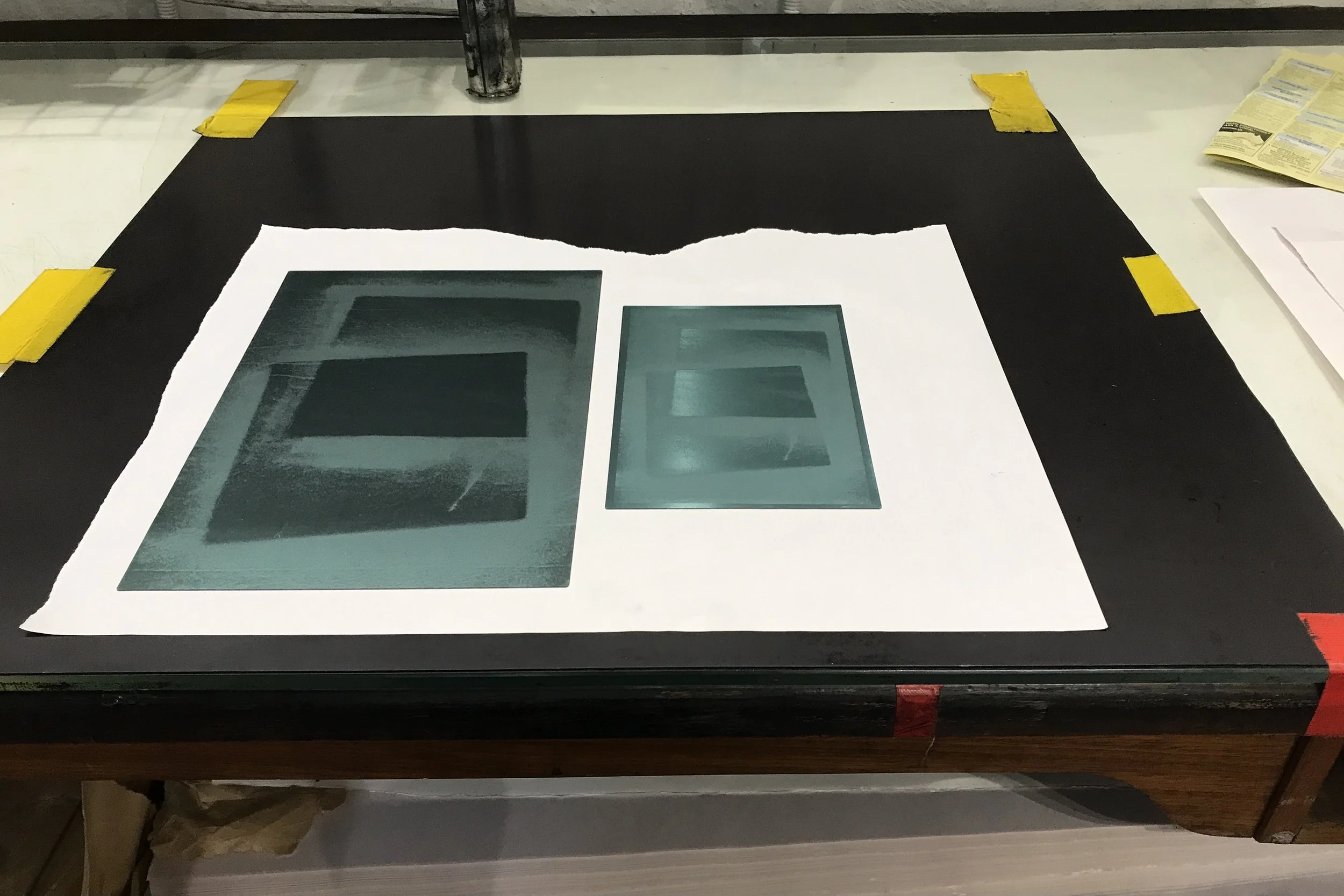
Figure 1
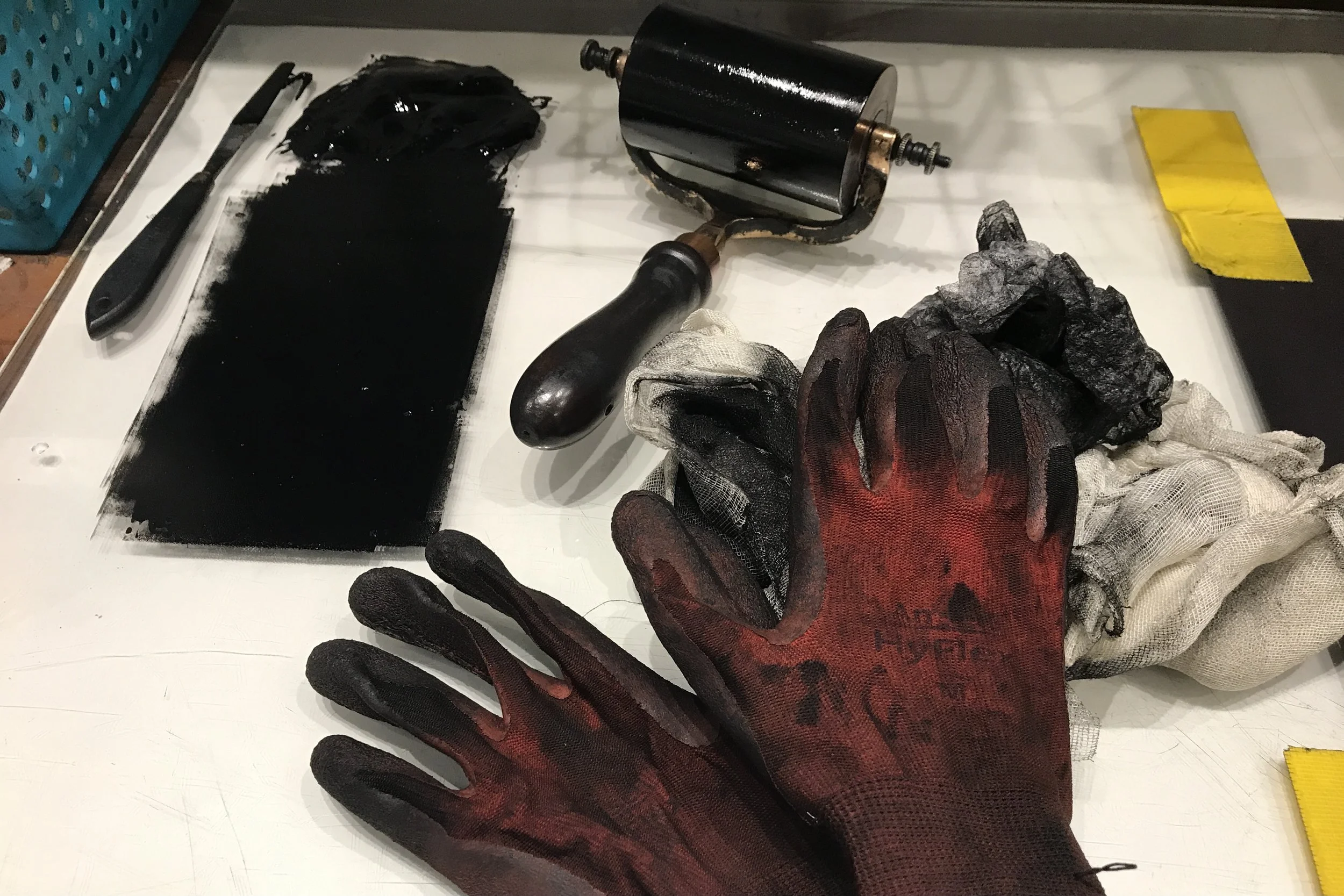
Figure 2
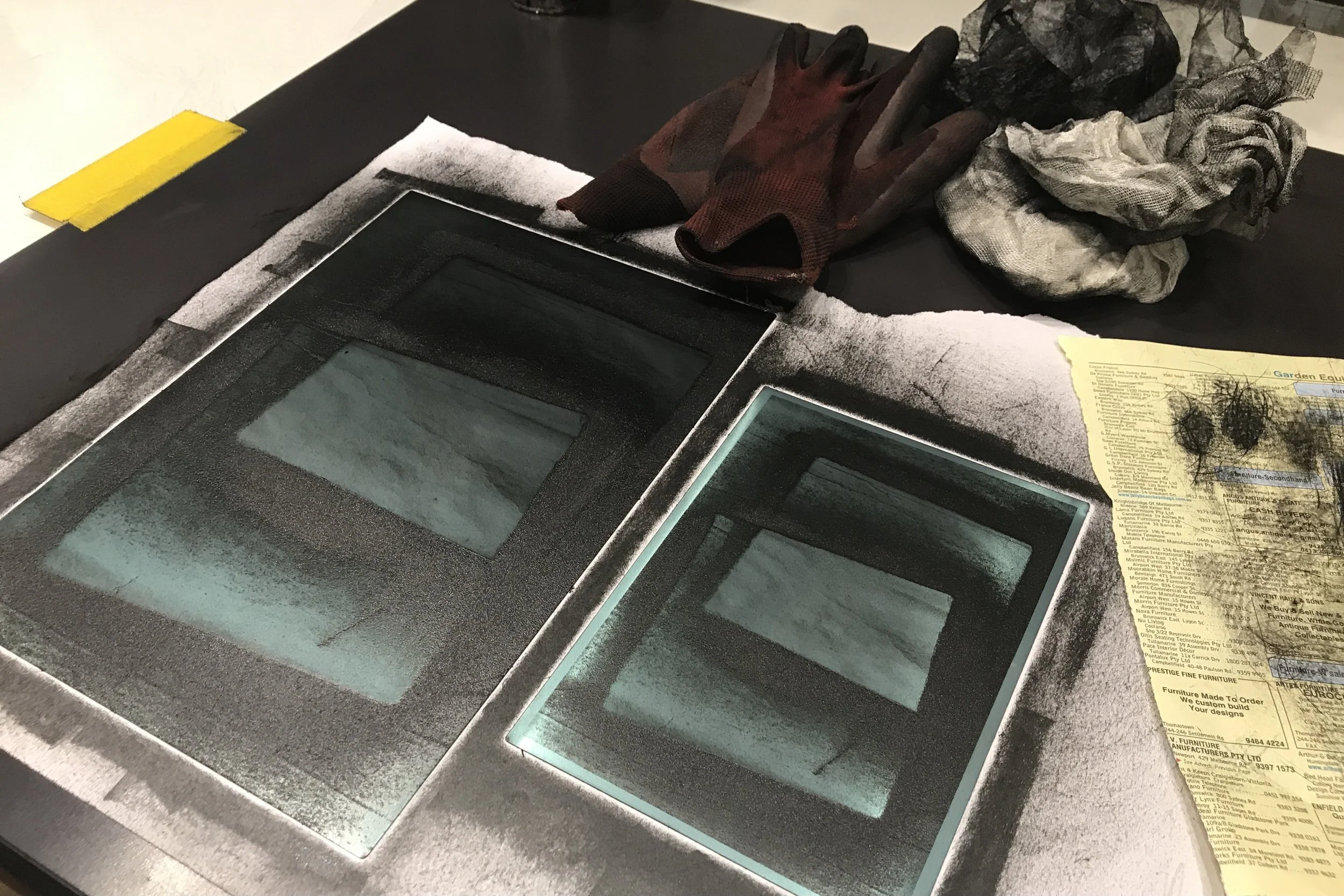
Figure 3
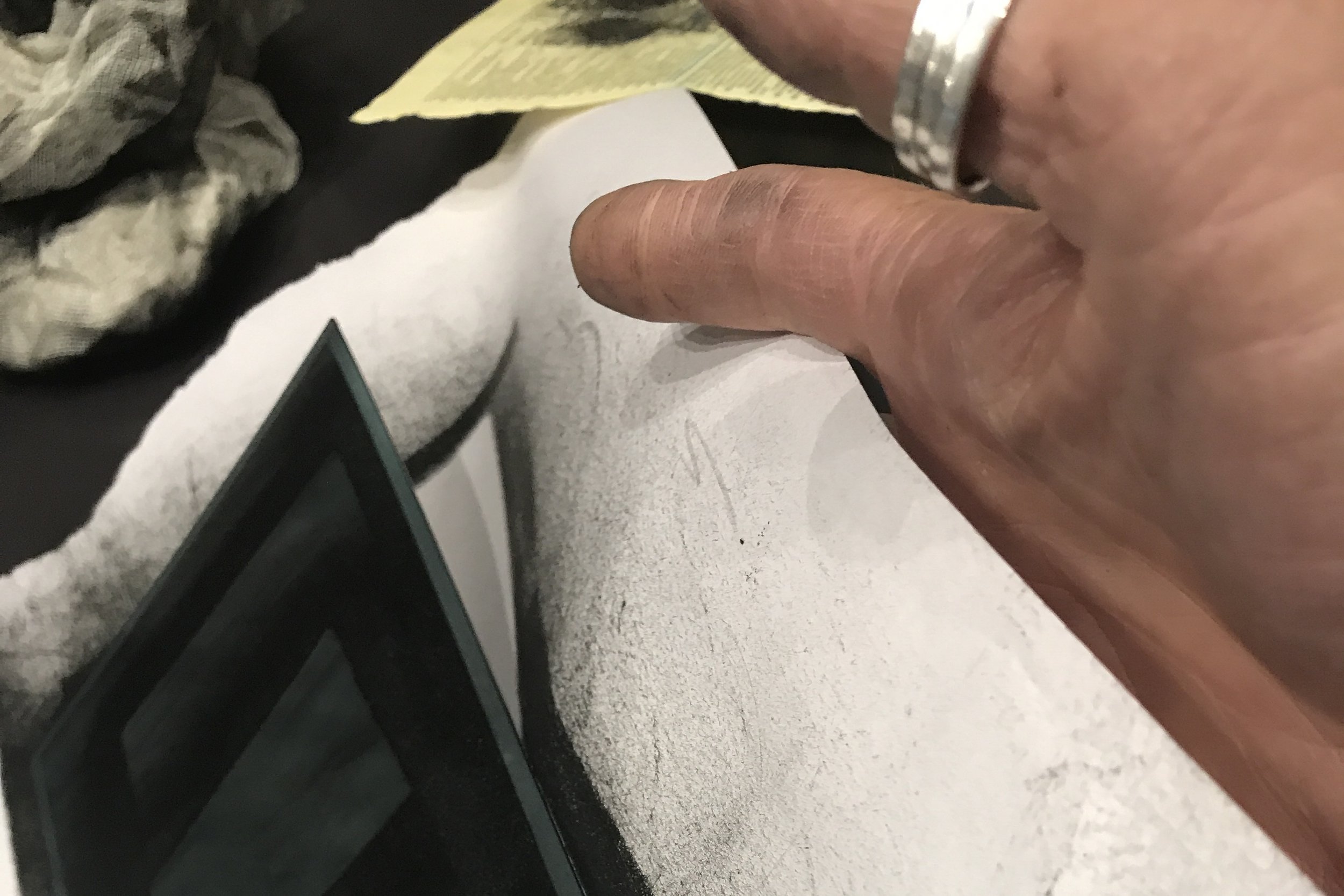
Figure 4
Footnotes
Photogravure etching is non-toxic and without use of solvents, or acids. Images are transferred directly onto a photopolymer plate with the use of an inkjet printer. The plate is then exposed using UV light, processed with water, and printed via an etching press (Glattauer 2021).
Keywords
MFA, Studio 1, Development of practice, Photogravure, Printmaking, Artefacts
Bibliography
Glattauer, Silvi. 2021. “PHOTOPOLYMER PHOTOGRAVURE - WEEK-END WORKSHOP.” Melbourne: Baldessin Press. https://baldessinpress.com.au/upcoming-workshops/photopolymer-photogravure-july2021-wgxz.