
S2 W5 group crit
Ballroom IV
Zo Damage, 2022
Unique gelatin silver print
406x508mm
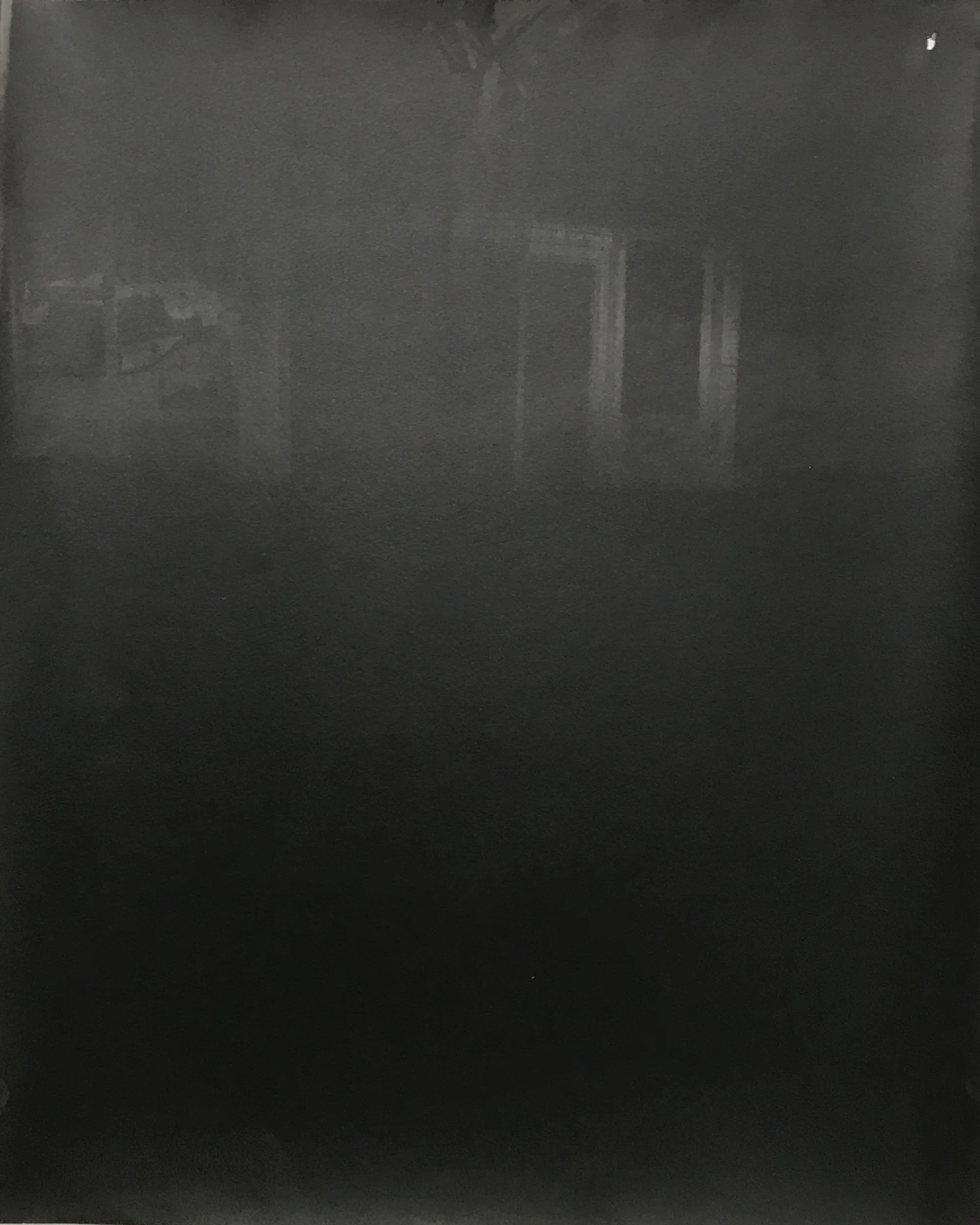
Somewhere/Enthusiasm
Zo Damage, 2022
Unique gelatin silver print
406x508mm
Gum I
Zo Damage, 2022
Unique gelatin silver print
406x508mm
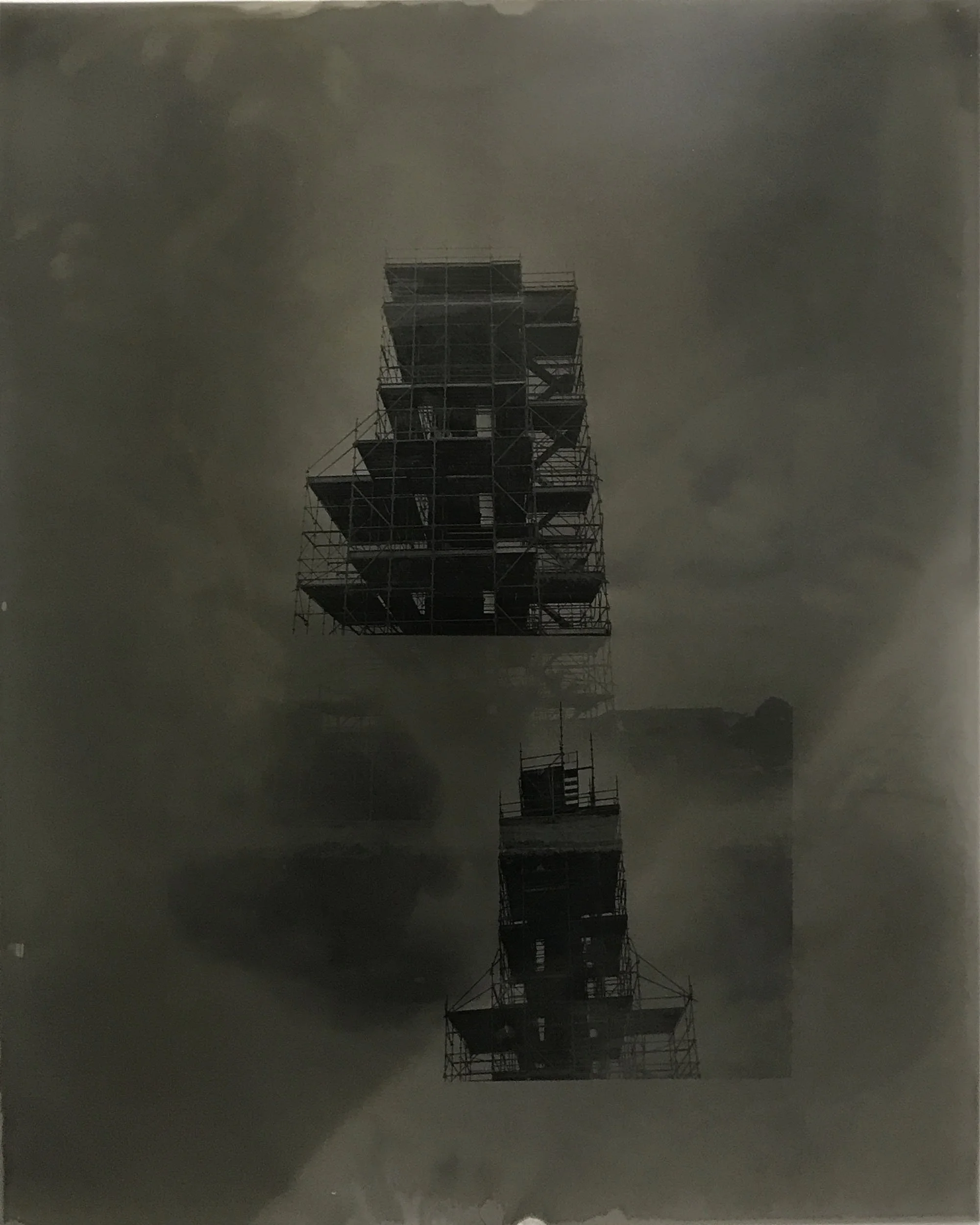
Untitled (Brunswick)
Zo Damage, 2022
Unique gelatin silver print
406x508mm
Studio-based research
Informed by academic disciplines, including brain sciences, phenomenology and ethnomethodology this studio-based research explores how unpredictable modes of analogue photography and alternative darkroom processes can be used to a) cultivate alternative means of perception and observation, b) explore creative ways of interpreting physical and psychological to the world I inhabit, and c) seek unfamiliar modes within the mediums discussed above that allow suspension of presumptions and judgments about, and expand upon, my existing practice.
Keywords
Collingwood, Ballroom, Wabi Sabi, Brain science, Evolving, Devolving, Gelatin silver, Darkroom, Alternative darkroom, MFA, Studio 2, Group crit
Group crit comments
Jodie: The material itself is becoming part of the image. It is like seeing what is behind what is going on. Letting go of the process and coercing another world.
Paula: Sense of mystery, there is more behind the images than you can see. Very surrealistic (excellent — surrealism). Unrealistic light.
Reminds me of Dirk Braeckman's photography
Brunswick – You can see other things in these images (abstraction — excellent).
Jo: Black and white photographs. Quite layered.
1) Obscured and layered by foggy marks. Quite a lot of texture and sense of materiality of the print that the layers are coming through from the photographic paper rather than the negative. Sense of chance, the process being left to chance and how the different chemicals are playing out together. Relating it to painting, it does its own thing.
2) Second image. Maybe the same image. Very atmospheric.
3) Bleeding out. The image of the building has been set and blended with the paper. Title.
4) Composition shows there is a lot of process in the image. Collagic in the way it is deconstructed and constructed. A lot of atmosphere and “matter” in the image.
Revealing a “presence”.
Steven: They are unique. Not repeated. Akin to “painting”. History, loss, dreams and process. Sense of “movement” and expanding in scale. Invitation to create new narratives.
Steph: 234 Reminiscent of a storm (excellent!). Images within images. The buildings feel “framed”. Brunswick feels the most enigmatic. Ghostly and sad. Sense of loss of history. Layering over our urban history with dirt and mud and new construction — Reflection of self. Creating new worlds by blending process and time.
Steven: The work still connects to reality through the “indexical” nature of chemical photography.
Dan: Brunswick feels imposing. 1 and 2 with the processing it feels like the images are wrapping around me and inviting me in. Experiential.
Emotions are driven by chemistry.
Objective / Subjective
Provode interpretation
Measurable / Immesurable
Isabella graph - painting makes itself
Fog
Mist
Chance
Process - letting it take over... possession
Layers
Repetition
Matter
Images within images. Mise en abyme
Ghostly... sad
Also - agency of the materials & processes + indexical images = considering Isabelle Graw's essay on the agency of painting: Graw.pdf
Painterly
A correlation: chemistry + image = chemistry + emotion/feeling/sensation
Darkroom sequences in movies: Blow Up (1966); The Omen (1976) etc
The light emanating from the subjects through veils of chemical fog
The light pours out of me - Magazine
Group crit 1
Equanimity was shown for the first Studio 1 'Group Crit'. I felt most attempted to 'assert' knowledge (Foucault 2020, 1–153) of the photographic process rather than deconstructing and feedback to 'artworks' (although I do believe that it was given with no ill intent). This response to experimental or alternative modes of photography is commonplace. Contemporary photographer Adam Fuss discusses how the 'technical' is often raised in viewing works stating that 'technical' is irrelevant. Fuss (2011, 00:38) asserts, "We have the illusion that we're going to understand [the image] by a piece of technical information". The artist continues, stating, "I don't see it happen with painting. I don't see people say, 'Hey, did you use a number seven brush and cadmium three'?". Despite coming a long way with being objective in critiques, I grew impatient and frustrated and 'reacted' rather than 'responded', the Group Crit has provided practical prompts to further improve my people skills (which are not my strong point).
Zo Damage, Equanimity, 2022, (IRL) Archival pigment print from scan of original 35mm negative, 1100x360mm
Definition
equanimity
noun
mental or emotional stability or composure, especially under tension or strain; calmness; equilibrium. (dictionary.com)
Keywords
MFA, Studio 1, Equanimity, Group crit, Freeway, 35mm, Film photography
Bibliography
"Definition Of Equanimity". dictionary.com. Accessed April 28, 2022. https://www.dictionary.com/browse/equanimity.
Foucault, Michel. 2020. Power. 3rd ed. UK: Penguin.
Fuss, Adam. 2011. "A&A Portrait - Adam Fuss". 123marketstreet. March 30, 2011. YouTube video, 02:03. https://www.youtube.com/watch?v=QxpeNIN0iRA.
Pinhole photography
Expand on notes for Contemporary pinhole photography; What is pinhole photography; Making a pinhole camera; Film or paper; Field of view workaround; Light metering formulas; Contemporary pinhole and zone plate photography exhibition
While it can be very time consuming to find online photography resources, it is worth the investment. Pinhole cameras do not have a viewfinder. As such, one of the biggest issues of image capture with a pinhole camera is composition. The formula for estimating the field of view of a pinhole camera provides a reliable estimation (Henson 2020, 06:09).
Calculating field of view for pinhole camera
First measure from the inside left of the film gate to the outside left of the camera and transfer the measurement marking with a small dot on the top of the camera. Repeat for the right side. Next measure from the centre of the pinhole to the outer edge of one (left OR right) side of the camera body and make a small dot. As the pinhole in many cameras is not at the ‘true centre’ is it best to measure one side only. Using a ruler, join the measurement marks to make a ‘V-shape’ (Figure 1). Repeat the steps above on side of the camera to determine the height of the field of view.
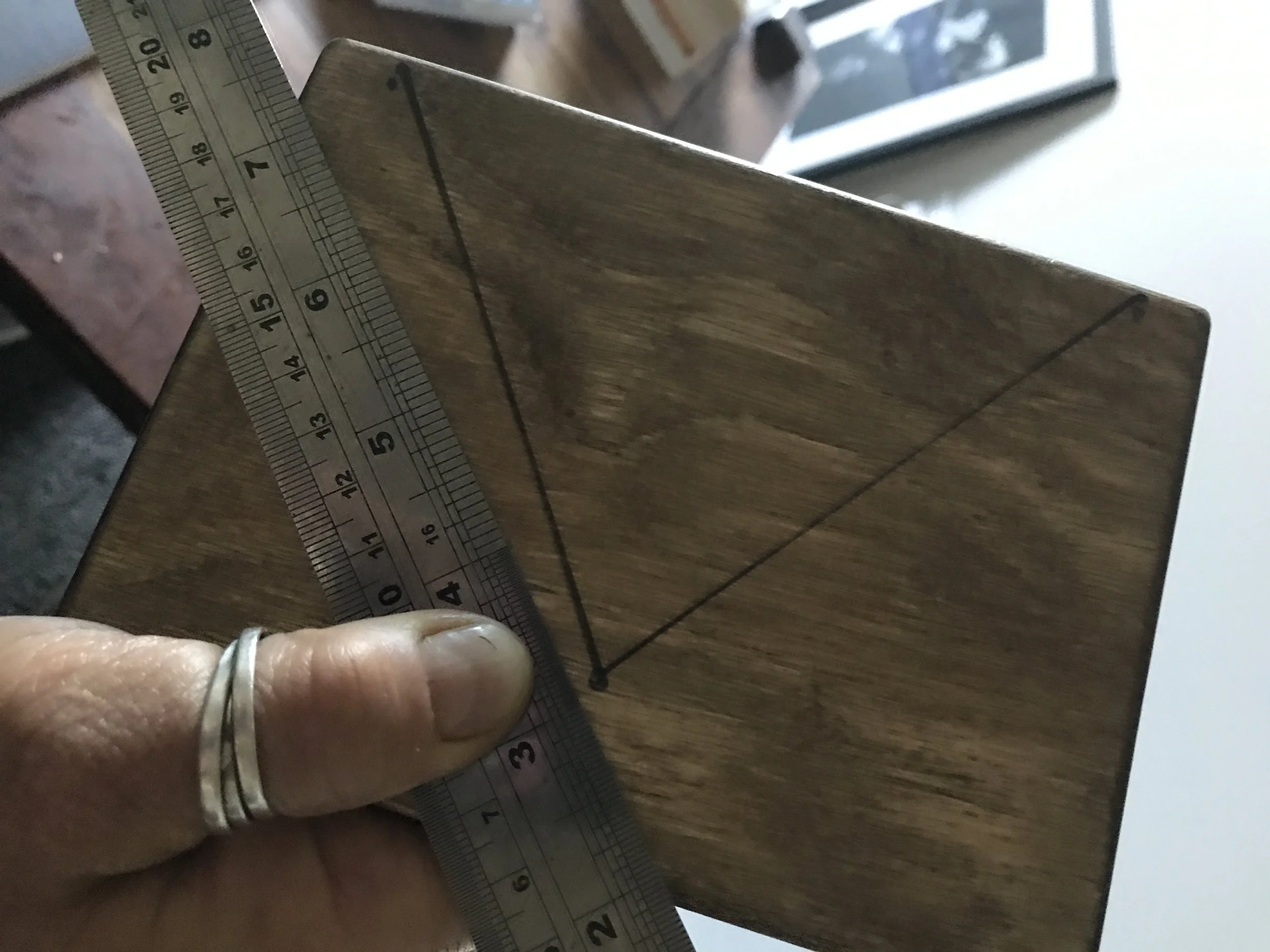
Figure 1. Marking field of view guides on 4x5 pinhole camera
Exposure times (general)
https://www.alternativephotography.com/determining-exposures-for-the-pinhole-camera/
http://www.martinwinfield.co.uk/pinholetech.html
https://www.lomography.com/magazine/69260-holga-wide-pinhole-camera-wpc-user-review-exposure-table-and-more
https://www.lomography.com/magazine/10960-applied-mathematics-to-holga-cameras
Exposure times
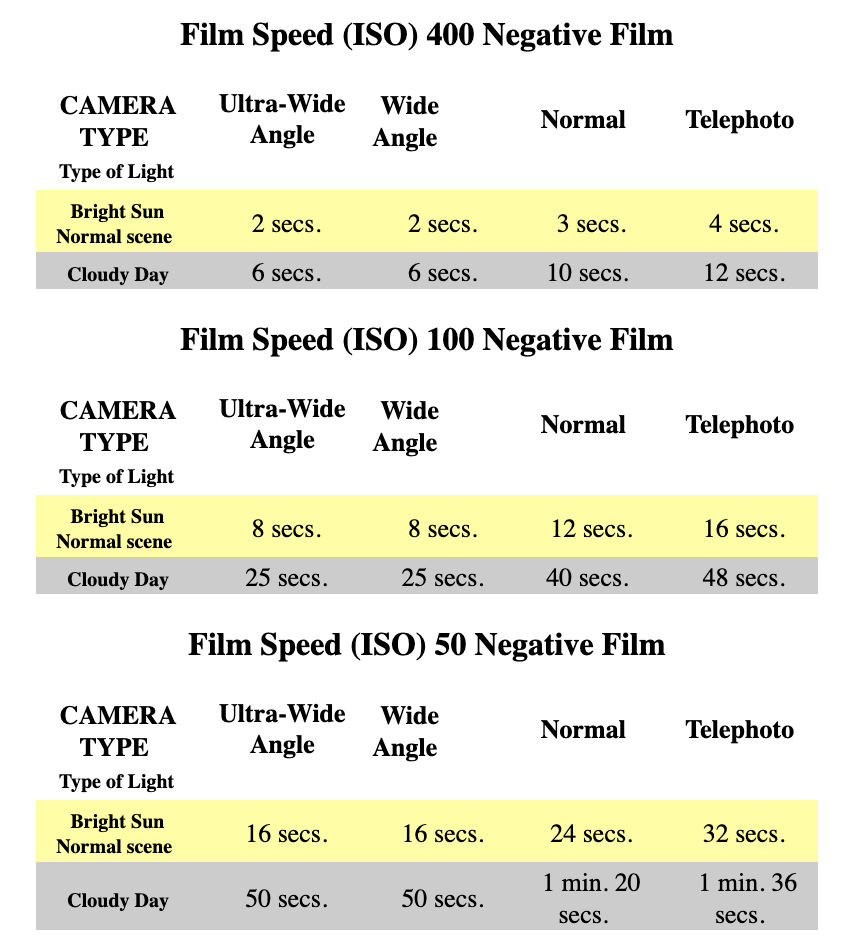
Figure 1. Pinhole exposure times (PinholeCamera n.d.)
Keywords
Pinhole, Field of view, MFA, Studio 1
Bibliography
“Pinhole exposure times”. pinholecamera.com. Accessed April 10, 2022. http://www.pinholecamera.com/exposure.html.
Hammond, Mary Sayer. 1986. "THE CAMERA OBSCURA: A CHAPTER IN THE PRE-HISTORY OF PHOTOGRAPHY (PINHOLE PHOTOGRAPHY, ASTRONOMY, DRAWING MACHINES, KEPLER, PERSPECTIVE)." Order No. 8703552, The Ohio State University. https://login.ezproxy.lib.rmit.edu.au/login?url=https://www.proquest.com/dissertations-theses/camera-obscura-chapter-pre-history-photography/docview/303482885/se-2?accountid=13552.
Henson, Martin. 2020. “Pinhole photography, all about” Martin Henson. May 22, 2020. YouTube video, 09:51. https://youtu.be/nuI5l0t9PHg.
Hymer, Karen. 2021. "Layered Light: Contemporary Pinhole And Zone Plate Photography". Light Art Space. https://lightartspace.com/exhibition/layered-light-contemporary-pinhole-and-zone-plate-photography/.
Madison, James. 2020. "Shooting 8x10 On A Homemade Pinhole Camera With F/264? Why Not?". Fstoppers. https://fstoppers.com/film/shooting-8x10-homemade-pinhole-camera-f264-why-not-508286.
Broadening practice
Following the Master of Photography program, I am determined to broaden my analogue photographic practice and am at a complete creative loss. Dom has provided me with exercises that aim to prompt creative focus and direction, leading me to explore lumen printing and zone plate photography. I am also deepening my study of photograms and pinhole photography.
Recent works include a photogram of a vintage threadbare denim jacket (Figures 1–2) and a series of self-portraits captured using a 4x5" large format pinhole camera (Figure 3). Planning to capture lumen prints of the jacket to compare how the colours and tones in the final images correspond with the photograms and researching pinhole cameras, including how to make them, is inspiring.
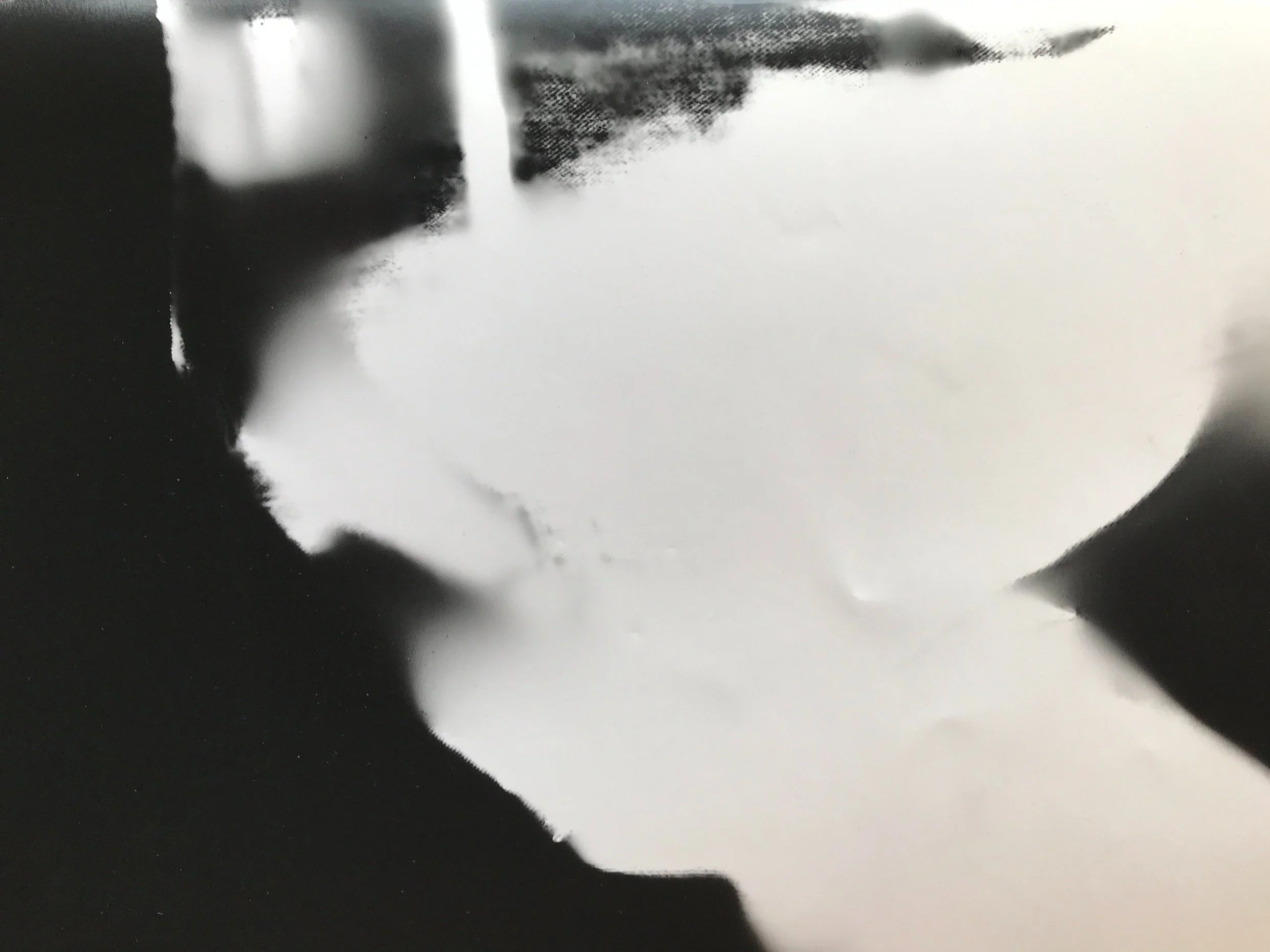
Figure 1. Untitled photogram, 2022
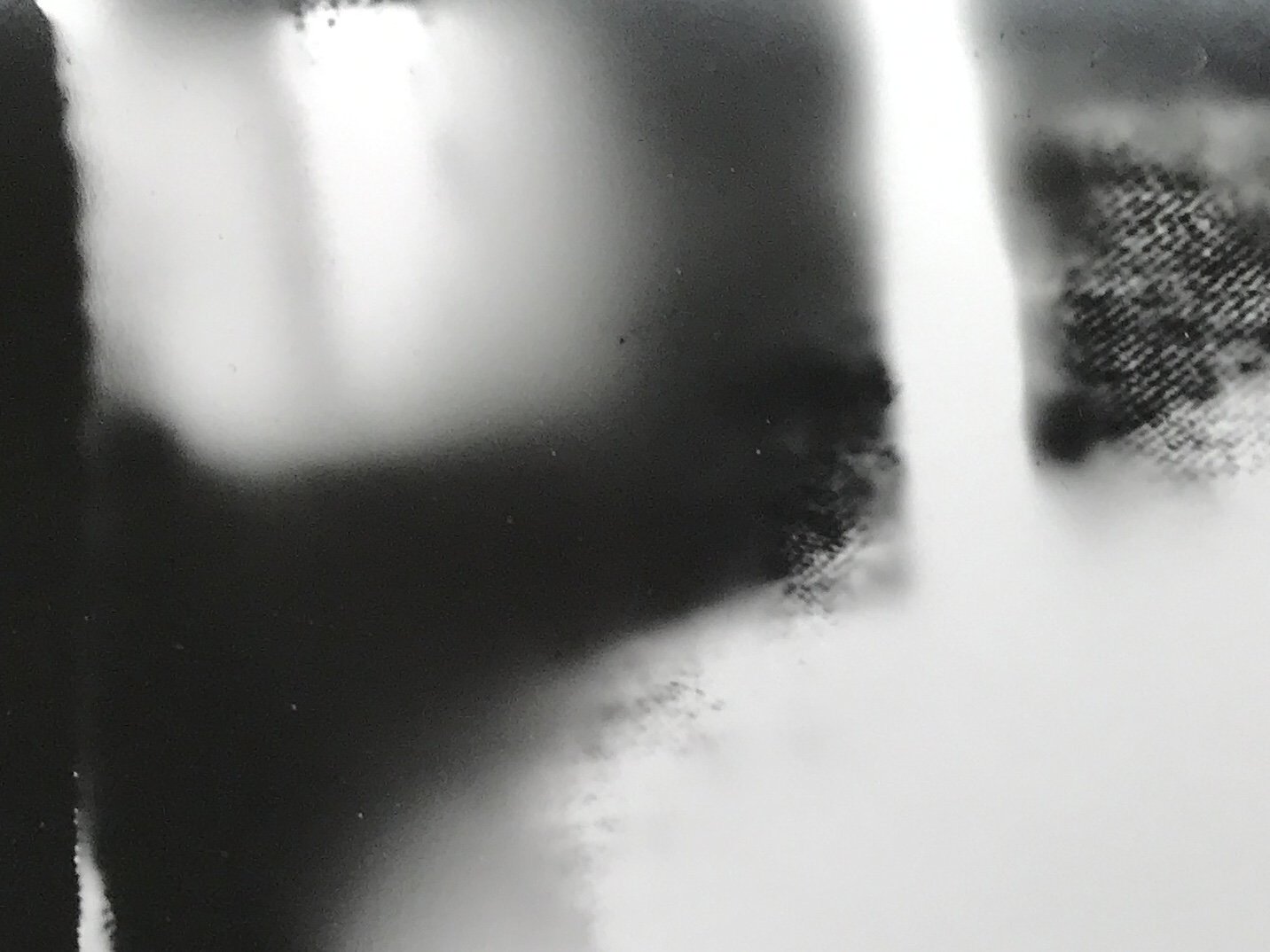
Figure 2. Untitled photogram (detail), 2022
Although creating artworks from items and events (Figure 3) that are part of my everyday life is engaging, it is also confronting, leading me to reflect on Dom frequently asking, "Yeah, but what do you want to make?" prompting me to reflect on past work and motivations. What do 'I' want to make indeed.
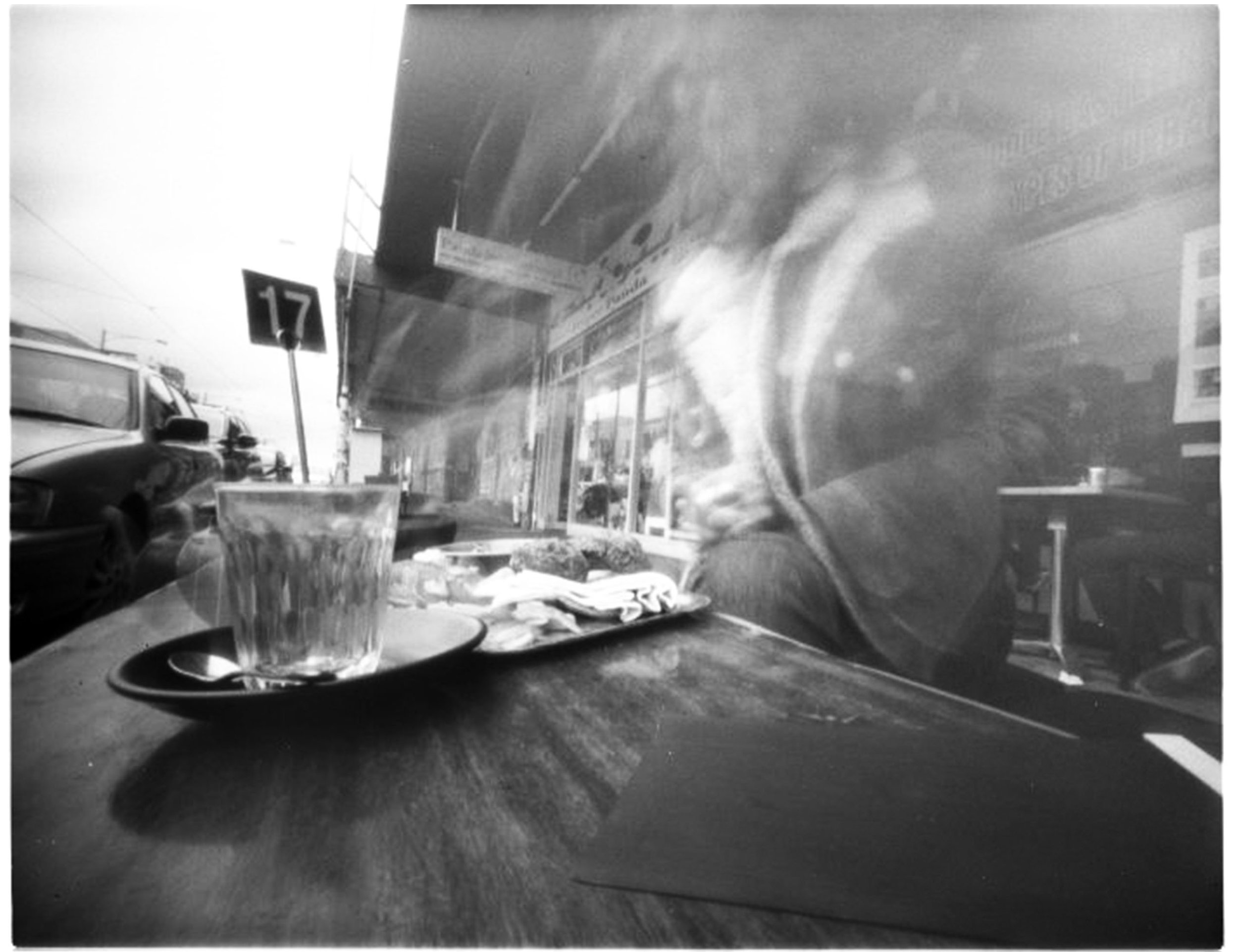
Figure 3. Zo Damage, Tea and falafel (self-portrait), 2022
Keywords
MFA, Studio 1, Photogram, Lumen, Pinhole, Cameraless photography, Film photography
Chords and emotion
I am drawn to musical compositions with minor chords, prompting me to investigate the affects of musical composition on physical and psychological states and the different emotional responses to major and minor chords.
Keywords
Minor chords, Major chords, Emotion, Studio 1, MFA
Further reading
Fritz, Thomas, and Stefan Koelsch. 2008. "The Role Of Semantic Association And Emotional Contagion For The Induction Of Emotion With Music". Behavioral And Brain Sciences 31 (5): 579-580. doi:10.1017/s0140525x08005347.
Wager, Tor D, K.Luan Phan, Israel Liberzon, and Stephan F Taylor. 2003. "Valence, Gender, And Lateralization Of Functional Brain Anatomy In Emotion: A Meta-Analysis Of Findings From Neuroimaging". Neuroimage 19 (3): 513-531. doi:10.1016/s1053-8119(03)00078-8.
McGettigan, Carolyn, Andrew Faulkner, Irene Altarelli, Jonas Obleser, Harriet Baverstock, and Sophie K. Scott. 2012. "Speech Comprehension Aided By Multiple Modalities: Behavioural And Neural Interactions". Neuropsychologia 50 (5): 762-776. doi:10.1016/j.neuropsychologia.2012.01.010.
Bibliography
Bakker, David Radford, and Frances Heritage Martin. 2014. "Musical Chords And Emotion: Major And Minor Triads Are Processed For Emotion". Cognitive, Affective, & Behavioral Neuroscience 15 (1): 15-31. doi:10.3758/s13415-014-0309-4.
Craton, Lincoln G., Daniel S. Juergens, Hannah R. Michalak, and Christopher R. Poirier. “Roll Over Beethoven? An Initial Investigation of Listeners’ Perception of Chords Used in Rock Music.” Music Perception: An Interdisciplinary Journal 33, no. 3 (2016): 332–43. https://www.jstor.org/stable/26417411.
Willetts, Dale. 2020. "How To Make A Pinhole Film Camera At Home With Some Packaging". Petapixel. https://petapixel.com/2020/05/11/how-to-make-a-pinhole-film-camera-at-home-with-some-packaging/.
Biotextiles
Exploring visual iterations of “networks” I have been researching biotextiles, particularly mycelium structures, grown for artistic creative practice (Snoad 2020), although there are the ethics of manipulating organic form to consider. In reference to fungi, it has been suggested that I research psychedelic philosopher Terrance McKenna (Lamb 2021). First, I do not drink alcohol or take mind or mood-altering drugs (prescribed or otherwise). Second, after a precursory look into McKenna, I believe it is fair to state that even if I did use drugs and alcohol, his writing appears (at first glance) to be drug-addled nonsense and another conversation that I am not willing to be part of. My brief research into biotextiles applied methods in creative practice has led to two topics that have no interest to me and have decided to let go of the concept entirely.
Mycelium Lace, Design & Living Systems Lab, Carole Collet, 2015 (Ræbild et al. 2018)
Faber Futures | Void, Natsai Audrey Chieza in collaboration with Ginkgo Bioworks, exhibited at Hubweek, Boston, 2017 (Ræbild et al. 2018)
Keywords
Development of practice, DOP, MFA, Studio 1, Biotextiles, Biotechnology, Posthumanism, Transhumanism, Terrance McKenna, Mycelium, Fungi
Bibliography
Collet, Carole. 2021. "Biotextiles: Making Textiles In A Context Of Climate And Biodiversity Emergency". Materials Experience 2, 207-226. doi:10.1016/b978-0-12-819244-3.00029-6.
Lamb, Robert. 2021. "The Stoned Ape Hypothesis: Did Magic Mushrooms Influence Human Evolution?". Howstuffworks. https://science.howstuffworks.com/life/evolution/stoned-ape-hypothesis.htm.
Ræbild, Ulla & Piper, Anna & Nimkulrat, Nithikul. 2018. Soft Landing.
Snoad, Laura. 2022. "8 Makers Using Biodesign To Grow Their Work". Crafts Council. https://www.craftscouncil.org.uk/stories/8-makers-using-biodesign-grow-their-work.
Thacker, Eugene. 2003. “Data Made Flesh: Biotechnology and the Discourse of the Posthuman.” Cultural Critique, no. 53: 72–97. http://www.jstor.org/stable/1354625.
Painting
I have been experimenting with paint. In the process of a said experiment, I painted on one of my archival pigment prints, hated it, tore it up, then salvaged a section (it was a huge print) and stuck it to some cardboard I had lying around my uni studio. Stepping back I thought, “that's better”. Painting does not in any way shape or form come naturally to me, and I don't know how I feel about sharing this piece. But that is exactly the point.
Fragile, 2022
Acrylic on archival pigment print and cardboard
594x841mm (approx)
Keywords
Painting, Development of practice, Fragile, Studio 1, MFA
Textures and colour
Preparing and making photogravure [1] plates, inspired by and repurposing printmaking artefacts.
Artefacts
Photogravure (photopolymer) printing plates are placed on a magnetic sheet taped to the workbench, stabilising the plate and preventing it from slipping during the inking process. A sheet of newsprint is placed between the magnet and plate to help keep the workstation clean and enable lifting the plate off the magnet post-inking. The black marks on the paper in Figures 1 and 2 clearly show the position of the photopolymer plates and the rub-over of ink from the buffing or polishing in preparation to print. The “under-sheets” are then discarded after two or three uses. The traces of ink are captivating, beautiful and immersive.
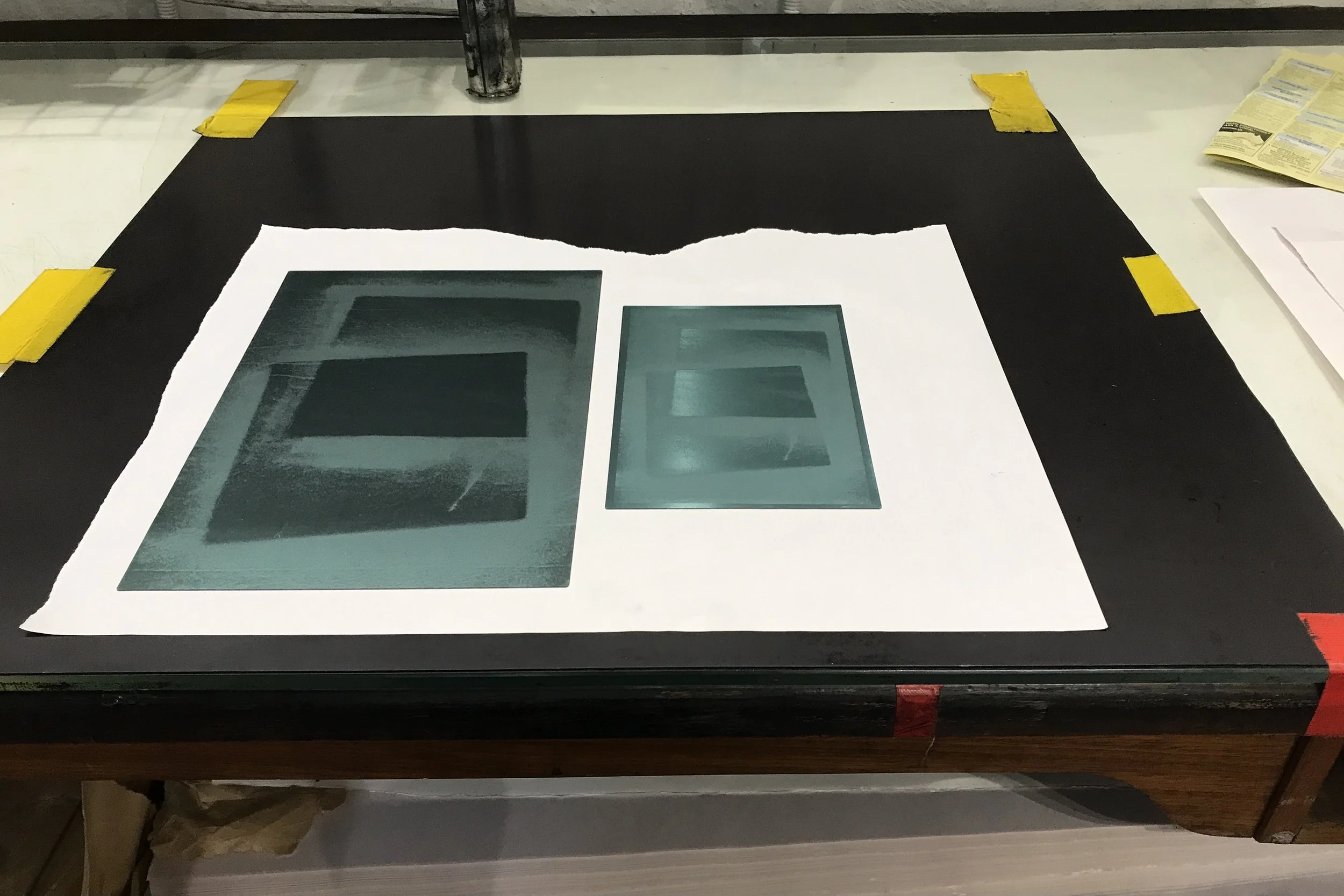
Figure 1
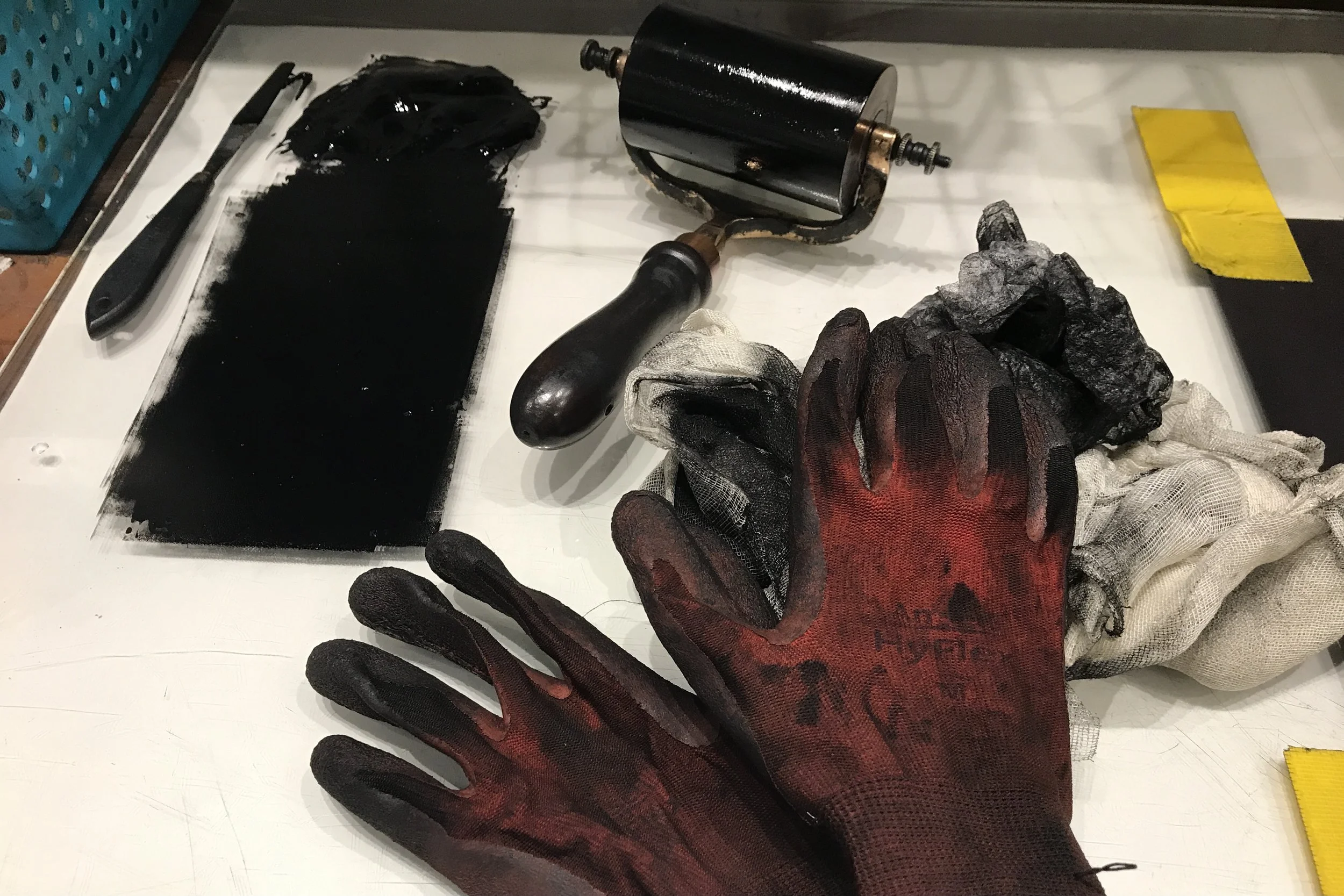
Figure 2
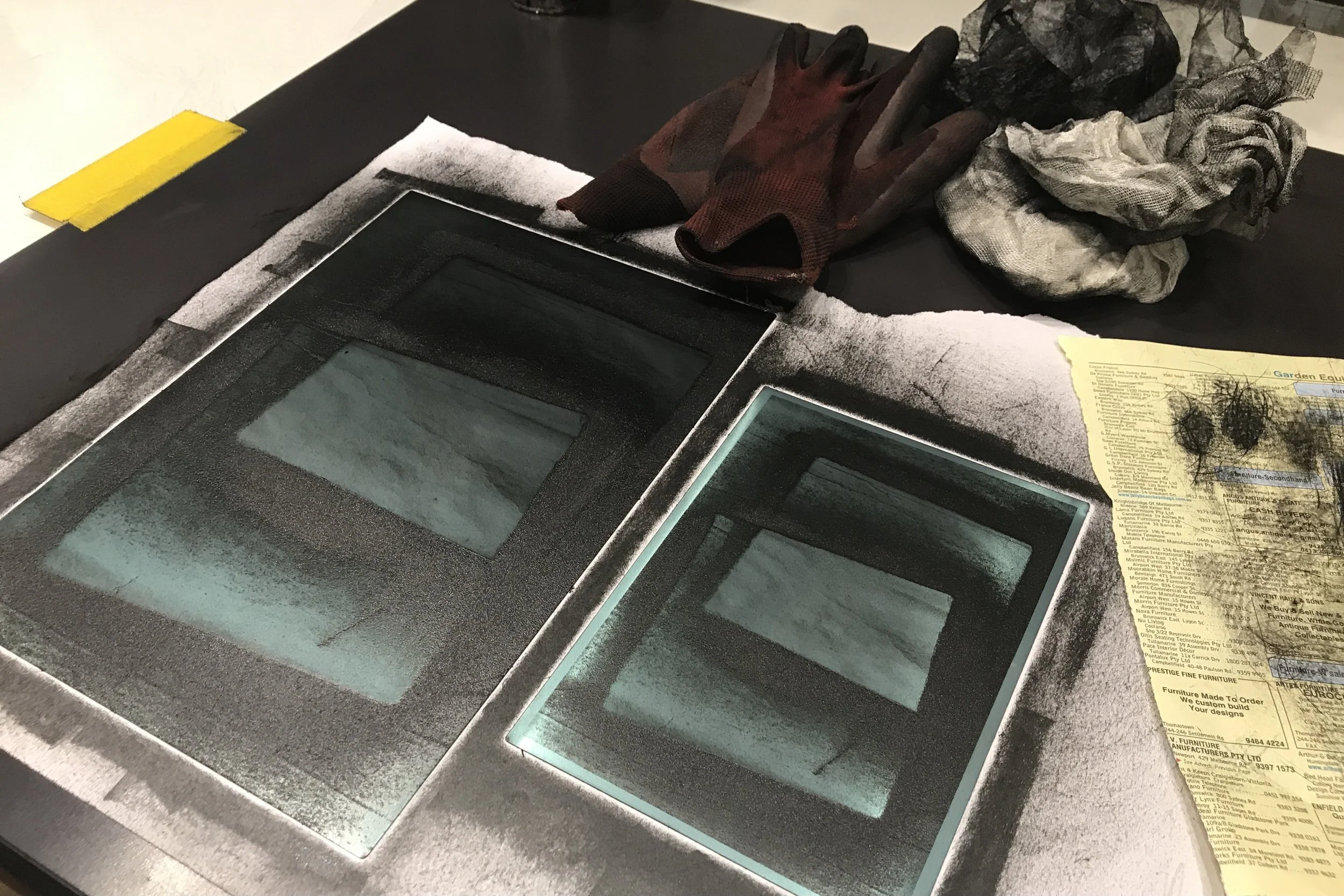
Figure 3
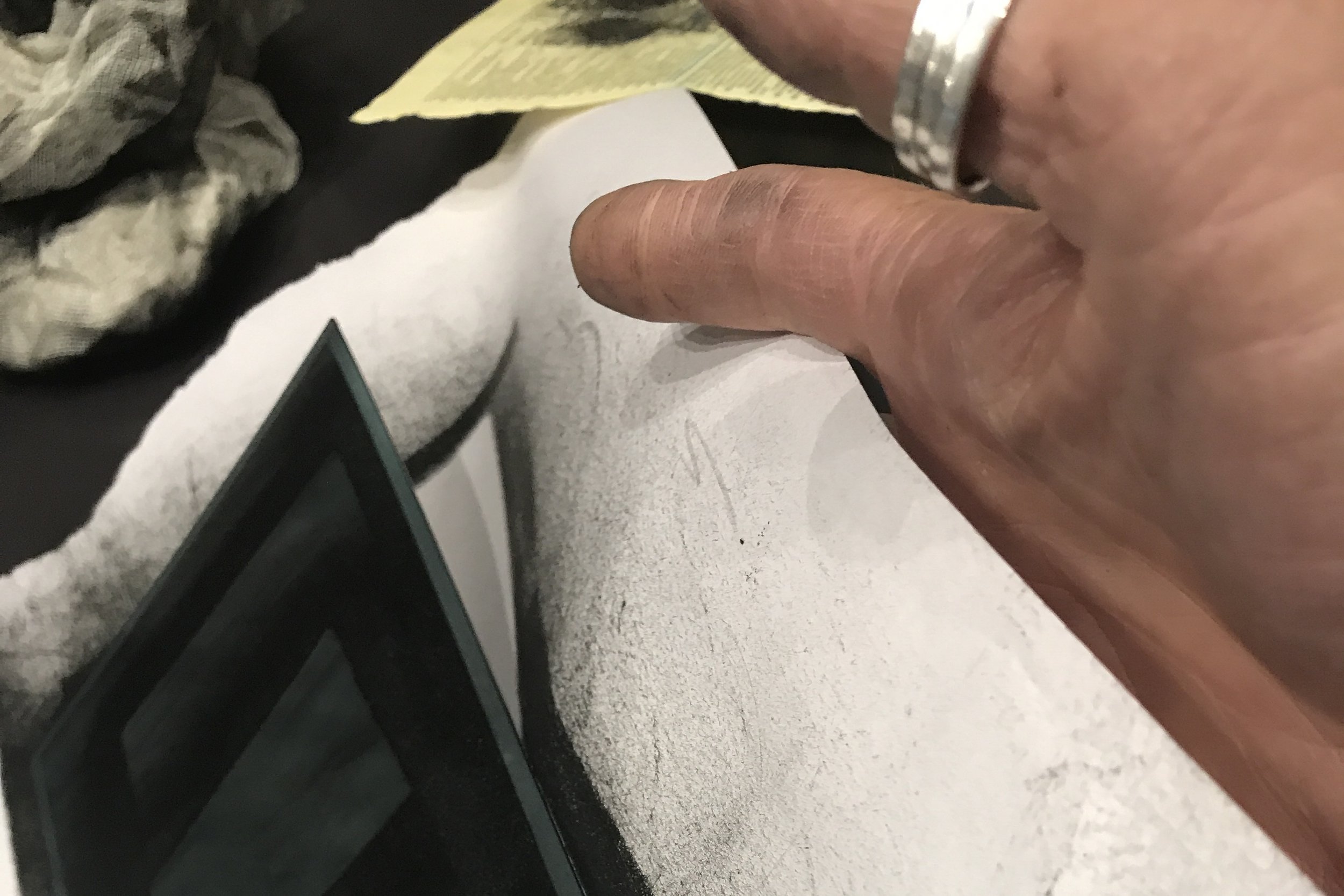
Figure 4
Footnotes
Photogravure etching is non-toxic and without use of solvents, or acids. Images are transferred directly onto a photopolymer plate with the use of an inkjet printer. The plate is then exposed using UV light, processed with water, and printed via an etching press (Glattauer 2021).
Keywords
MFA, Studio 1, Development of practice, Photogravure, Printmaking, Artefacts
Bibliography
Glattauer, Silvi. 2021. “PHOTOPOLYMER PHOTOGRAVURE - WEEK-END WORKSHOP.” Melbourne: Baldessin Press. https://baldessinpress.com.au/upcoming-workshops/photopolymer-photogravure-july2021-wgxz.