
S2 W10 group crit
Respite is a gelatin silver print created by exposing a single 35mm close-up capture of a succulent over fifteen 370x370mm sheets of hand-cut gelatin silver paper. The print was designed to display in a grid (five across and three down) which measures approximately 1900x1200mm installed. The process, from tearing paper to developing the prints, took approximately 5–6 hours.
To create the work, I hand tore fifteen sheets, or tiles, from a 127cm x 30 meter roll of gelatin silver paper. The individual sheets were then placed in a grid on the darkroom wall and exposed with a single 35mm negative of a succulent, chosen as it is aesthetically pleasing and for its composition, texture and tone. Next, the sheets were taken into the darkroom, where I hand-painted each individually with the developer (as opposed to tray immersion) to bring out the image. The process, from tearing paper to developing the prints, took approximately 5–6 hours.
The titling of the work reflects the sense of respite I experienced during its making. Notably, the nuance of the deckled edges in the hand-torn gelatin silver paper and the sense of humanity introduced by the brush strokes from developing prints served to eliminate elements of mass production in the materials, the dust and scratches on the negative are also embraced and clearly visible in the final artwork. This is in the context of producing novel results by embracing chaos and disaster to create conceptual photographic works of art that investigate transformation and a visual language of beauty and strength (Jolly et al. 2015, 6).
Moreover, the simplicity of the capture, combined with the hand-torn paper and alternative darkroom processing reflect tensions between objectivity and subjectivity, which in turn reflect my aesthetic responses to lived experience. Further, the chemical process transforms the somewhat ordinary landscape of conventional photography, offering points of entry into the unknown.
As with abstract painting, knowledge of the craft and proficiency in the conventional execution of techniques and strategies – such as composition, exposure settings and the inherent qualities of base materials, including film and substrates – is essential before understanding how to exploit and debase the rules of the medium that reflect intent and purpose to achieve successful results in the final works of art.
Installing Respite for my third Studio 2 group critique
Print information: Zo Damage, Respite, 2022, unique gelatin silver print on hand-cut paper, installation (approx) 1900x1200mm, sheet size (approx) 370x370mm x 15 sheets exposed from a single 35mm negative, and hand-painted individually with developer to bring out the image
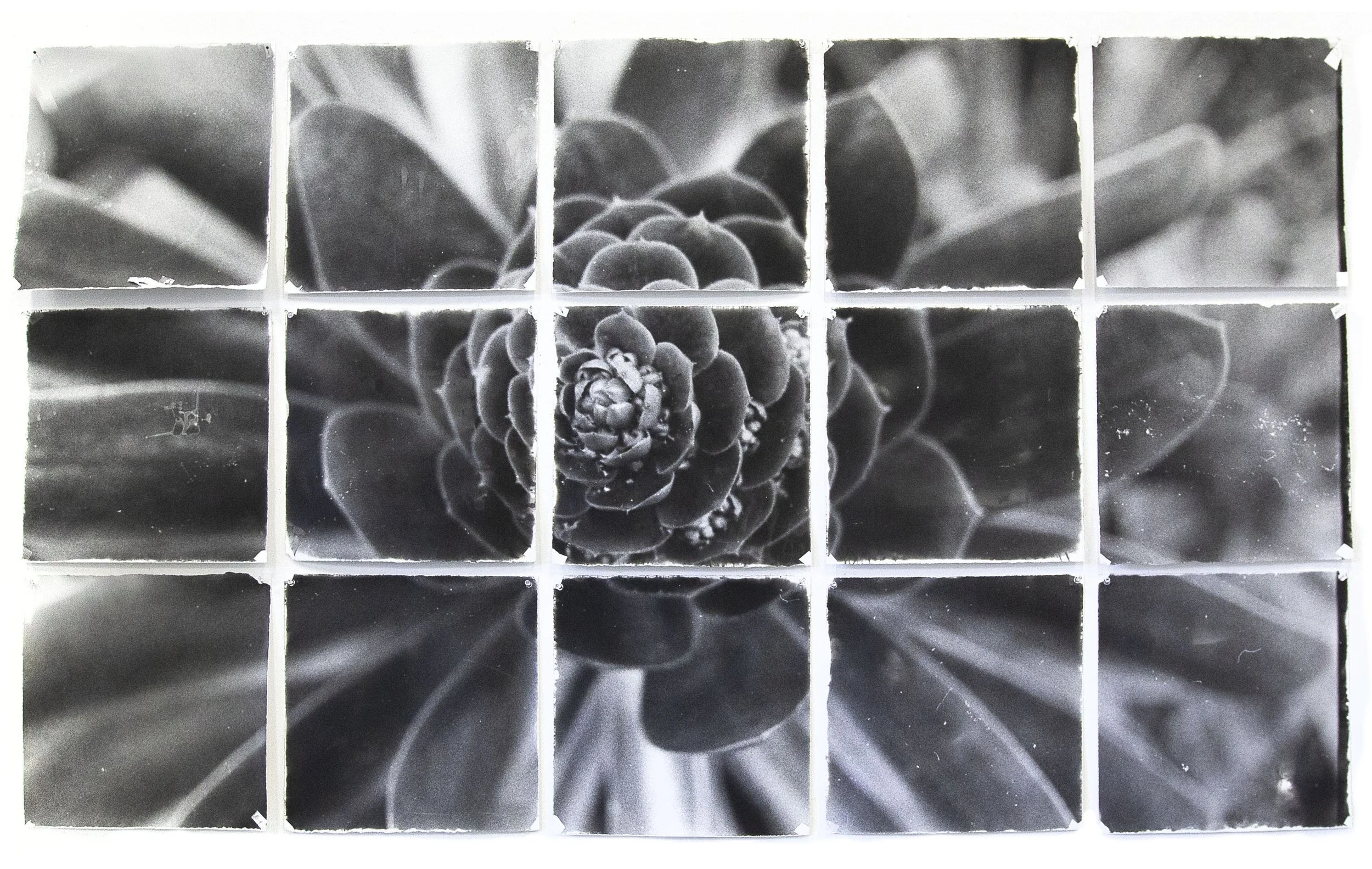
Figure 1. Respite, 2022, unique gelatin silver print on hand-cut paper, created from single 35mm exposure with each sheet hand brushed to develop the prints, installation (approx) 1900x1200mm, sheet size (approx) 370x370mm x 15 sheets
Figure 2. Group crit notes, 2022
Figure 3. Group crit notes, 2022
Figure 4. Group crit notes, 2022
Bibliography
Damage, Zo. 2022. “Installing Respite”. Zo Damage. October 28, 2022. YouTube video, 00:38. https://youtu.be/i8BIjO87Jio.
Respite
Respite is the next iteration of the grid-like print. As with the untitled piece presented for my second crit, Respite was made using traditional (or straight) photography on 35mm film combined with alternative and experimental darkroom processes. I hand tore fifteen 370x370mm sheets from a large roll of gelatin silver (light-sensitive photographic) paper. The individual sheets were then placed in a grid on the wall of the darkroom and exposed with a single 35mm negative. Next, the sheets were taken into the darkroom where I hand-painted each sheet individually with developer to bring out the image (rather than swishing them around in developing trays). The process (from tearing paper to developing the prints) took approximately 5–6 hours.
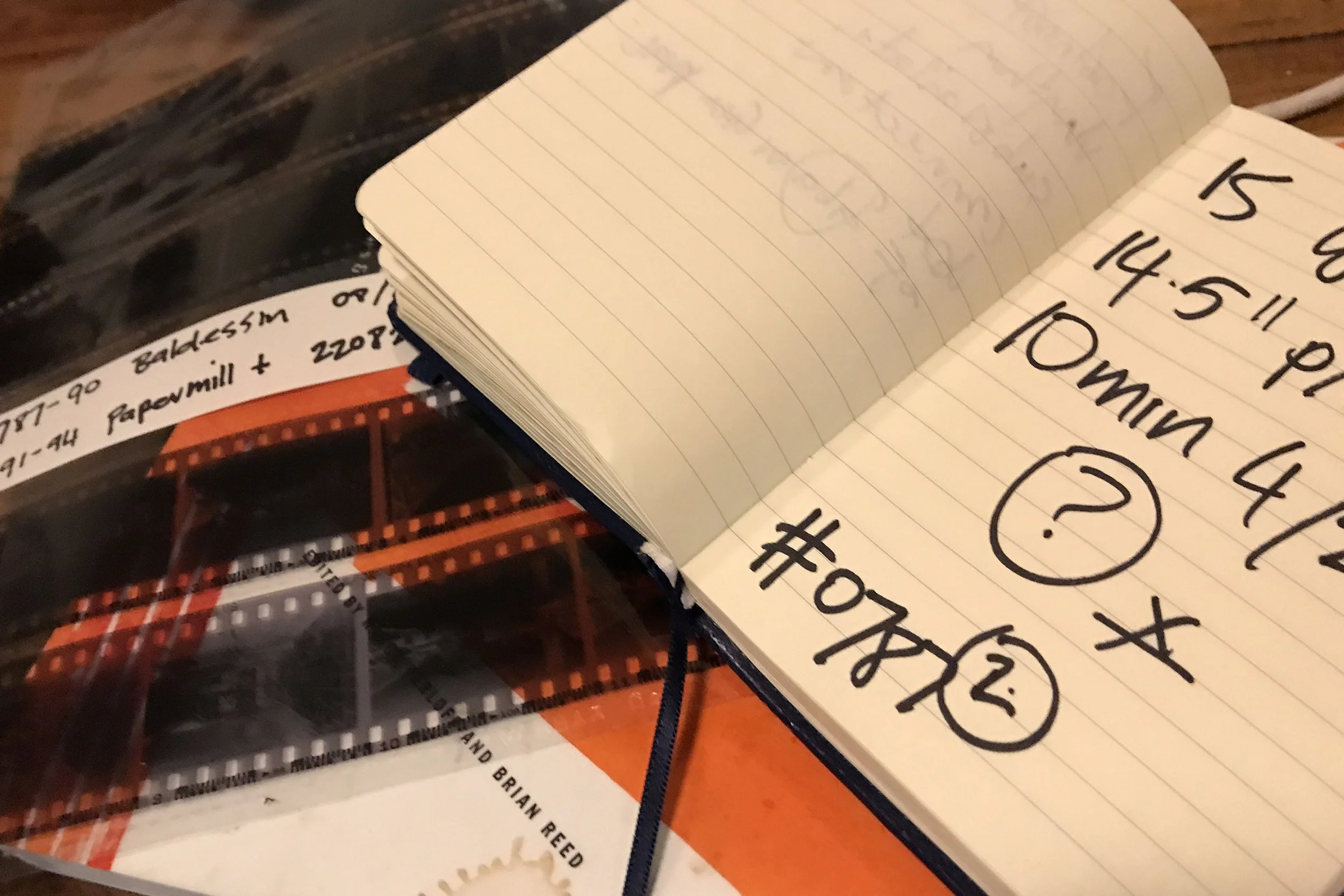
Figure 1. Respite negative and darkroom notes, 2022
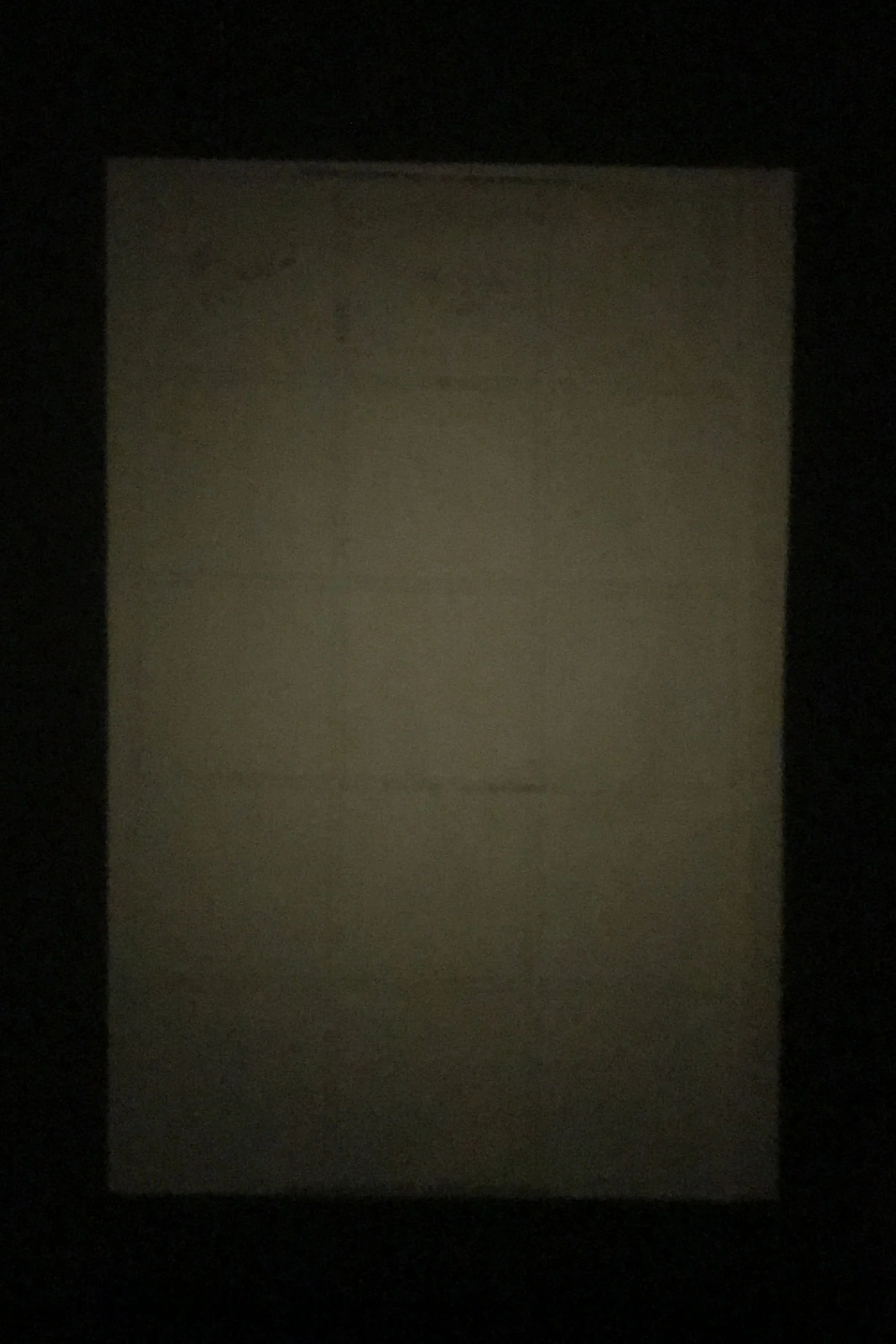
Figure 2. Testing grid and setting up exposure of negative
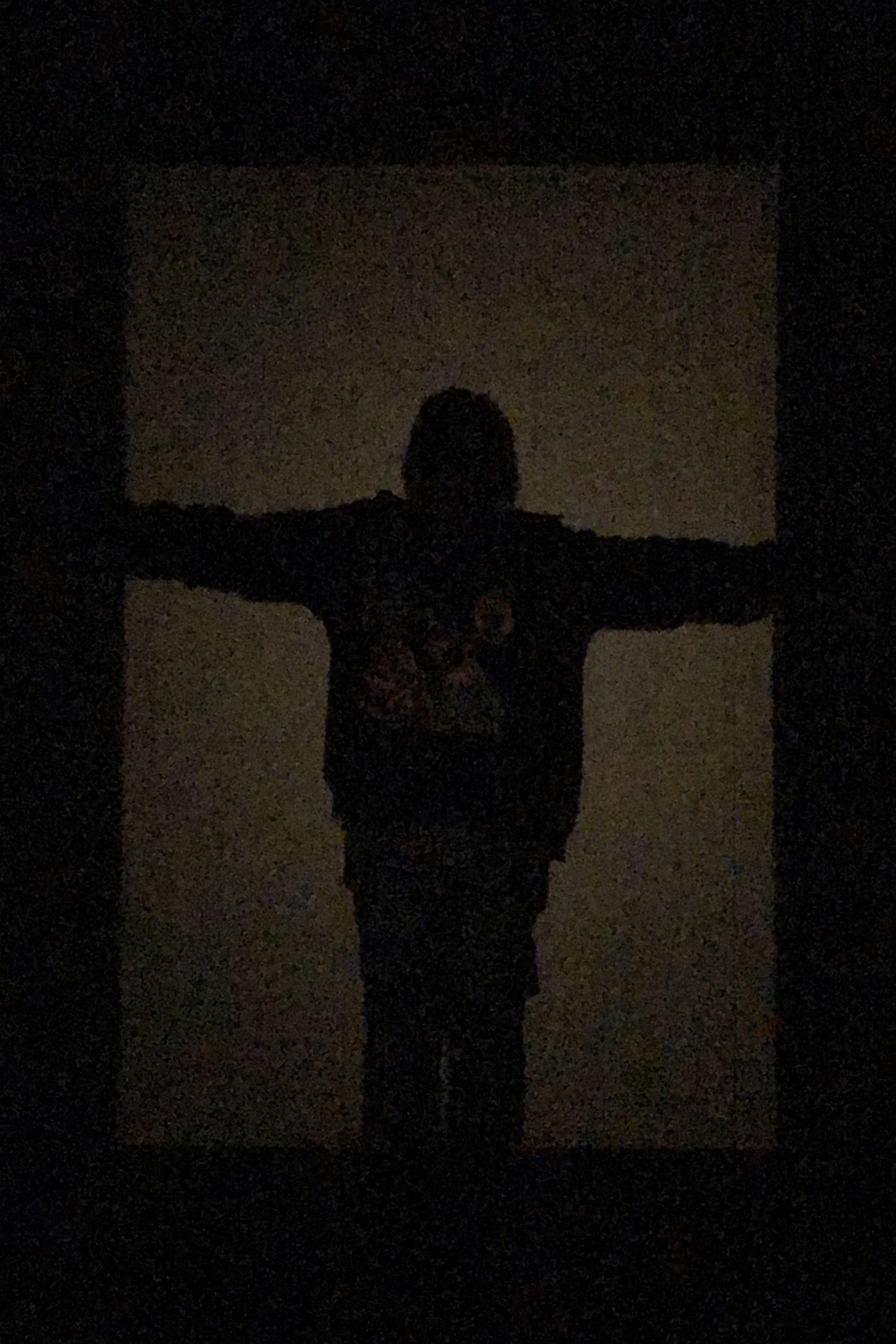
Figure 3. Standing in the grid indicates scale of artworks
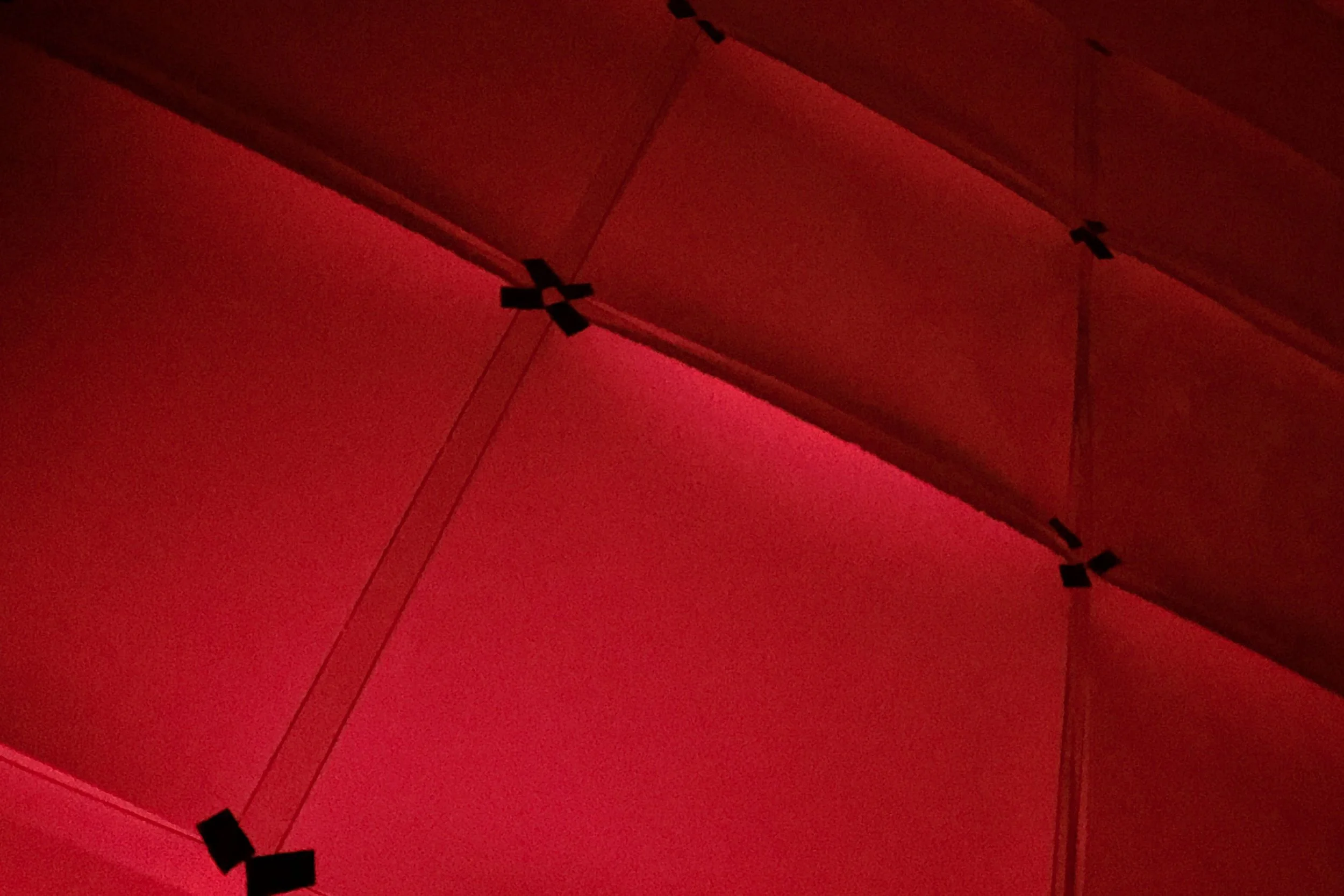
Figure 4. This photo of the gelatin silver paper grid was taken as the image was being exposed
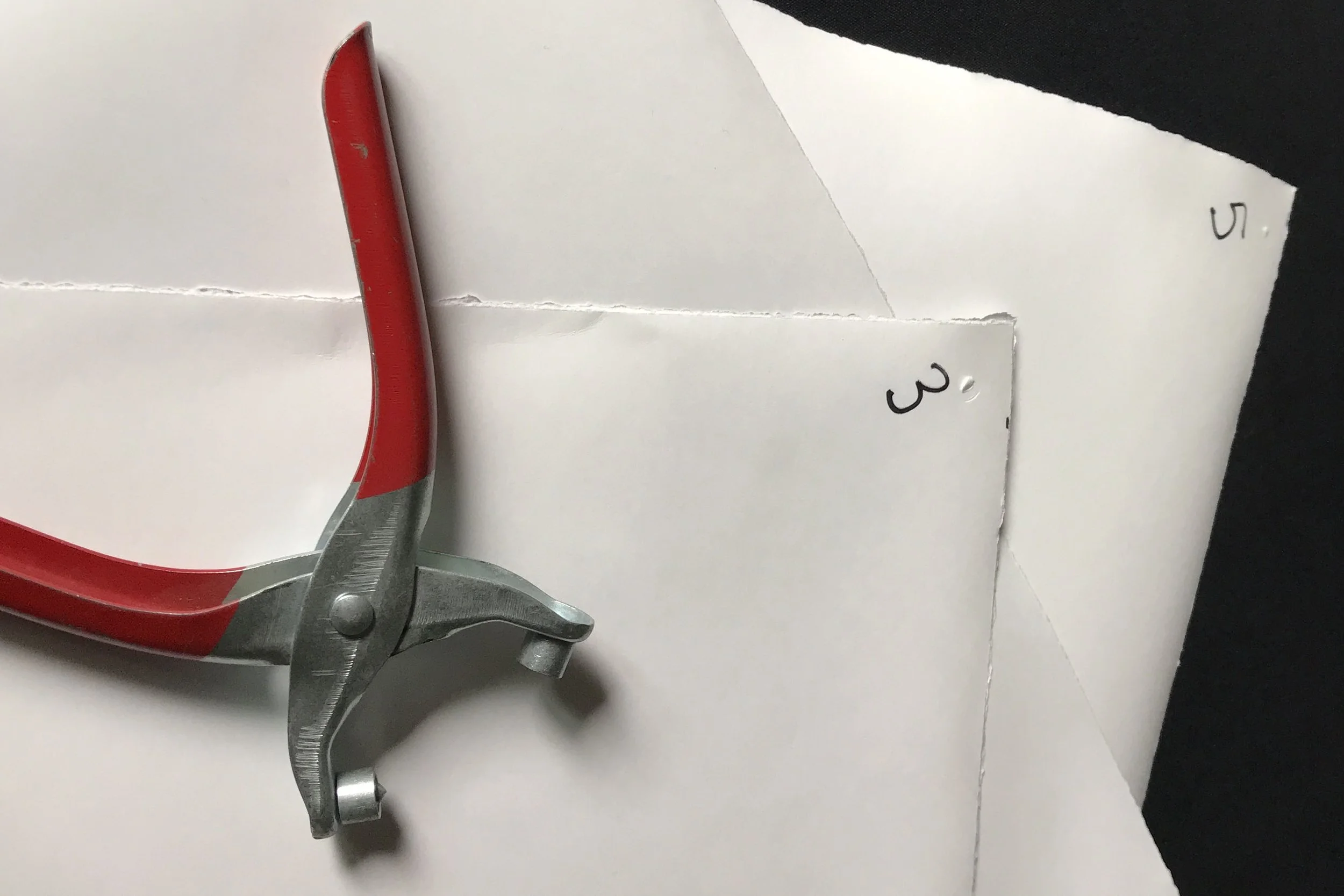
Figure 5. Marking and notching each sheet
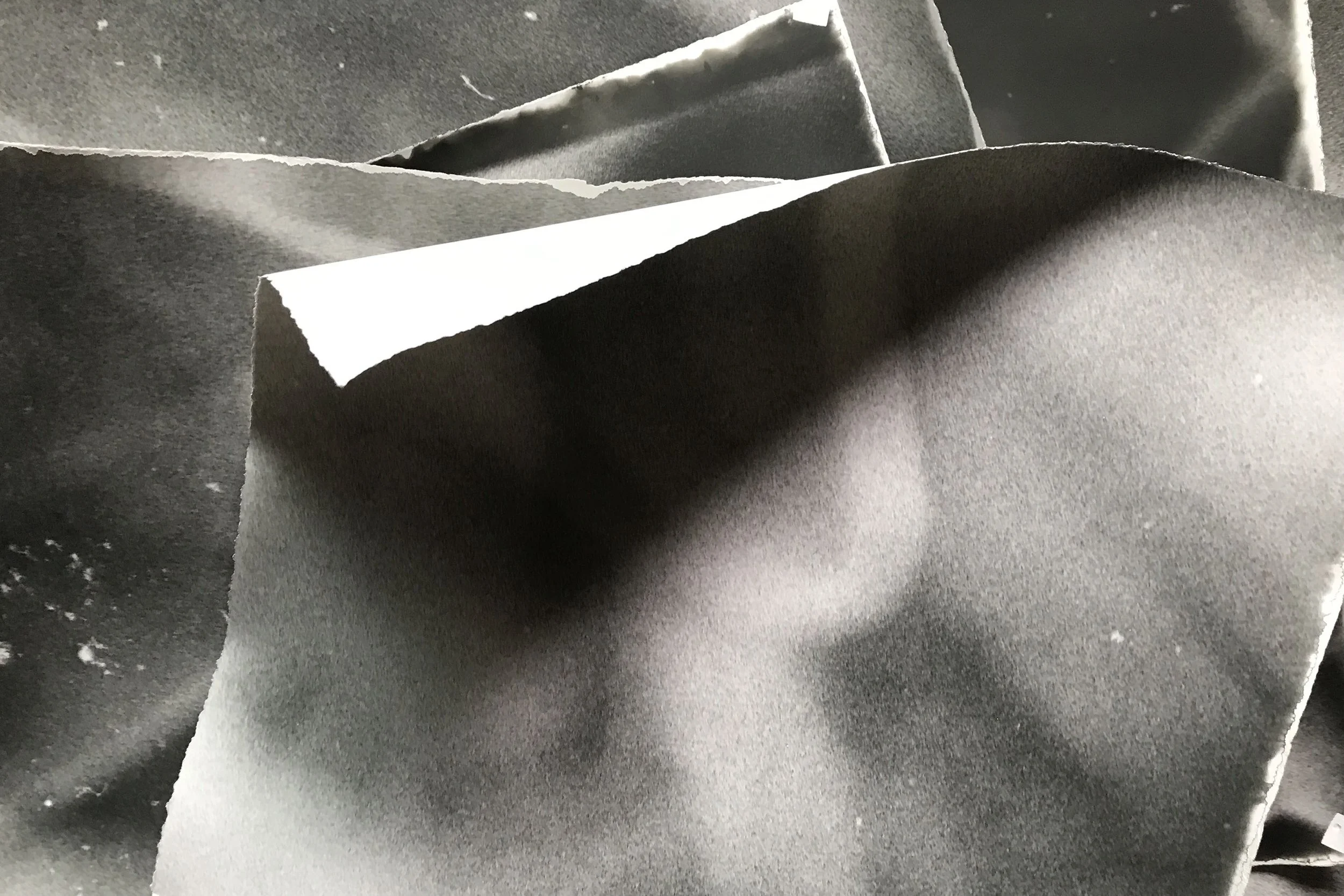
Figure 6. Paper curls
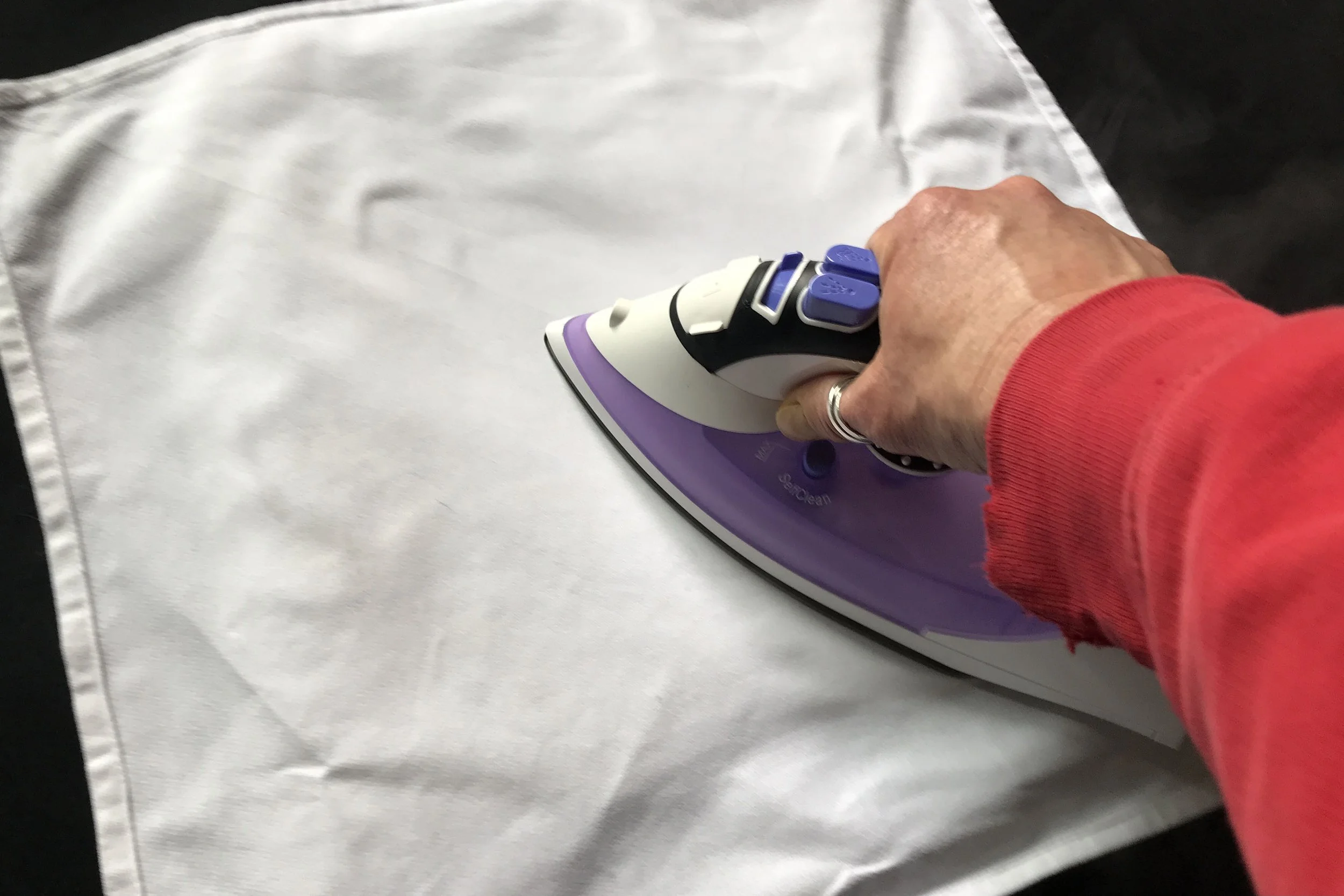
Figure 7. Ironing prints ready to install
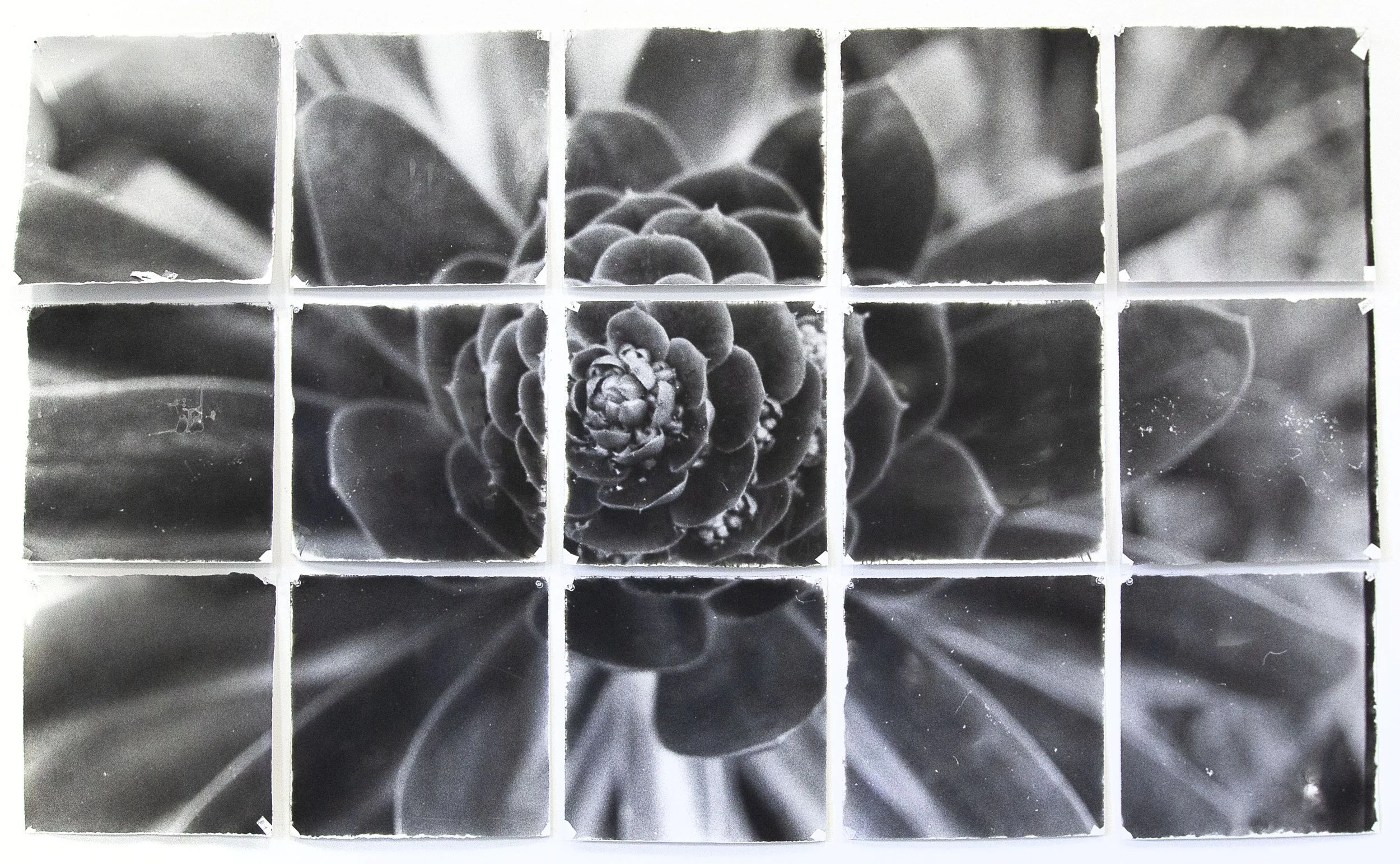
Figure 8a. Respite, gelatin silver print on hand torn paper, 2022, 1900x1200mm (approx) installation size (370x370mm approx sheet size, 2022
Figure 8b. Respite detail, 2022
Figure 8c. Respite detail, 2022
Figure 8d. Respite detail, 2022
S2 W7 group crit
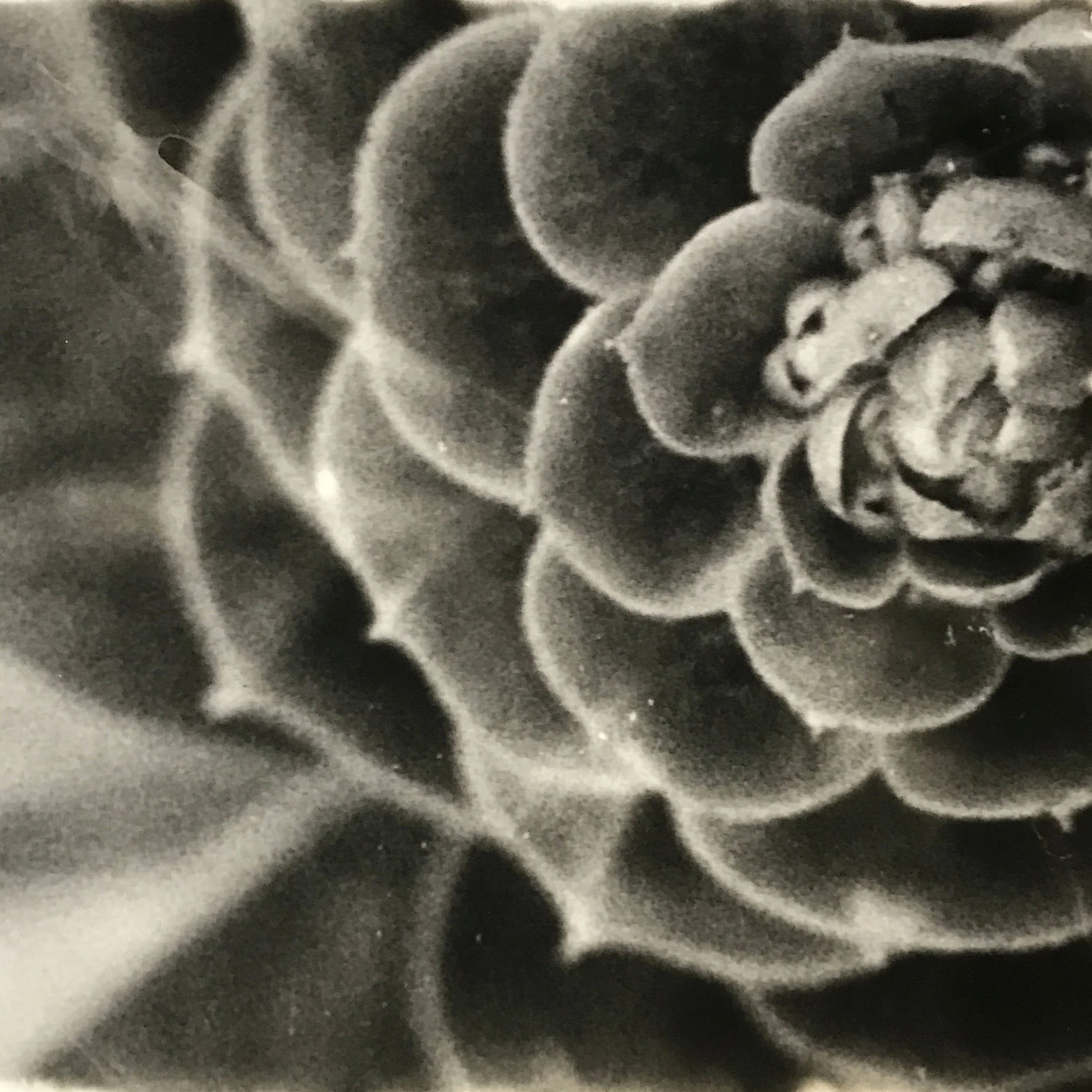
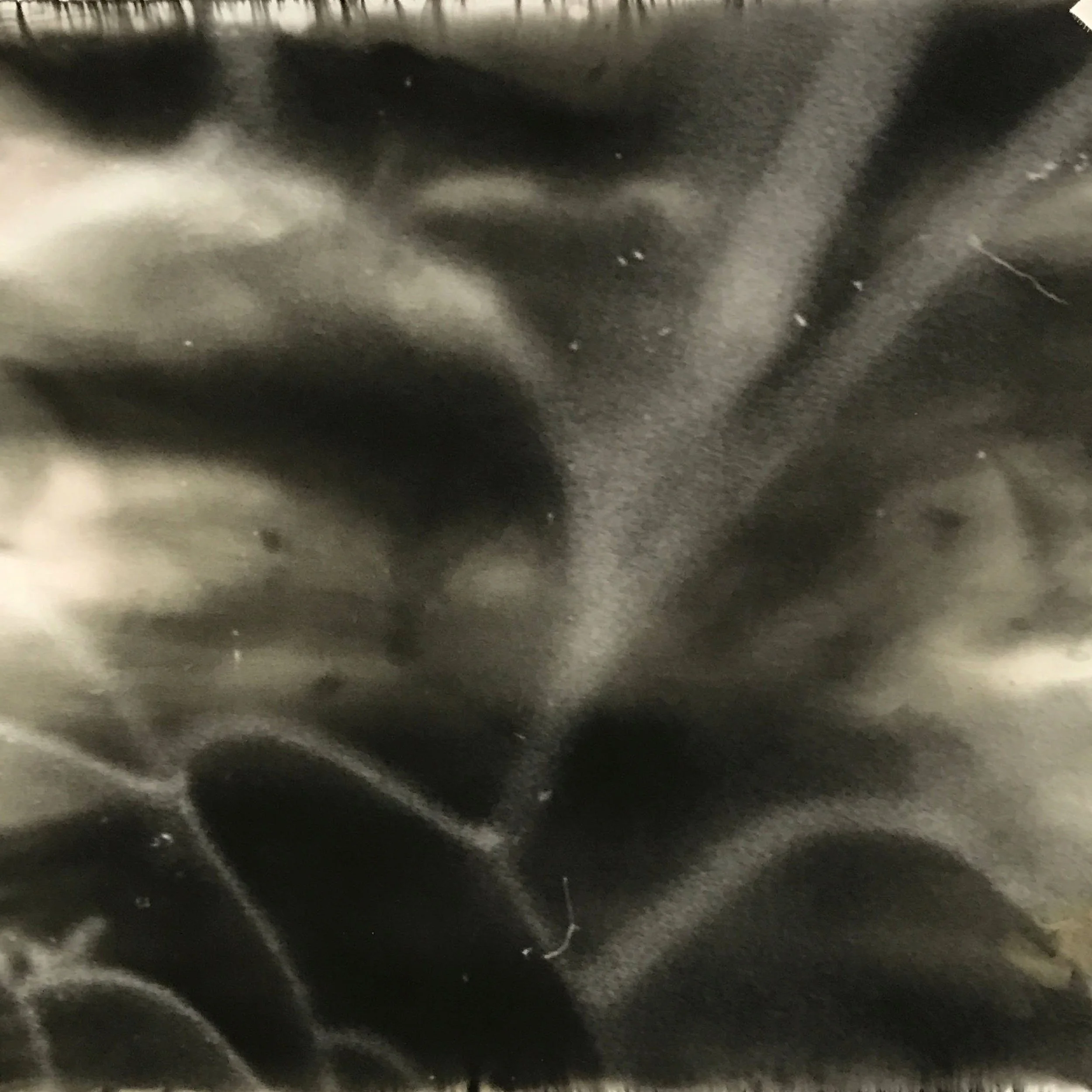
This untitled work is my initial test to create a large grid-like print. Made using traditional (or straight) photography on 35mm film combined with alternative and experimental darkroom processes. I hand tore six 330x300mm (approx) sheets from a large roll of gelatin silver (light-sensitive photographic) paper. The individual sheets were then placed in a grid on the wall of the darkroom and exposed with a single 35mm negative. Next, the sheets were taken into the darkroom where I hand-painted each individually with developer to bring out the image (rather than swishing them around in developing trays).
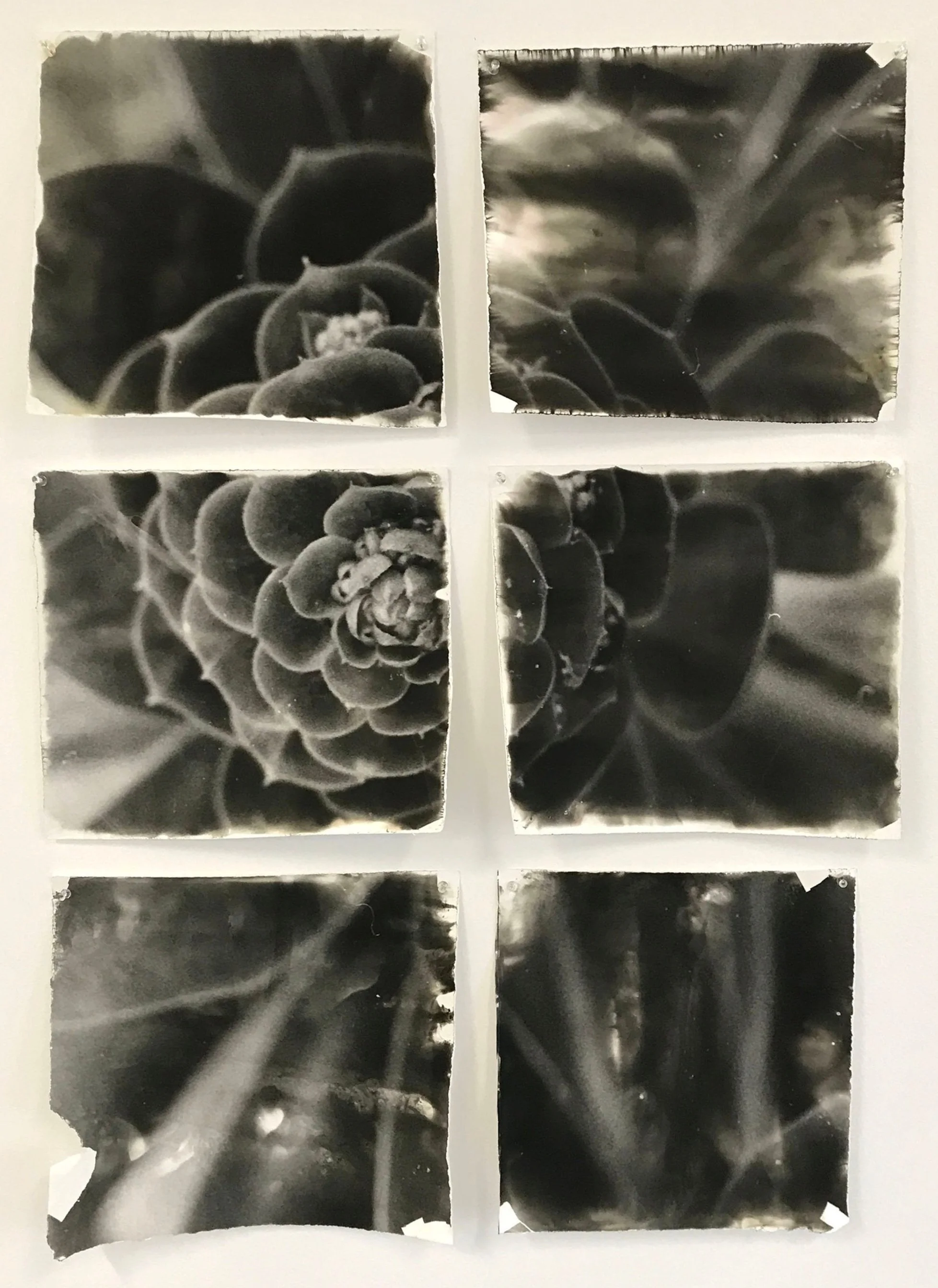
Group crit feedback
What do Pictures Want by W. J. T. Mitchell
According to W. J. T. Mitchell, we need to reckon with images not just as inert objects that convey meaning but as animated beings with desires, needs, appetites, demands, and drives of their own.
https://press.uchicago.edu/ucp/books/book/chicago/W/bo3534152.html (Links to an external site.)
Pictures with drives =? agency of pictures... see Isabelle Isabelle Graw: https://www.perimeterbooks.com/products/thinking-through-painting-reflexivity-and-agency-beyond-the-canvas (Links to an external site.)
& related Graw lecture on the value of liveliness here:https://www.youtube.com/watch?v=1JDthDEcmAs&ab_channel=thejewishmuseum (Links to an external site.)
Indexicality & its “desire for
referentiality": indexicality (Links to an external site.)
Richard Hamilton's update: https://www.tate.org.uk/art/artworks/hamilton-just-what-is-it-that-makes-todays-homes-so-different-p11358 (Links to an external site.)
(I'll try & find the catalogue where RH says that he wants to make something that isn't just a photograph)
On the proprietorial and ways of thinking about the studio this lecture by Kerry James Marshall might be of interest (specifically about 30 mins in):https://www.youtube.com/watch?v=6sv-YptD9Bc&ab_channel=CANTV (Links to an external site.)
On Daichi Saito:
Working against the contemporary urge to capture Instagram-worthy vistas and gussy them up with filters, Saito practices an old fashioned, stubbornly material form of alchemy to transmute relatively ordinary landscape footage into cinematic magic
S2 W5 group crit
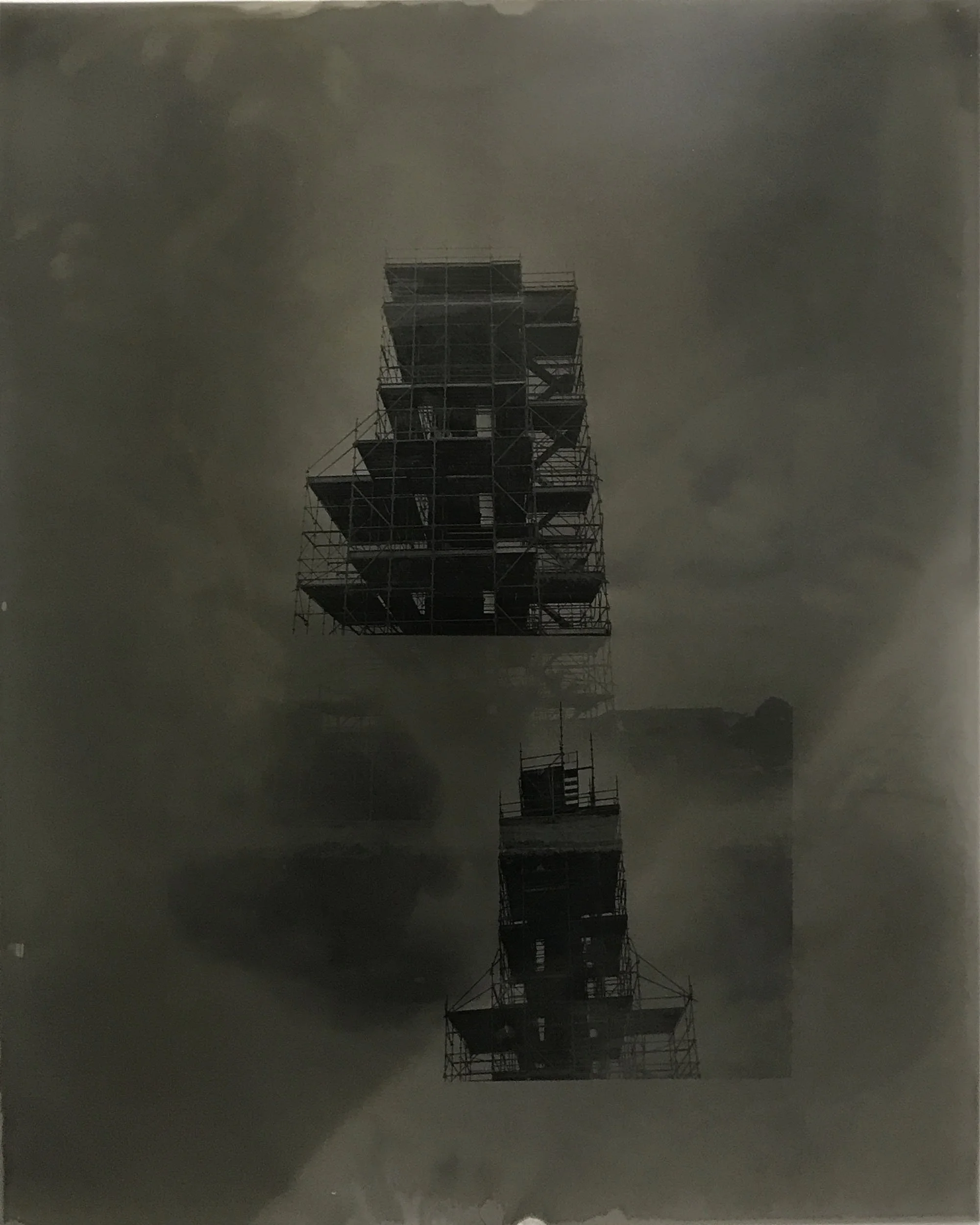
Ballroom IV
Zo Damage, 2022
Unique gelatin silver print
406x508mm
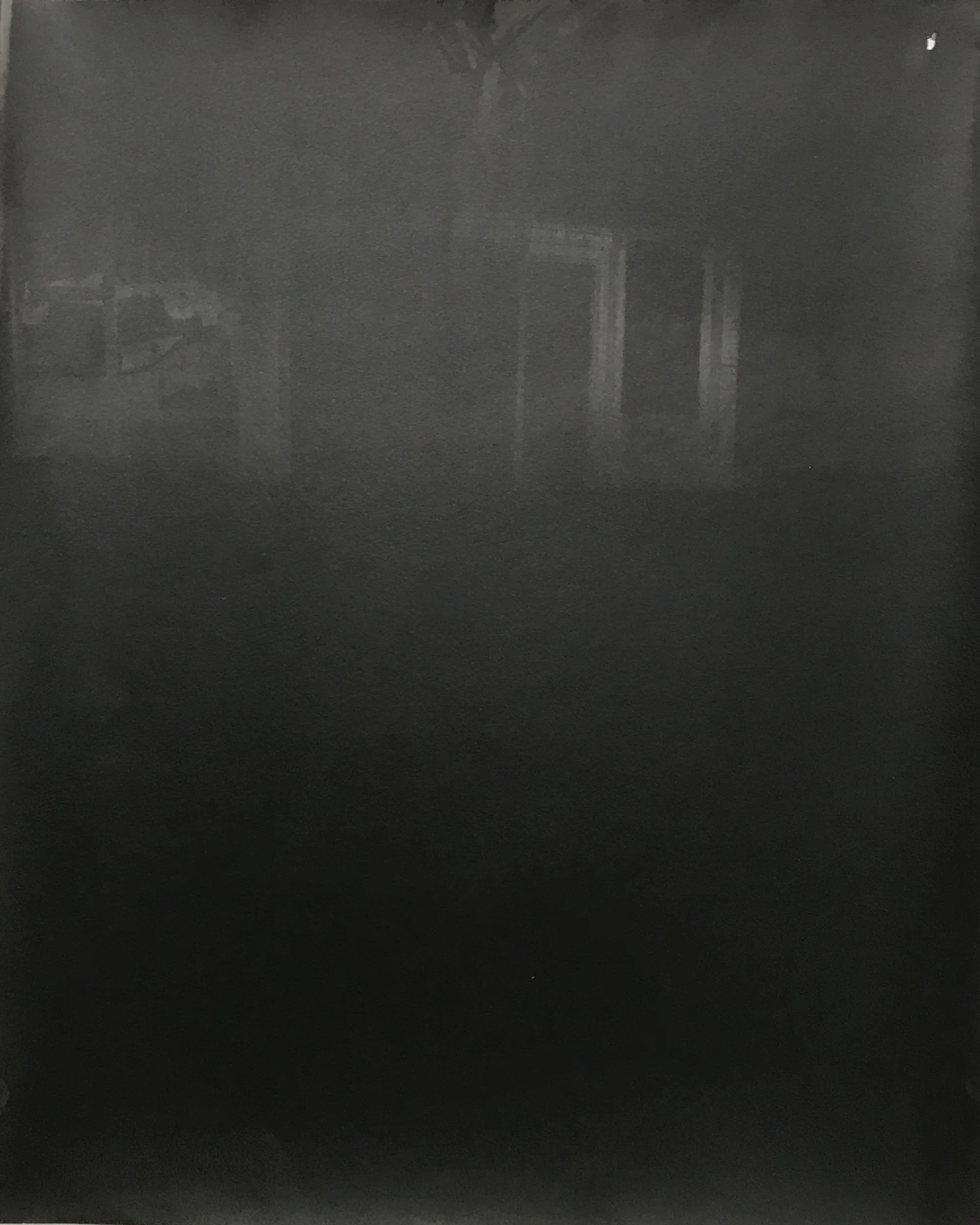
Somewhere/Enthusiasm
Zo Damage, 2022
Unique gelatin silver print
406x508mm
Gum I
Zo Damage, 2022
Unique gelatin silver print
406x508mm
Untitled (Brunswick)
Zo Damage, 2022
Unique gelatin silver print
406x508mm
Studio-based research
Informed by academic disciplines, including brain sciences, phenomenology and ethnomethodology this studio-based research explores how unpredictable modes of analogue photography and alternative darkroom processes can be used to a) cultivate alternative means of perception and observation, b) explore creative ways of interpreting physical and psychological to the world I inhabit, and c) seek unfamiliar modes within the mediums discussed above that allow suspension of presumptions and judgments about, and expand upon, my existing practice.
Keywords
Collingwood, Ballroom, Wabi Sabi, Brain science, Evolving, Devolving, Gelatin silver, Darkroom, Alternative darkroom, MFA, Studio 2, Group crit
Group crit comments
Jodie: The material itself is becoming part of the image. It is like seeing what is behind what is going on. Letting go of the process and coercing another world.
Paula: Sense of mystery, there is more behind the images than you can see. Very surrealistic (excellent — surrealism). Unrealistic light.
Reminds me of Dirk Braeckman's photography
Brunswick – You can see other things in these images (abstraction — excellent).
Jo: Black and white photographs. Quite layered.
1) Obscured and layered by foggy marks. Quite a lot of texture and sense of materiality of the print that the layers are coming through from the photographic paper rather than the negative. Sense of chance, the process being left to chance and how the different chemicals are playing out together. Relating it to painting, it does its own thing.
2) Second image. Maybe the same image. Very atmospheric.
3) Bleeding out. The image of the building has been set and blended with the paper. Title.
4) Composition shows there is a lot of process in the image. Collagic in the way it is deconstructed and constructed. A lot of atmosphere and “matter” in the image.
Revealing a “presence”.
Steven: They are unique. Not repeated. Akin to “painting”. History, loss, dreams and process. Sense of “movement” and expanding in scale. Invitation to create new narratives.
Steph: 234 Reminiscent of a storm (excellent!). Images within images. The buildings feel “framed”. Brunswick feels the most enigmatic. Ghostly and sad. Sense of loss of history. Layering over our urban history with dirt and mud and new construction — Reflection of self. Creating new worlds by blending process and time.
Steven: The work still connects to reality through the “indexical” nature of chemical photography.
Dan: Brunswick feels imposing. 1 and 2 with the processing it feels like the images are wrapping around me and inviting me in. Experiential.
Emotions are driven by chemistry.
Objective / Subjective
Provode interpretation
Measurable / Immesurable
Isabella graph - painting makes itself
Fog
Mist
Chance
Process - letting it take over... possession
Layers
Repetition
Matter
Images within images. Mise en abyme
Ghostly... sad
Also - agency of the materials & processes + indexical images = considering Isabelle Graw's essay on the agency of painting: Graw.pdf
Painterly
A correlation: chemistry + image = chemistry + emotion/feeling/sensation
Darkroom sequences in movies: Blow Up (1966); The Omen (1976) etc
The light emanating from the subjects through veils of chemical fog
The light pours out of me - Magazine
Interdisciplinary group tutorial 2
Being in isolation due to testing positive for Covid, Gabe and the tech team have generously agreed to help with printing and installing physical works to show for my group tutorial.
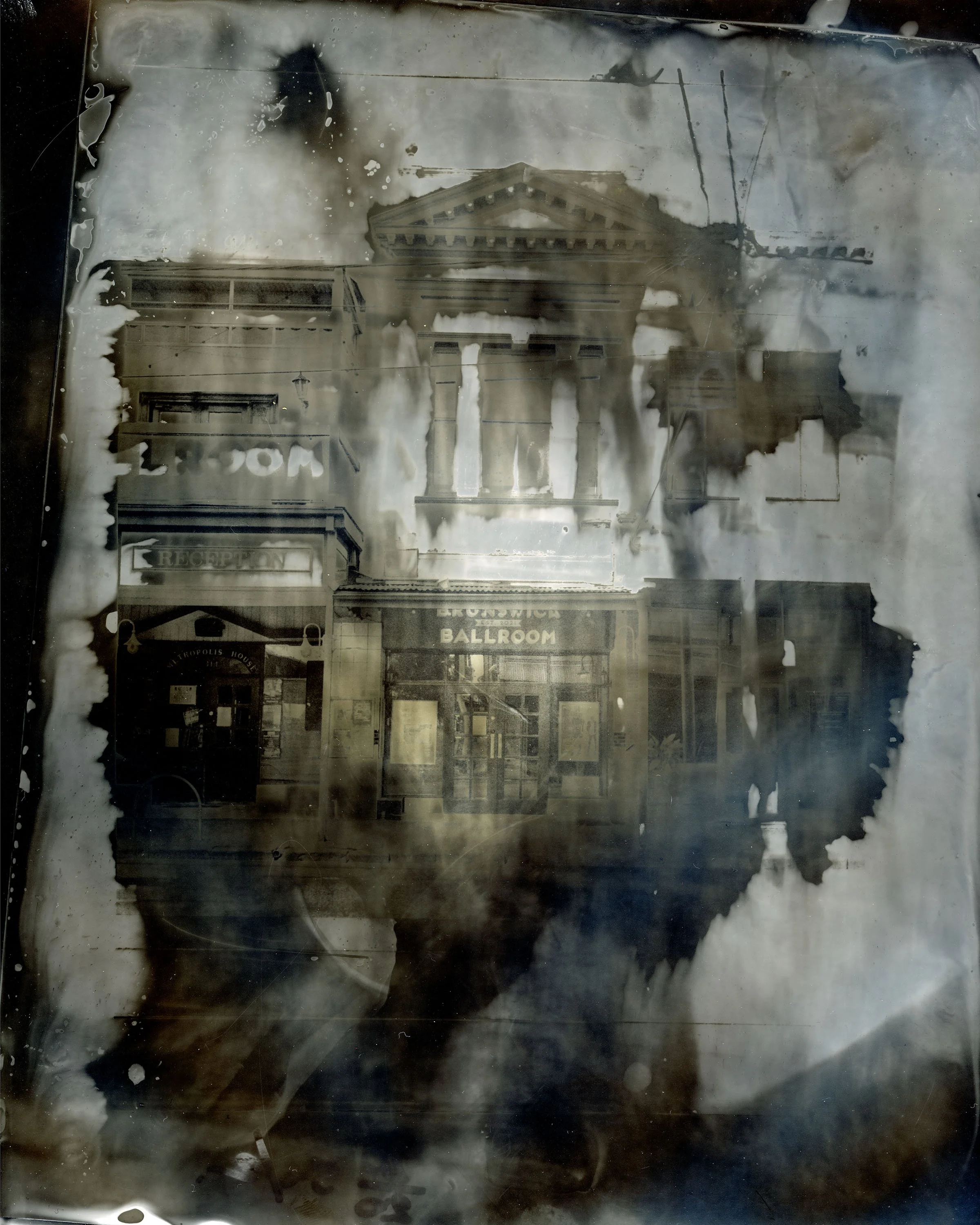
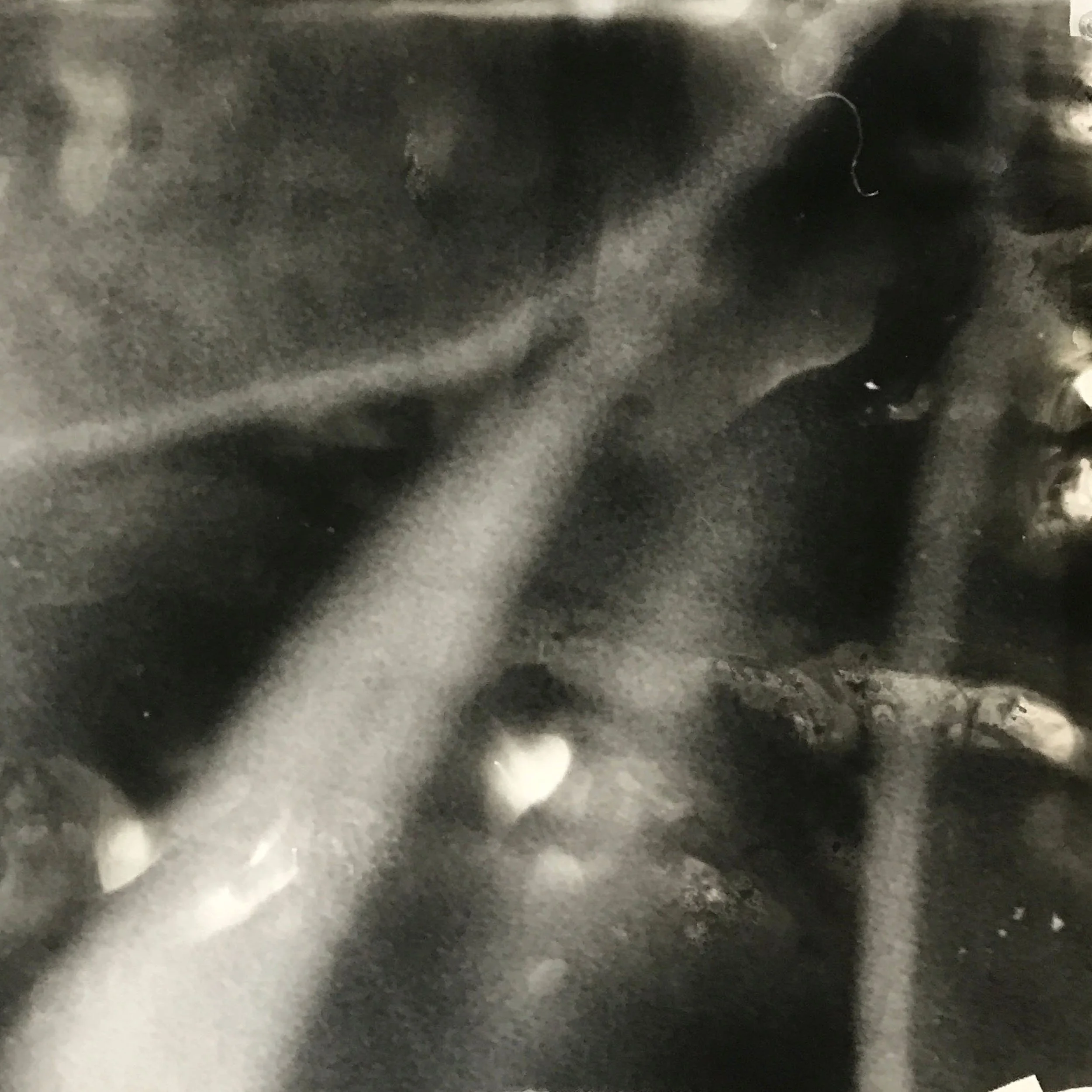
Figure 3. Across a synapse, 2022, unique gelatin silver print on paper, 8x10” (203x254mm)
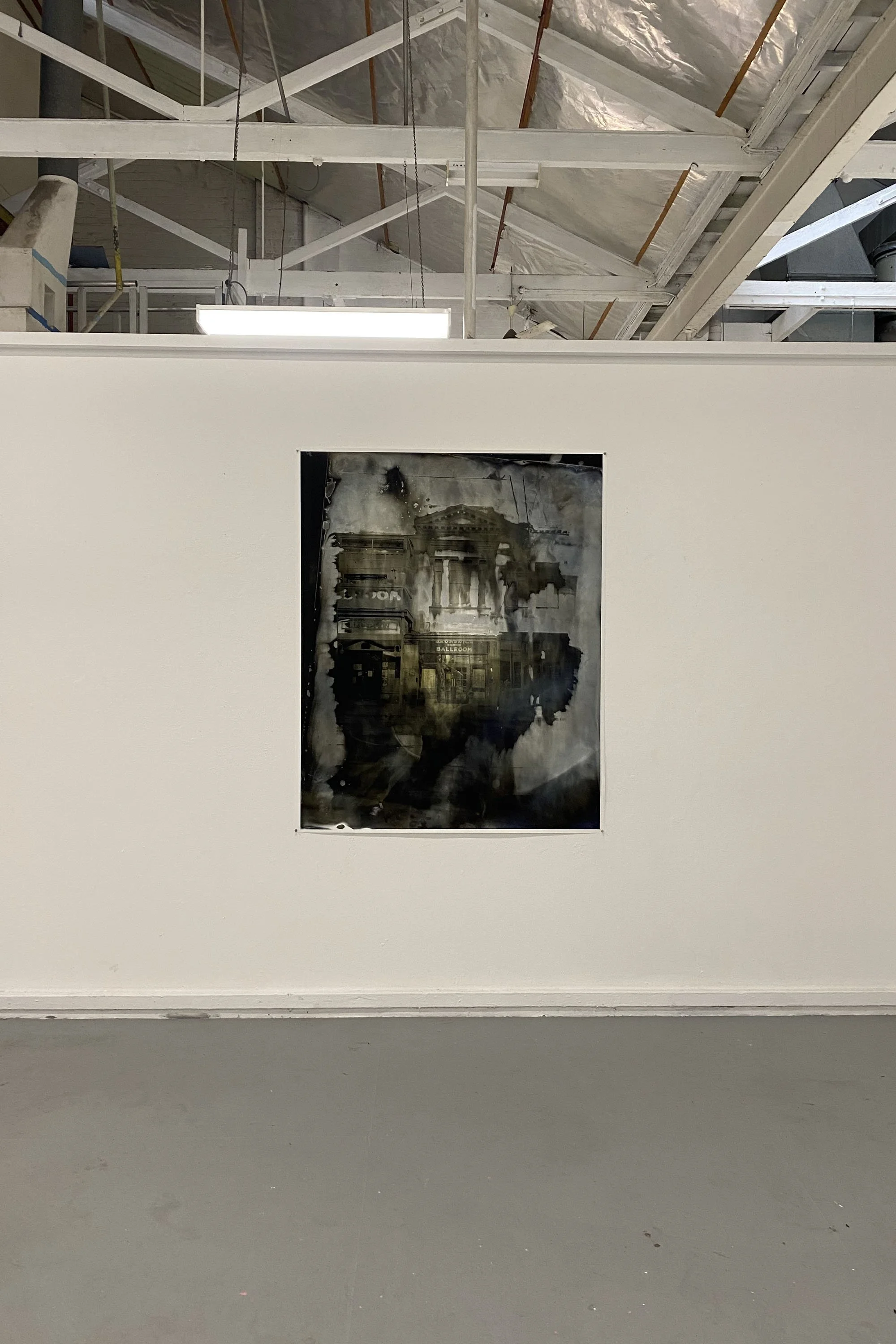
Figure 1. Across a synapse,1200x1500mm archival pigment print from scan of original 8x10” (203x254mm) unique gelatin silver print on paper, 2022 installation view. Photo by Faiza Rezai, 2022
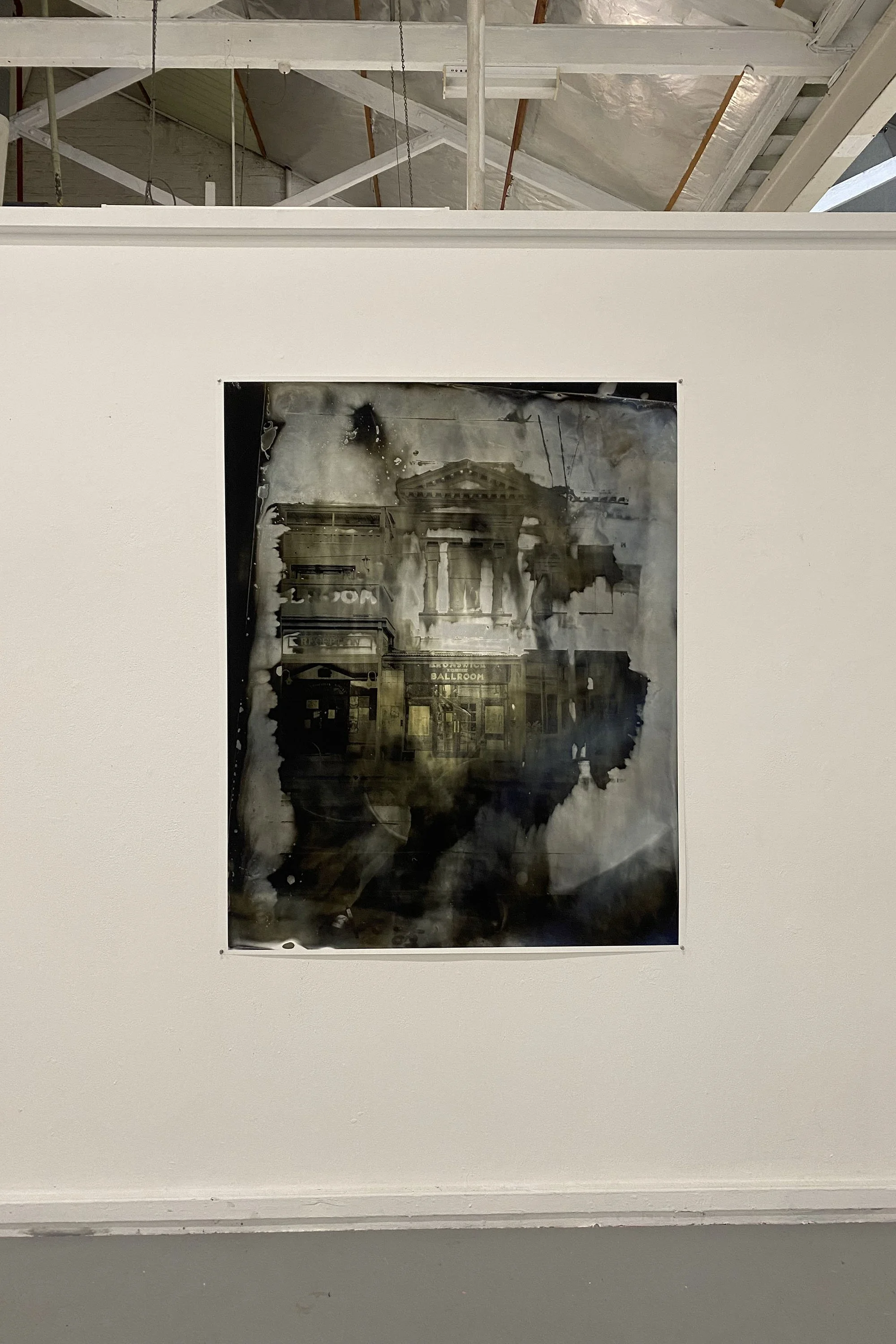
Figure 2. Across a synapse,1200x1500mm archival pigment print from scan of original 8x10” (203x254mm) unique gelatin silver print on paper, 2022 installation view. Photo by Faiza Rezai, 2022
Definitions
Synapse (noun)
“A gap between two nerve cells, across which impulses pass by diffusion of a neurotransmitter.” (Concise Oxford English Dictionary 2008, 1460)
Keywords
Surrealism, Darkroom, Solarise, Unique gelatin silver print, Wabi-Sabi, Minor chords, Melancholy, Group crit, Studio 1
Bibliography
Concise Oxford English Dictionary. 2008. 11th ed. New York: Oxford University Press.
Group crit 1
Equanimity was shown for the first Studio 1 'Group Crit'. I felt most attempted to 'assert' knowledge (Foucault 2020, 1–153) of the photographic process rather than deconstructing and feedback to 'artworks' (although I do believe that it was given with no ill intent). This response to experimental or alternative modes of photography is commonplace. Contemporary photographer Adam Fuss discusses how the 'technical' is often raised in viewing works stating that 'technical' is irrelevant. Fuss (2011, 00:38) asserts, "We have the illusion that we're going to understand [the image] by a piece of technical information". The artist continues, stating, "I don't see it happen with painting. I don't see people say, 'Hey, did you use a number seven brush and cadmium three'?". Despite coming a long way with being objective in critiques, I grew impatient and frustrated and 'reacted' rather than 'responded', the Group Crit has provided practical prompts to further improve my people skills (which are not my strong point).
Zo Damage, Equanimity, 2022, (IRL) Archival pigment print from scan of original 35mm negative, 1100x360mm
Definition
equanimity
noun
mental or emotional stability or composure, especially under tension or strain; calmness; equilibrium. (dictionary.com)
Keywords
MFA, Studio 1, Equanimity, Group crit, Freeway, 35mm, Film photography
Bibliography
"Definition Of Equanimity". dictionary.com. Accessed April 28, 2022. https://www.dictionary.com/browse/equanimity.
Foucault, Michel. 2020. Power. 3rd ed. UK: Penguin.
Fuss, Adam. 2011. "A&A Portrait - Adam Fuss". 123marketstreet. March 30, 2011. YouTube video, 02:03. https://www.youtube.com/watch?v=QxpeNIN0iRA.