
Wolfgang Tillmans
First published 18 April 2020
Last updated 6 June 2023
Wolfgang Tillmans’ Frieschwimmer series was created using dry, cameraless analogue photographic processes. The artist used his hands to manipulate light to create the patterns on the paper during development. The colour was introduced into the images by way of Tillmans’ use of a colour head enlarger and C-type paper. Many art critics regard Tillmans’ work to be situated between observational and abstract photography, creating new narratives while offering a significant contribution to the overarching field of contemporary photography.
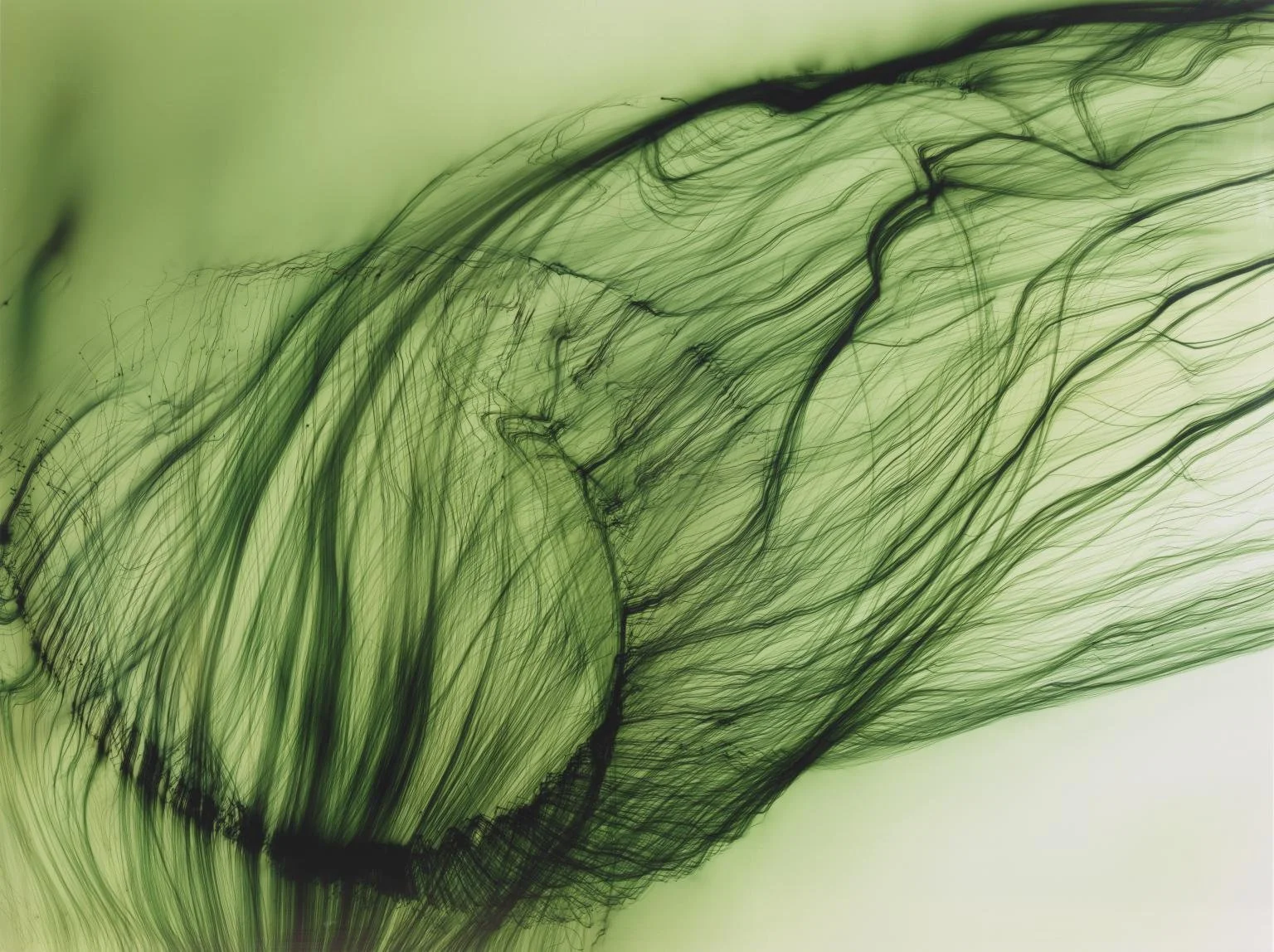
Wolfgang Tillmans, Freischwimmer 16, 2003, c-type print on paper, 2395×1797mm
Relevance to practice
Alternative printing, Abstraction, Darkroom, Analogue, Experimentation, Technical, Paradoxical
Keywords
21st century, Art, Photography, Technology, Digital, Perspective, Arrangement, Exploration, Contemporary
References
Artspace Editors. 2016. “8 New Classics of 21st-Century Photography You Need to Know Now.” Artspace. 2016. https://www.artspace.com/magazine/art_101/book_report/phaidon-photography-21st-century-list-53466.
Tillmans, Wolfgang. 2003. Freischwimmer 16. Image. https://www.tate.org.uk/art/artworks/tillmans-freischwimmer-16-p20284.
Sigmar Polke
First published 14 April 2020
Similarly, lens-based German artist Sigmar Polke (Figure 9) applies radical techniques, such as creating in-camera multi-exposures and omitting, bypassing and reversing steps in the darkroom to subvert traditional ideals of the medium.[1] The artist documents his life and surroundings, “altering the aesthetic heredity of his mediums by debasing the integrity of each, cultivating crossovers of material and meaning” (Halbreich 2016, 69). Like myself, Polke is as self-taught photographer, considers “the darkroom as an arena for exploration” and displays a recklessness for “the conventions of photography [which] often resulted in scratched negatives, under- and overexposures, and prints that further obscured details to create visually disorienting compositions” (The J. Paul Getty Museum 2007).
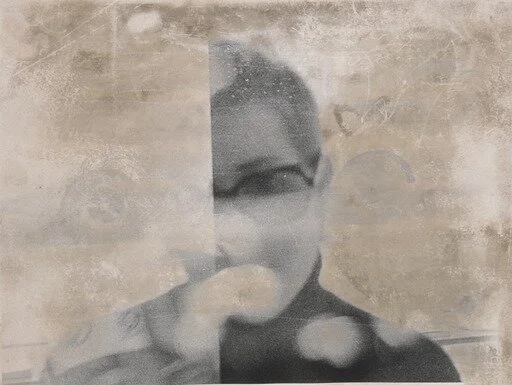
Sigmar Polke, Untitled (Mariette Althaus), c. 1973, unique gelatin silver print, 180x240mm
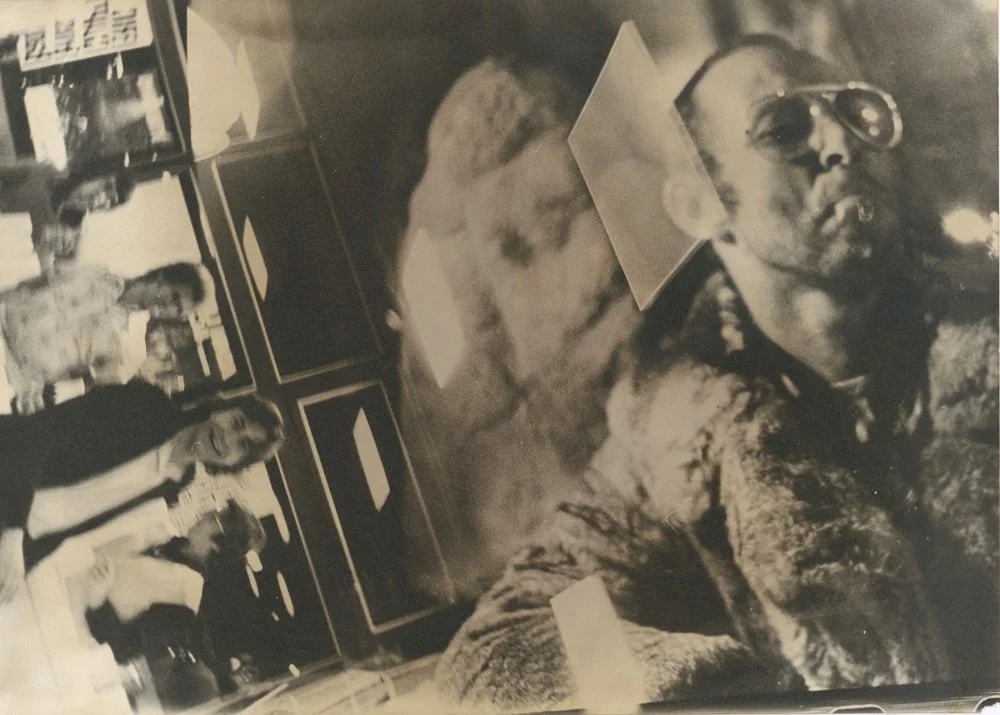
Sigmar Polke, Untitled (Sigmar Polke), c. 1975, photograph on AGFA C90 paper, 210x296mm
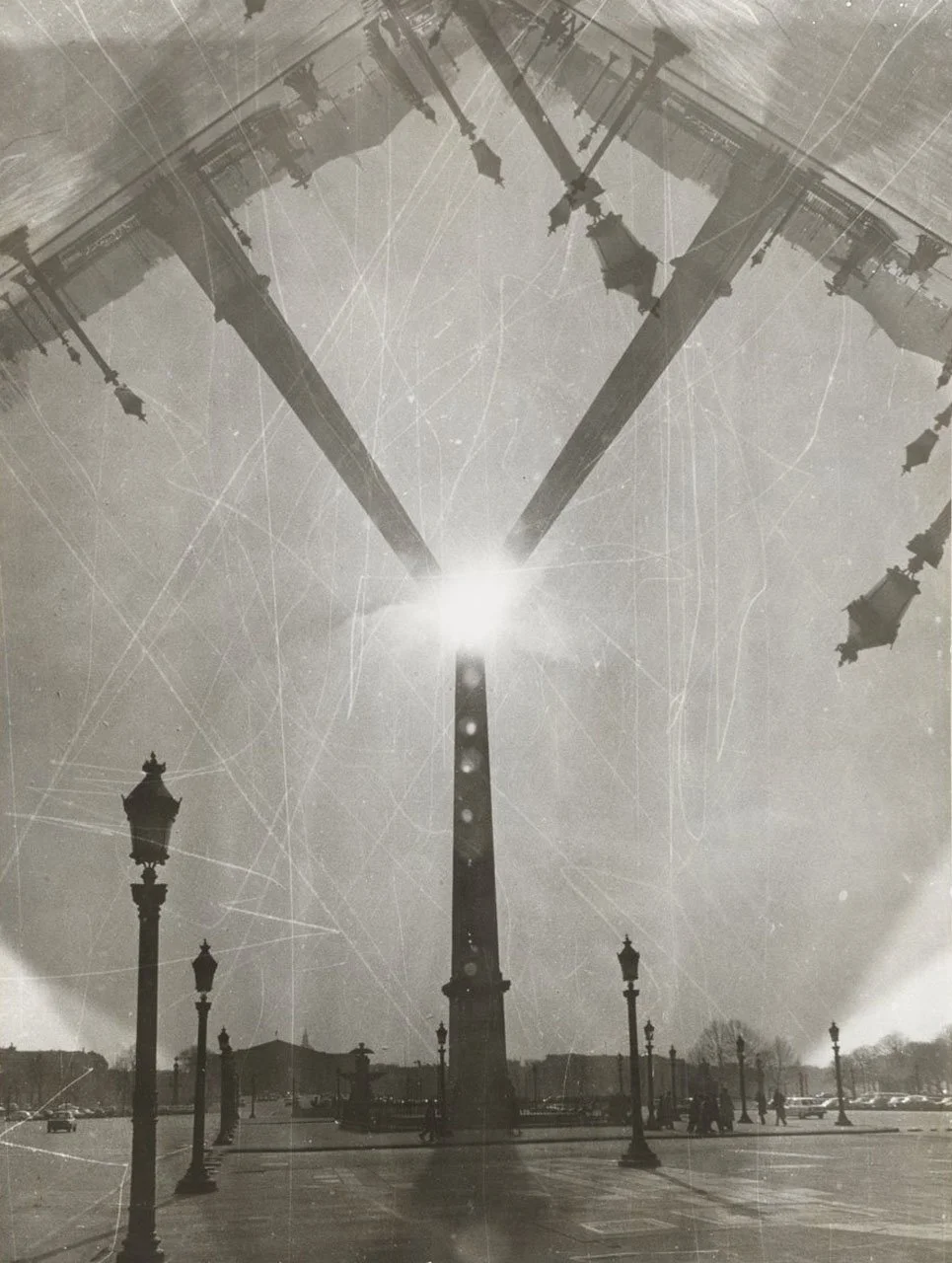
Sigmar Polke, Untitled (Obelisk, Paris), c. 1970. Courtesy Kicken Berlin, Berlin & Sies + Höke, Düsseldorf
Footnotes
An in-camera multi-exposure is when the film is rewound in the camera and repeatedly exposed, resulting in montage-like images embedded directly into the negative.
Keywords
Sigmar Polke, Painting, Photography, Capitalist realism, Abstract, Art, Community of practice, Expressionism, Contemporary, Alternative, Film, Darkroom, Courage, Pushing boundaries
References
Polke, Sigmar. c. 1975. Untitled (Obelisk, Paris). Image. https://news.artnet.com/market/sigmar-polke-at-paris-photo-11451237.
Polke, Sigmar. c. 1973, Untitled (Mariette Althaus). Image. https://www.moma.org/collection/works/149078.
Polke, Sigmar. c. 1975. Untitled (Sigmar Polke). Image. https://www.maxhetzler.com/zh/exhibitions/sigmar-polke-zeitreise-photographs-1966-1986collection-georg-polke-2020/works/#img27.
Rowell, Margit, Michael Semff, and Bice Curiger. 1999. Sigmar Polke WORKS on PAPER 1963-1974. New York: Museum Of Modern Art. PDF. https://www.moma.org/documents/moma_catalogue_187_300100396.pdf.
Squires, Carol and George Baker 2013. What Is a Photograph?. New York: International Center for Photography and DelMonico Books.
Thistlewood, David. 1996. Sigmar Polke: Back to Postmodernity. Liverpool: Liverpool University Press And Tate Gallery Liverpool.
Williams, Gregory. 2016. "Gregory H. Williams. Review of 'Alibis: Sigmar Polke, 1963–2010' by Kathy Halbreich". caa.reviews. http://www.caareviews.org/reviews/2337#.Yq2CS-xBzUI.
Halbreich, Kathy, Mark Godfrey, Lanka Tattersall, and Magnus Schaefer. 2014. Alibis: Sigmar Polke 1963–2010. London: Tate Publishing.
Olafur Eliasson
Meteorological circles (Eliasson 2016) comprise twenty-seven oval yellow mirrors (Figure 1). Arranged on the wall in three rows, each mirror was created from silvered, hand-blown glass. The discs are tilted and in three sizes, the installation giving the impression of a set of rotating discs. Olafur's installation art utilises visual uncertainty of forms and viewer perspective. While in Baroque Baroque (Eliasson 2015), Eliasson combines and reunites works from collections spanning two decades. The installation (Figure 2) “explores the affinities between the artworks and opulent baroque setting of Belvedere’s Winter Palace of Prince Eugene of Savoy in Vienna (Olafur Eliasson Baroque Baroque n.d.).
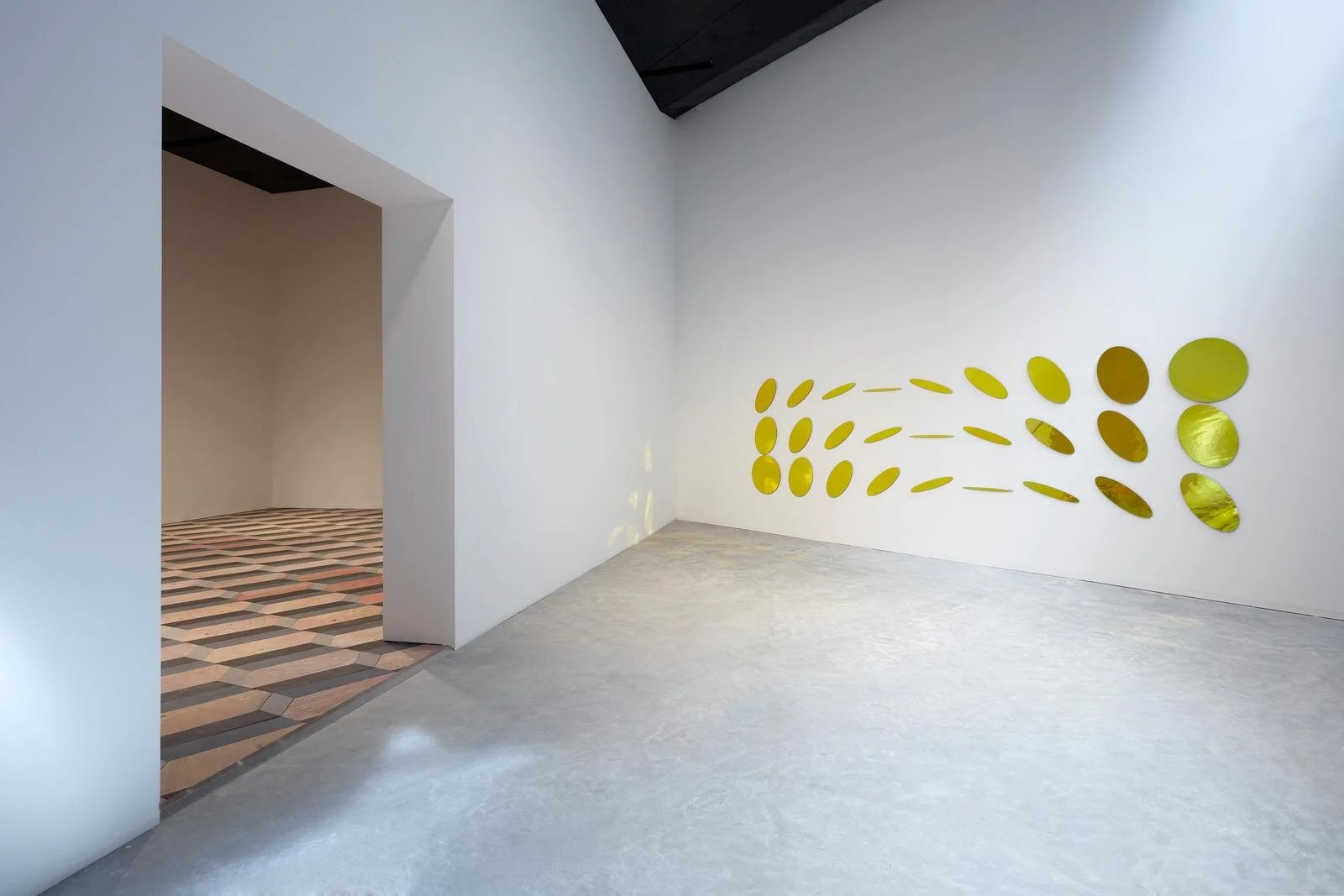
Figure 1. Olafur Eliasson, Meteorological circles, 2016, Leeum, Samsung Museum of Art, Seoul
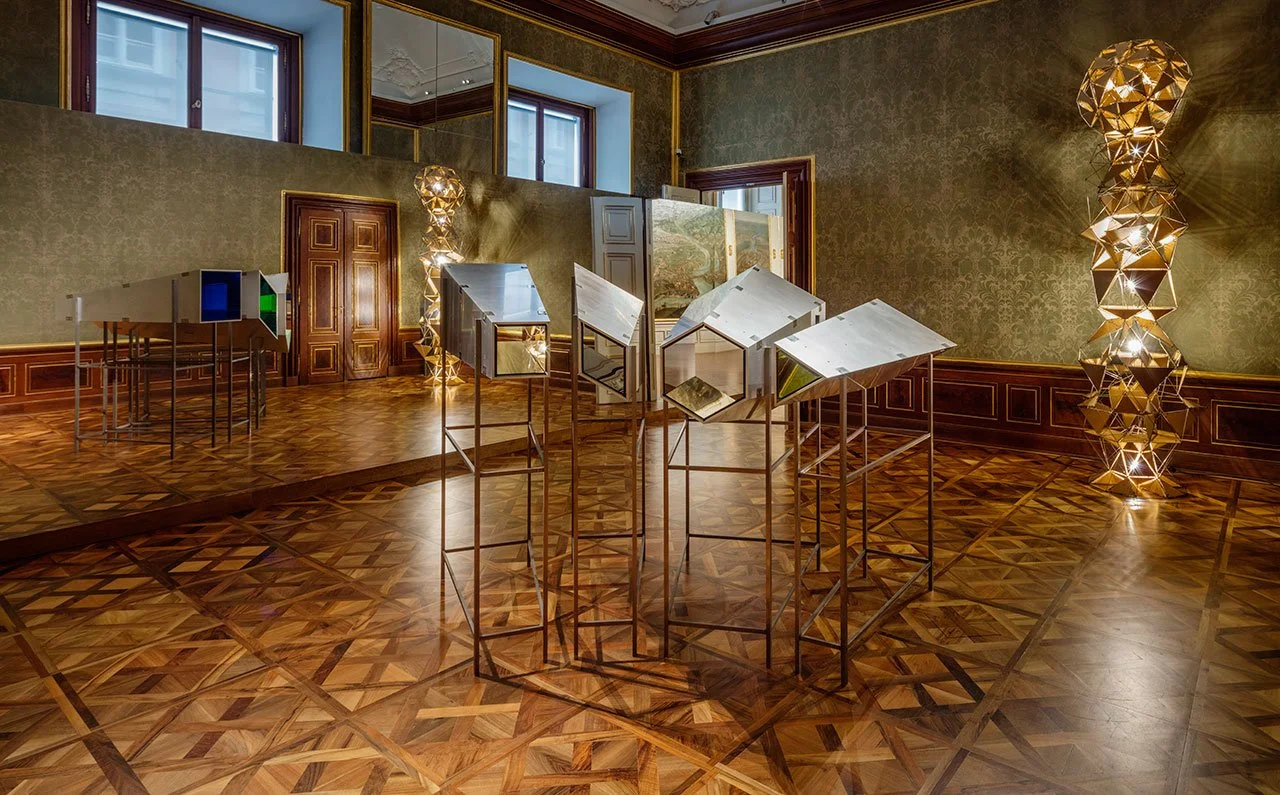
Figure 2. Olafur Eliasson, Baroque Baroque installation view, The Winter Palace of Prince Eugene of Savoy, Vienna 2015. Photo by Anders Sune Berg

Olafur Eliasson, Five orientation lights, 1999, stainless steel, coloured glass, halogen bulbs and fresnel lenses, 200x70x70cm, installation view, The Winter Palace of Prince Eugene of Savoy, Vienna 2015. Photo by Anders Sune Berg
Keywords
Olafur Eliasson, Installation, Art, Installation art
Bibliography
“Olafur Eliasson Baroque Baroque.” Sternberg Press. Accessed August 20, 2022. https://www.sternberg-press.com/product/baroque-baroque/.
Eliasson, Olafur. 2015. “[Baroque Baroque] installation view, The Winter Palace of Prince Eugene of Savoy, Vienna 2015.” Image. https://www.yatzer.com/olafur-eliasson-baroque-baroque.
Eliasson, Olafur. 1999. Five orientation lights. Image. https://www.yatzer.com/olafur-eliasson-baroque-baroque.
Eliasson, Olafur. 2016. "Meteorological Circles". Olafur Eliasson. Image. https://olafureliasson.net/archive/artwork/WEK109680/meteorological-circles.
———. 2016. "Meteorological Circles". Olafur Eliasson. https://olafureliasson.net/archive/artwork/WEK109680/meteorological-circles.
Bauhaus
The Bauhaus (The Staatliches Bauhaus) was a German art school (1919–1933) that became famous for its approach to design, which strove to combine beauty with function and attempted to unify the principles of mass production with individual artistic vision.
The Bauhaus movement had a profound influence on subsequent developments in art, architecture, graphic design and typography.
Although the school was closed by its own leadership under pressure from the Nazi regime who believed the Bauhaus was a centre of communist intellectualism, the staff continued to spread its idealistic precepts as they fled Germany and emigrated all over the world.
Russian painter, printmaker and graphic artist, Wassily Kandinsky was a teacher at The Bauhaus. Kandinsky is credited for creating the first purely abstract works, and as a pioneer of Abstract which I question in my journal entry Futurism (Gay 2020). Kandinsky is considered to be one of the great Modernists. No arguments from me on that point, in fact I would go so far as to say that Kandinsky is an undisputed great of the Modernist period.
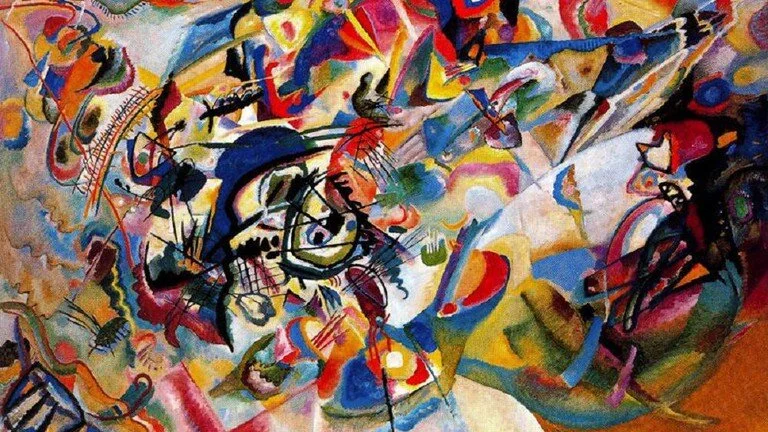
Composition 7, Wassily Kandinsky 1913
László Moholy-Nagy, a teacher of the Bauhaus, is my favourite artist. Of all the creatives I have researched and discovered throughout the year, Moholy-Nagy has had the most powerful and profound impact on me and my practice.
Moholy-Nagy authored Bauhausbücher 8: Painting Photography Film (1925). As represented by the title, the first half of the book finds Moholy-Nagy discussing various styles of art with a focus on painting, photography and film and theory. Curated by Moholy-Nagy, the second half of Bauhausbücher 8: Painting Photography Film presents a collection of works – ranging from sheet music to photograms – by artists of the Bauhaus.
In the introduction to Bauhausbücher 8: Painting Photography Film, Moholy-Nagy states that “This book is in defence of photography, which many people still think of as an inferior mechanical operation of recording.”
One hundred years down the track, Moholy-Nagy stands strong as a profound thinker and creative. His art and writing continue to be a powerful influence on contemporary artists, particularly in the field of photography. To me, Moholy-Nagy is God.
Things to come, László Moholy-Nagy 1936
Community of practice
I identify many of the teachers and artists from the Bauhaus movement in my community of practice, particularly Moholy-Nagy and Kandinsky. I am a book designer and typesetter by trade. My father (an illustrator, photographer, commercial artist, graphic designer and typographer) has also had a significant impact on my creative development. Considering this, it comes as no surprise that I am so passionately drawn to the Bauhaus movement.
Quotes
With few exceptions, music has been for some centuries the art which has devoted itself not to the reproduction of natural phenomena, but rather to the expression of the artist's soul, in musical sound. — Wassily Kandinsky (Kandinsky n.d.)
Keywords
Moholy-Nagy, Kandinsky, Mondrian, Constructivism, Bauhaus, WWII, Germany, Bauhausbücher, Books, Modernism, Futurism, Expressionism, Dada, Abstract, Typography, Film, Design, Photography, Art history
References
Kandinsky, Wassily. n.d. “Quotes”. Wassily Kandinsky. https://www.wassilykandinsky.net/quotes.php.
Kandinsky, Wassily. 1913. Composition 7. In ‘10 Artworks By Kandinsky You Should Know’. Culture Trip. https://theculturetrip.com/europe/russia/articles/10-artworks-by-kandinsky-you-should-know/.
Maholy-Nagy, Laszlo. [1928] 2019. Bauhausbücher 8: Painting Photography Film. Switzerland: Lars Müller Publishers.
Moholy-Nagy, Laszlo. 1936. Things to come. Image. http://www.artnet.com/artists/l%C3%A1szl%C3%B3-moholy-nagy/special-effect-f%C3%BCr-things-to-come-njNeWNe6qcXCU1TD_H-W1A2
László Moholy-Nagy
László Moholy-Nagy
Hungary
1895–1946
Practice: Painting; Photography; Sculpture; Film
Movement/Style: Dada, Constructivism, Expressionism, Bauhaus style, Modern art
The complexity, depth and structure of Moholy-Nagy’s work are deceiving. ‘Photogram’ by László Moholy-Nagy (1926) has had a significant impact on me and how I look at photography. Although simple at first glance, the layers, exposure and the opacity of the objects are complex and highly technical.
László Moholy-Nagy, a teacher of the Bauhaus (Staatliches Bauhaus), authored Bauhausbücher 8: Painting Photography Film (1925). As represented by the title, the first half of the book finds Moholy-Nagy discussing various styles of art with a focus on painting, photography and film and theory. Curated by Moholy-Nagy, the second half of Bauhausbücher 8: Painting Photography Film presents a collection of works – ranging from sheet music to photograms – by artists of the Bauhaus.
In the introduction, author Moholy-Nagy states that “This book is in defence of photography, which many people still think of as an inferior mechanical operation of recording.” The books are as magnificent to look at as it is to read. Typography is as much as a graphic element as a means of communication. One hundred years down the track, Moholy-Nagy was a profound thinker and creative. His art and writing continue to be a powerful influence on contemporary artists, particularly in the field of photography.
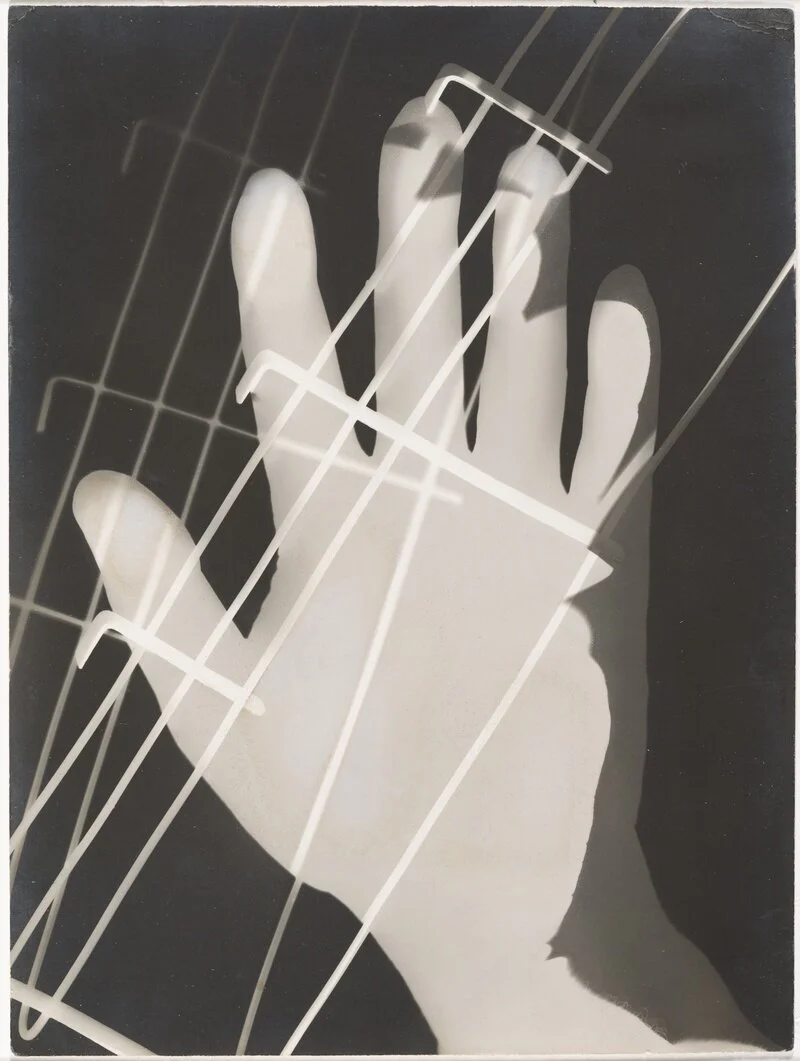
Laszlo Moholy-Nagy, Photogram, 1926
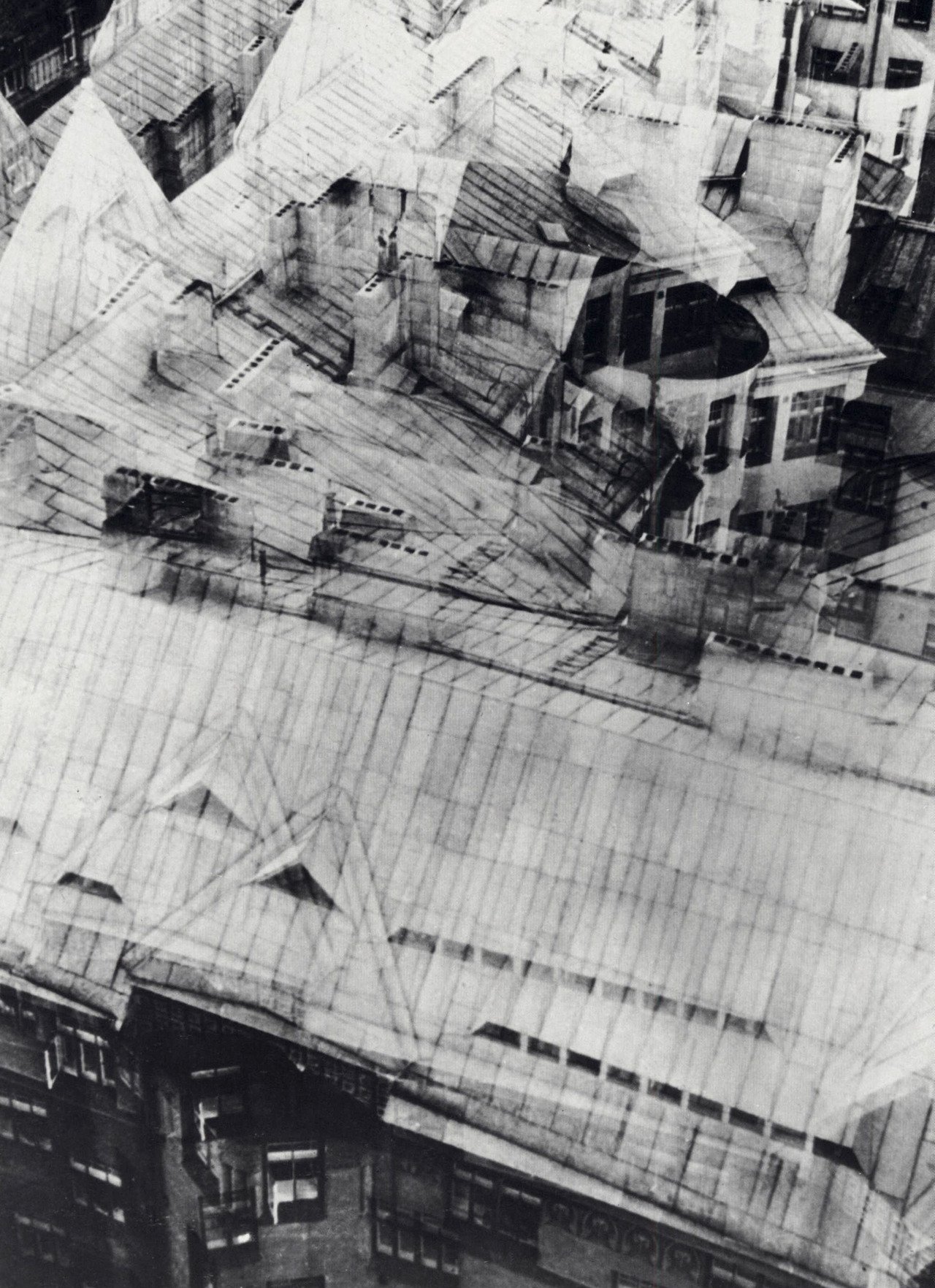
László Moholy-Nagy, Helskini, 1930, gelatin silver print, 394×292mm
Keywords
Dada, Modernism, Photogram, Experimental, Art, Community of practice
References
Laszlo Moholy-Nagy. 1926. Photogram. Image. https://moholy-nagy.org/.
Laszlo Moholy-Nagy. 1930. Helsinki. Image. https://www.sfmoma.org/artwork/98.243/.
Tate n.d. “Laszlo Moholy-Nagy”. TATE. Accessed March 11, 2020. https://www.tate.org.uk/art/artists/laszlo-moholy-nagy-1649.