
Coercing colour
Native solarised unique gelatin silver paper three-day pinhole long exposure, captured with coffee can pinhole camera (Figure 1). The subject matter and size of the pinhole resulted in a flat image. The paper negative was treated with a diluted developer and solarised in an attempt to reveal and lift the image. The captured image disappeared while traces of time and place from the darkroom processes evolved (Figure 3).
Figure 1. Native solarised unique gelatin silver paper three day pinhole long exposure, 2022, 120x254mm
Figure 2. Notes on back of above gelatin silver print, 2022
Figure 3. Infinite void, 2022, digitally enhanced scan of solarised unique gelatin silver paper pinhole (three day) long exposure (Figure 1)
Keywords
Pinhole, Long exposure, Coercing colour
Long exposure pinhole
Like lumen prints, pinhole long exposures form directly on the gelatin silver paper (Figures 1). In fact, developing pinhole gelatin silver paper long exposures is likely to overexpose and obliterate the image. Further, as a photographer with a foundational generative practice, making the cameras, cutting the paper, composing and producing the exposures, and then developing the paper negatives is a complete and all-encompassing cycle. The pinholes are as much artwork as the images made of them. Consequently, pinhole photography epitomises the ‘evolving’ and ‘devolving’ Kintsugi and Wabi Sabi aesthetic, fostering serendipitous outcomes and ephemeral, captivating and hauntingly evocative images that question time and space while acknowledging the fragmented and displaced with newfound beauty.
Floating in D minor, 2022, digitally enhanced scan of solarised unique gelatin silver paper negative five-day pinhole exposure, original print size 140x150mm (approx)
Keywords
Long exposure, Pinhole, Solarise, Unique print, Gelatin silver, Experimental darkroom
Camera installation
The first video is of an exhibition-style installation of cameras used and built to create projects for MFA Studio 1 , Assignment 2, the second shows experimenting with installation presentation of pinhole cameras constructed for the MFA Studio project.
Keywords
Studio 1, Camera installation, Lomography, Large format, 35mm, Pinhole, DIY pinhole
Bibliography
Damage, Zo. 2022. “Installation of cameras”. Zo Damage. June 17, 2022. YouTube video, 01:35. https://youtu.be/Coc8hPJ_ajM.
Diana 35mm hack, pinhole and liquid emulsion
Diana F+ 35mm hack
Medium format (120mm film) pinhole
Keywords
Studio 1, Diana, 35mm hack, Lomography, Pinhole, 120mm
Bibliography
ESMONDSIT. 2011. "Lomography - A Proper 35 Mm Film Mod For The Diana F+". Lomography. https://www.lomography.com/magazine/99621-a-proper-35-mm-film-mod-for-the-diana-f.
Making pinhole cameras
I am preparing several boxes in various sizes to make my first pinhole cameras, including purchased gift boxes and recycled darkroom paper boxes. Given that pinhole photography is one of the oldest pre-digital forms of the craft and will also use iPhone and Beats packaging. Sealing the units to prevent light leaks will be most challenging.
The juxtaposition of old tech using new tech is amusing and questions the longevity of methods. Although today’s technology allows for multiple backup systems, this has not always been the case. Notably, many of my backup drives and DVDs from the late 1990s to 2000s have corrupted, with the files now irretrievable. Double backups have proven futile over this period, while my negatives are perfectly intact.
Gift boxes and iPhone box pinhole camera preparation
Figure 1. Applying undercoat of gesso to box interiors before painting black to aid light proofing of pinhole cameras
Figure 2. Once the gesso is dry, the box interiors are painted black for additional light proofing
Figure 3. Once the gesso is dry, the box interiors are painted black for additional light proofing
Figure 4. Second and final coat of black paint to aid light proofing of boxes for pinhole cameras
Photo paper box pinhole camera preparation
A photo paper box is lightproof and makes good pinhole cameras, particularly for exposing on paper (making paper negatives). I am experimenting with making a housing to keep the paper stable in the box during exposure (Figures 5–7).
Figure 5. Making paper negative housing prototype for pinhole camera
Figure 6. Making paper negative housing prototype for pinhole camera
Figure 7. Paper negative housing prototype for pinhole camera (I have no idea if this will work)
Panorama
I am also exploring making a wide-angle pinhole camera (Figure 8), prompted by researching how to make a panorama pinhole for 35mm and 120mm film. A wine box could work well with its solid construction. Although the depth and width of the box ‘should’ be adequate, it could be adjusted by cutting down or extending the sides.
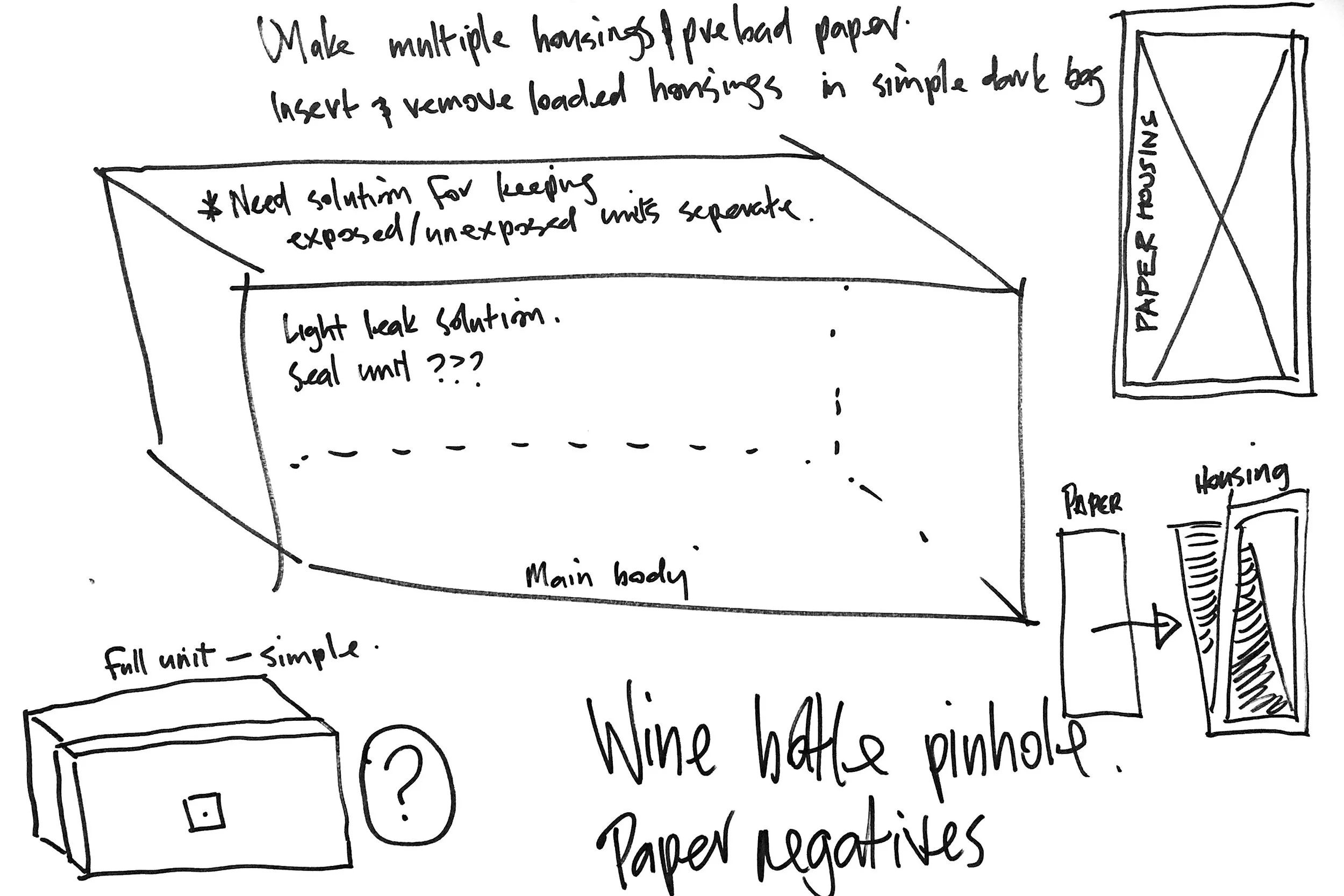
Figure 8. Design rough for panorama pinhole camera using wine box
Reflection
Today's supervisor meeting was very productive, with many breakthroughs. Dom followed up with an email outlining what was discussed and provided me with a plan of action for the rest of this semester.
My studio-based research was indeed prompted, or clarified, by the "Dinner Party" exercise, the outcome of which, as outlined in Dom's meeting debrief below, is in "pivoting the camera inwards" to reflect on my own life, surroundings and my humanity including mental and physical states.
The research includes Kintsugi and Wabi-Sabi aesthetics and philosophical theory in acknowledging fragments, fissures and the displaced with newfound beauty. The work intends to reinterpret what is perceived as broken as 'whole' – embracing how decay and time shape space, environment and existence.
The proposed equipment and method embrace and foster the unpredictable. This includes using a broken 35mm camera with a shutter that jams and slips on the reel producing fragmented images and novel gestalts. The pinhole camera epitomises unpredictability as there is no viewfinder or mechanisms to show or create any ‘settings’ – for example, exposure times are based on an educated guess.
Email from Dom
So big news today, something for you, something about you, not facing outwards but just pivoting to point the camera inwards in a more overt/deliberate way. In Zo’s words, ‘my life, my surrounds, my humanity’.
Rules
Kintugi, we are repairing and treasuring the broken and imperfect.
Wabi Sabi, we are embracing decay, time, aging and way it shapes things.
We are handicapping ourselves, we are using tools that won’t give us the ‘perfect’ photo – pinhole camera, Diana F, Broken SLR.
Pinhole cameras are key, it may be that we become interested in the object itself and consider how it’s size, design, or placement may become a vector in the project too.
Note: the pinhole and the broken SLR must be ‘performed’ and we cannot know what they might produce until developing – this is an important element of these processes.
Tone words (themes if you like)
Energy
Rhythm
No truth
ASKEW – ‘nothing is rigid, particularly me’
And to get us loose, we are going to MAKE ONE COMPLETE ARTWORK EVERYWEEK FOR THE REMAINING 4 WEEKS OF SEMESTER.
Keywords
Kintsugi, Wabi Sabi, Pinhole photography, Lomography, Broken SLR
Pinhole photography
Expand on notes for Contemporary pinhole photography; What is pinhole photography; Making a pinhole camera; Film or paper; Field of view workaround; Light metering formulas; Contemporary pinhole and zone plate photography exhibition
While it can be very time consuming to find online photography resources, it is worth the investment. Pinhole cameras do not have a viewfinder. As such, one of the biggest issues of image capture with a pinhole camera is composition. The formula for estimating the field of view of a pinhole camera provides a reliable estimation (Henson 2020, 06:09).
Calculating field of view for pinhole camera
First measure from the inside left of the film gate to the outside left of the camera and transfer the measurement marking with a small dot on the top of the camera. Repeat for the right side. Next measure from the centre of the pinhole to the outer edge of one (left OR right) side of the camera body and make a small dot. As the pinhole in many cameras is not at the ‘true centre’ is it best to measure one side only. Using a ruler, join the measurement marks to make a ‘V-shape’ (Figure 1). Repeat the steps above on side of the camera to determine the height of the field of view.
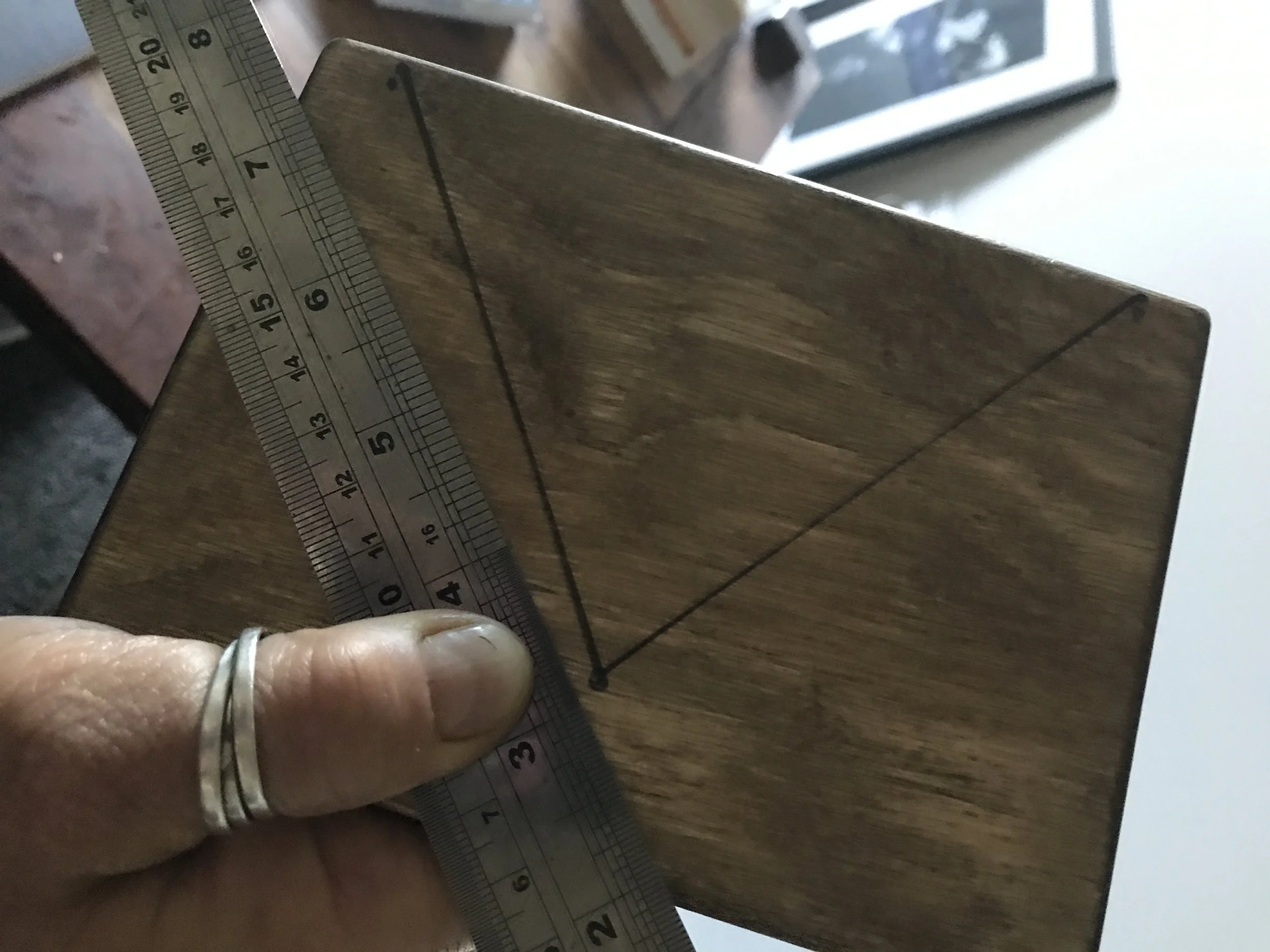
Figure 1. Marking field of view guides on 4x5 pinhole camera
Exposure times (general)
https://www.alternativephotography.com/determining-exposures-for-the-pinhole-camera/
http://www.martinwinfield.co.uk/pinholetech.html
https://www.lomography.com/magazine/69260-holga-wide-pinhole-camera-wpc-user-review-exposure-table-and-more
https://www.lomography.com/magazine/10960-applied-mathematics-to-holga-cameras
Exposure times
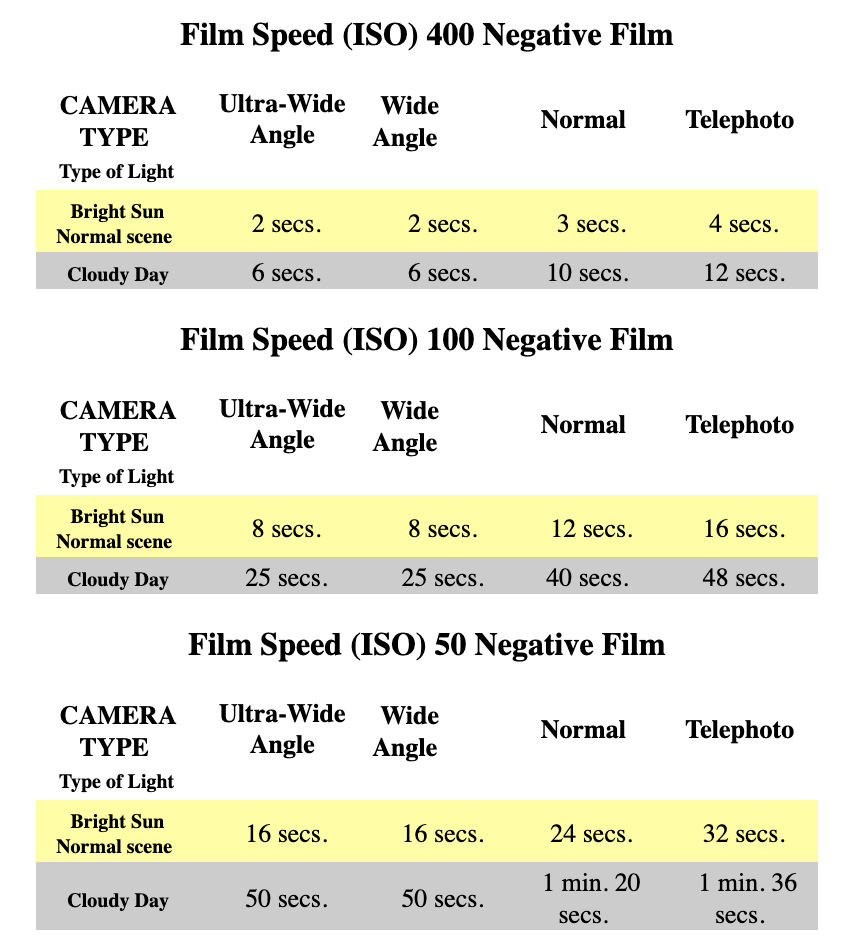
Figure 1. Pinhole exposure times (PinholeCamera n.d.)
Keywords
Pinhole, Field of view, MFA, Studio 1
Bibliography
“Pinhole exposure times”. pinholecamera.com. Accessed April 10, 2022. http://www.pinholecamera.com/exposure.html.
Hammond, Mary Sayer. 1986. "THE CAMERA OBSCURA: A CHAPTER IN THE PRE-HISTORY OF PHOTOGRAPHY (PINHOLE PHOTOGRAPHY, ASTRONOMY, DRAWING MACHINES, KEPLER, PERSPECTIVE)." Order No. 8703552, The Ohio State University. https://login.ezproxy.lib.rmit.edu.au/login?url=https://www.proquest.com/dissertations-theses/camera-obscura-chapter-pre-history-photography/docview/303482885/se-2?accountid=13552.
Henson, Martin. 2020. “Pinhole photography, all about” Martin Henson. May 22, 2020. YouTube video, 09:51. https://youtu.be/nuI5l0t9PHg.
Hymer, Karen. 2021. "Layered Light: Contemporary Pinhole And Zone Plate Photography". Light Art Space. https://lightartspace.com/exhibition/layered-light-contemporary-pinhole-and-zone-plate-photography/.
Madison, James. 2020. "Shooting 8x10 On A Homemade Pinhole Camera With F/264? Why Not?". Fstoppers. https://fstoppers.com/film/shooting-8x10-homemade-pinhole-camera-f264-why-not-508286.
Broadening practice
Following the Master of Photography program, I am determined to broaden my analogue photographic practice and am at a complete creative loss. Dom has provided me with exercises that aim to prompt creative focus and direction, leading me to explore lumen printing and zone plate photography. I am also deepening my study of photograms and pinhole photography.
Recent works include a photogram of a vintage threadbare denim jacket (Figures 1–2) and a series of self-portraits captured using a 4x5" large format pinhole camera (Figure 3). Planning to capture lumen prints of the jacket to compare how the colours and tones in the final images correspond with the photograms and researching pinhole cameras, including how to make them, is inspiring.
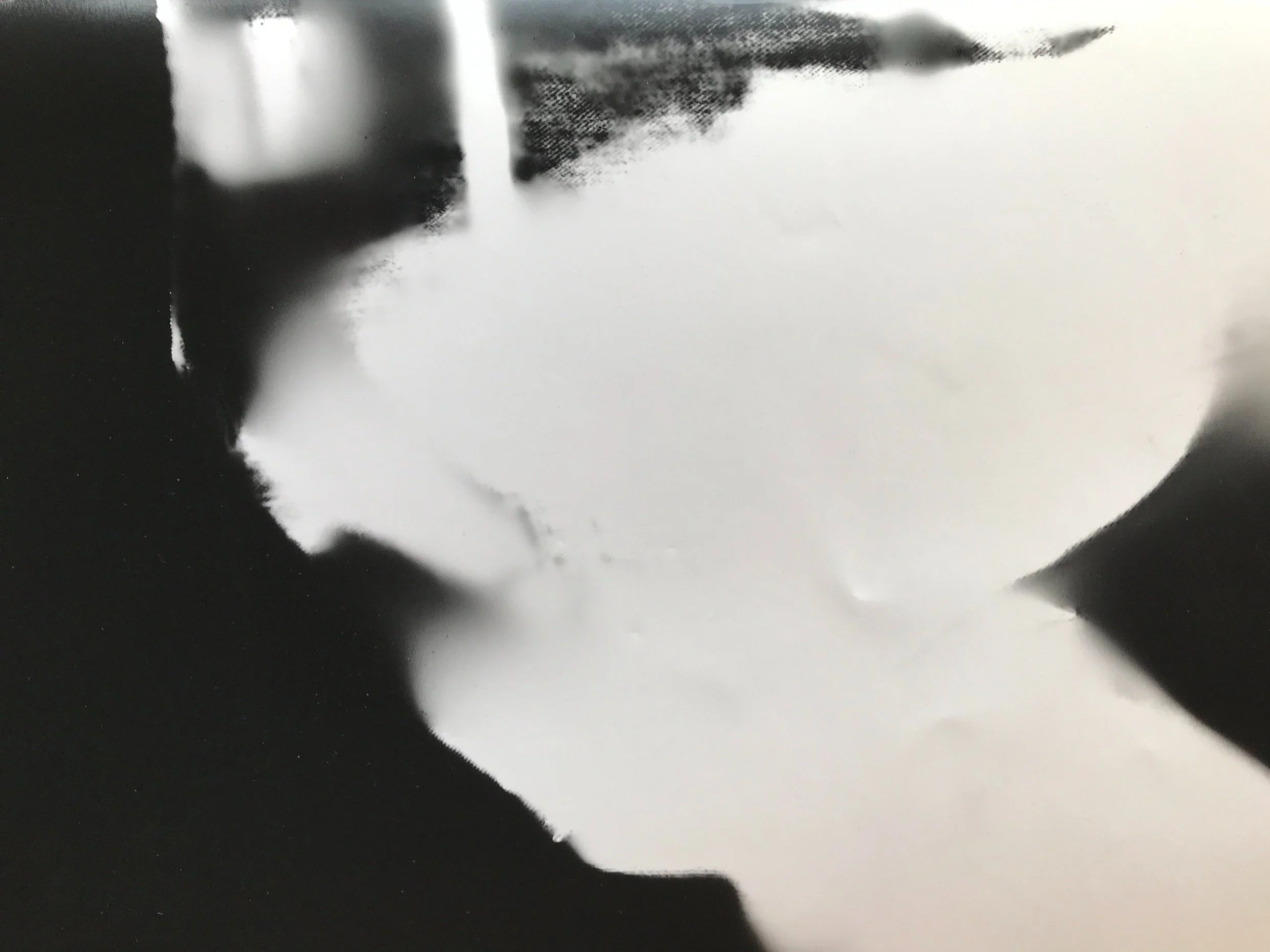
Figure 1. Untitled photogram, 2022
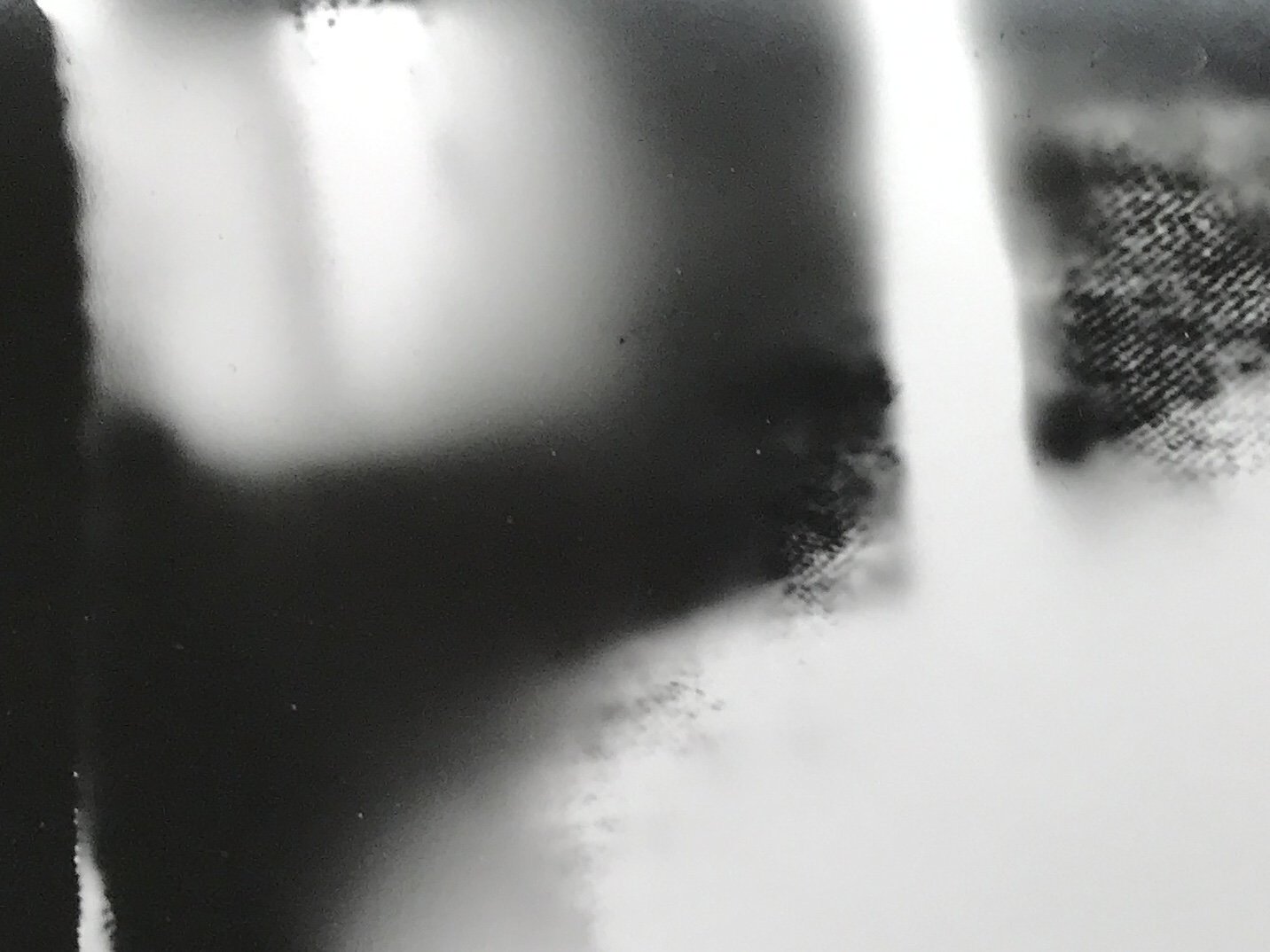
Figure 2. Untitled photogram (detail), 2022
Although creating artworks from items and events (Figure 3) that are part of my everyday life is engaging, it is also confronting, leading me to reflect on Dom frequently asking, "Yeah, but what do you want to make?" prompting me to reflect on past work and motivations. What do 'I' want to make indeed.
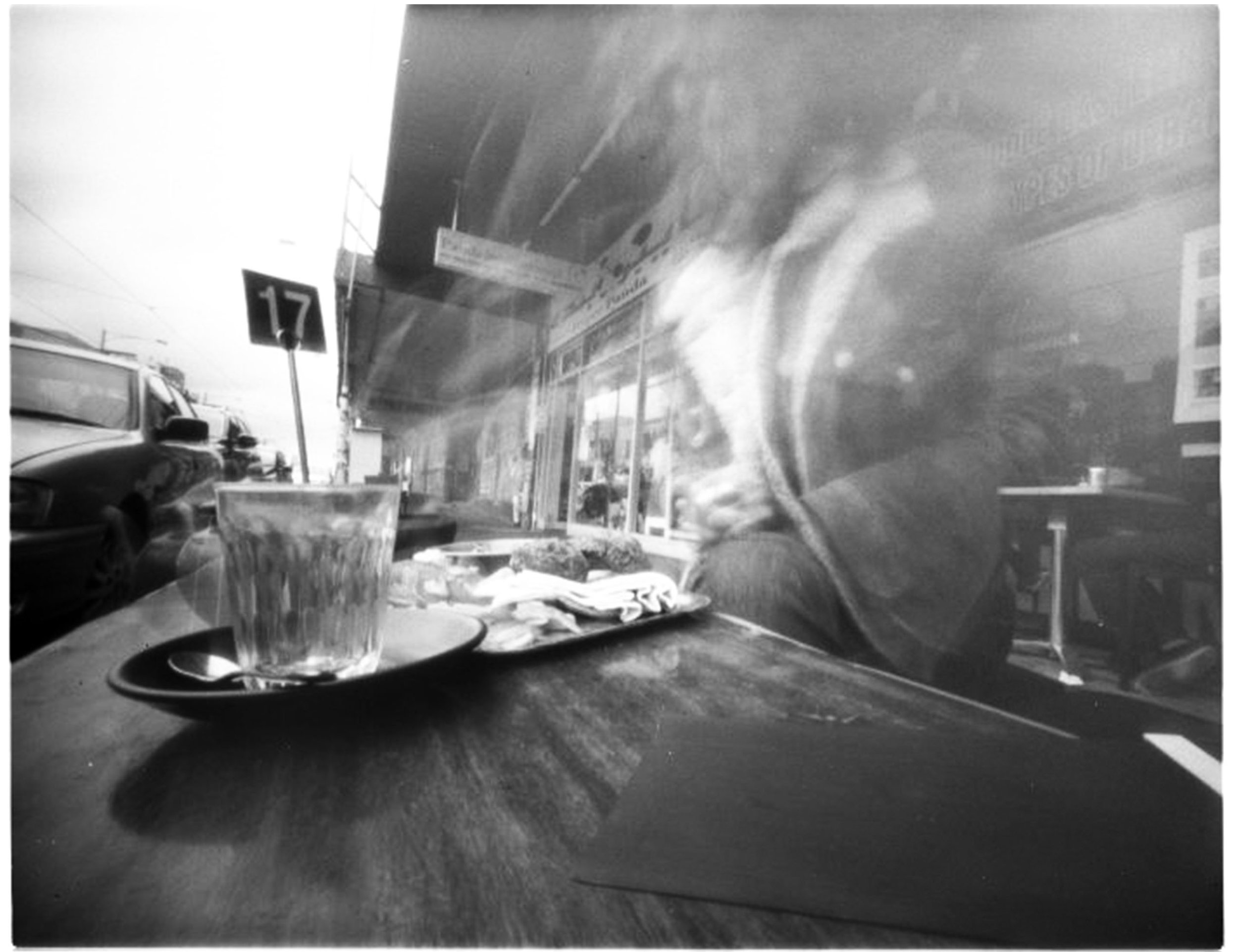
Figure 3. Zo Damage, Tea and falafel (self-portrait), 2022
Keywords
MFA, Studio 1, Photogram, Lumen, Pinhole, Cameraless photography, Film photography