
Camera installation
The first video is of an exhibition-style installation of cameras used and built to create projects for MFA Studio 1 , Assignment 2, the second shows experimenting with installation presentation of pinhole cameras constructed for the MFA Studio project.
Keywords
Studio 1, Camera installation, Lomography, Large format, 35mm, Pinhole, DIY pinhole
Bibliography
Damage, Zo. 2022. “Installation of cameras”. Zo Damage. June 17, 2022. YouTube video, 01:35. https://youtu.be/Coc8hPJ_ajM.
Preparing Gossard Space
Cleaning Gossard Space in preparation for installation of my mini project of displaying the cameras used, made and modified to create images for subsequent mini projects which include pinhole photography, 35mm photography, lomography, large format photography.
Keywords
Studio 1, Cleaning, Gossard, Assignment 2, Installation preparation
Bibliography
Damage, Zo. 2022. 2022. “Preparing Gossard”. Zo Damage. June 7, 2022. YouTube video, 01:35. https://youtu.be/cjecnOcVDH0.
Slideshow with soundscape
Raul Sanchez[1] and I collaborated in composing a soundscape (Damage and Sanchez 2022) comprised exclusively of recordings of my analogue photographic processes to accompany a display of images I have created for Studio 1. Sanchez made the recordings in situ, resampling and mixing the material in his studio. Contemplating Wabi Sabi' sound', I have edited the soundscape and embedded it into a slideshow of random images created for my Studio 1 projects. Titled Exposure (Damage and Sanchez 2022), the composition reflects the 'evolving' and 'devolving' Wabi Sabi aesthetic, transforming 'process' into music to further challenge the 'photographic index'[2] while exploring modes of representing and iterating 'musical emotion', perception and observational awareness of the photographer's presence and intention in the image (Berger 1972, 10).
Footnotes
Sanchez is a founding member of Melbourne rock band Magic Dirt, solo artist, sound artist and recording engineer.
“Photography is indexical insofar as the represented object is ‘imprinted’ by light and the chemical (or electronic) process on the image, creating a visual likeness that possesses a degree of accuracy and ‘truthfulness’ unattainable in purely iconic signs such as painting, drawing, or sculpture.” (Sadowski 2011)
According to Sanchez, the Kontakt is “a plugin sampler that can vary the pitch, and length etc, of the sounds to create a variety of Virtual Instruments”.
Keywords
Studio 1, Wabi Sabi, Sound, Soundscape, Slideshow, Raul Sanchez, Sound art
Bibliography
Berger, John. 1972. Ways of Seeing. Penguin Books
Damage, Zo. 2022. 2022. “Slideshow with soundscape 2”. Zo Damage. June 7, 2022. YouTube video, 02:57. https://youtu.be/3ek06V-vqWU.
Damage, Zo, and Raul Sanchez. 2022. Exposure. Online soundtrack. https://zed-oh.com/mfa-journal/exposure-soundtrack.
Sadowski, Piotr. 2011. “The Iconic Indexicality Of Photography”. John Benjamins Publishing Catalog. https://benjamins.com/catalog/ill.10.20sad.
Sanchez, Raul. 2022. Experimental music. Email.
S1 E1: Novice and expert Curiosity, openness and dialogue
Zo Gay
S9753760
Studio 1
Exercise
Novice and expert — Curiosity, openness and dialogue
Position / Dialogue
Novice, in dialogue with Melbourne painter, Angela Chauvin
Angela Chauvin is a Melbourne based painter who is currently studying a Master of Fine Art at RMIT, following her recent completion of a Bachelor of Fine Arts at RMIT and Honours year at VCA. “Angela’s work sits within the traditions of observational oil painting, documenting her experience of the physical world around her” (Stockrooms 2019).
Angela paints in situ (on location) directly onto a blank canvas or linen stretched over timber frames. She also paints on timber boards, stating that the firmness of the boards allows her to “push against” the surface applying “stronger gestures” as opposed to the springy-like surface of the stretched canvas and linen.
Figure 1. Angela shows the back of a painting on timber. Photo by Zo Gay
In 2019 Angela presented a solo exhibition titled “How is a Window” at Stockroom Gallery, Kyneton. Comprising paintings created in artists’ studios from 2016 to 2019, the series focuses on “how windows exist in these spaces symbolically and experientially … exploring the translation of perception of reality into visual and material artworks” (ibid 2019). Sourced from the Stockroom Gallery online room sheet, figures 2–6 are a selection of works from the exhibition, which display Angela’s observational style, creative vision and deep connection with her surroundings and subject matter.
Figure 2. Angela Chauvin, EmptyFull, 2016, oil on linen, 138x112cm
Figure 3. Angela Chauvin, Studio Things, 2017, oil on linen, 41x77cm
Figure 4. Angela Chauvin, The Way Out, 2018, oil on linen, 150x112cm
Figure 5. Angela Chauvin, Blue Print Room, 2019, oil on linen, 120x90cm
Figure 6. Angela Chauvin, Pink Pigeons on Brunswick, 2019, oil on linen, 80x60cm
During our meeting at her RMIT studio, Angela explained that she “draws with paint” and then “paints a little bit on the drawing”, describing the painting as the “placement of paint”, while the drawing – working with line, akin to “handwriting” – fosters spontaneity and immediacy in the making that further asserts her “voice” and personal connection to and with each piece.
Angela is now experimenting with “bringing in elements from her imagination and possibly from photographs”, although she is considering developing her concept first, then sourcing representational objects to paint in a new approach to expressing her imagination combined with her existing observational painting practice.
We also discussed one of her paintings, a work in progress of a charred landscape from recent bushfires (Figures 7–9).
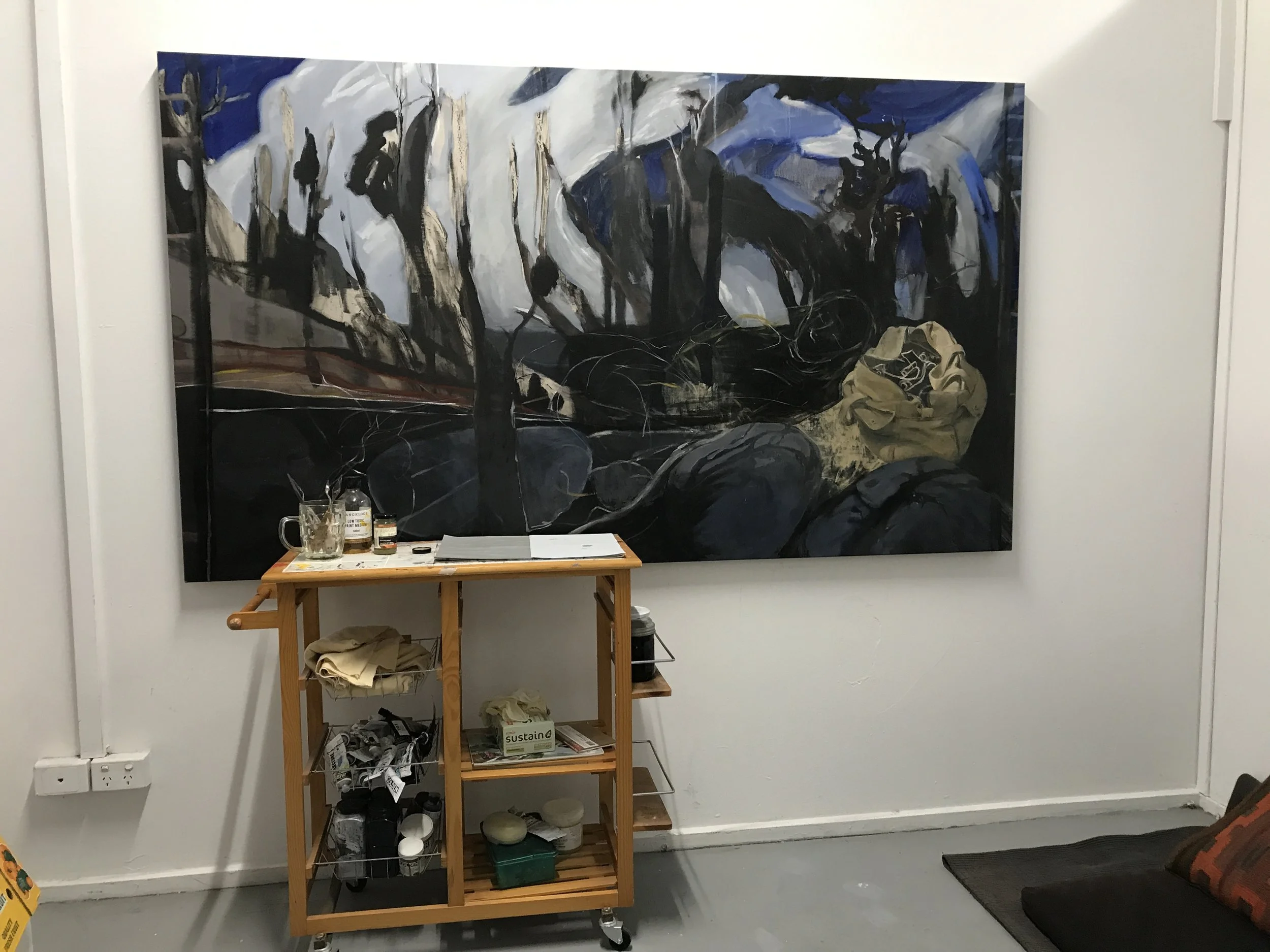
Figure 7. Angela Chauvin, Untitled work in progress, 2022, charcoal and oil on linen, 120x240cm. Photo by Zo Gay
On location, Angela first drew on the canvas using a “chunck of charcoal” taken from the burnt landscape. Returning to her studio, she began building the work with paint. Anglea states her intention is to include fragmented pieces of herself in the artwork and will need to source representational objects to paint to achieve this outcome.
To quote, “I want to bring in other elements, which will be me, in pieces. Then I’ll need to find objects that symbolise those pieces of me, and actually paint them in real life … I will be painting a collage of things from life, but they will not neccessarily be in front of me at the same time.”
When asked about the title, Angela replies, “It is untitled, although I think it will be something like ‘Me in pieces’”, stating that “It is a post-separation piece” and that her paintings “always relate to what is going on in my life as well as what is around me”.
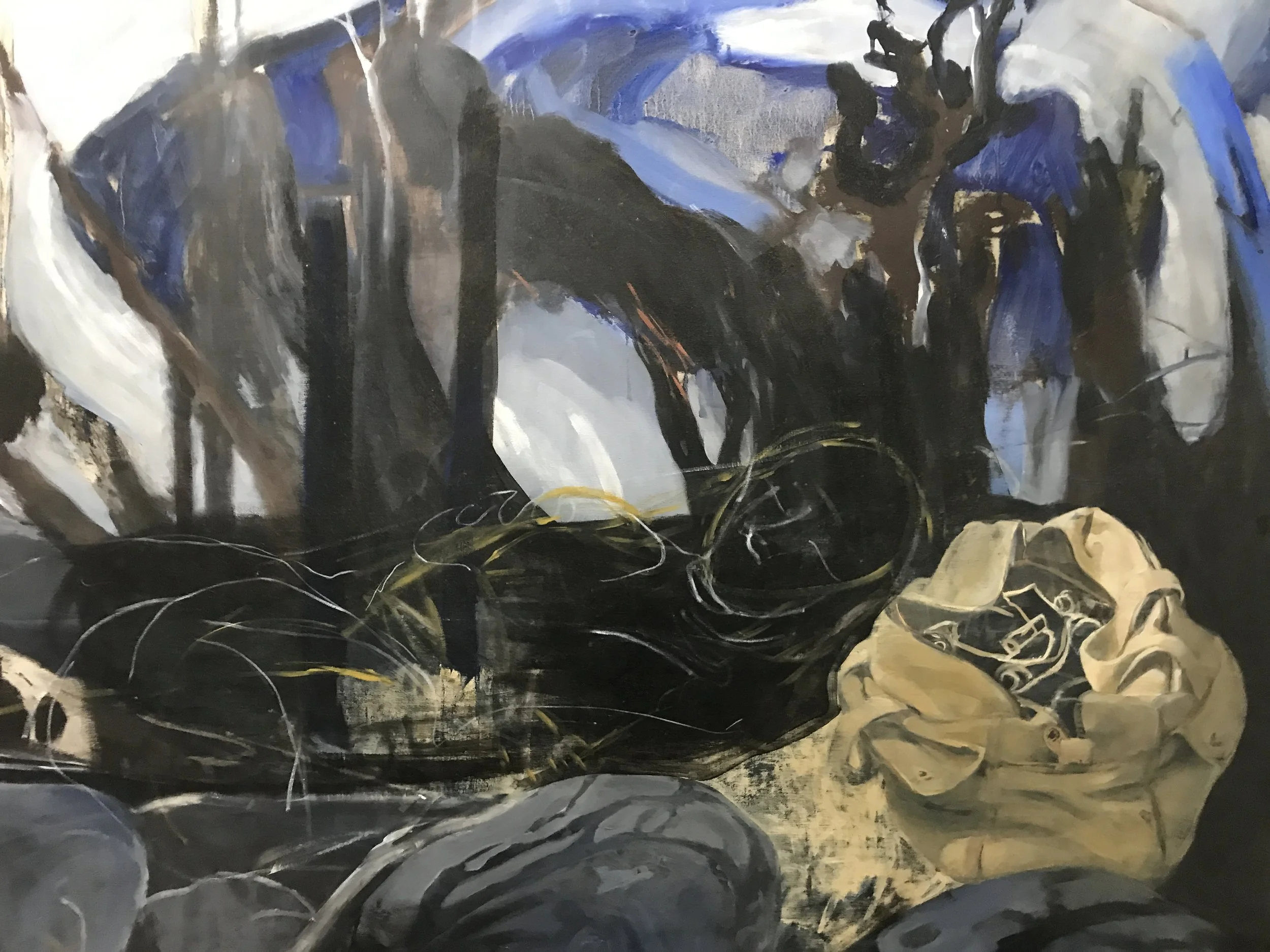
Figure 8. Angela Chauvin, Untitled work in progress (detail), 2022, charcoal and oil on linen, 120x240cm. Photo by Zo Gay
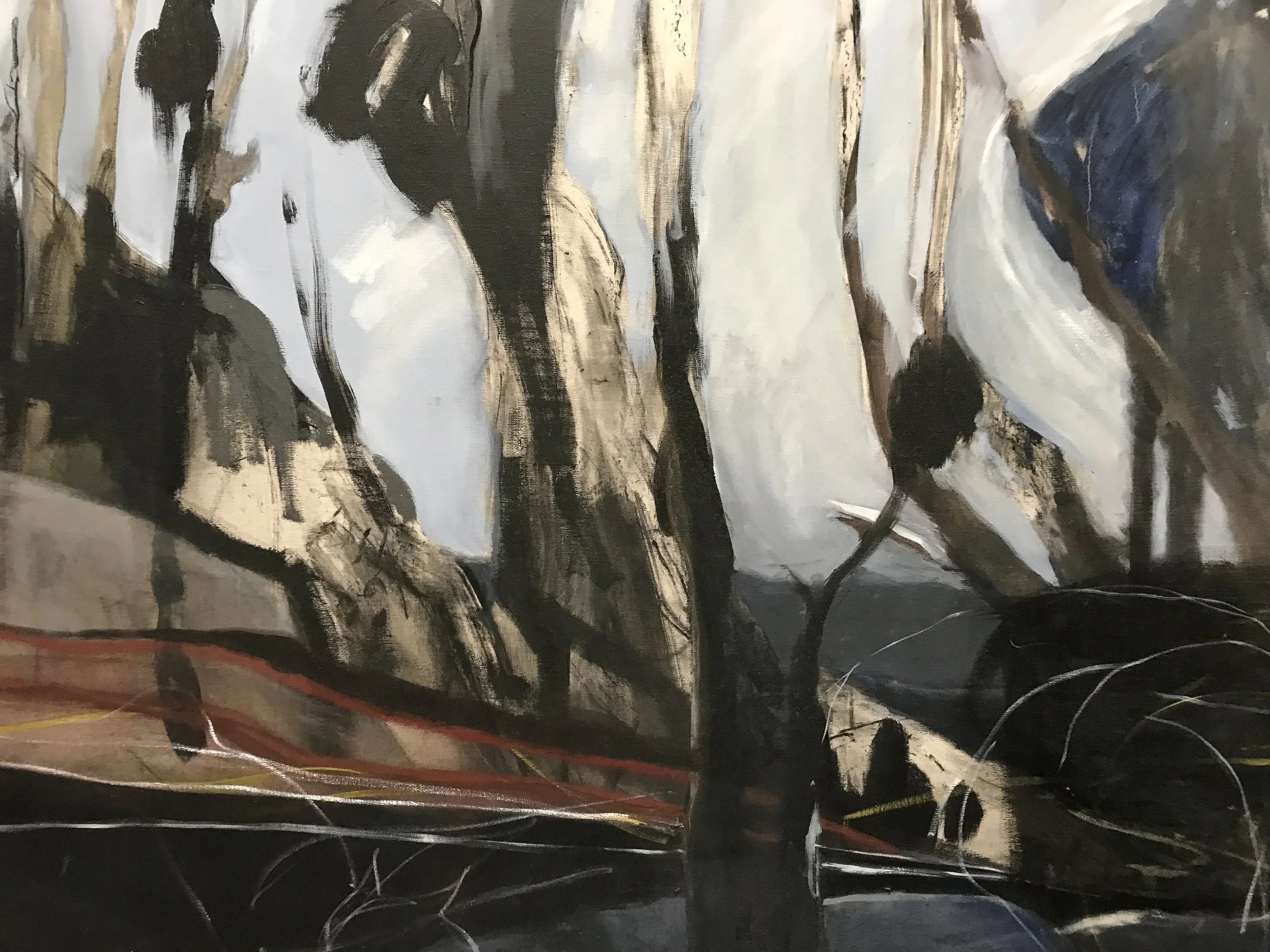
Figure 9. Angela Chauvin, Untitled work in progress (detail), 2022, charcoal and oil on linen, 120x240cm.Photo by Zo Gay
Angela reflects that she grew up in the country, spending much time in the forest, and acknowledges that “nature” and the “non-human’ world” are a “safe space” for her which has significantly influenced the “post-separation” piece. Considered part of her healing process, the painting has enabled her to connect with the bush during a difficult time when she is committed to being city-bound.
When asked if creating the piece has been a cathartic process and conduit for her emotional health and well being, Angela replies, “That’s all my art has ever been”.
Influenced by artists including Nick Cave and Warren Ellis, Angela describes her creative themes as Australian Gothic, a moody melancholy whereby she endeavours to connect with the unspoken and “in betweens” along with the unrepresented and misrepresented fissures of life, with a primary focus on social injustice and contributing to the discourse of post-colonialism through her work.
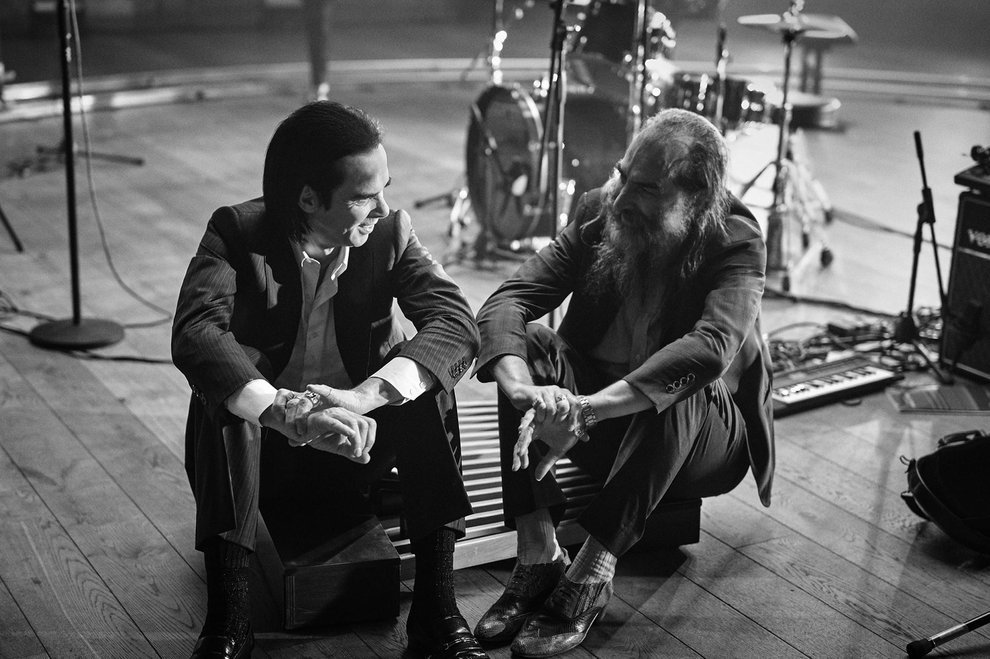
Figure 10. Nick Cave and Warren Ellis (The Scotsman 2021)
Keywords
Studio 1, Novice, Expert, Dialogue
Bibliography
Chauvin, Angela. 2016. EmptyFull. Online image. https://stockroomspace.com/angela-chauvin-exhibitions.
———. 2017. Studio Things. Online image. https://stockroomspace.com/angela-chauvin-exhibitions.
———. 2018. The Way Out. Online image. https://stockroomspace.com/angela-chauvin-exhibitions.
———. 2019. Blue Print Room. Online image. https://stockroomspace.com/angela-chauvin-exhibitions.
———. 2019. Green Tablescape. Online image. https://stockroomspace.com/angela-chauvin-exhibitions.
———. 2019. Pink Pigeons on Brunswick. Online image. https://stockroomspace.com/angela-chauvin-exhibitions.
Gay, Zo. 2022. Conversation with Angela Chauvin.
The Scotsman. 2021. Nick Cave And Warren Ellis. Online image. https://www.scotsman.com/whats-on/arts-and-entertainment/music-review-nick-cave-warren-ellis-playhouse-edinburgh-3391472.
Studio and paint
Advice for Studio 1 is to experiment and start small and create several small pieces as a preliminary exploration to work from in building the year’s major project moving forward, and most importantly, to have fun with the processes. I am learning how paint behaves, confronting and pushing my comfort zones. I found myself navigating expectations of what painting is and began questioning myself and my creative ability. For some reason, I have a preconception that one must be good at drawing to paint, which I am not. This led to disastrous results and frustration. Although I was not happy with my initial outcomes and felt I was fighting with or against the medium, it did result in some intriguing developments and a personal breakthrough. Michael, Sally, and Steven’s advice came to the forefront, “have fun, experiment, be playful with your practice”. Thus, I changed my approach and am now experimenting with how the medium “behaves” how I can work with it to incorporate it into my photographic and printmaking practice.
Figure 1. It took a lot of experimenting with different brands of acrylic to find the quality and pigmentation I was happy with.
Figure 2. Making a colour mixing book and preparing to hand colour a selection of photogravure test prints.
I am working with foam core as I have a lot of offcuts. Being light and sturdy, it enables me to make a collage of my experiments and tests with darkroom prints, photogravure, screen prints and paintings on my studio wall at uni. I am also working with Fabriano Roseapina, as it is what I use for photogravure printmaking. However, Roseapina is a course paper and will be problematic, as I intend to combine photogravure and screen printing in a series of works. Testing how a variety of substrates I use in my practice respond to paint is as important as how to use paint to make images, so I regard these trials relevant.
Figure 3. “Cracking the shits”, 2022. Acrylic on archival pigment print.
Shift in approach and design
Figure 4. Permaprint rolled onto 5mm foam core
Figure 5. Permaprint rolled onto Fabriano Roseapina printmaking paper
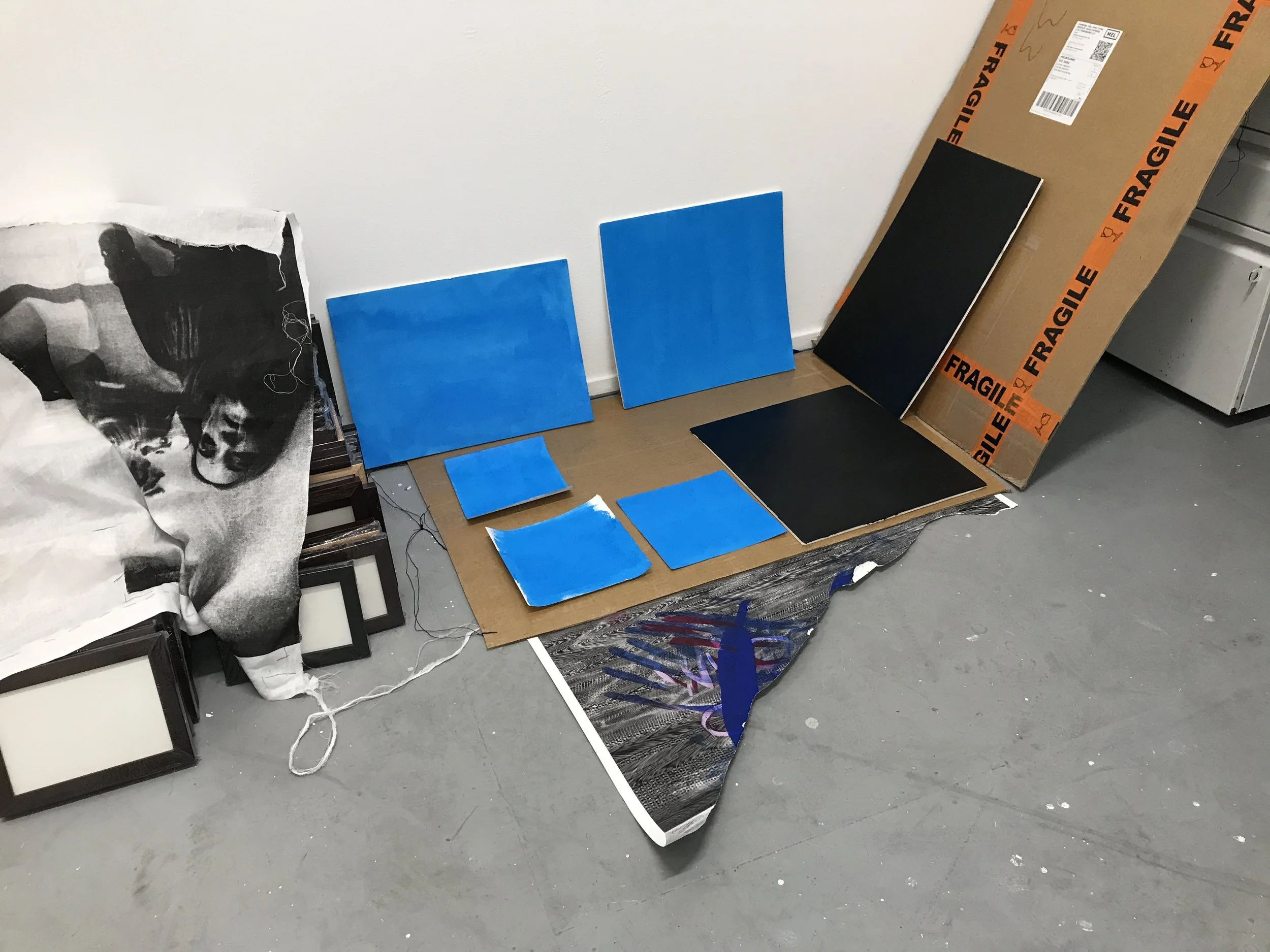
Figure 6. Drying substrates
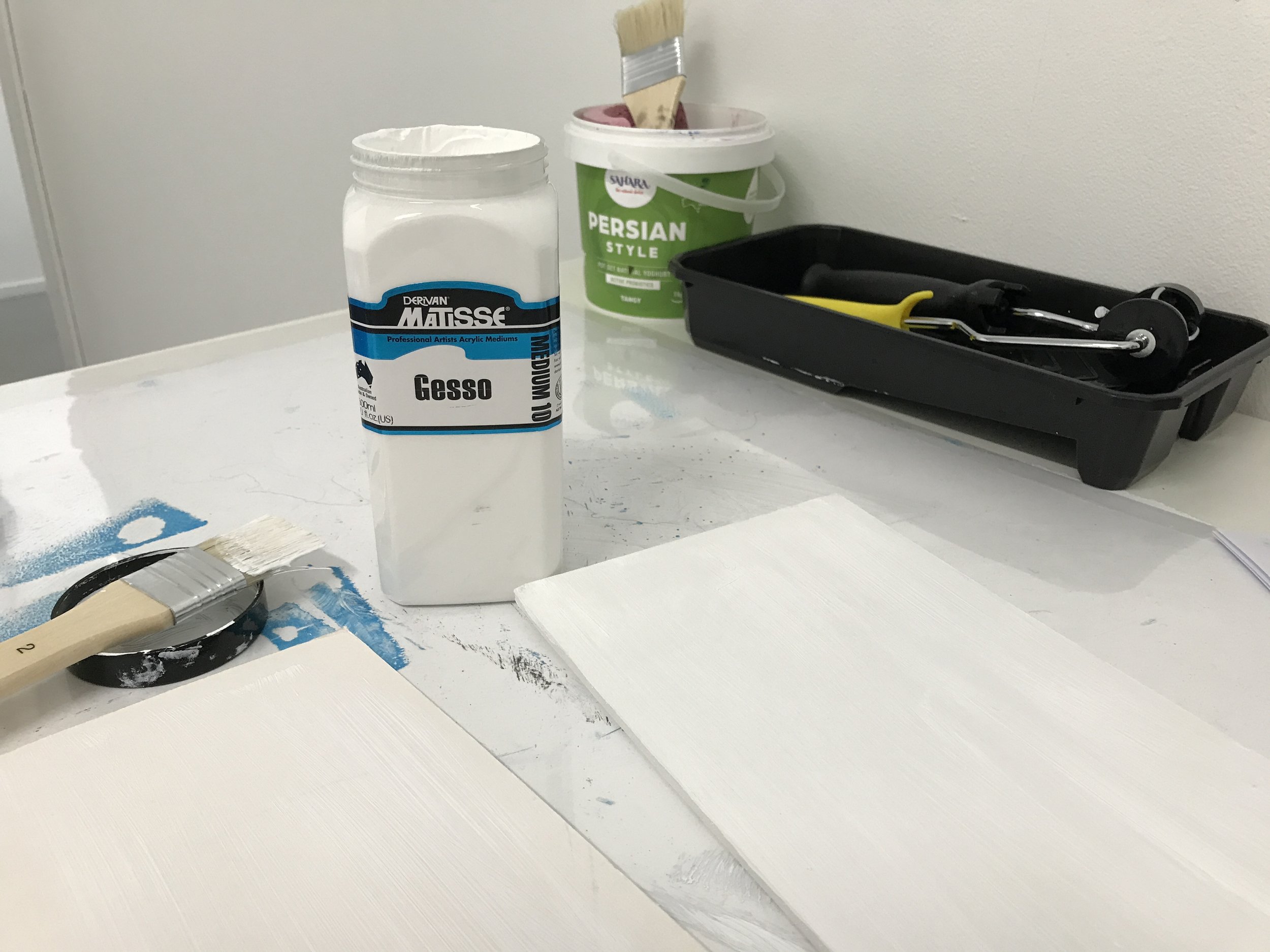
Figure 7. Applying gesso as a base coat prior to painting
Meaningful object
For our first Studio 1` class, we had to bring in a meaningful object, which, for me, is akin to asking how long is a piece of string. The level of meaningfulness of any given object fluctuates and changes. It's like asking me, "what is your favourite song?" to which my response is simply, "today?" Reflecting on the class requirement, I would say no one object is particularly significant or embodies my creative practice. However, I have chosen to bring my vintage Canon AE1 35mm film camera. This camera gave me the freedom to see and explore the nuances of light play and the photographic image, despite being unable to fully articulate how, through the lens of the AE1, I found a voice and means by which to express the rhythm, energy and emotion – and my mental and physical responses to my surroundings. The camera and its influence on my perception and my ability to articulate narratives through the image have changed my life and are, in part, a major contributing factor that inspired me to formalise my art practice with a university degree.
Keywords
MFA, Studio 1, Meaningful object, AE1
Physics of sound
What is the physics of sound?
How does sound move?
How does the body register ‘sound’?
How does the ear differentiate between ‘noise’ and ‘music’?
Further research
Barad, Robin Fox, Joel Stern
Keywords
Psychophysics, Physics, Sound, Materiality