
Painting
I have been experimenting with paint. In the process of a said experiment, I painted on one of my archival pigment prints, hated it, tore it up, then salvaged a section (it was a huge print) and stuck it to some cardboard I had lying around my uni studio. Stepping back I thought, “that's better”. Painting does not in any way shape or form come naturally to me, and I don't know how I feel about sharing this piece. But that is exactly the point.
Fragile, 2022
Acrylic on archival pigment print and cardboard
594x841mm (approx)
Keywords
Painting, Development of practice, Fragile, Studio 1, MFA
Studio and paint
Advice for Studio 1 is to experiment and start small and create several small pieces as a preliminary exploration to work from in building the year’s major project moving forward, and most importantly, to have fun with the processes. I am learning how paint behaves, confronting and pushing my comfort zones. I found myself navigating expectations of what painting is and began questioning myself and my creative ability. For some reason, I have a preconception that one must be good at drawing to paint, which I am not. This led to disastrous results and frustration. Although I was not happy with my initial outcomes and felt I was fighting with or against the medium, it did result in some intriguing developments and a personal breakthrough. Michael, Sally, and Steven’s advice came to the forefront, “have fun, experiment, be playful with your practice”. Thus, I changed my approach and am now experimenting with how the medium “behaves” how I can work with it to incorporate it into my photographic and printmaking practice.
Figure 1. It took a lot of experimenting with different brands of acrylic to find the quality and pigmentation I was happy with.
Figure 2. Making a colour mixing book and preparing to hand colour a selection of photogravure test prints.
I am working with foam core as I have a lot of offcuts. Being light and sturdy, it enables me to make a collage of my experiments and tests with darkroom prints, photogravure, screen prints and paintings on my studio wall at uni. I am also working with Fabriano Roseapina, as it is what I use for photogravure printmaking. However, Roseapina is a course paper and will be problematic, as I intend to combine photogravure and screen printing in a series of works. Testing how a variety of substrates I use in my practice respond to paint is as important as how to use paint to make images, so I regard these trials relevant.
Figure 3. “Cracking the shits”, 2022. Acrylic on archival pigment print.
Shift in approach and design
Figure 4. Permaprint rolled onto 5mm foam core
Figure 5. Permaprint rolled onto Fabriano Roseapina printmaking paper
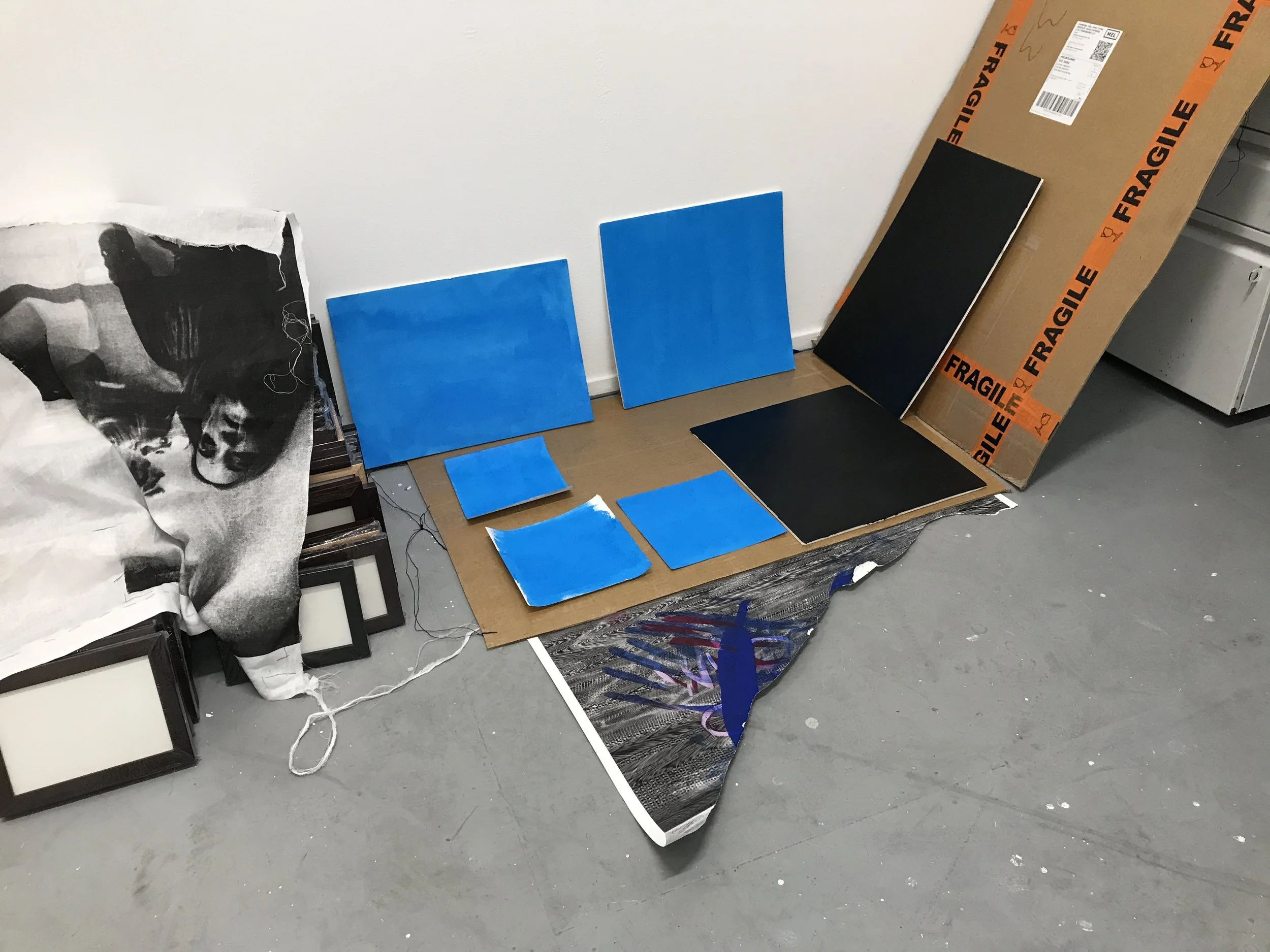
Figure 6. Drying substrates
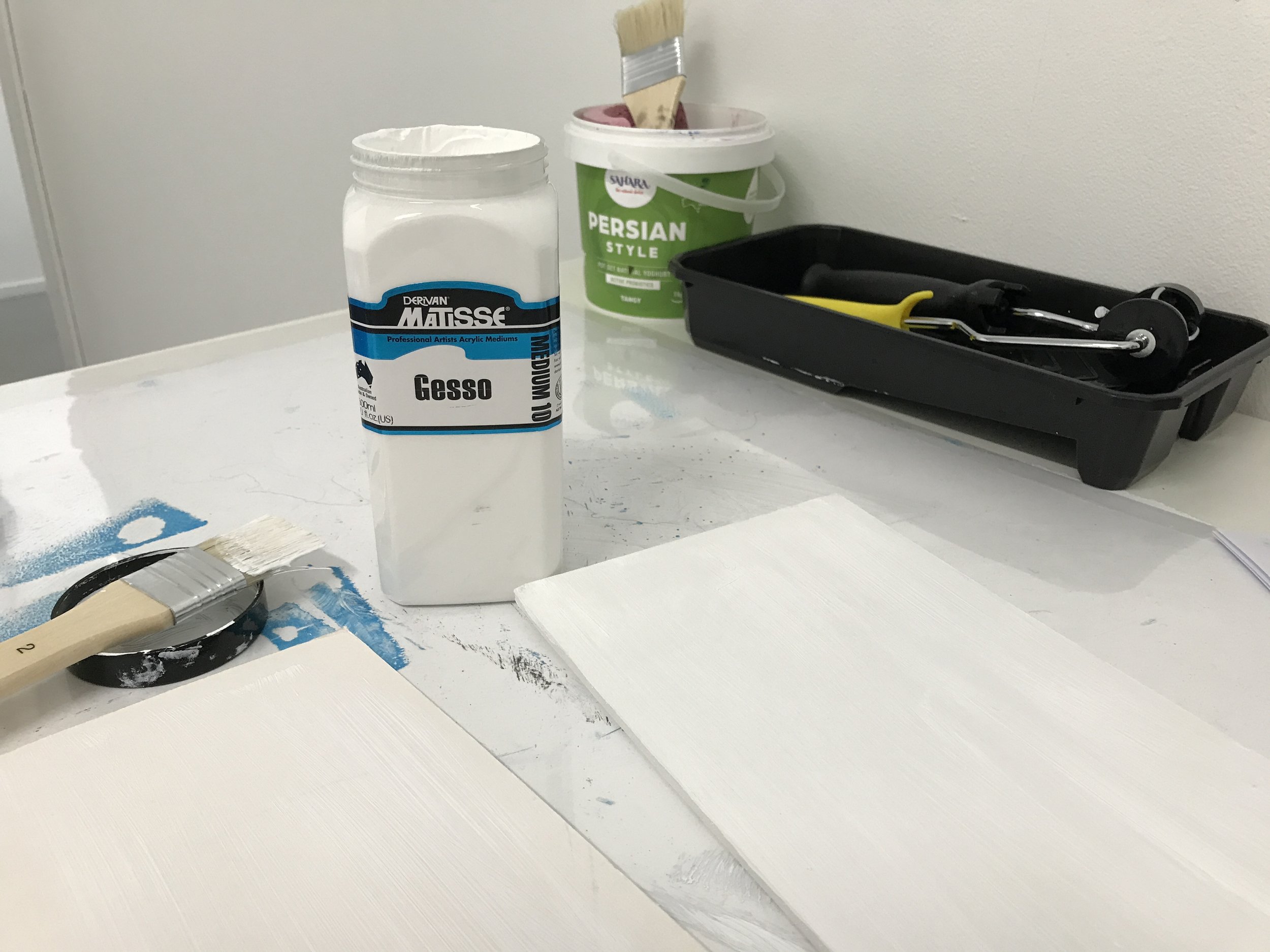
Figure 7. Applying gesso as a base coat prior to painting