
Infinity: Prototypes 1-2
<Reworking text> <Replace all>
This project draws on the aesthetic and practical principles of faktura as a foundational theoretical model, bridging the Russian Avant-Garde’s material practices with the phenomenological perspectives of Maurice Merleau-Ponty. While the concept of faktura originated with David Burliuk, its subsequent adaptations by various artists between the 1910s and 1930s maintained a consistent underlying premise regarding material integrity. By tracing this conceptual arc, my study goes beyond the two-dimensional plane to encompass sculpture, to propose that faktura logic facilitates a critical intersection between material manipulation, meaning making and the viewer’s embodied perception. The artwork is arranged to create a feedback loop, enabling viewers to observe it in a continuous sequence as they move through the exhibition space. The images were captured with a hand-cranked 35mm movie camera, each still measuring 24mm × 8mm (3:1), unlike the standard 35mm (3:2) format (Figures 1, 2 and 3). Although I created a test movie from the negatives, I prefer viewers to generate a sense of motion by walking through the space.
The project is intended to be evolutionary rather than infinite. I am currently researching potential keywords for the title; one option is 'Telos,' which suggests purposeful movement. Another possible title draws on the Hegelian notion of “geist” (or spirit) and the philosophical principles of the enlightenment of consciousness, or becoming as a continuous evolutionary process. From a phenomenological perspective, I am examining the distinction between the philosophical principles of “geist” and “telos.” In keeping with the project theme, my concept involves presenting a series of unique gelatin silver prints, each created from an individual frame of the negative, arranged chronologically and as captured (Figures 1, 2 and 3) in a single series of hinged panels that form a wave-like circular configuration spanning the room’s circumference.
Many of my initial design concepts were unsuccessful because the back of the installation was visible due to the MADA Gallery’s glass front, which spans the width and height of the room. The current installation models have been developed to address this glass frontage. While the circular arrangement of prototype 1 (Figure 5) aligns with my original concept, concealing the back of the work at the entrance proved challenging and disrupted the overall flow and themes.
Potential title: Perpetual Motion: Between Telos and Geist
Rational: Grounds the technical origins of the project in the Russian Avant-Garde principles of faktura, with the mechanical "perpetual motion" of the hand-crank camera, materiality of the hand-crafted prints, analogue prints and fluidity of the installations’ arrangement and spatial method between two heavy-hitting philosophical pillars. The title further acknowledges that the work exists in the tension between the predetermined end (Telos) of the film strip and the fluid becoming (Geist) of the viewer’s experience.
Although I have used the Lomokino for many years, this is the first time I have created a movie from the negatives. While I am exploring possibilities for incorporating projection into the project, the movie currently remains a personal experiment. My primary objective is to present the project as a series of static silver gelatin prints, allowing the sense of motion from the original movie to emerge as viewers move through the installation.

Figure 1. Lomokino negative 1/3 (Zo Damage 2026)

Figure 2. Lomokino negative 2/3 (Zo Damage 2026)

Figure 3. Lomokino negative 3/3 (Zo Damage 2026)
Figure 4. Assembling Infinity Project (WT) prototype panels, scaled at 1:200
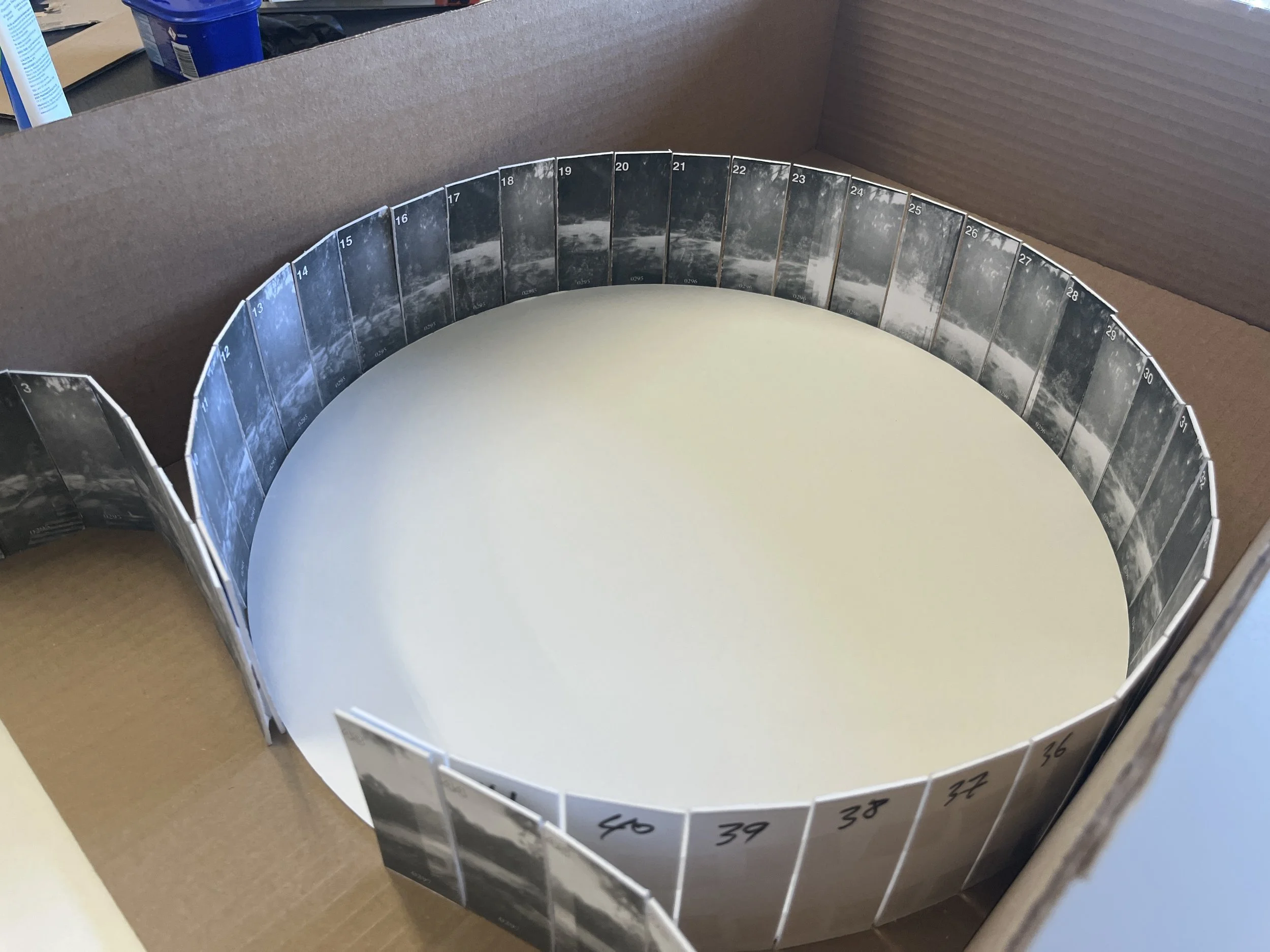
Figure 5. Infinity prototype 1. Design allows for glass front frontage of MADA Gallery