
Uta Barth
First published 15 August 2020
Uta Barth
Germany
1958–
Practice: Photography
Movement/Style: Contemporary
Uta Barth is best known for her alternative use of light, colour and focus, producing abstraction and distortion, resulting in an elusive and ethereal discourse of her images and subject matter. Barth considers her work never directly addresses the literal subject matter of the photograph but attempts to ask questions about vision itself, photographing sound, non-space and in-betweens. In her presentation for The Modern Art Museum of Fort Worth (2011), Uta Barth discusses her work over the past 20 years. Barth shares her influences and inspirations as she questions the interpretation of visual perception. Describing her work as visceral, Barth continues, explaining the application of psychological theories, including phenomenology, to her practice.
“The discussion of these photographs, or anything that lacks focus for that matter, as being ‘painterly’ or ‘pictorialist’, drives me crazy. It assumes that a photograph would secretly–or overtly–aspire to the attributes of painting in order to justify itself as an artwork” (Higgins 2013).
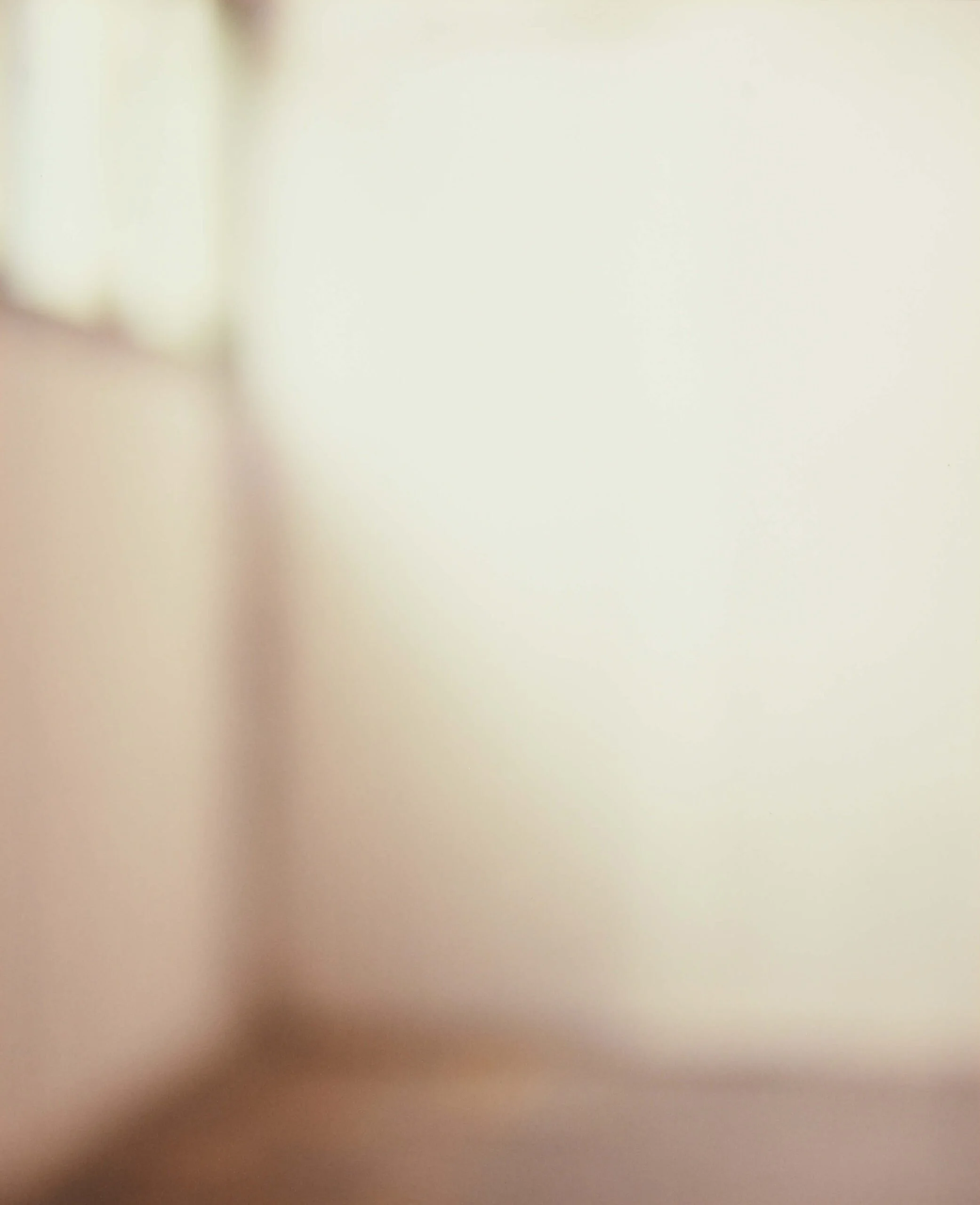
Uta Barth, Ground #56, 1995
Bibliography
Barth, Uta. 1994. Ground #30. Image. https://utabarth.net/work/ground/#image-3.
Barth, Uta. 2011. "Uta Barth 2.8.11". Podcast. Modern Art Museum Of Fort Worth. https://soundcloud.com/themodernpodcast/uta-barth-2811.
Barth, Uta. 2012. "Conceptual Photographer Uta Barth: 2012 MacArthur Fellow | MacArthur Foundation". macfound. October 2, 2012. YouTube video, 03:10. https://youtu.be/xxYcpPDq5iQ.
Sigmar Polke
First published 14 April 2020
Similarly, lens-based German artist Sigmar Polke (Figure 9) applies radical techniques, such as creating in-camera multi-exposures and omitting, bypassing and reversing steps in the darkroom to subvert traditional ideals of the medium.[1] The artist documents his life and surroundings, “altering the aesthetic heredity of his mediums by debasing the integrity of each, cultivating crossovers of material and meaning” (Halbreich 2016, 69). Like myself, Polke is as self-taught photographer, considers “the darkroom as an arena for exploration” and displays a recklessness for “the conventions of photography [which] often resulted in scratched negatives, under- and overexposures, and prints that further obscured details to create visually disorienting compositions” (The J. Paul Getty Museum 2007).
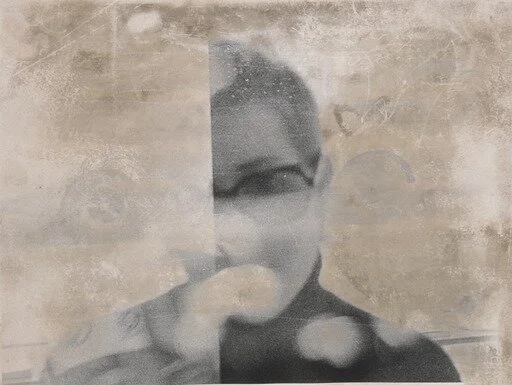
Sigmar Polke, Untitled (Mariette Althaus), c. 1973, unique gelatin silver print, 180x240mm
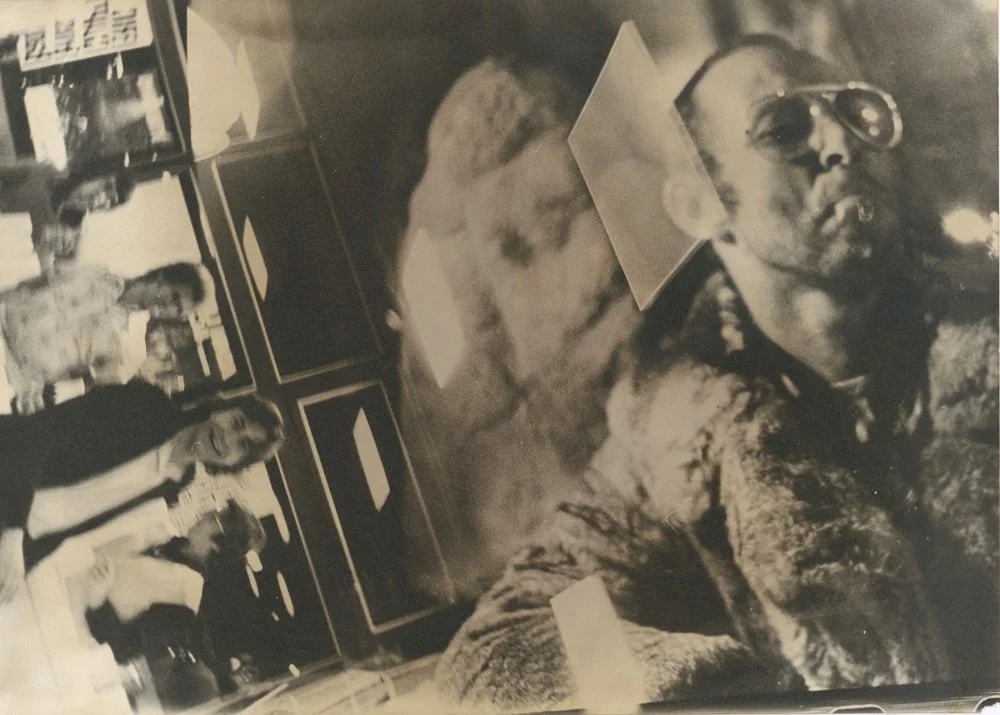
Sigmar Polke, Untitled (Sigmar Polke), c. 1975, photograph on AGFA C90 paper, 210x296mm
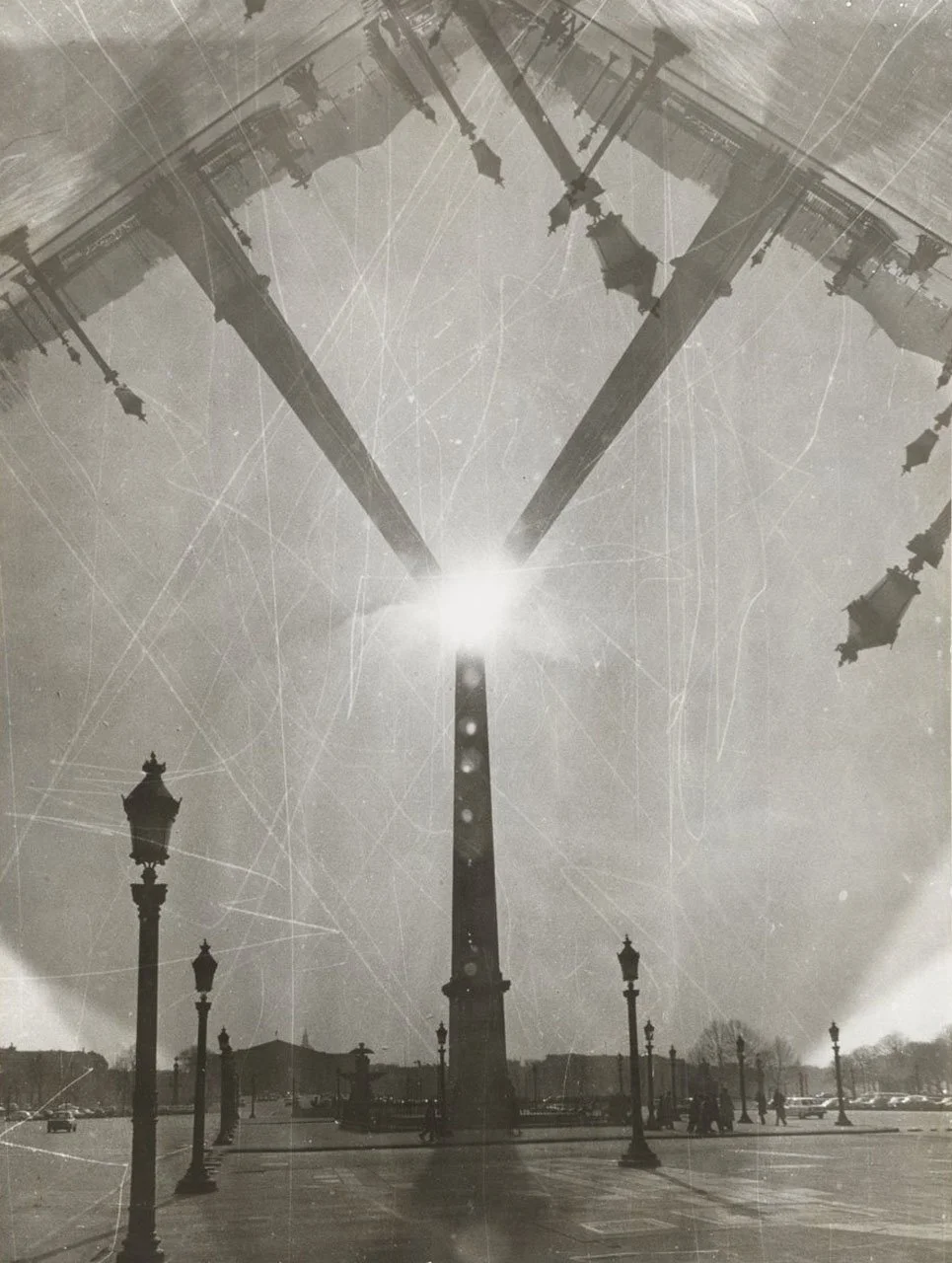
Sigmar Polke, Untitled (Obelisk, Paris), c. 1970. Courtesy Kicken Berlin, Berlin & Sies + Höke, Düsseldorf
Footnotes
An in-camera multi-exposure is when the film is rewound in the camera and repeatedly exposed, resulting in montage-like images embedded directly into the negative.
Keywords
Sigmar Polke, Painting, Photography, Capitalist realism, Abstract, Art, Community of practice, Expressionism, Contemporary, Alternative, Film, Darkroom, Courage, Pushing boundaries
References
Polke, Sigmar. c. 1975. Untitled (Obelisk, Paris). Image. https://news.artnet.com/market/sigmar-polke-at-paris-photo-11451237.
Polke, Sigmar. c. 1973, Untitled (Mariette Althaus). Image. https://www.moma.org/collection/works/149078.
Polke, Sigmar. c. 1975. Untitled (Sigmar Polke). Image. https://www.maxhetzler.com/zh/exhibitions/sigmar-polke-zeitreise-photographs-1966-1986collection-georg-polke-2020/works/#img27.
Rowell, Margit, Michael Semff, and Bice Curiger. 1999. Sigmar Polke WORKS on PAPER 1963-1974. New York: Museum Of Modern Art. PDF. https://www.moma.org/documents/moma_catalogue_187_300100396.pdf.
Squires, Carol and George Baker 2013. What Is a Photograph?. New York: International Center for Photography and DelMonico Books.
Thistlewood, David. 1996. Sigmar Polke: Back to Postmodernity. Liverpool: Liverpool University Press And Tate Gallery Liverpool.
Williams, Gregory. 2016. "Gregory H. Williams. Review of 'Alibis: Sigmar Polke, 1963–2010' by Kathy Halbreich". caa.reviews. http://www.caareviews.org/reviews/2337#.Yq2CS-xBzUI.
Halbreich, Kathy, Mark Godfrey, Lanka Tattersall, and Magnus Schaefer. 2014. Alibis: Sigmar Polke 1963–2010. London: Tate Publishing.
Francis Bacon
In the early years of his career, Francis Bacon[1] was best known as an interior designer. However, attending an exhibition in Paris in the early 1930s, Bacon was inspired to become a painter after viewing the work of Pablo Picasso.
In 1933 Herbert Reed featured Bacon’s “Crucifixion 1933” in the highly regarded and influential publication “Art Now”. However, his first solo exhibition was not a success.
Despite the acknowledgement of Reed, Bacon’s submission to the “International Surrealist Exhibition” in 1936 was rejected for being insufficiently surreal. In the years to follow, disheartened, Bacon destroyed nearly all of his paintings. (Photographer Brian Duffy also destroyed most of his negatives in the 1960s out of frustration).
Bacon aims to make concentrations of images – to deconstruct and reconstruct reality in his own vision, stating that his aim is not “to create an illustration of reality, but to create images that are a concentration of reality and a shorthand of sensation”.
Figure 1. Untitled self-portrait by Zo Damage, 2021. Photogram (unique print) on gelatin silver paper (600x1200mm). Click to open in light box view.
Relevance to practice
Bacon asserts that he aims to make concentrations of images – to deconstruct and reconstruct reality in his own vision, stating that his aim is not “to create an illustration of reality, but to create images that are a concentration of reality and a shorthand of sensation”. This resonates strongly in my own work, particularly with the photograms and in-camera multi-exposures.
Despite my not liking the colour of the fibre-based paper, my photograms are particularly relevant as they are unique prints – artifacts, which relates directly to Bacon as the artist asserts “Art is artefact”. Streaks and textures have been created purposefully and with performative gestures during the development process, representing agency, impermanence, movement and emotion in my photograms (Figure 1) may be compared with many of Bacon’s paintings (Figure 2).
Figure 2. Study from the human body by Francis Bacon, 1953
I strongly identify with Bacon’s passion for chaos in his painting. I began exploring chaos through film photography using in-camera multi-exposure in 2018, further developing my practice at university (Figure 3).
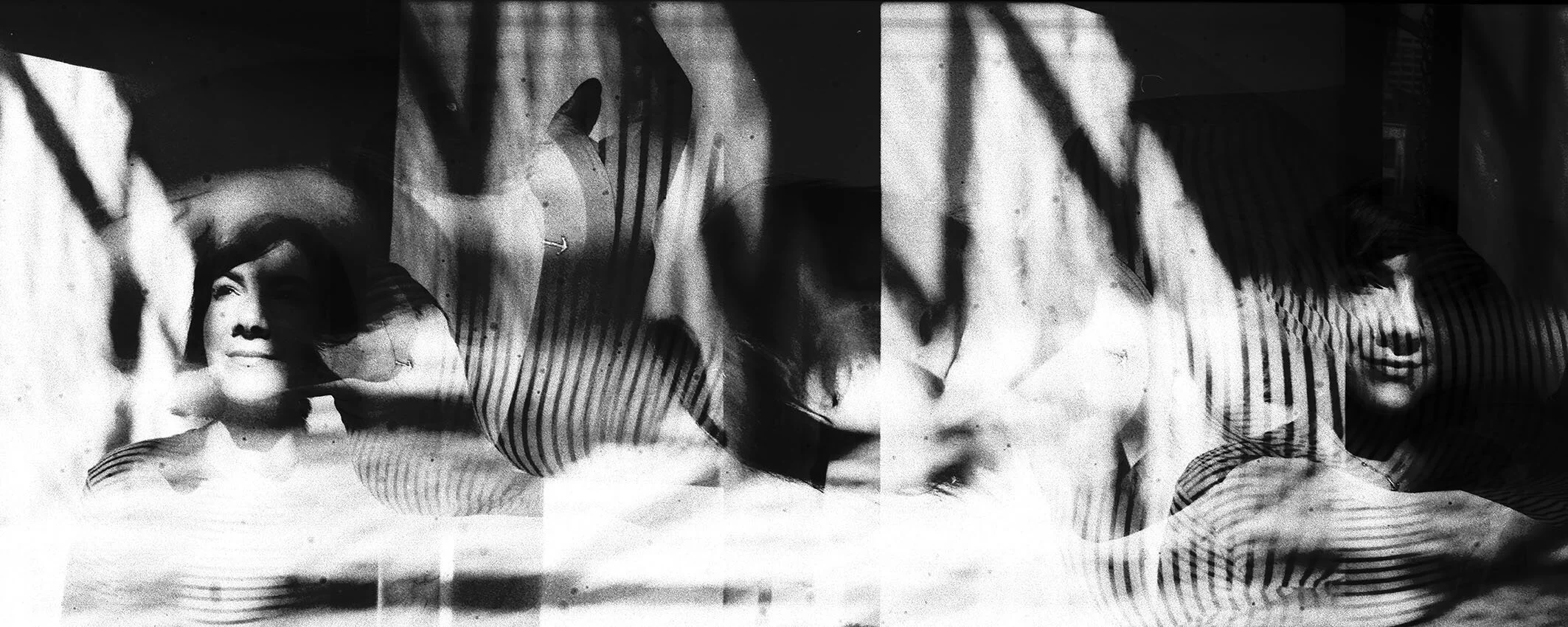
Figure 3. Hanamax. In-camera multi-exposure on 35mm film by Zo Damage, 2021
Quotes
“Chaos for me breathes images.” — Francis Bacon.
“I believe in deeply ordered chaos.” — Francis Bacon. (I love this guy!)
Keywords
Community of practice, Francis Bacon, Agency, Epherial, Surrealism, Photogram, Painting
Footnotes
Francis Bacon. David Hinton. et. al. 2013.
Bibliography
Hinton, David. et.al. Francis Bacon. Australia: ABC1 [broadcaster], 2013. https://rmit.primo.exlibrisgroup.com/permalink/61RMIT_INST/tcai14/alma9921628248001341.
Bacon, Francis. 1953. Study From The Human Body. Image. Accessed June 3, 2021. https://www.ngv.vic.gov.au/explore/collection/work/3761/.
Damage, Zo. 2021. Hanamax. Image.
Damage, Zo. 2021. Untitled self-portrait. Image.
Man Ray
Man Ray was a significant contributor to the Dada and Surrealist movements, although his ties to each were informal. Man Ray worked in a wide range of mediums and considered himself a painter. Best known for his photography, Man Ray was a renowned fashion and portrait photographer. Man Ray is also known for his work with photograms, which he called "rayographs", a reference to himself.
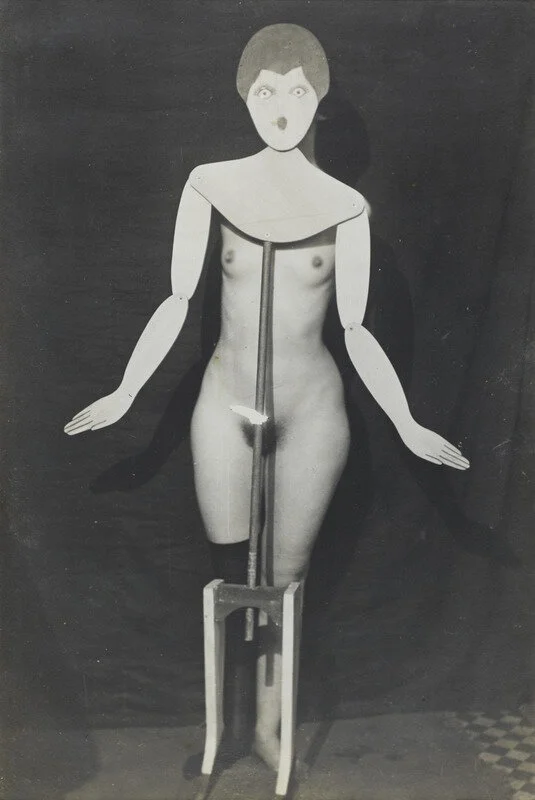
Man Ray, The Coat-Stand (Porte manteau), 1920
Keywords
Experimental, Sculpture, Photography, Modernism, Community of practice
References
Dupêcher, N 2017, ‘Man Ray (Emmanuel Radnitzky)’ , MoMA, viewed 31 March 2020, <https://www.moma.org/artists/3716>
Ray M 1920, The Coat-Stand (Porte manteau), photograph, viewed 31 March 2020, <https://www.centrepompidou.fr/cpv/resource/czzAepB/rXKKqz>
France Scully Osterman
France Scully Osterman
USA
Practice: Photographer
Movement/Style: Vintage processes, Portraits
I discovered the work of France Scully Osterman watching ‘A&A Portrait 2011’ series on YouTube and was taken by the photographer’s excitement toward her work practices, eye for beauty and composition and enthusiasm. In the video, Osterman takes the viewer through the collodion process, from preparing plates through to hanging finished works. It was interesting seeing the process and approach to the work from the photographer’s perspective and I was greatly inspired in the way Osterman presented the finished pieces. So much so that I have experimented with splitting/creating polyptych displays of my own images for my Invent, define, destruct series. Although Osterman’s style is very different from my own, there are cross overs in practice in her vision, enthusiasm, application of vintage technology and methodology. Osterman’s eyes smile when she talks about photography and her work. There is a lot to be said about that in itself.
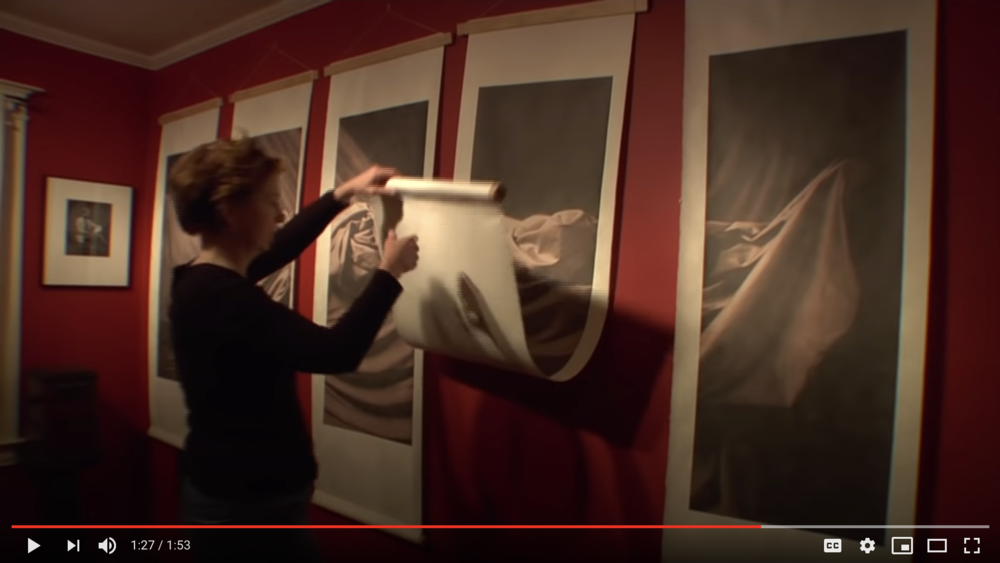
A&A Portraits (2011) France Scully Osterman (screenshot)
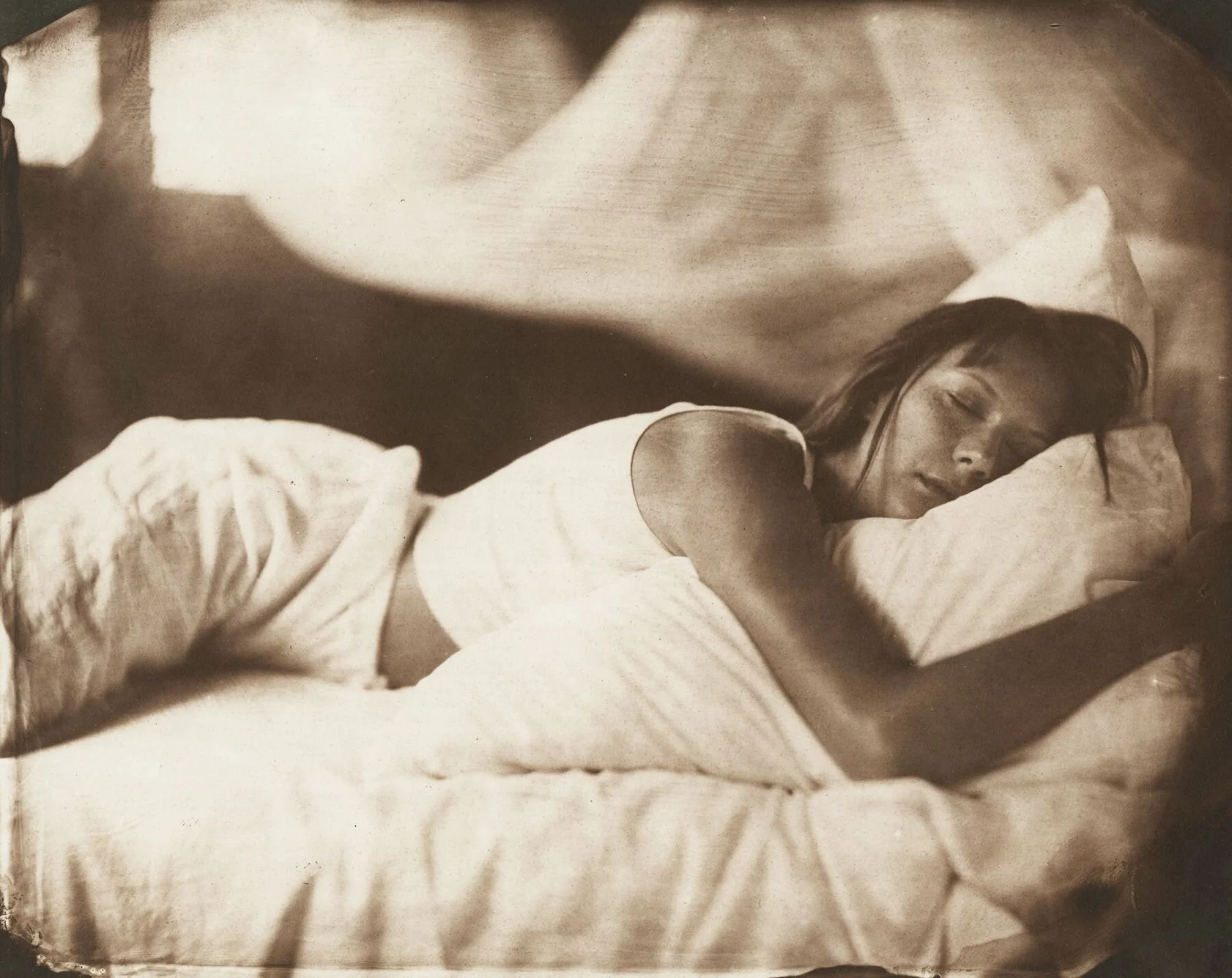
France Scully Osterman, Daydream , 2001
Relevance to practice
Alternative printing, Large format, Analogue, Composition, Design
Keywords
France Scully Osterman, Wet plate, Collodion, Large format photography, Community of practice
References
123marketstreet 2011, A&A Portrait – France Scully Osterman, online video, YouTube, viewed 3 May 2020, <https://www.youtube.com/watch?v=qfcfVVsz4xc&feature=youtu.be>
Scully Osterman, F 2001, Daydream, photograph, viewed 13 May 2020, <http://www.howardgreenberg.com/artists/france-scully-osterman>
Minor White
Minor White
1908–1976
USA
Practice: Photography
Movement/Style: Contemporary art, Photography
Although many consider White to be an abstract photographer, the environmentalist and Buddhist was primarily a landscape photographer. White blurred the lines of reality while combining his emotional and spiritual connections with nature and environment with his unique vision and approach in his work. Thought-provoking with vast scope for interpretation, I am attracted to the beauty, serenity and textures of White’s exposures and the courage and conviction of the artist as he pushes against boundaries in his expression and image-making. Relationship to practice is in White’s persistence to push boundaries and think outside the box in the narrative of his work. Bold and hauntingly beautiful with seemingly endless possibilities for interpretation, White is fearless and unapologetic in the images he makes.
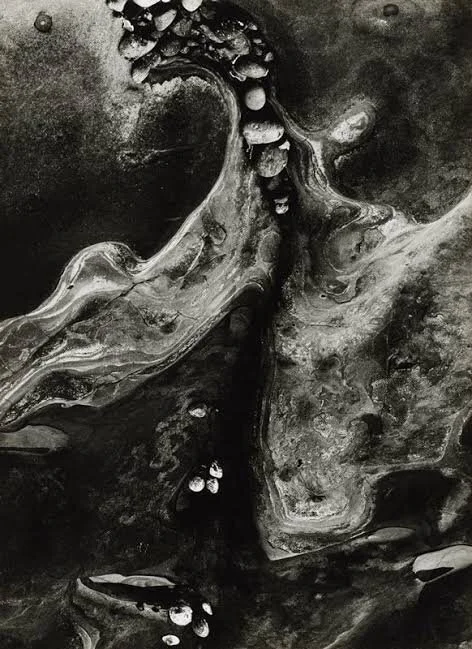
Minor White, Nature Abstract, 1963
Quotes
If all your life means to you is water running over rocks, then photograph it, but I want to create something that would not have existed without me. — Minor White (Graf, M 2016)
Relevance to practice
Large format, Abstraction, Black and white, Contemporary, Texture, Tone, Composition
Keywords
Minor White, Contemporary art, Photography, Texture, Tone, Abstraction, Alternative view, Composition, Film, Analogue, Black and white, Community of practice
References
Artnet n.d., Minor White, viewed 11 May 2020, <http://www.artnet.com/artists/minor-white/>
Graf, M 2016, ‘Art from the Moment’, Notes from the Woods, blog post, 20 March, viewed 2 June 2020, <https://www.grafphoto.com/2016/03/20/art-from-the-moment/>
White, M 1963, Nature Abstract, photograph, viewed 2 June 2020, <https://collections.artsmia.org/art/115964/nature-abstract-minor-white>
Floris Neusüss
Adventurous and innovative, Contemporary artist Floris Nuesüss has a great impact on my work practice, particularly in exploring shape, texture and methodology. Best known for his photograms, I am drawn to Neusüss’ willingness to think outside the box, push boundaries and explore the craft of photography.
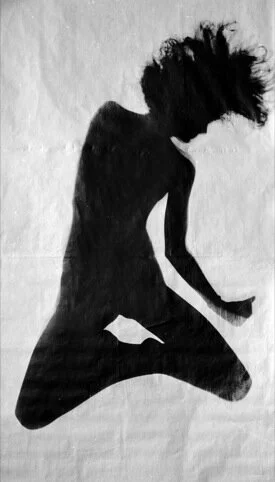
Floris Neusüss, Nudogrammm, 1964
Floris Neusüss is a contemporary experimental German photographer known for his use of camera-less photography (photograms) … “Photograms don’t show us what’s beyond the visible, but they give us a hint of it,” Neusüss has said. “It is true that the subject resting on the photo-sensitive paper presents its reverse side to be recorded, the side that is in shadow, the shadow cast by the object itself. This intimate physical connection inscribes into the paper, and this, if you are open to it, is the real fascination of photograms: the tension between the hidden and the revealed.” … Today, his works are held in the collections of the Victoria and Albert Museum in London, the San Francisco Museum of Modern Art, and the Art Institute of Chicago, among others. (artnet, nd)
Quotes
A true pioneer of photographic art, inspired by the camera-less photography of Làszló Moholy-Nagy and by Man Ray’s Surrealist photograms, Floris Neusüss has dedicated his whole career to the practice, study and teaching of the photogram, exploring its technical and visual possibilities and pushing the boundaries of the medium. — Twenty 6 Magazine
Relevance to practice
Alternative printing, Darkroom, Film, Contact printing, Obscure, Abstraction, Tone, Texture, Questioning, Experimentation
Keywords
Photograph, Monochrome, Photography, Camera-less, Abstract, Contemporary, 20th century, Community of practice
References
Artnet n.d., Floris Neusüss, viewed 15 April 2020, <http://www.artnet.com/artists/floris-neus%C3%BCss/>
Atlas Gallery n.d., Floris Neusüss, viewed 8 May 2020, <http://www.atlasgallery.com/artists/floris-neususs>
Gosling, Emily. 2012. “Floris Neusüss: Ancient and Modern.” Design Week. https://www.designweek.co.uk/issues/may-2012/floris-neususs-ancient-and-modern/.
Neusüss, Floris. 1964. Nudogramm. Image. https://www.designweek.co.uk/issues/may-2012/floris-neususs-ancient-and-modern/.
Squires, C, Batchen, G, Baker, G & Steyerl H 2013, What Is a Photograph?, International Center for Photography and DelMonico Books, New York, NY
Adam Fuss
Adam Fuss creates a visual language of beauty and strength, exploring and redefining notions of what constitutes a photograph or an image. Fuss is less interested in the meaning of the picture than the making of it (Kellein 2013), depending on the rudimentary infrastructure of pinhole cameras, photograms and other commonly considered ‘redundant’ processes to create spectacular conceptual deconstructions of the transforming medium (Lundström 2005) (Jolly et al. 2015, 6).
I am officially in love … and not sure how to approach writing about Fuss or the relationship to practice.
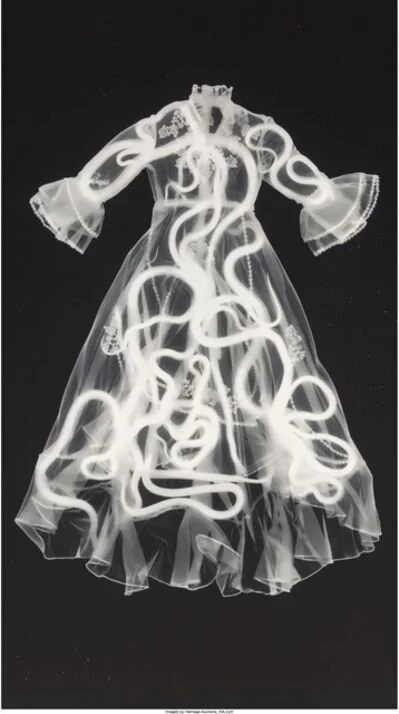
Adam Fuss, Medusa, 2010
Quotes
I’m not interested in the meaning of the picture, I’m interested in the making of it. — Adam Fuss (2013)
Keywords
“Adam Fuss.” n.d. Fraenkel Gallery. Accessed September 11, 2022. https://fraenkelgallery.com/artists/adam-fuss.
Adam Fuss, Camera-less photography, Photogram, Water, Chemigram, Contemporary, Energy, Movement Rebel, Focused, Narratives, Alternative printing, Abstraction, Obscure, Texture, Contrast, Emotive, Community of practice
References
123marketstreet 2011, A&A Portrait – Adam Fuss, online video, YouTube, viewed 3 May 2020, <https://www.youtube.com/watch?v=QxpeNIN0iRA>
Cheim & Read 2013, Adam Fuss Documentary, online video, YouTube, viewed 3 May 2020, <https://youtu.be/LHvByy7950Q>
Douglas Udell Gallery 2013, Adam Fuss in Conversation with Thomas Kellein, online video, YouTube, viewed 3 May 2020, <https://youtu.be/HrgvCngcf40>
Fuss, A 2010, Medusa, photograph, viewed 3 May 2020, <https://www.artsy.net/artwork/adam-fuss-medusa-from-the-series-home-and-the-world>
Fuss, Adam. 2013. "Adam Fuss in Conversation with Thomas Kellein." February 10, 2013, 26:07. YouTube video. DouglasUdelGalery. https://youtu.be/HrgvCngcf40.
Jolly, Martin, Cherine Fahd, and Suzanne Buljan. 2015. The Alchemists: Rediscovering Photography In The Age Of The Jpeg. Sydney: The University of Sydney. PDF. https://martynjolly.files.wordpress.com/2015/10/
thealchemistscatalogue.pdf.Lundström, Jan-Erik. "Fuss, Adam." In The Oxford Companion to the Photograph. : Oxford University Press, 2005. https://www-oxfordreference-com.ezproxy.lib.rmit.edu.au/view/10.1093/acref/9780198662716.001.0001/acref-9780198662716-e-601.
Rafferty, E 2013, Art Movements Through Photography, online video, YouTube, B&H Photo Video, viewed 2 May 2020, <https://www.youtube.com/watch?v=r-Bx5krtLZY&t=3444s>
Victoria and Albert Museum 2018, Camera-less photography: Adam Fuss, online video, YouTube, viewed 2 May 2020, <https://www.youtube.com/watch?v=RHNvVm0Rp_4>
László Moholy-Nagy
László Moholy-Nagy
Hungary
1895–1946
Practice: Painting; Photography; Sculpture; Film
Movement/Style: Dada, Constructivism, Expressionism, Bauhaus style, Modern art
The complexity, depth and structure of Moholy-Nagy’s work are deceiving. ‘Photogram’ by László Moholy-Nagy (1926) has had a significant impact on me and how I look at photography. Although simple at first glance, the layers, exposure and the opacity of the objects are complex and highly technical.
László Moholy-Nagy, a teacher of the Bauhaus (Staatliches Bauhaus), authored Bauhausbücher 8: Painting Photography Film (1925). As represented by the title, the first half of the book finds Moholy-Nagy discussing various styles of art with a focus on painting, photography and film and theory. Curated by Moholy-Nagy, the second half of Bauhausbücher 8: Painting Photography Film presents a collection of works – ranging from sheet music to photograms – by artists of the Bauhaus.
In the introduction, author Moholy-Nagy states that “This book is in defence of photography, which many people still think of as an inferior mechanical operation of recording.” The books are as magnificent to look at as it is to read. Typography is as much as a graphic element as a means of communication. One hundred years down the track, Moholy-Nagy was a profound thinker and creative. His art and writing continue to be a powerful influence on contemporary artists, particularly in the field of photography.
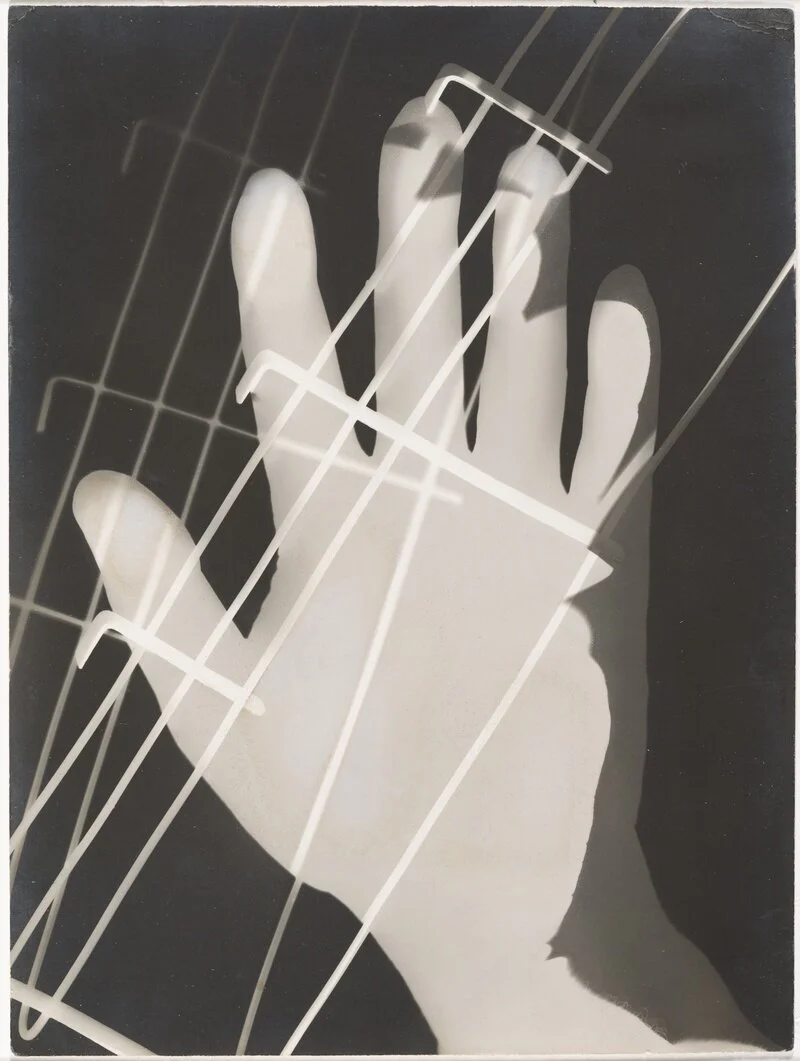
Laszlo Moholy-Nagy, Photogram, 1926
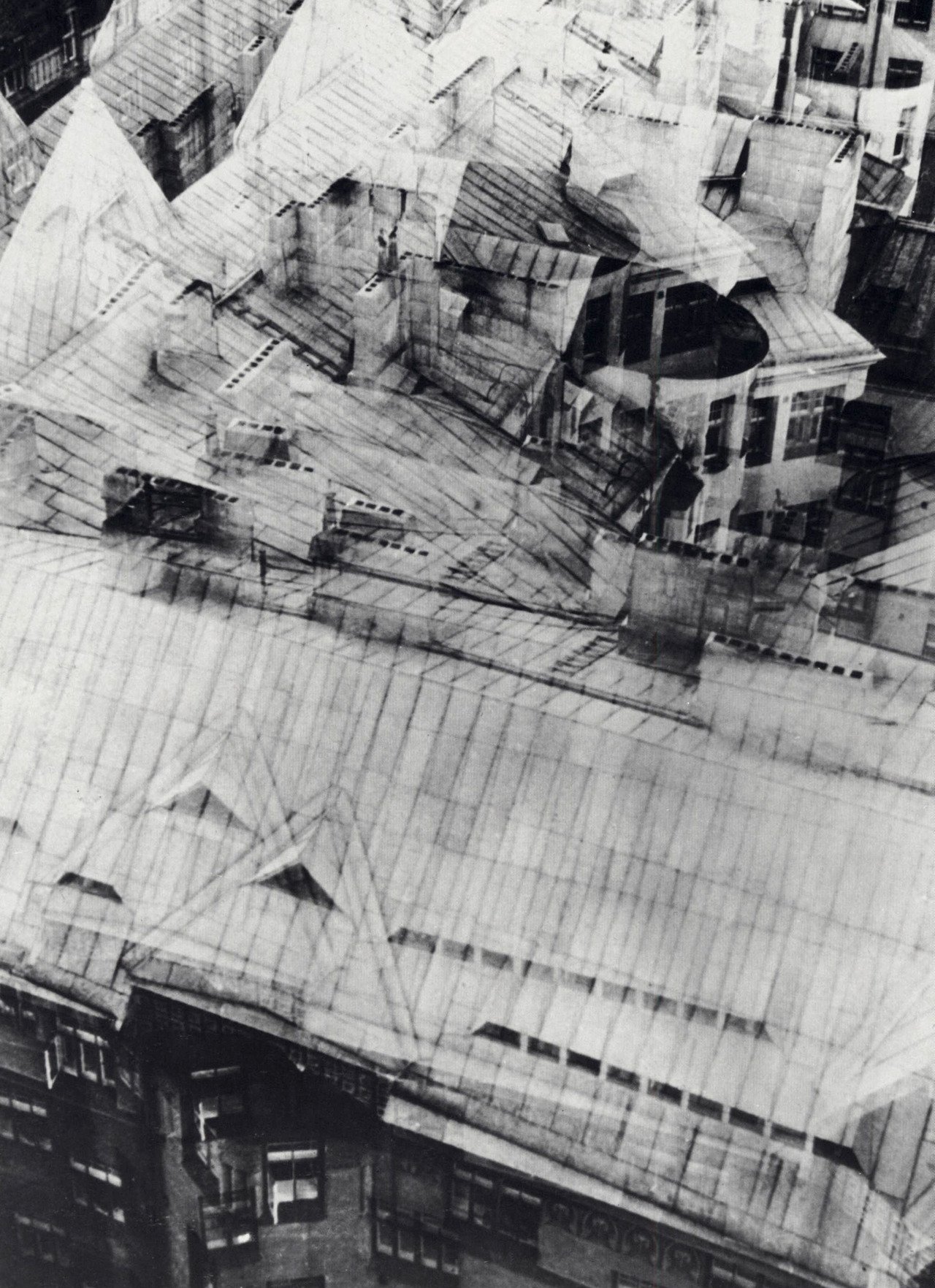
László Moholy-Nagy, Helskini, 1930, gelatin silver print, 394×292mm
Keywords
Dada, Modernism, Photogram, Experimental, Art, Community of practice
References
Laszlo Moholy-Nagy. 1926. Photogram. Image. https://moholy-nagy.org/.
Laszlo Moholy-Nagy. 1930. Helsinki. Image. https://www.sfmoma.org/artwork/98.243/.
Tate n.d. “Laszlo Moholy-Nagy”. TATE. Accessed March 11, 2020. https://www.tate.org.uk/art/artists/laszlo-moholy-nagy-1649.