
PCP Week 2
Professional Creative Practice Week 2
Thursday 29 July 2021
Class notes
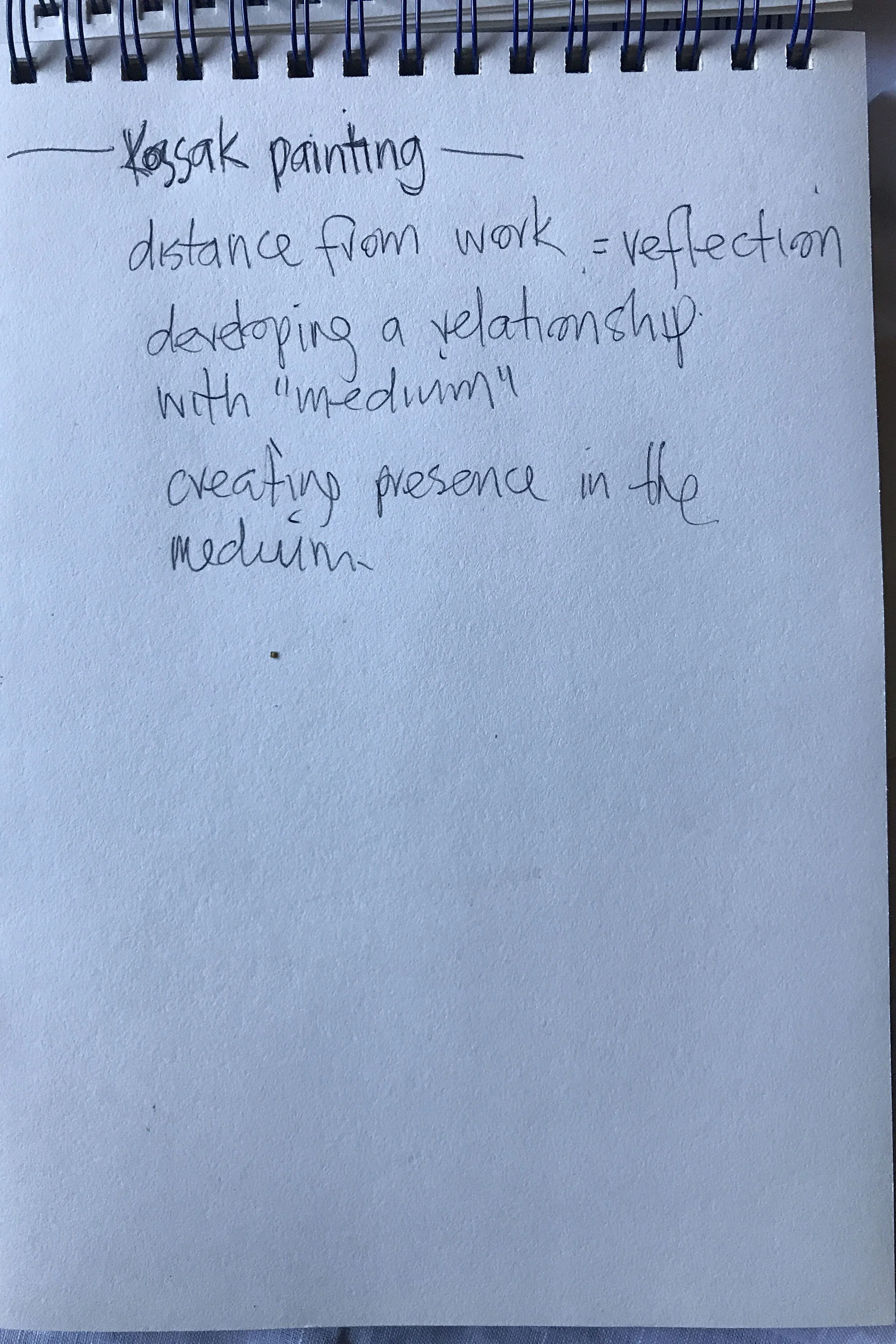
On Kossak Painting
Photography is often presumed "digital" and or representational over and above the idea of developing a relationship with a "medium" resonates strongly for me. The conversation leads me to think of photographic artists including Mariah Robertson, Justine Varga, Danica Chappell.
Thinking is in the doing.
One to one relationship with medium and practice.
Understanding yourself, your work, what images mean in the world.
Talking about art with artists.
Talking about art with people that are not artists.
Let life get into the work.
What is the artist responsibility with content and subject matter?
Find a way to inhabit and express moments.
To instigate and express.
Having something to do.
Make something every day.
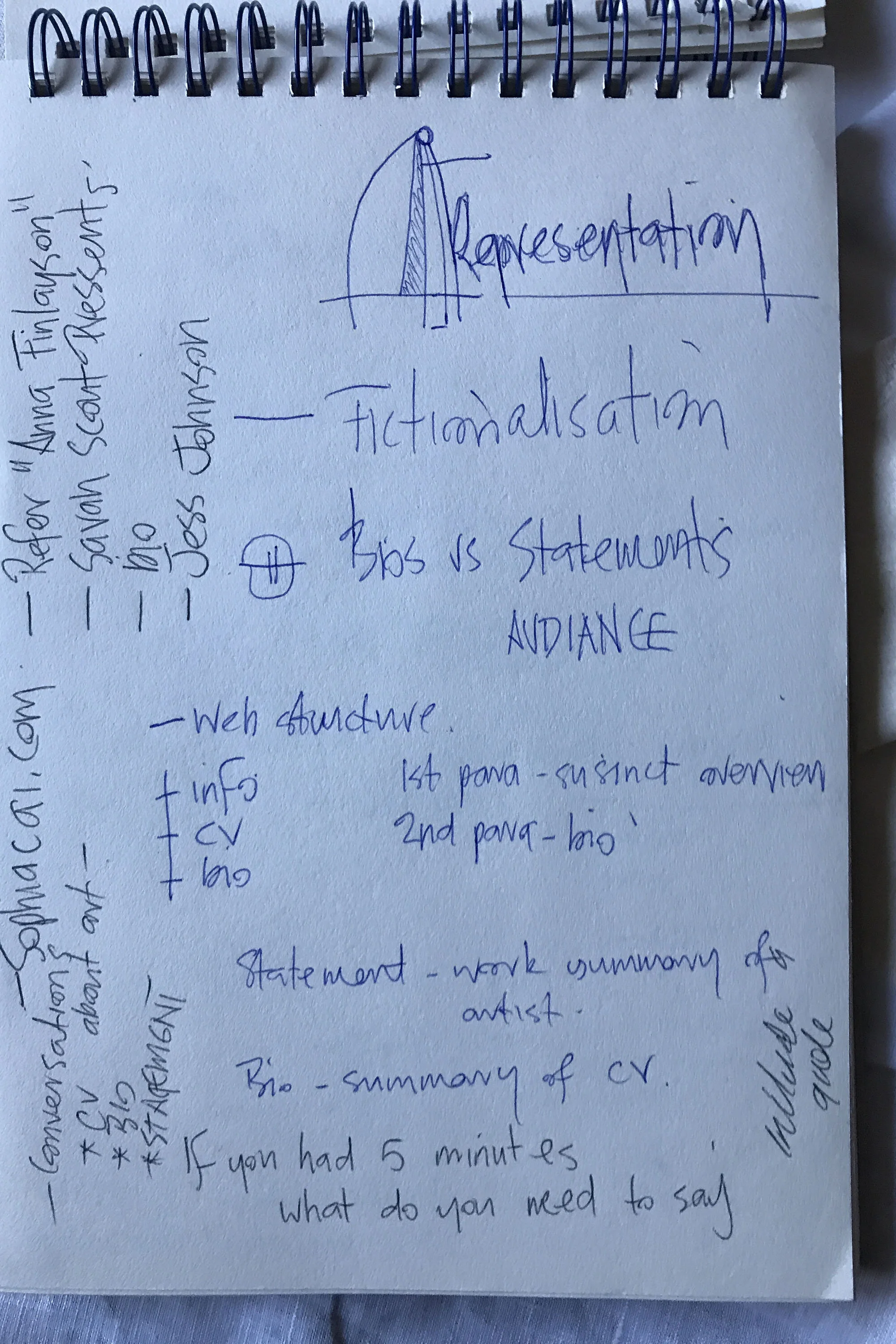
Artists statement
An artists statement represents a basic introduction to your art. A good artists statement ensures greater understanding and appreciation in working towards informing as many people as possible about the artist and their practice or project. Be brief and specific. Aim for two to three paragraphs or approximately 150 words. Appeal to and involve viewers with what you are doing. Know your target audience. What is in it for them? Provide a connection, a reason to engage and care.
Written in plain English (without colloquialisms), an artists statement is not an academic paper and should be easily understood by experts and laymen alike.
Be personal and conversational. Inform what the art is about (signifies, intention of communication, inspiration). Explain why you make art, what inspires you, what your work signifies or represents, how you make it, what it is made out of and what it means to you. (NAVA)
CV
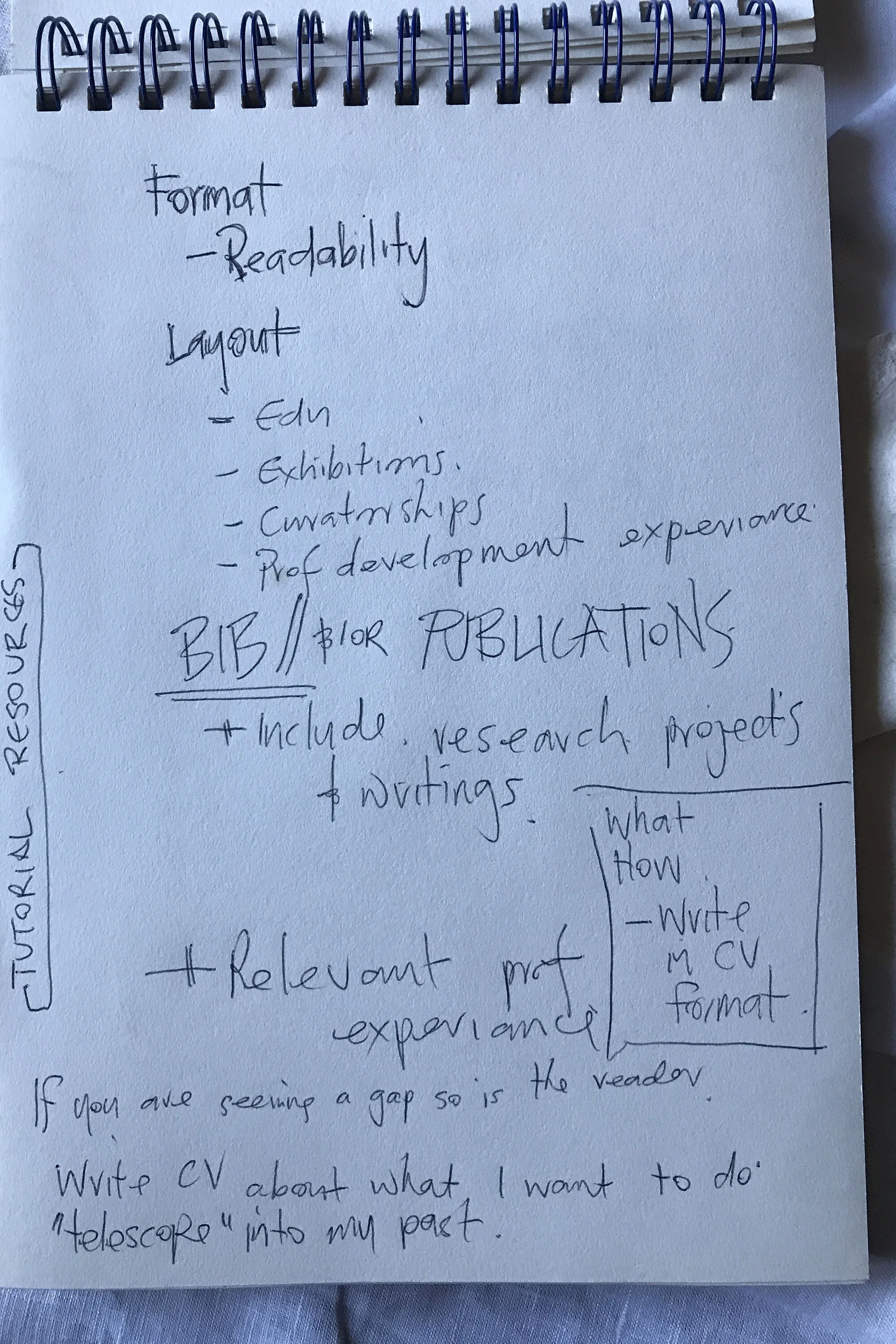
I am rewriting my CV, bio and artist statement as per the course recommendation, utilising the NAVA template “Writing an artist CV” (Cameron-Smith 2014).
The template is very useful, outlining the appropriate structure, citations, and general information required to create a concise and informative CV.
I have completed the Solo exhibitions, Group exhibitions, Collections, Awards and Residencies sections and am currently working on the bio. This includes referencing articles and media coverage. I am also adding curatorial roles to the CV.
CV draft. Zo Gay, 2021.
Bibliography
Cameron-Smith, Joan. 2014. "Writing An Artist CV". NAVA. Accessed July 22, 2021. https://visualarts.net.au/guides/2014/writing-artist-cv/.
NAVA. n.d. Q AND A HOW DO I WRITE AN ARTIST’S STATEMENT? WHY ARE THEY IMPORTANT?. PDF. NAVA.
TCCP Week 2
Themes for Contemporary Creative Practice Week 2
Wednesday 28 July 2021
Class notes
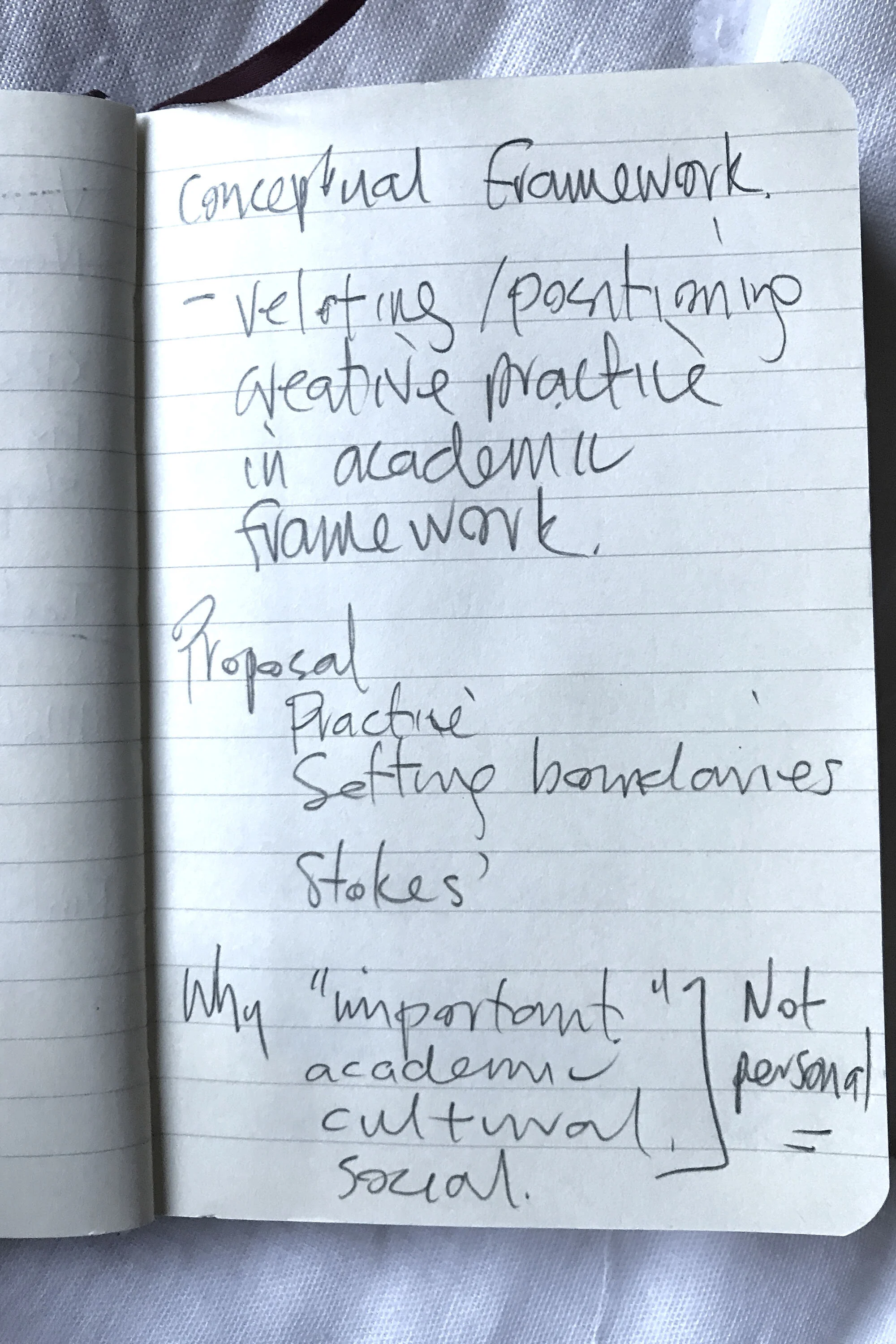
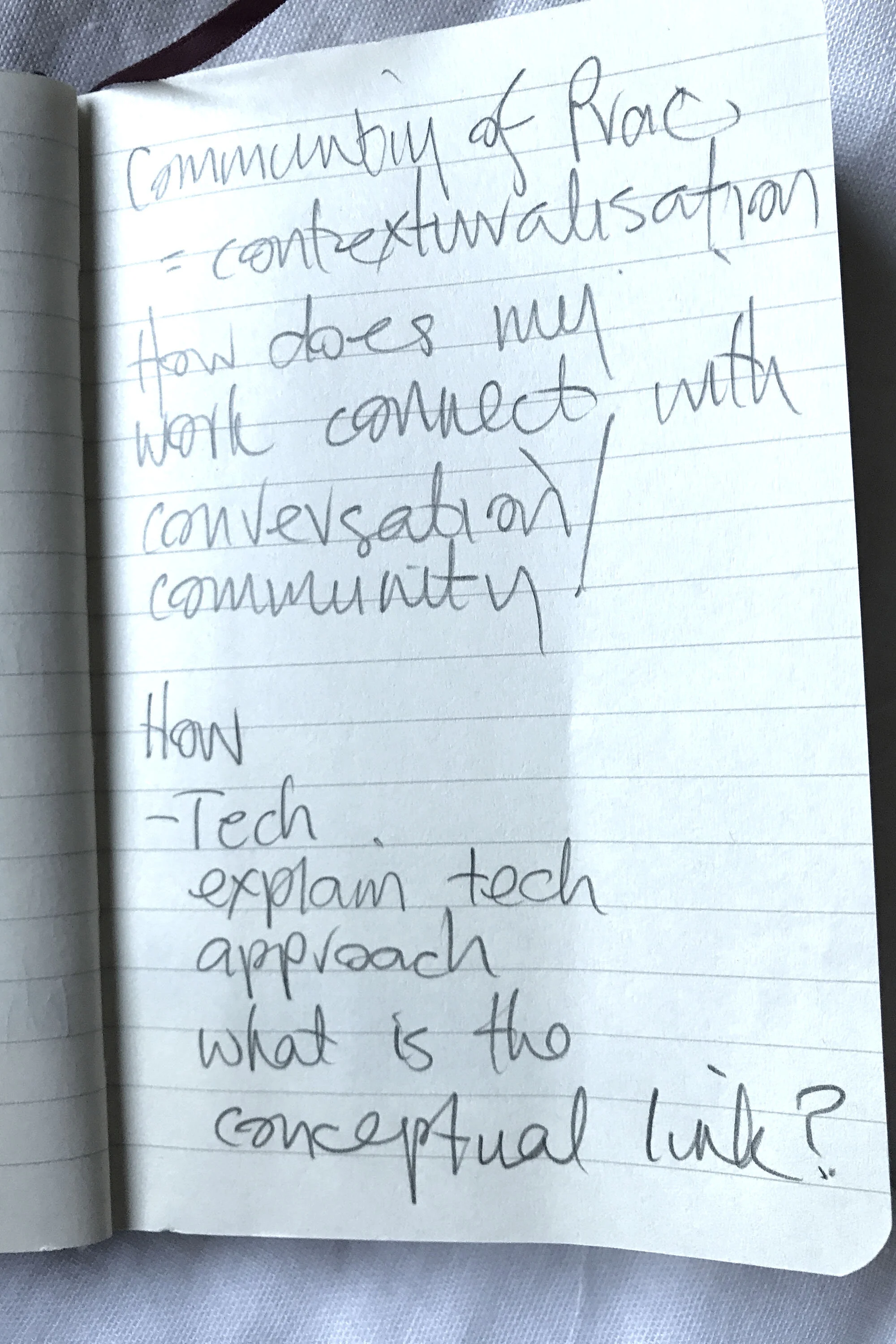
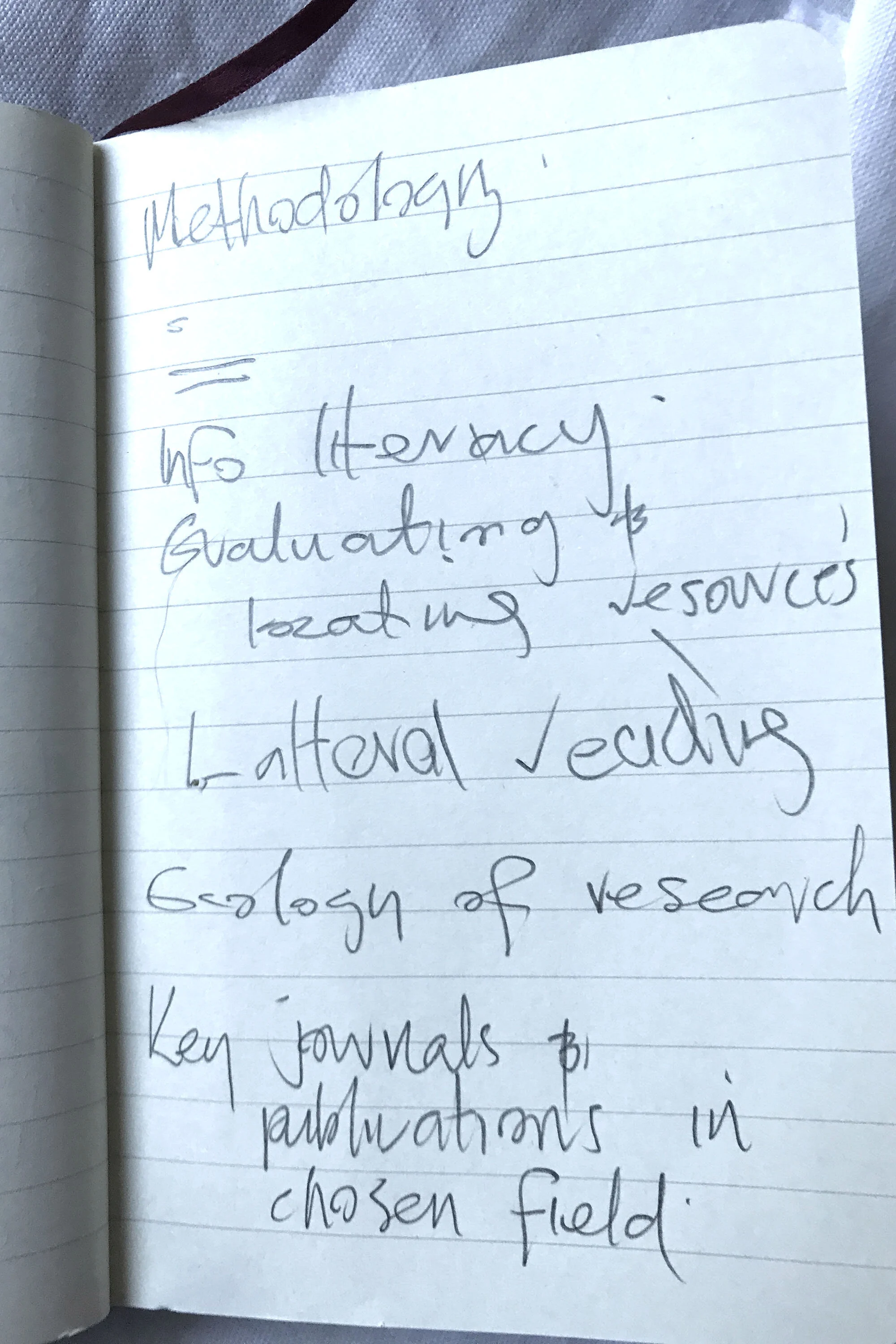
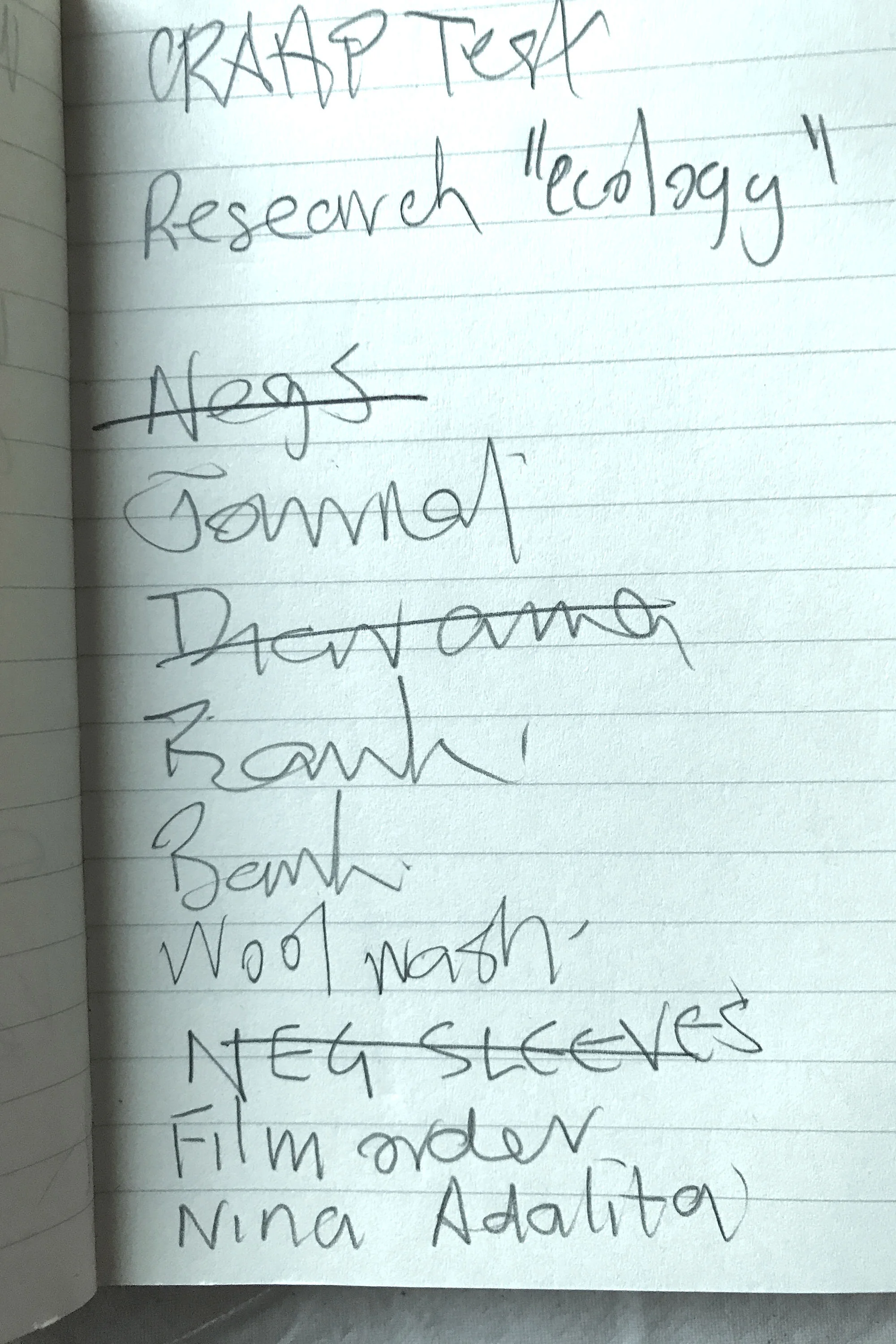
Themes of Contemporary Creative Practice Week 2, 28 July 2021 (Figures 1–4).
Figure 1. TCCP class notes. Week 2, page 1. Zo Gay, 2021.
Figure 3. TCCP class notes. Week 2, page 3. Zo Gay, 2021.
Figure 2. TCCP class notes. Week 2, page 2. Zo Gay, 2021.
Figure 4. TCCP class notes. Week 2, page 1. Zo Gay, 2021.
Discussion group
Program: Tell the group which program you are in.
Master of Photography, Semester 4.
Practice: What is your preferred mode of working? What processes do you use?
Film and cameraless photography, photo screen printing, darkroom printing, photogravure.
Project: What are the starting points for your project in this class.
As suggested, curate and consolidate works.
Priority: Can you articulate your project by telling us which of these you are prioritising (or most interested in exploring): Figuration; Representation; Virtuality. It can be a combination.
Figuration:
Representation:
Virtuality:
Problem: What problems are you encountering in your project?
Access to studio spaces to create works.
People: What are the key thinkers, artists, makers, writers, theorists etc that matter to your project … how might they help with the problems that you might be encountering?
Danica Chappell:
Justine Varga:
Sigmar Polke:
Laszlo Moholy-Nagy:
Dr Gregory Minissale: Neuroscientist and author of “Rhythm in Art, Psychology and New Materialism”.
Dr Michael Thaut: Neuroscientist and author of “Rhythm and the Brain”.
Steven shared from McEvilley’s “13 Ways of Looking at a Blackbird”.
“Some of you might have looked at McEvilley's 13 Ways of Looking at a Blackbird in Strategies: Content that arises from the aspect of the artwork that is understood as representational. This type of content is widely regarded as the least problematical; ironically, this very assumption lies at the heart of a tangled problem. We tend to feel that representation works by a recognizable element of objective resemblance, yet it seems more accurate to say that what we experience as representation is, like aesthetic taste, a culturally conditioned habit response not involving objective resemblance. In fact, it is difficult if not impossible to say what would constitute objective resemblance. And in reverse, the conviction of objective resemblance habituated in our pictorial tradition seems to exercise control over our perception of nature. The pictorial tradition, presented to us as representation of nature, has remade our perception of nature to conform with the conventions of pictures (as Goodman and others have demonstrated in their critiques of representation and, especially, of the tradition of perspectival drawing). The resemblance we seem to see between pictures and nature does not result from the fact that art imitates nature, but from the fact that our perception of nature imitates our perception of art. Seen thusly, just as it seems we can't think anything that our language can't formulate, so it seems we can't see anything that our pictorial tradition does not include or imply.! Representation, then, especially two-dimensional representation, is not an objective imitation, but a conventional symbolic system which varies from culture to culture. What "looks like" nature to an Australian aborigine looks like symbols to us, and vice versa. Virtually every culture has a tradition of representation which it sincerely regards as based on resemblance. Faced with a painting of the Battle of Waterloo, we seem to recognize horses, weapons, warriors, and so on; what we are in fact recognizing are our conventional ways of representing horses, weapons, warriors, and so on. The fact that it is specifically the Battle of Waterloo must come from the next level of content.” — Steven Rendall
A motif represented through different processes tate.org.uk/art/art-terms/m/motif.
Anchor conversations in the work.