
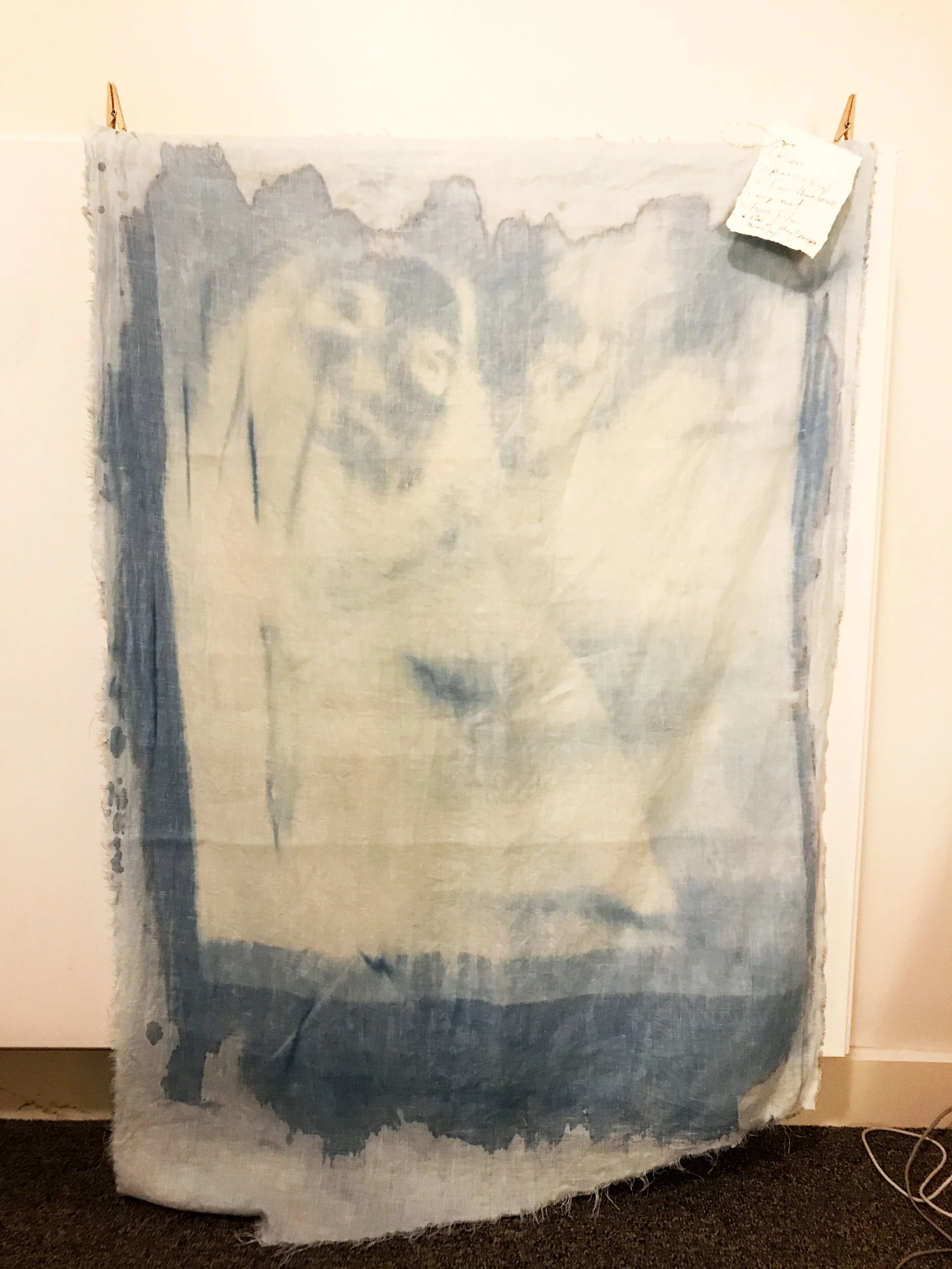
Figure 1. Initial experiments treating linen and muslin (as purchased and not pre-washed) with cyanotype solution. Brushing on dry fabric as purchased (with factory chemical treatments such as fabric stiffeners) was problematic because the cyanotype solution beaded and rolled off. The fabric was submerged in the cyanotype solution to overcome the issue of inadequate absorption, 2023
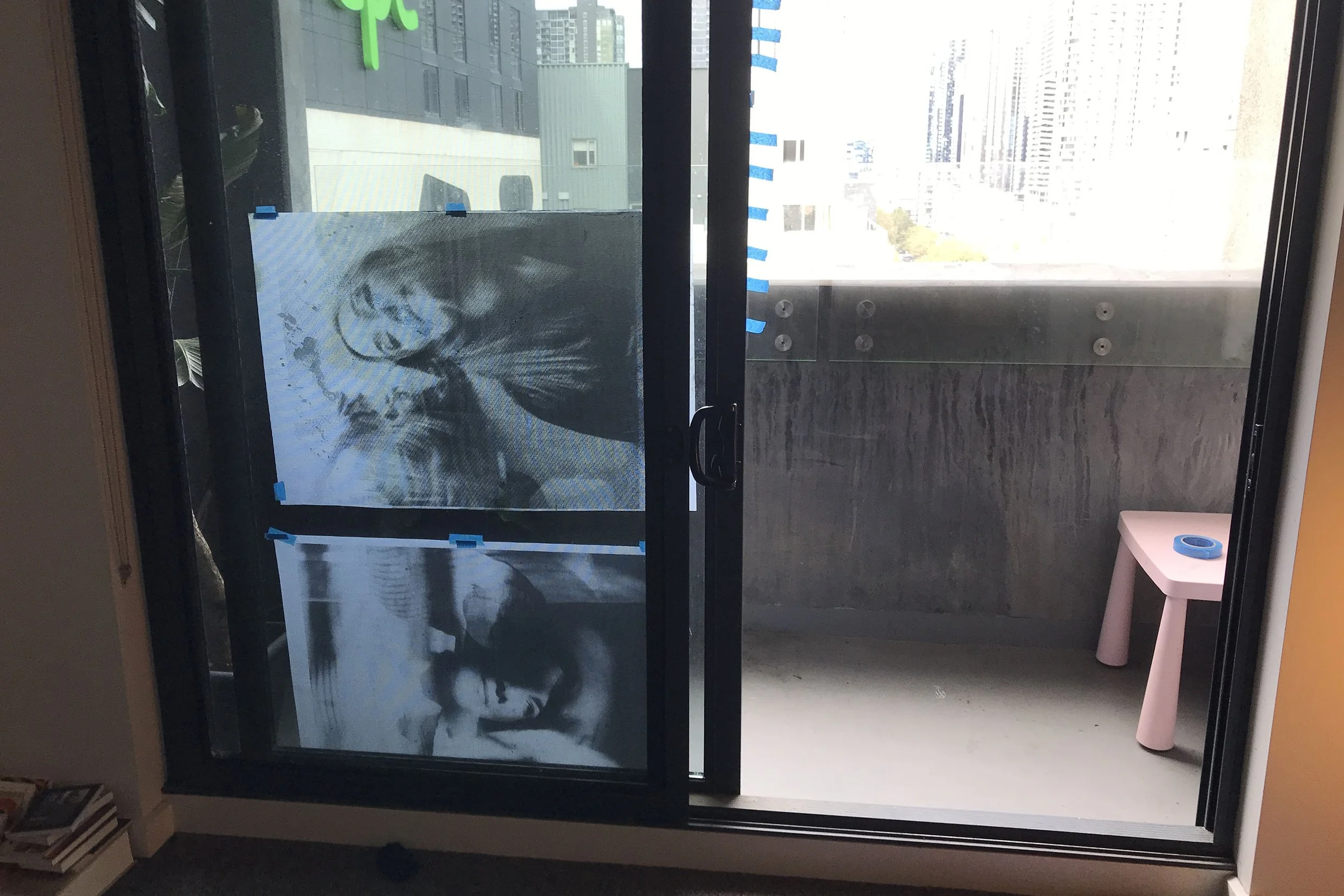
Figure 2. Repurposing transparencies used to make silk screens for Frisson (Damage 2021) to make cyanotype exposures. Transparency film was secured on top of the textiles, which were laid out flat on sheets of core flute 2023
Figure 3. Initial experiments produced unsuccessful results. Reflecting on the process, I propose that poor outcome was in part due to low UV rating and not pre-washing factory chemicals out of the fabric prior to cyanotype treatment, 2023
https://www.alternativephotography.com/cyanotypes-on-fabric-preparing-the-fabric/
Vanbar Imaging
https://www.vanbar.com.au/catalogue/product.php?id=125769#specs
Resources
Ferric Ammonium Green
Potassium Ferricyanide
These kits contain the right amount of chemicals needed to make up to 200ml of sensitizer. Enough to coat up to roughly 50 8x10" inch sheets; depending on material it's being applied to. Each chemicals is dissolved in 100ml of water to produce a seperate A and B solution. The solutions are mixed together just before coating begins.
For more information about Cyanotypes please view these web sites
http://www.alternativephotography.com/category/processes/cyanotype/


https://www.sciencecompany.com/The-Cyanotype-Process.aspx


https://www.silverprint.co.uk/cyanotype-instructions/
Forum thread
You can turn your cyanotype sepia by bleaching them in bicarbonate and then dipping them in tea or coffee. https://www.alternativephotography.com/cyanotype-classic-process/#:~:text=The%20cyanotype%20is%20made%20up%20of%20two%20simple%20solutions%3A,make%20up%20100%20ml%20solution.