
MFA S4: Research Document
Flow: Embodying aesthetic responses through process-based analogue photography
This heuristic investigation[1] uses process-based analogue photography[2] to embody my aesthetic responses to my life experiences. The research aims to harness the merging of my body, mind, lifeworld[3] and artistic practice to engage with photography in terms of an embodied art form. The research investigates cognitive neuroscience in the context of developing a greater understanding of phenomenological interplays that connect me to the world and my creative practice. Practical and theoretical elements of painting are fused with analogue photography to not only challenge the truth value of the medium but, importantly, to materialise my intent and authorship in my creative outcomes. The conclusion of this exegesis reflects on how contesting the tropes of “intellectual, and technical concepts and aesthetics [may broaden] the notion of what a photograph could be in art” (Squires 2013, 9).
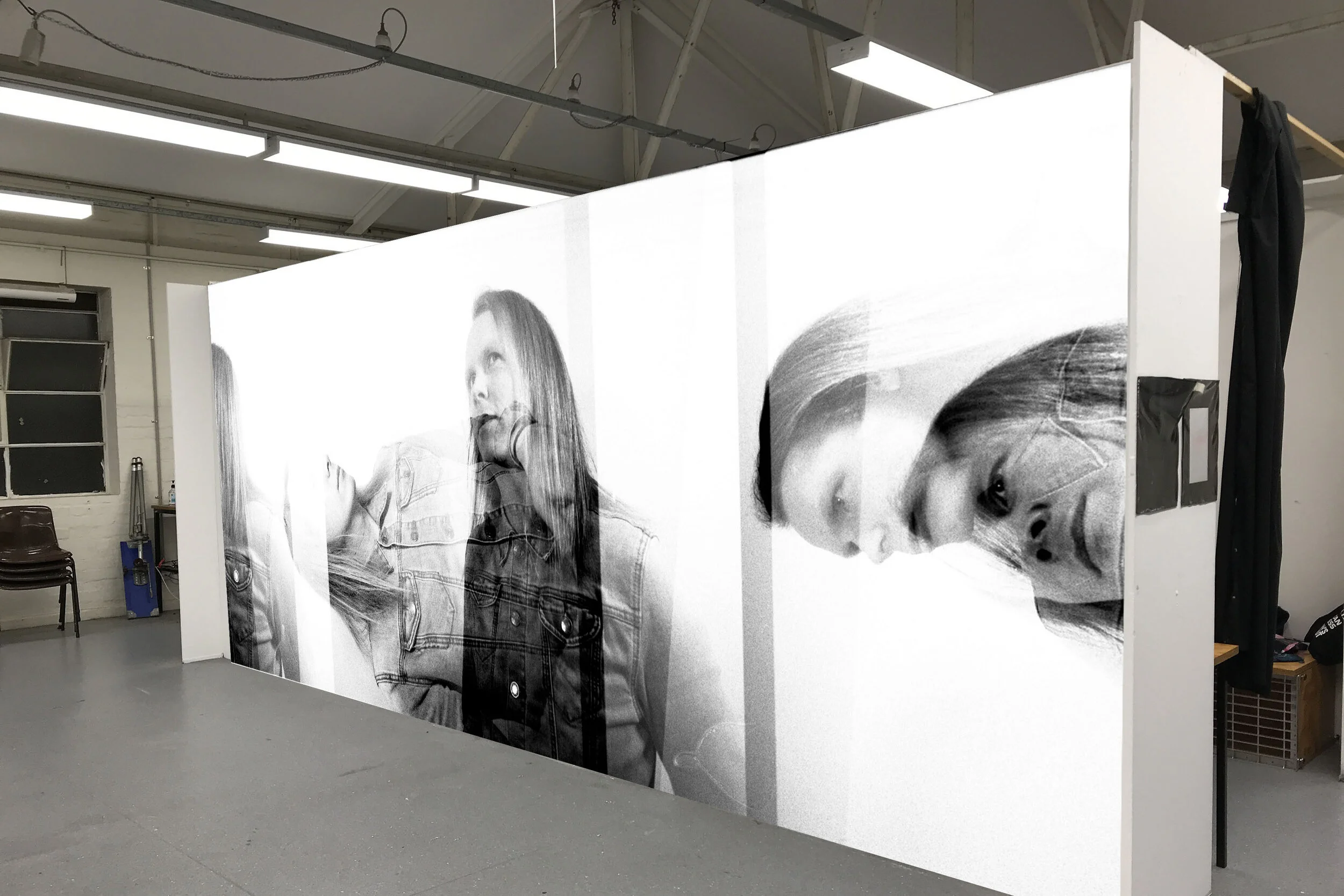
West wall detail
Footnotes
[1] A heuristic learning method applies discovery and problem-solving grounded in reasoning and experience (Sultan 2019).
[2] Analogue photography refers to nondigital, emulsion-based modes of the medium where the latent image emerges during chemical development.
[3] Lifeworld is a phenomenological term that “refer[s] to the idea that ‘individuals’ realities are invariably influenced by the world in which they live” (Neubauer, Witkop, and Varpio 2019, 94).