
Francis Bacon
In the early years of his career, Francis Bacon[1] was best known as an interior designer. However, attending an exhibition in Paris in the early 1930s, Bacon was inspired to become a painter after viewing the work of Pablo Picasso.
In 1933 Herbert Reed featured Bacon’s “Crucifixion 1933” in the highly regarded and influential publication “Art Now”. However, his first solo exhibition was not a success.
Despite the acknowledgement of Reed, Bacon’s submission to the “International Surrealist Exhibition” in 1936 was rejected for being insufficiently surreal. In the years to follow, disheartened, Bacon destroyed nearly all of his paintings. (Photographer Brian Duffy also destroyed most of his negatives in the 1960s out of frustration).
Bacon aims to make concentrations of images – to deconstruct and reconstruct reality in his own vision, stating that his aim is not “to create an illustration of reality, but to create images that are a concentration of reality and a shorthand of sensation”.
Figure 1. Untitled self-portrait by Zo Damage, 2021. Photogram (unique print) on gelatin silver paper (600x1200mm). Click to open in light box view.
Relevance to practice
Bacon asserts that he aims to make concentrations of images – to deconstruct and reconstruct reality in his own vision, stating that his aim is not “to create an illustration of reality, but to create images that are a concentration of reality and a shorthand of sensation”. This resonates strongly in my own work, particularly with the photograms and in-camera multi-exposures.
Despite my not liking the colour of the fibre-based paper, my photograms are particularly relevant as they are unique prints – artifacts, which relates directly to Bacon as the artist asserts “Art is artefact”. Streaks and textures have been created purposefully and with performative gestures during the development process, representing agency, impermanence, movement and emotion in my photograms (Figure 1) may be compared with many of Bacon’s paintings (Figure 2).
Figure 2. Study from the human body by Francis Bacon, 1953
I strongly identify with Bacon’s passion for chaos in his painting. I began exploring chaos through film photography using in-camera multi-exposure in 2018, further developing my practice at university (Figure 3).
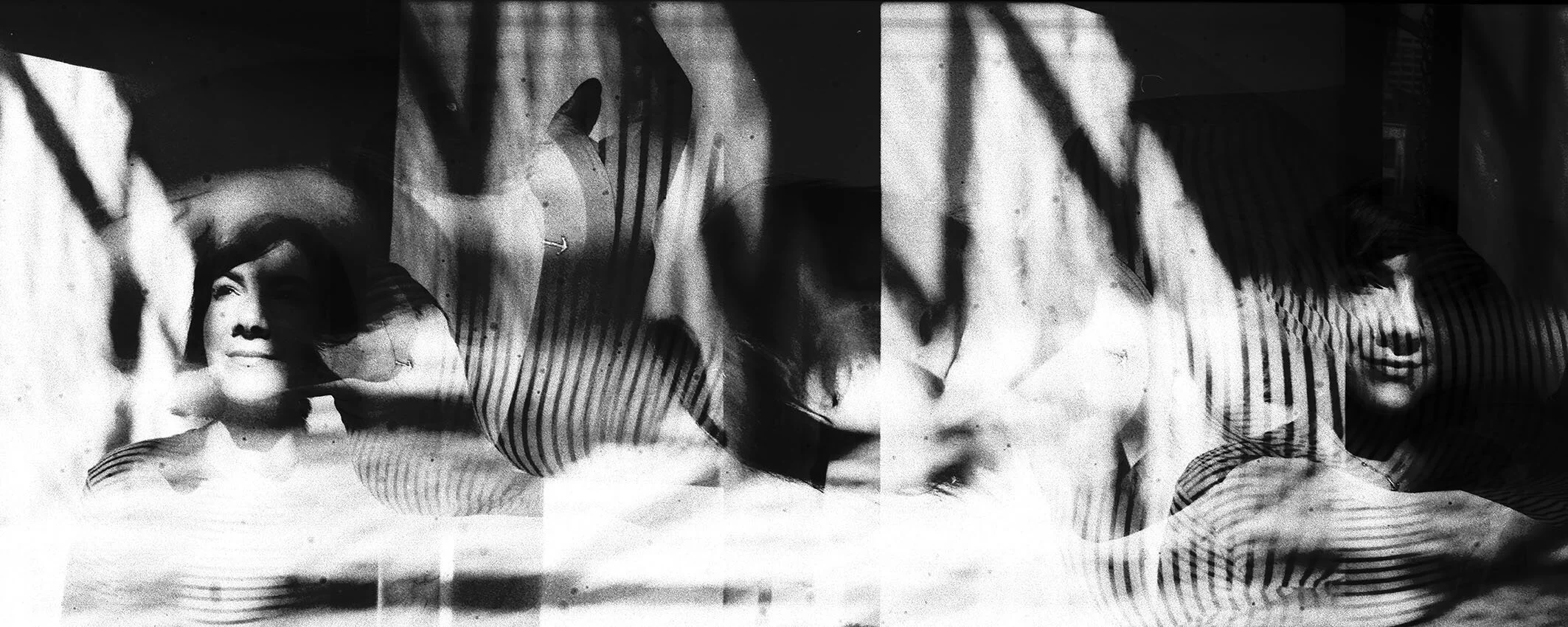
Figure 3. Hanamax. In-camera multi-exposure on 35mm film by Zo Damage, 2021
Quotes
“Chaos for me breathes images.” — Francis Bacon.
“I believe in deeply ordered chaos.” — Francis Bacon. (I love this guy!)
Keywords
Community of practice, Francis Bacon, Agency, Epherial, Surrealism, Photogram, Painting
Footnotes
Francis Bacon. David Hinton. et. al. 2013.
Bibliography
Hinton, David. et.al. Francis Bacon. Australia: ABC1 [broadcaster], 2013. https://rmit.primo.exlibrisgroup.com/permalink/61RMIT_INST/tcai14/alma9921628248001341.
Bacon, Francis. 1953. Study From The Human Body. Image. Accessed June 3, 2021. https://www.ngv.vic.gov.au/explore/collection/work/3761/.
Damage, Zo. 2021. Hanamax. Image.
Damage, Zo. 2021. Untitled self-portrait. Image.