
Provenance or Crisis Point: A Case Study in Medium Ambiguity
Zo Damage (36982784)
PhD Candidate | Fine Art
Monash Art, Design and Architecture
Monash University
Provenance or Crisis Point: A Case Study in Medium Ambiguity
Recent debates regarding traditional light-based and synthetically generated imaging demonstrate that the economy of photography faces a crisis of ontological provenance. This shift is characterised by structural despecification and intra-hybridisation of photo-imaging’s various modalities.[1] Scholars, educators and industry experts—including Dean Emeritus of the International Center of Photography and journalist Fred Ritchin, and archivist and historian Joan Boadas i Raset—caution that a lack of clear definitions inadequately distinguishes between the practical, theoretical and aesthetic principles of contemporary photo-realistic imaging. Consequently, this case study draws from the perspectives of Ritchin and Boadas i Raset to establish how this structural blurring requires a re-examination of the fundamental aspects of photographic production within its own operational framework.
To elucidate this dynamic, in 2023, the Sony World Photography Awards (SWPA) selected Boris Eldagsen as the winner of the ‘Creative’ category for The Electrician (fig. 1).[2] Eldagsen subsequently declined the award, disclosing that he generated the work using artificial intelligence (AI) as, in Eldagsen’s words, “a test” to assess whether competitions were prepared for this technology.[3] The event administrators publicly ignored Eldagsen’s refusal and dismissed his suggestion to initiate a public debate on AI-generated imaging compared to traditional photography. Additionally, in announcing the winners, the SWPA press release omitted any reference to The Electrician’s AI origins. Despite this omission, media interest and subsequent coverage of Eldagsen’s ruse stimulated widespread public discussion.[4]
Inversely, in 2024, artist Miles Astray submitted a work, Flamingone, to the AI category of the 1839 Awards (fig. 2).[5] Although Flamingone received both third place and the ‘People’s Choice’ nomination for ‘Best in Category,’ it was disqualified after Astray revealed it was a traditional photograph. Responding to the controversy surrounding Eldagsen, Astray aimed to demonstrate that, despite the increasing difficulty in distinguishing photorealistic from authentic records, there remains an enduring value in the “human and emotional quality” that generative processes lack.[6] Together, these cases exemplify how developments within the domain of light-based and AI-generated image-making illustrate the current crisis of material provenance. Ritchin notes that the work of Eldagsen and Astray challenged the expertise of competition judges, but most importantly underscores the need for precise definitions to distinguish categories and clarify the broader context of photography.[7]
Since the mid-2010s, art theorists such as Geoffrey Batchen have debated the definition of a photograph, raising questions such as whether “a negative [can] be called a photograph?” and whether “a negative that is never printed, never turned into a positive [can] be called a negative.”[8] Similarly, art curator and theorist Carol Squires contends that the question of what defines a photograph cannot be “definitively answered.”[9] This lack of formal consensus directly impacts the preservation of visual culture. In response, recent scholarship in the humanities has emphasised the need for clearer definitions of photography. Boadas i Raset further underscores that we cannot adequately manage “photographic heritage” through “the same attitudes, aptitudes and tools that were previously sufficient.”[10] Echoing the views of Ritchin, Boadas i Raset asserts that the global community of industry professionals, academics, and creative practitioners must address this issue to achieve resolution.[11] In the context of the post-photographic era, future research would benefit from analysing theories of despecification and hybridisation. This approach provides a critical reassessment of established viewpoints, highlighting a persistent crisis of despecification within contemporary analogue, computational and synthetic imaging.
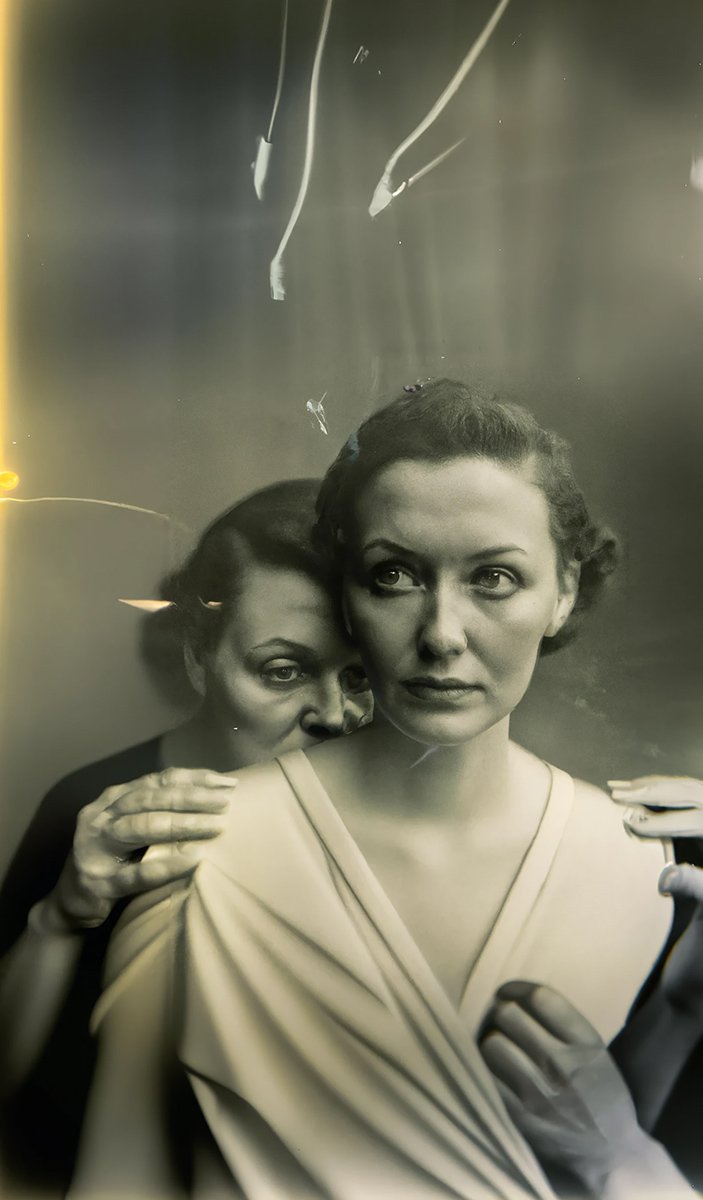
Figure 1. Boris Eldagsen, The Electrician, 2022, AI-generated image from the series Pseudomnesia: Fake Memories, https://www.eldagsen.com/pseudomnesia/
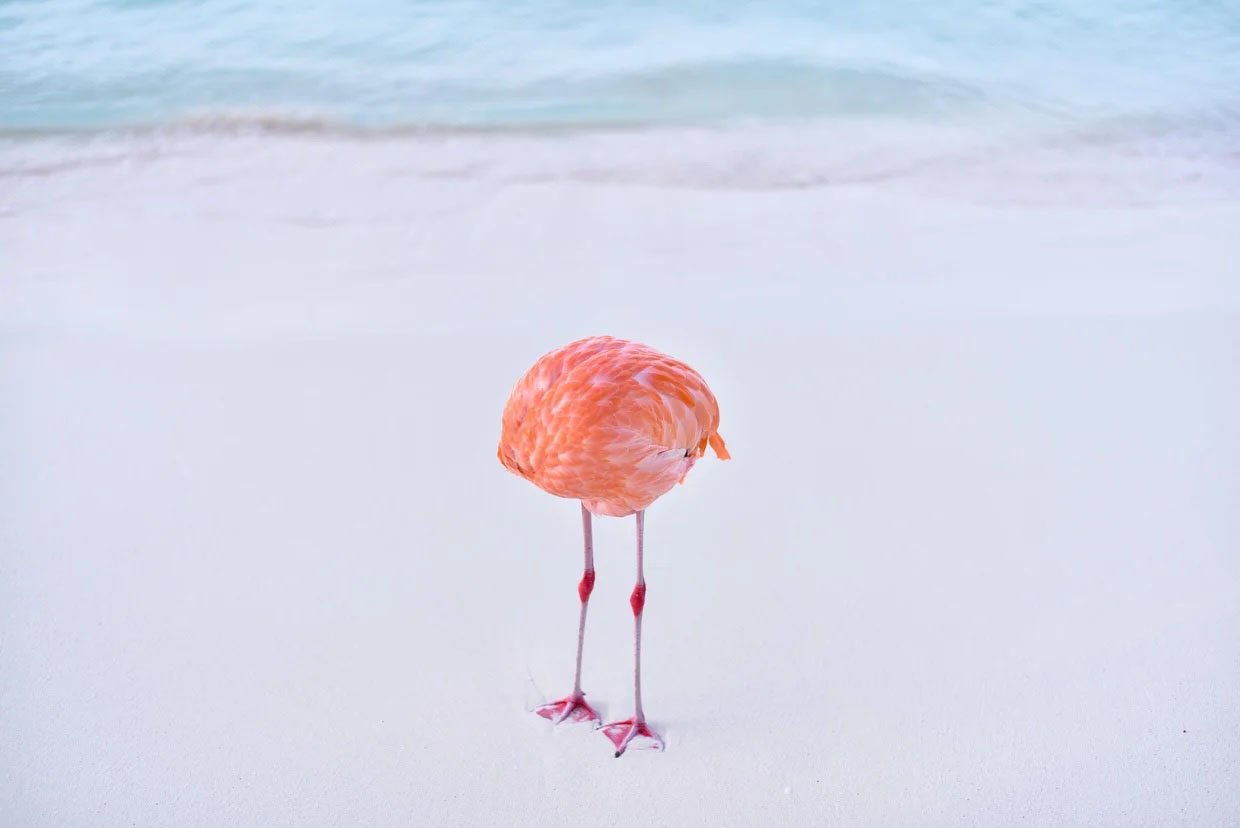
Figure 2. Miles Astray, Flamingone, 2024, photograph, in Alex Clark, “A Real Photo Took Two Honors in an AI Competition. Here’s the Inside Story,” CBS News, June 24, 2024, https://www.cbsnews.com/news/real-photo-ai-competition-flamingone-miles-astray/
Footnotes
[1] Here, the prefix intra- establishes that photographic hybridity does not exclusively denote its synthesis with alternative mediums—such as painting or sculpture—but signifies an internal network where hybridisation takes place entirely within the multiple modalities of photography, including the synthesis of analogue and digital workflows.
[2] Boris Eldagsen, “Sony World Photography Awards 2023,” Boris Eldagsen, March 14, 2023, https://www.eldagsen.com/sony-world-photography-awards-2023/
[3] Boris Eldagsen and Deborah Klochko, “What is promptography?” interview by Luke Siddham Dundon, ABC Listen: Radio National Breakfast, April 24, 2023, https://www.abc.net.au/listen/programs/radionational-breakfast/what-is-promptography/102258618?utm_content=link&utm_medium=content_shared
[4] Boris Eldagsen, “Artist wins photo award with AI generated image, sparking debate,” interview by DW News, posted April 16, 2023, by DW News, YouTube video, https://youtu.be/Pv1HUd8rsG4?si=HO8_duVhuVALTE6i.
[5] For additional information about Astray’s artwork Flamingone, including images, see Alex Clark, “A Real Photo Took Two Honors in an AI Competition. Here’s the Inside Story,” CBS News, June 24, 2024, https://www.cbsnews.com/news/real-photo-ai-competition-flamingone-miles-astray/
[6] Miles Astray, quoted in Clark, “A Real Photo.”
[7] In recent years, the terms ‘promptography’ and ‘synthography’ have emerged as contested terms within academic discourse on AI imaging. Ritchin notes that although the prefix accurately refers to algorithmic text prompts, the suffix ‘graphy’ implies images are ‘drawn’ anew, as in conventional photography. This stands in contrast to the generative process of reconstruction of AI, which relies on text prompts to extract data from extensive online image repositories. Ritchin proposes ‘synthetic imaging’ as a more transparent descriptor of the algorithmic process. Refer to Fred Ritchin, “Photography in the Age of Synthetic Imaging, with Fred Ritchin,” interview by Allan White and Jill Waterman, posted August 1, 2024, by B&H Photography Podcast, Spotify audio, https://open.spotify.com/episode/6EI5mHPkLOep5Yv5dZGkjI?si=QtwnjNwCTIWXuIegTHnLBw
[8] Geoffrey Batchen, “Inventing Negatives,” in Negative/Positive: A History of Photography (Routledge, 2020), 21.
[9] Carol Squires, “What Is a Photograph?,” in What Is a Photograph? (International Center of Photography/DelMonico Books, 2013), 42.
[10] Joan Boadas i Raset, “Managing Photographic Heritage: Ten Ideas to Consider,” Comma, no. 1 (2020): 79, https://doi.org/10.3828/comma.2019.1.9. Note: As of July 2026, this DOI does not resolve publicly. The article was obtained through special request to Monash University.
[11] Boadas i Raset, “The Management of Photographic Heritage.”
Bibliography
Astray, Miles. Flamingone. 2024. Digital photograph. Reproduced from Alex Clark, “A Real Photo Took Two Honors in an AI Competition: Here’s the Inside Story,” CBS News, June 24, 2024. https://www.cbsnews.com/news/real-photo-ai-competition-flamingone-miles-astray/
Batchen, Geoffrey. “Inventing Negatives.” In Negative/Positive: A History of Photography. Routledge, 2020.
Boadas i Raset, Joan. “Managing Photographic Heritage: Ten Ideas to Consider.” Comma, no. 1 (2020): 79–84. https://doi.org/10.3828/comma.2019.1.9
Clark, Alex. “A Real Photo Took Two Honors in an AI Competition. Here’s the Inside Story.” CBS News, June 24, 2024. https://www.cbsnews.com/news/real-photo-ai-competition-flamingone-miles-astray/
Eldagsen, Boris, and Miles Astray. “B&H Podcast: Authentic Photographic Documentation vs AI Generated Images.” Interview by Allan White and Jill Waterman. Posted September 27, 2024, by B&H Photography Podcast. YouTube audio, 01:18:38. https://youtu.be/akxsi7r9uNE?si=qHGZRfAPP84Wdt36
Eldagsen, Boris. “Sony World Photography Awards 2023.” Boris Eldagsen, March 14, 2023. https://www.eldagsen.com/sony-world-photography-awards-2023/
Eldagsen, Boris. “Artist wins photo award with AI generated image, sparking debate.” Interview by DW News. Posted April 16, 2023, by DW News. YouTube video, 05:21. https://youtu.be/Pv1HUd8rsG4?si=HO8_duVhuVALTE6i
Eldagsen, Boris, and Deborah Klochko. “What is promptography?” Interview by Luke Siddham Dundon. ABC Listen: Radio National Breakfast, April 24, 2023. https://www.abc.net.au/listen/programs/radionational-breakfast/what-is-promptography/102258618?utm_content=link&utm_medium=content_shared
Eldagsen, Boris. The Electrician. 2022. AI-generated image from the series Pseudomnesia: Fake Memories. https://www.eldagsen.com/pseudomnesia/
Ritchin, Fred. “Photography in the Age of Synthetic Imaging, with Fred Ritchin.” Interview by Allan White and Jill Waterman. Posted August 1, 2024, B&H Photography Podcast. Spotify audio, 01:22:00. https://open.spotify.com/episode/6EI5mHPkLOep5Yv5dZGkjI?si=QtwnjNwCTIWXuIegTHnLBw
Ritchin, Fred. “The Challenge to the Photographic Record: A Reflection.” Common Place 3, no. 1 (2023). https://doi.org/10.21428/6ffd8432.65cc1979
Ritchin, Fred. After Photography. W.W. Norton, 2009.
Squires, Carol. “What Is a Photograph?” In What Is a Photograph?. International Center of Photography/DelMonico Books, 2013.